

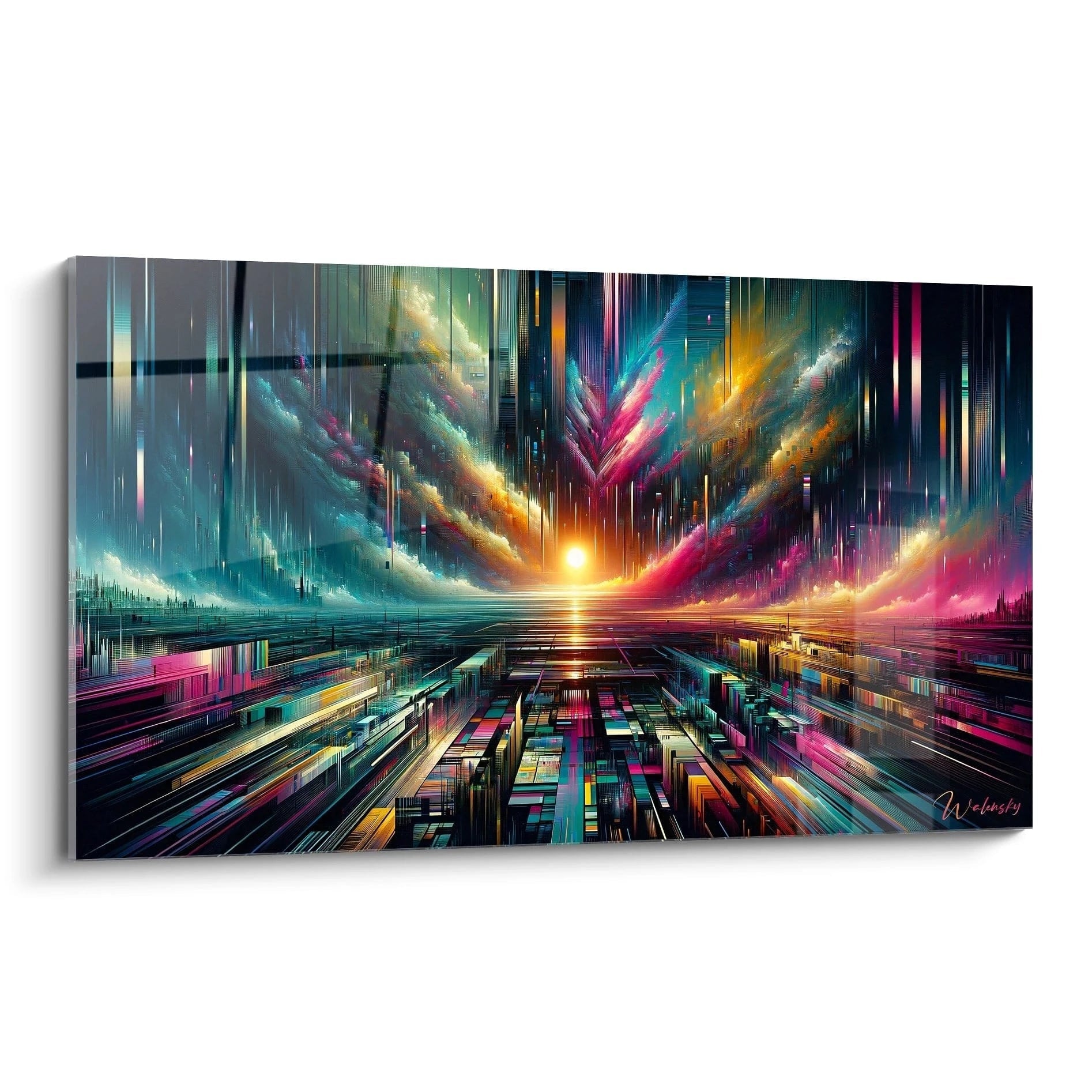
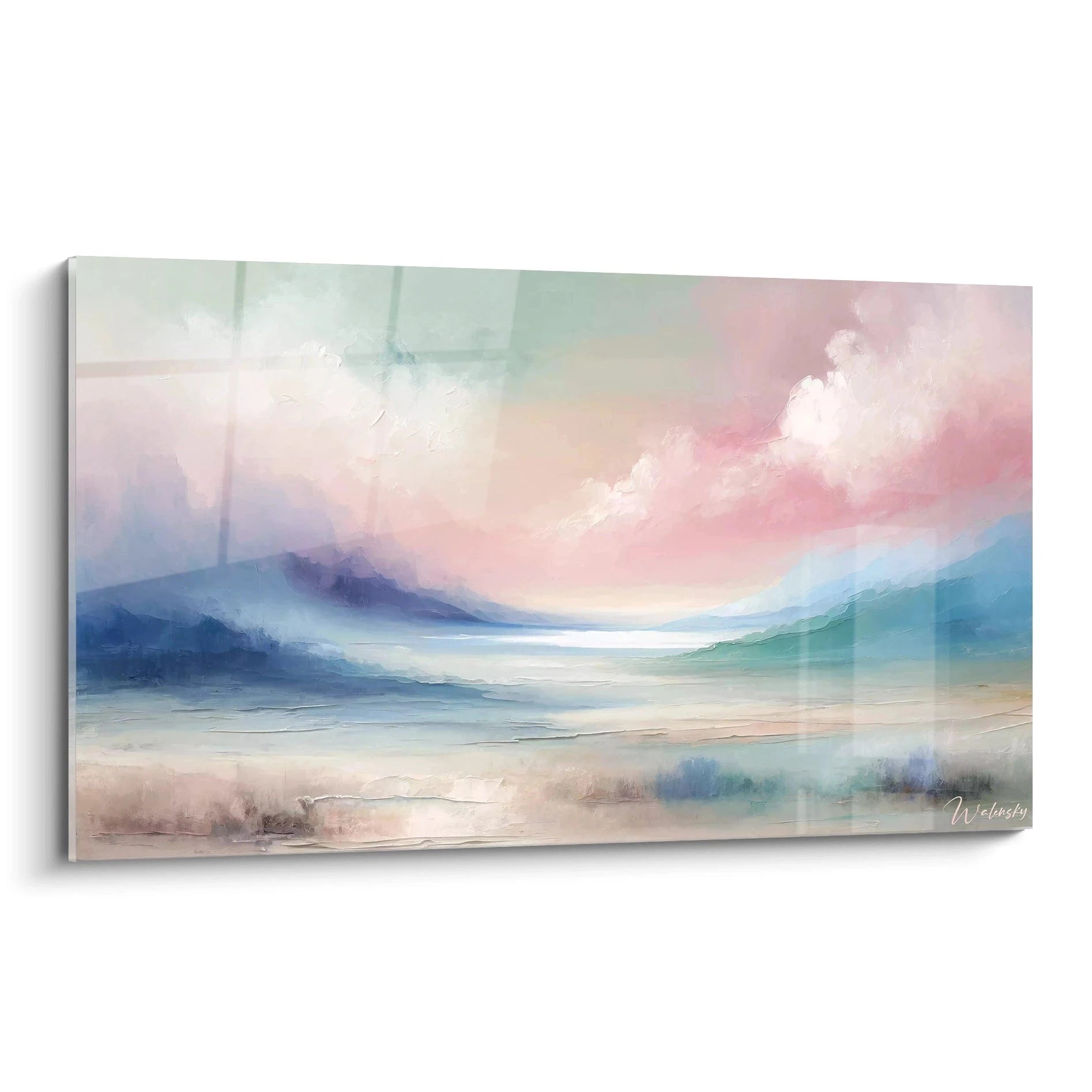

What size artwork for a 25m² master bedroom?
December 4, 2025 · 9 min read · by Walensky
This morning again, entering this bedroom just renovated, I felt that familiar emptiness above the bed. Twenty-five square meters of harmonious volumes, beautiful natural light, carefully chosen neutral tones… and yet, something was missing. It wasn't until I hung a painting with the right proportions that the space really came to life. The dimensions of a painting in a 25m² master bedroom are not random: they create visual balance, personalize the intimacy of the place and transform a simple wall into a soothing focal point.
Are you also standing in front of this wall, with a measuring tape in hand, hesitating between several formats? Do you fear that the painting will be too small and disappear into the decor, or too imposing and overwhelm the atmosphere? I have seen this uncertainty in dozens of clients. The good news: there are simple rules that guarantee harmonious proportions. In this article, you will discover exactly which dimensions to prioritize according to your configuration, how to adapt the format to your headboard, and the mistakes to avoid to create a bedroom that truly resembles you.
The rule of thirds: your dimensional compass
For a 25m² master bedroom, let's start with the golden rule that I apply systematically: the painting above the bed should cover approximately two-thirds of its width. This proportion creates a natural visual dialogue between the furniture and the artwork, without domination or timidity.
Let's take a concrete example: if your bed is 160 cm wide (standard queen size), your ideal painting will be between 100 and 120 cm wide. For a king size bed of 180 cm, aim for 120 to 140 cm. These dimensions allow the painting to assert its presence while allowing the composition to breathe. I have noticed that below this proportion, the artwork seems to float in the void, lost in the immensity of the wall.
Regarding height, for a 25m² bedroom with standard ceiling height of 2.50 m, prioritize formats ranging from 60 to 90 cm high. A painting that is too high would rise towards the ceiling and break the horizontal balance sought in a bedroom, an area dedicated to rest par excellence.
Winning formats for 25m²
Here are the painting dimensions that I most often recommend for a bedroom of this size:
- 120x80 cm format : the versatile, perfect above a 160 cm bed
- 140x90 cm format : the elegant imposing, ideal for a king size bed and spacious walls
- 100x70 cm format : the balanced, suitable for more intimate configurations
- Panoramic 150x50 cm format : the contemporary, creates a soothing horizontal line
These dimensions work particularly well in a 25m² bedroom as they correspond to the scale of the space without overwhelming it. The eye immediately perceives the consistency of the proportions.
Adapting dimensions to your wall configuration
A 25m² master bedroom generally offers several possible configurations. The arrangement of your furniture directly influences the size of the artwork you choose.
If your bed is centered on a wall 3.50 to 4 meters wide (a classic configuration for 25m²), you have generous lateral breathing space. This is the ideal scenario for a large format of 120 to 140 cm. The visual margins on each side, approximately 40 to 60 cm, create a natural frame that highlights the work.
On the other hand, if your bed occupies a narrower wall panel, for example between two openings, reduce proportionally. A 100x70 cm format will avoid an effect of visual overload. I've learned it’s always better to slightly undersize rather than create a feeling of confinement in this sanctuary of rest.
The importance of ceiling height
In a 25m² master bedroom, ceiling height also influences your choice. With a standard 2.50 m ceiling, follow the rule: the center of the artwork should be at approximately 145-150 cm from the floor, slightly above eye level when standing.
For those lucky enough to have 3 meters or more under their ceilings, you can dare to use bolder vertical formats, up to 100 cm high, which beautifully exploit these generous volumes. Vertical space then becomes an asset for creating elegance.

Our favourite
Colorful cosmic spiral painting - Celestial vortex - abstract spiral edition
232,90€
Discover this artworkWhen a multiple composition changes the game
Sometimes, a single large artwork is not the answer. In some 25m² bedrooms, I have achieved spectacular results with compositions of several works. This approach offers valuable dimensional flexibility.
A triptych composition, for example, can total 150 cm in width distributed over three panels of 50x70 cm spaced 5 to 8 cm apart. The overall visual effect respects the rule of thirds while adding rhythm and modernity. This solution is particularly suitable for contemporary styles and photography enthusiasts.
The gallery wall represents another alternative for creative souls. Above the bed, you can compose a set of 4 to 6 paintings in various sizes (40x50 cm, 30x40 cm, 50x70 cm) whose total footprint reaches 120 to 140 cm wide. The trick: visualize the composition on the floor first to find balance before drilling into the wall.
Diptychs: Elegance by Two
The diptych format, two panels side by side, offers a compelling compromise in a master bedroom. Two canvases of 60x80 cm spaced 10 cm apart create an ensemble 130 cm wide that beautifully dialogues with a king-size bed. This configuration brings reassuring symmetry, particularly appreciated in a space dedicated to rest.
— Our selection


Dimensional errors that ruin everything
After years of correcting unfortunate hangings, I have identified the most frequent dimensional errors in master bedrooms of 25m².
The timid's mistake: choosing a 60x40 cm painting above a 160 cm bed. This disproportion creates a floating effect, like a lost postage stamp on an envelope. The eye doesn’t know where to settle, and the space lacks structure. In a 25m² bedroom, you have room to assert your aesthetic choices, take advantage of it.
The maximalist's mistake: conversely, installing an 180x120 cm painting in this space, even spacious, overwhelms the atmosphere. The bedroom should remain a cocoon, not an exhibition gallery. Beyond 150 cm wide, the artwork dominates and can disrupt sleep quality due to its overly assertive presence.
The elevation error: hanging the painting too high, sometimes 30 cm above the head of the bed. The golden rule: 15 to 20 cm of space between the top of the headboard and the bottom of the frame. This proximity creates a natural visual connection between the furniture and the wall art.

— You may also like


The influence of style on ideal dimensions
The decorative style of your 25m² master bedroom subtly influences the optimal dimensions of your painting.
In a minimalist or Scandinavian style, prioritize clean and slightly smaller formats: a 100x70 cm will suffice to create the focal point without overloading the stripped-down aesthetic. The negative space around the artwork is an integral part of the composition.
For a bohemian or maximalist style, dare to use more generous dimensions, up to 140x100 cm. These universes rich in textures and patterns visually absorb large formats that become structuring elements necessary for the balance of the whole.
A classic or Haussmannian style calls for noble proportions: a 120x90 cm format with an imposing frame creates this timeless elegance. In a 25m² bedroom with generous moldings, these dimensions harmonize with the architecture.
Proportions and psychology of space
The dimensions of a painting affect our perception of space. A panoramic horizontal format (150x50 cm) visually widens the room, perfect if your 25m² bedroom is slightly narrow. A vertical format (80x120 cm) draws the eye upwards and gives an impression of height, ideal with low ceilings.
Ready to transform your bedroom into a sanctuary of serenity?
Discover our exclusive collection of wall art for bedroom that perfectly adapts to the proportions of your 25m² space.

Specifically: how to measure and visualize
Before any purchase, visualization is essential. For a parental bedroom of 25m², here's my foolproof method that avoids disappointments.
Cut out a rectangle of kraft paper or cardboard to the dimensions you are considering for your painting. Temporarily attach it to the wall with masking tape. Step back, sit on the bed, observe from different angles. Live with this simulation for 24 hours. Your eye will immediately tell you if the proportions work.
This simple technique has saved me countless mistakes. A 140 cm painting that seemed perfect on the website can seem disproportionate in your actual configuration. The cardboard never lies.
Also use the rule of sight: from your usual position on the bed, the painting should naturally enter your field of vision without you having to excessively raise your eyes. This visual ergonomics contributes to the feeling of harmony that a well-thought-out bedroom provides.
The photographer's trick
Take a photo of your empty wall, print it or display it on a tablet, then draw digitally or with pencil the outline of the painting to the dimensions you are considering. This two-dimensional visualization instantly reveals imbalances that the three-dimensional eye may miss.
Imagine yourself tomorrow morning, waking up in your 25m² master bedroom transformed. The artwork with the perfect proportions gently captures your gaze, anchors the space, tells your story. No more intimidating emptiness, no more hesitation. Just the harmonious balance that this intimate space deserved. The good dimensions are not just a matter of centimeters: they create that feeling of being exactly in the right place, that visual breathing room which makes all the difference between an ordinary bedroom and a true personal sanctuary. So, take your measuring tape, visualize, dare: your wall is waiting for that final touch that will make all the difference.
Frequently Asked Questions
Can I put a painting over 150 cm in a 25m² bedroom?
Technically yes, but I would not recommend it in most cases. A master bedroom of 25m², although spacious, remains an intimate and restful space. An artwork exceeding 150 cm wide risks visually dominating the space and creating a too stimulating atmosphere. The exception: if you have a wall of 4.50 m or more and a king size bed of 180 cm, a 160x100 cm format may work, provided that the style of the artwork remains soothing (minimalist landscape, soft abstraction, neutral tones). Always prioritize harmony over spectacular effect in a bedroom. If you are unsure, use the cardboard technique to visualize: you will immediately know if the dimensions suit your personal feeling.
What dimension should I choose if I don't have a headboard?
The absence of a headboard actually changes the calculation of artwork dimensions. Without this visual reference point, your artwork must create its own anchor. For a 25m² bedroom with a 160 cm bed without a headboard, I recommend a slightly wider format than the two-thirds rule: aim for 130 to 140 cm wide rather than 100-120 cm. The artwork structurally replaces the missing headboard and must assert its presence more strongly. Regarding hanging height, position the bottom of the frame about 30 cm above the mattress (the level where a standard headboard would be). This elevation creates a visual connection between the bed and the artwork. A horizontal panoramic format (140x60 cm) works particularly well in this configuration, visually redrawing the missing head line.
Should I adjust the dimension if I have two artworks instead of one?
Absolutely, and that's an excellent approach for a 25m² bedroom. With two artworks, the total footprint must respect the same rule of two-thirds of the bed’s width. For a 160 cm bed, your overall composition (artworks + spacing) should measure 100 to 120 cm. Specifically, two 50x70 cm artworks spaced 10 cm apart create an ensemble measuring 110 cm, perfect. The spacing between the works is extremely important: too tight (less than 5 cm), they visually compete; too wide (more than 15 cm), they seem disconnected. Ideally, it should be between 8 and 12 cm. For layout, prioritize horizontal alignment of upper edges or centers, never lower edges which create an uncomfortable asymmetry for the eye. This double composition offers modularity: you can create a narrative dialogue between the two artworks, play on chromatic or thematic complementarities.
Explore our collections


