I've accompanied over 200 clients in decorating their living spaces over the past ten years. And consistently, the same question arises during our initial meetings: how much should you invest in a wall art piece? How much is too much, how much is not enough? This questioning reveals something profound about our relationship with art in our interiors. We intuitively know that a wall artwork transforms a space, but we hesitate on the place it deserves in our budget.
Here's what a well-calibrated decoration budget for your wall artworks brings: visual consistency that unifies your decor, a personal expression that makes your interior unique, and lasting appreciation of your real estate assets. Because yes, a well-chosen wall artwork transcends trends and years.
Yet, many invest thousands of euros in a designer sofa, hundreds in accessories that will go out of style, but hesitate to dedicate a significant budget to the element that will capture the eye first. This inconsistency creates interiors where everything seems correct, but nothing truly tells a story. The result? Impersonal spaces lacking soul, where we live without really inhabiting.
Rest assured: there is a proven method for determining the ideal percentage of your decoration budget to allocate to wall artworks. An approach that respects your financial envelope while creating the visual impact you seek. I'm going to share what I've learned transforming hundreds of spaces, from student studios to Haussmann apartments.
The 15-25% rule: a financial and aesthetic balance
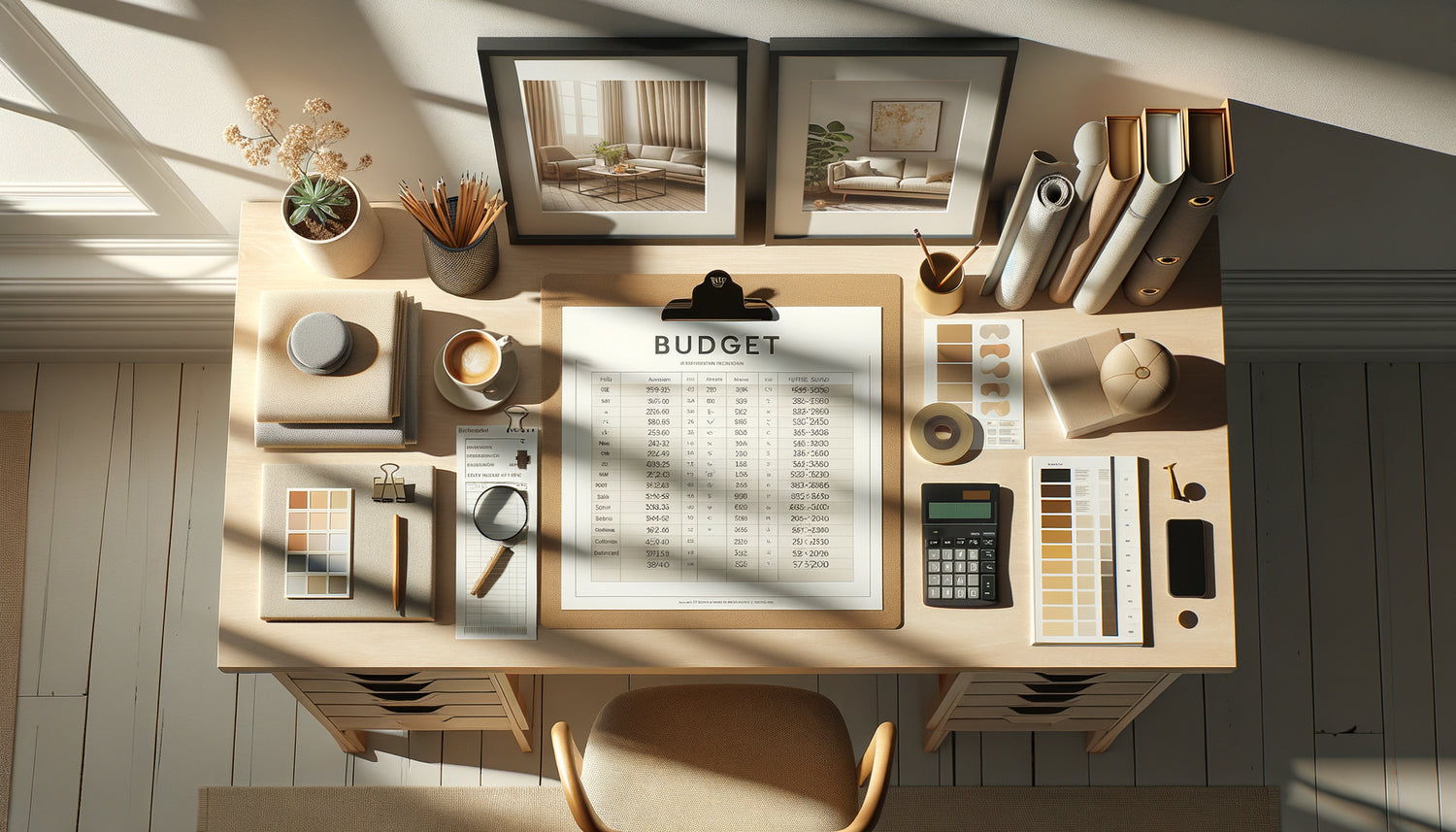
In my interior design projects, I apply a simple but effective rule: dedicate between 15 and 25% of the overall decoration budget to artistic wall elements. This percentage may seem high at first glance, but it reflects the strategic importance of the wall artwork in the visual hierarchy of a space.
Let's take a concrete example. For a €3000 decoration budget intended to furnish a living room, this represents between €450 and €750 for your wall artworks. Enough to acquire a significant centerpiece or compose a harmonious gallery wall with several complementary works.
This percentage varies depending on several factors: the surface area of your walls, the style you are looking for, and the importance you personally place on art in your daily life. A passionate art lover will naturally tend towards 25%, while a more minimalist approach will be satisfied with 15%. The essential thing is to recognize that the wall artwork deserves a substantial share, not the budgetary crumbs it is too often reserved.
Why this percentage isn't an expense, but an investment
I observe a fascinating transformation in my clients a few months after installing a quality wall artwork. What seemed like a significant expense becomes the emotional anchor of their interior. Unlike the trendy cushion that will end up relegated to the closet, the quality wall artwork lasts through the years without becoming outdated.
Let's calculate the real value together. A wall art piece at €600 that you contemplate daily for 10 years represents just €0.16 per day. Less than a coffee. Yet, its impact on your daily well-being far exceeds that of this morning beverage. It visually structures your space, influences your mood, impresses your guests, and contributes to your residential identity.
Moreover, a well-chosen wall art piece enhances your real estate value. During viewings, potential buyers remember spaces that tell a story, where every element seems thoughtfully considered. An interior with characterful wall artworks sells faster and often at a better price than a neutral and impersonal space.
The multiplier effect on your decor
This is what I call the multiplier effect: a quality wall art piece elevates all other decorative elements. That basic cushion you bought for €30 suddenly makes sense when it dialogues with the colors of your wall artwork. Your vintage coffee table regains its nobility by fitting into a visually coherent composition orchestrated by your painting.
By allocating 15 to 25% of your decor budget to wall art, you create that focal point which justifies and enhances all your other choices. The opposite is problematic: spending 90% on furniture and 10% on art creates materially rich but visually poor interiors.

How to adjust this percentage according to your project
Not all spaces require the same budget percentage for wall art. I have developed a reading grid to refine this allocation according to your priorities and constraints.
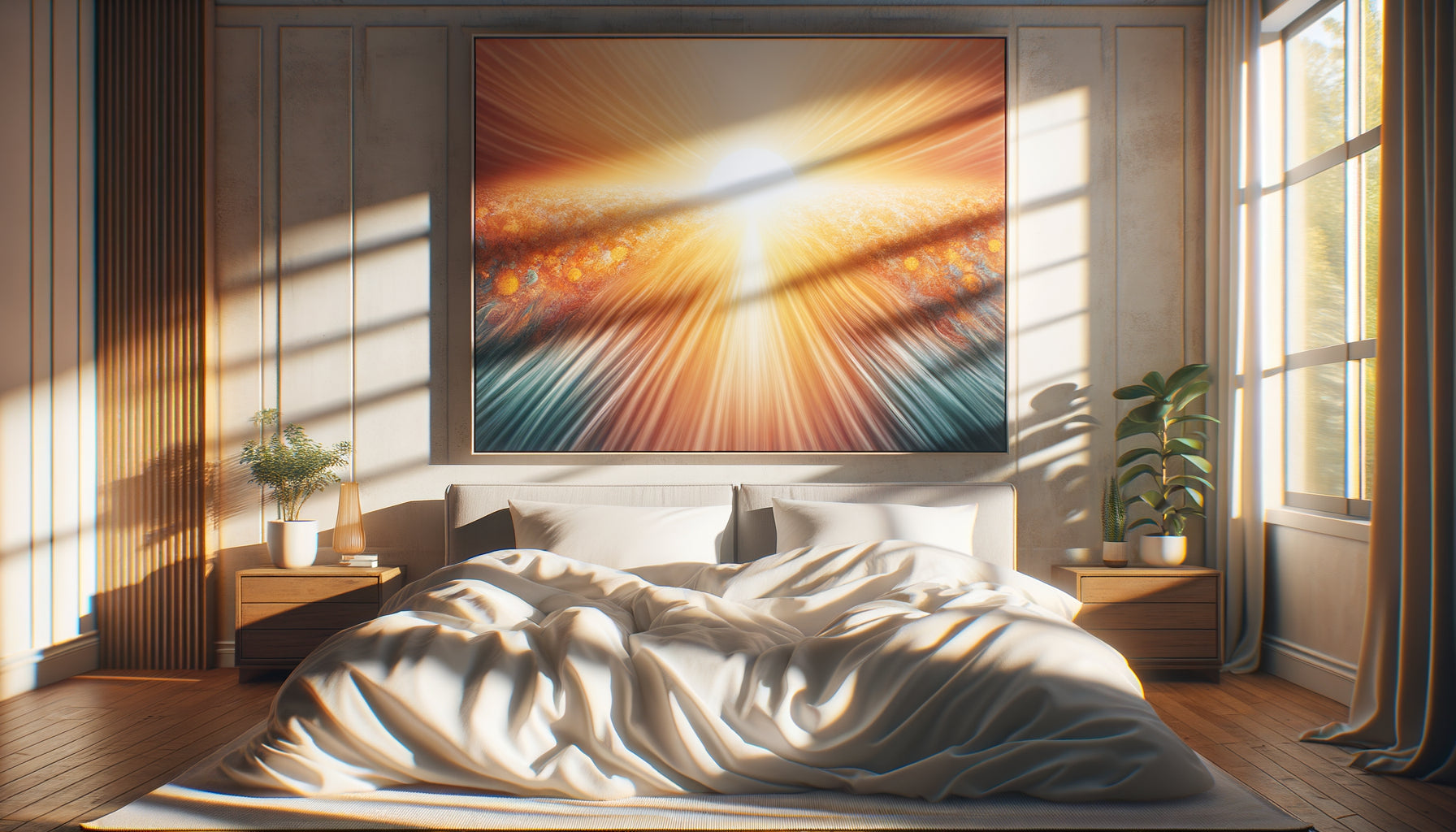
For a bedroom, I recommend going for 20-25% of the decor budget. Why? Because the bedroom offers few visual distractions. No television, no overflowing bookcase. The wall art becomes naturally the preferred contemplative element, the one you look at when you wake up and before you go to sleep. Its emotional impact justifies a higher percentage.
For a living room, the wall art budget can be between 15 and 20%. This space welcomes more elements (sofa, armchairs, bookcase, lighting), and the budget is therefore distributed more widely. Nevertheless, the wall art remains the element that visually unifies this whole, justifying a significant investment.
For an entrance or hallway, paradoxically, I suggest investing proportionally more (up to 30% of the budget dedicated to these spaces). These transitional areas require little furniture but greatly benefit from a striking wall artwork that immediately creates a positive impression.
The strategy of progressive deployment
You are not obliged to invest your entire decoration budget simultaneously. I often encourage my clients to adopt a sequential approach: start with the main wall artwork (50% of your art budget), then supplement it with secondary works over time. This method has two advantages: it spreads out the financial investment and allows you to refine your choices by living with your first acquisition.
One recent client invested €800 in a large wall artwork for their living room, then added two smaller pieces three months later at €200 each to create a visual dialogue. This progressive approach allowed them to verify the consistency of their choices and adjust their second acquisition based on the natural light and actual colors of their space.
Budgeting mistakes that sabotage your wall decoration
After years of correcting decorating errors, I identify three recurring pitfalls regarding budget allocation for wall artworks.
First mistake: the leftover-to-spend syndrome. You plan your decoration budget, buy the sofa, coffee table, luminaires, and you have €150 left. You then think that this is enough for a wall artwork. Wrong approach. With this residual amount, you will only purchase a work of modest size or mediocre quality that will not match the scale of your space. Result: your wall remains visually weak despite this purchase.
Second mistake: multiplying small acquisitions. Rather than investing €500 in an impactful wall artwork, some buy five artworks at €100 each. They end up with a collection of works without coherence, creating an overloaded and confusing wall. A single high-quality wall artwork will always have more impact than five mediocre pieces.
Third mistake: neglecting proportionality. Investing €3000 in a luxurious sofa and then €80 in the artwork intended to dialogue with it creates a glaring visual imbalance. Your guests will subconsciously feel this inconsistency. The 15-25% percentage guarantees this harmony between furniture investment and artistic investment.

Maximizing the impact of your wall artwork budget
Allocating 15 to 25% of your decor budget to wall art is good. Optimizing that investment is even better. Here are my strategies for maximizing the impact of every euro spent.
Prioritize quality over quantity. A large wall artwork of 120x80cm for €600 will transform your space more than three small formats at €200 each. The visual presence of a large-format work creates an immediate focal point and structures the space in an incomparable way.
Invest in framing. A beautiful wall artwork in a low-end frame loses 50% of its impact. I always include the cost of the frame in the overall budget allocated to wall artworks. Allow an additional 15 to 20% for quality framing that protects and enhances your acquisition.
Consider lighting from the time of purchase. A wall artwork properly lit doubles its visual impact. Reserve a small portion of your art budget (about 10%) for dedicated spotlights or sconces. This additional expense transforms your initial investment into a true visual event.
The rule of proportionality with furniture
Here's a professional tip that I consistently apply: the price of your main wall artwork should represent approximately 15 to 20% of the price of your dominant piece of furniture in the room. A sofa at €2500? Aim for a wall artwork between €375 and €500. This proportion guarantees visual and financial coherence.
This rule works remarkably well to avoid glaring disproportion. It prevents buying an artwork that is too modest for luxurious furniture, or conversely overinvesting in art at the expense of quality furniture that would betray the whole.
Transform your bedroom into a personal sanctuary with the perfect artwork
Discover our exclusive collection of bedroom artworks that create the serene and personal atmosphere you deserve, with works designed to dialogue with your intimate space.
Your wall artwork deserves this budget allocation
Three months after installing a thoughtful wall artwork in your space, you will no longer remember its exact price. You will remember, however, the moment when you return home, when your gaze rests on that work, and when you feel that deep satisfaction of living in a space that resembles you.
The 15 to 25 percent range isn't a rigid rule carved in stone. It’s a well-informed starting point, the result of hundreds of successful projects. Some of my most satisfied clients have invested 30% in their wall art because they identified art as their emotional priority. Others, with limited budgets, preferred 12%, prioritizing a single exceptional piece of wall art over an accumulation.
The key is to recognize that your wall art isn't a last-minute accessory, a residual expense to fill an empty wall. It’s the element that will give meaning to all your other decorative choices, the one that transforms your space into a true interior. Give it the budget it deserves, and it will repay you every day with beauty, character, and pride in living in a genuinely yours space.
Start today: list your overall decor budget, calculate 15 to 25%, and imagine the wall art that’s waiting to transform your wall. This well-informed financial decision will be one you'll applaud for years to come.
Frequently Asked Questions About Wall Art Budget
Is it really necessary to dedicate so much to wall art?
I understand this hesitation, I hear it regularly. Yet, consider this: your wall art is probably the decorative element you will contemplate most frequently. Unlike cushions hidden by your seating position or accessories placed on shelves, it occupies your natural field of vision whenever you are in the room. The recommended 15 to 25% reflects this visual omnipresence. Moreover, a quality piece of art transcends decades without going out of style, unlike fleeting trends. Over 10 years, this investment represents just a few cents per day of aesthetic pleasure. Finally, remember that neglecting the wall art budget systematically creates interiors where everything seems correct but nothing leaves a mark. It is precisely this investment that differentiates a banal space from a memorable interior.
Can I spread this budget over several small wall art pieces?
It's a tempting option, but generally counterproductive. I’ve corrected dozens of interiors where owners had accumulated multiple small wall art pieces thinking they were creating a dynamic gallery. The result? A visually confused wall where no work stands out, where the eye gets lost without finding an anchor point. My professional advice: invest 60 to 70% of your wall art budget in a large-format masterpiece that structures the space, then optionally supplement with one or two smaller secondary works. A single wall art piece for €600 will have infinitely more impact than six pieces at €100 each. The exception concerns deliberately designed mural compositions as coherent ensembles, but even in this case, prioritize quality with three beautiful pieces rather than eight mediocre works. Visual power comes from presence, not multiplication.
How to adjust this percentage if my total decor budget is limited?
A limited budget doesn't mean a neglected artwork, on the contrary. With a restricted decor budget, the wall art becomes even more strategic because it will visually compensate for the modesty of the furniture. If your total budget is €1000, dedicating €200 to an artwork (20%) leaves you with €800 for the furniture. Proven tip: prioritize used or basic furniture for the functional items (bed, sofa, table) and invest proportionally more in your wall art which will create the personality of the space. I have seen student studios with IKEA furniture transformed into havens of character thanks to a single striking wall artwork worth €250. The opposite (expensive furniture, neglected art) creates cold and impersonal spaces. Another strategy: buy your masterpiece now, and gradually complement it with other decorative elements in the following months. Wall art immediately gives soul to your space, even if the rest remains understated temporarily.