


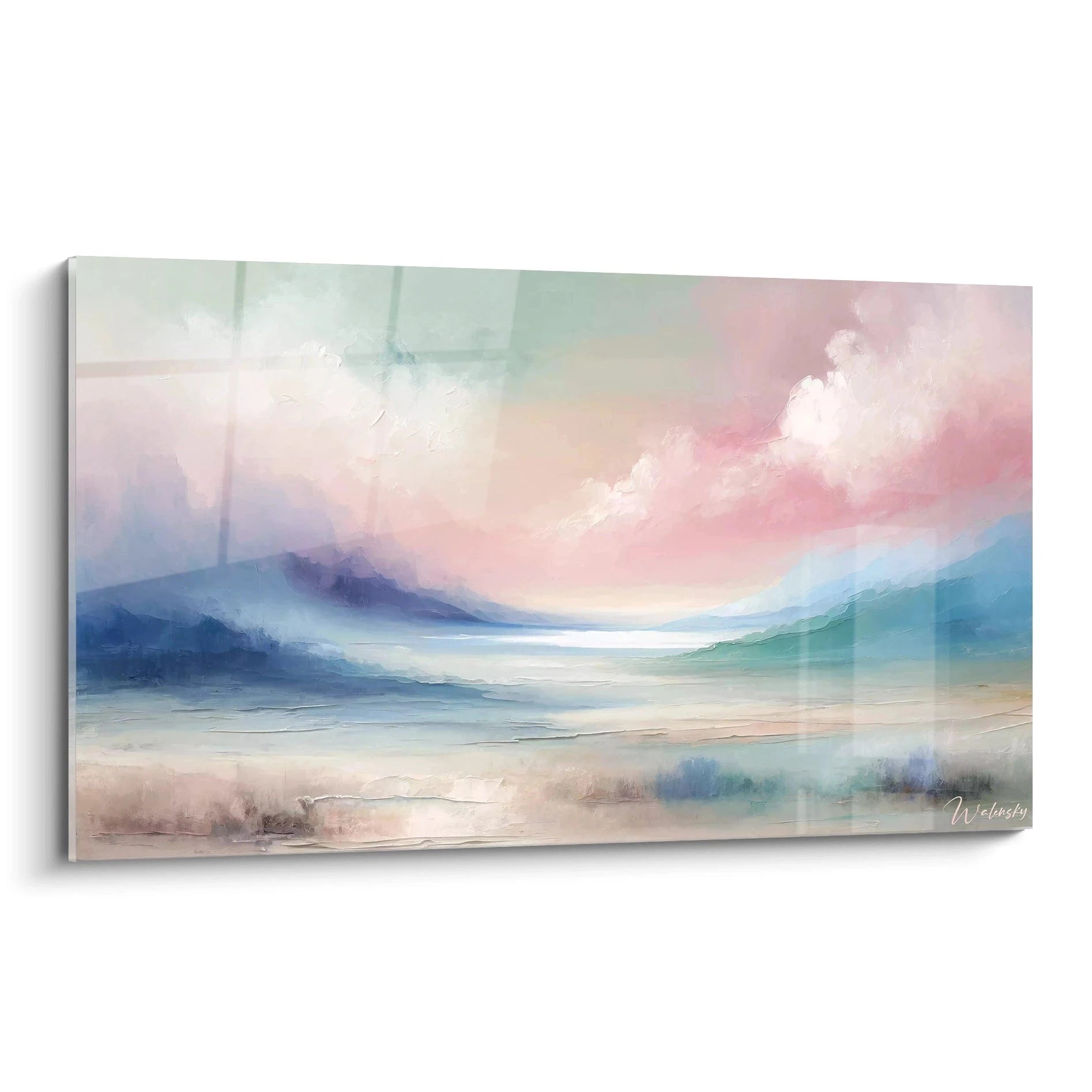

Does a well-chosen artwork really improve your morning mood?
November 10, 2025 · 9 min read · by Walensky
This morning again, the alarm clock rang in the dim light of February. You opened your eyes to the white wall of your bedroom, this neutral surface that welcomes you every day with the same indifference. A few minutes of scrolling on your phone, then the routine starts, mechanical, without sparkle. What if this first visual impression conditioned your whole day?
Here's what a well-chosen painting brings concretely to your mornings: it becomes your first source of positive energy, it measurably reduces wake-up stress, and it transforms your bedroom into an emotional sanctuary. No magic here, just the science of visual perception combined with placement intelligence.
You might think that a simple frame hung up can't influence your mood. That it’s superficial, decorative, secondary. Yet, you know this feeling: entering a bright room that instantly soothes you, or conversely, that heaviness in a dark and cluttered space. Your visual environment acts on your psyche, consciously or unconsciously.
The good news? Choosing the right painting for your wake-up doesn't require a degree in psychology or an extravagant budget. Just an understanding of how your brain processes the first visual information of the day and a few simple harmonization principles. I will show you exactly how this seemingly minor decision can restructure your mornings.
The first look in the morning shapes your day
In the 90 seconds after waking up, your brain gradually emerges from paradoxical sleep. Your eyes open, still blurry, and capture the first shapes, colors, contrasts of your environment. This moment of neurological transition is crucial: your limbic system, seat of emotions, activates even before your prefrontal cortex responsible for rational thought.
Concretely, what you see first directly influences your initial emotional state. A painting with warm and bright tones can stimulate the production of serotonin, this neurotransmitter of well-being. Conversely, a blank wall or a dark image can keep your brain in a state of neutrality, even gloom, difficult to shake afterwards.
I have observed this phenomenon in dozens of redecorated bedrooms: clients who strategically place a painting facing their bed consistently report an improvement in their morning mood within 10 to 15 days following installation. Not a fleeting placebo, but a lasting positive conditioning that is inscribed in their neural routine.
The chronobiology of visual perception
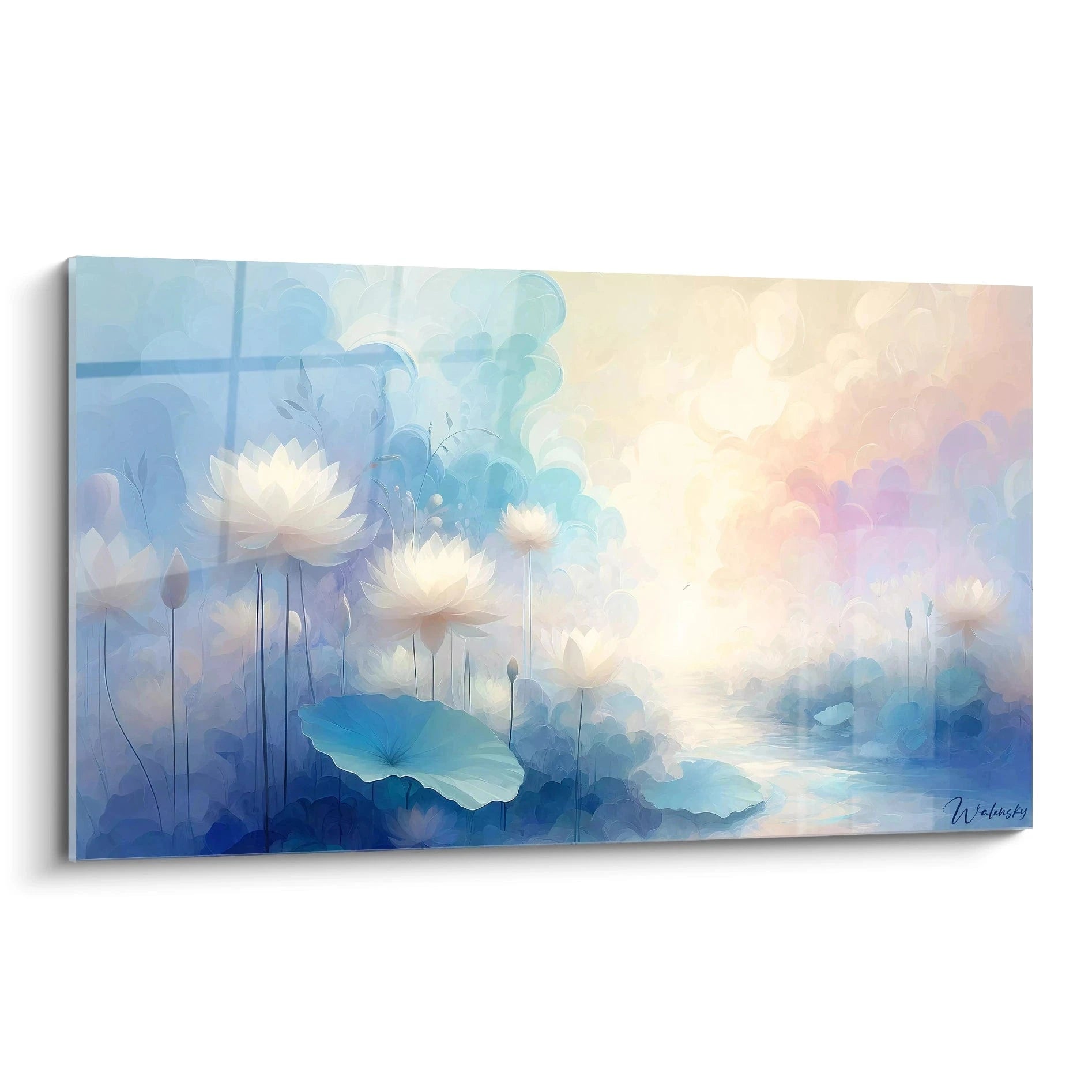
Your retina contains photosensitive ganglion cells that regulate your circadian clock. These cells react particularly to blue and yellow wavelengths. A painting incorporating light blues (sky, water) or soft yellows (sunrise, golden fields) can literally signal to your body: the day begins, it's time to be alert and positive.
This synchronization is not symbolic. It activates the suppression of melatonin (the sleep hormone) and stimulates morning cortisol production, essential for your energy. Choosing a painting with these tones is like installing a natural visual alarm clock, gentle but effective.
What colors and compositions truly transform mood?
Not all paintings are equal in improving your morning mood. Some color combinations and compositions act as emotional amplifiers, while others can subconsciously weigh you down.
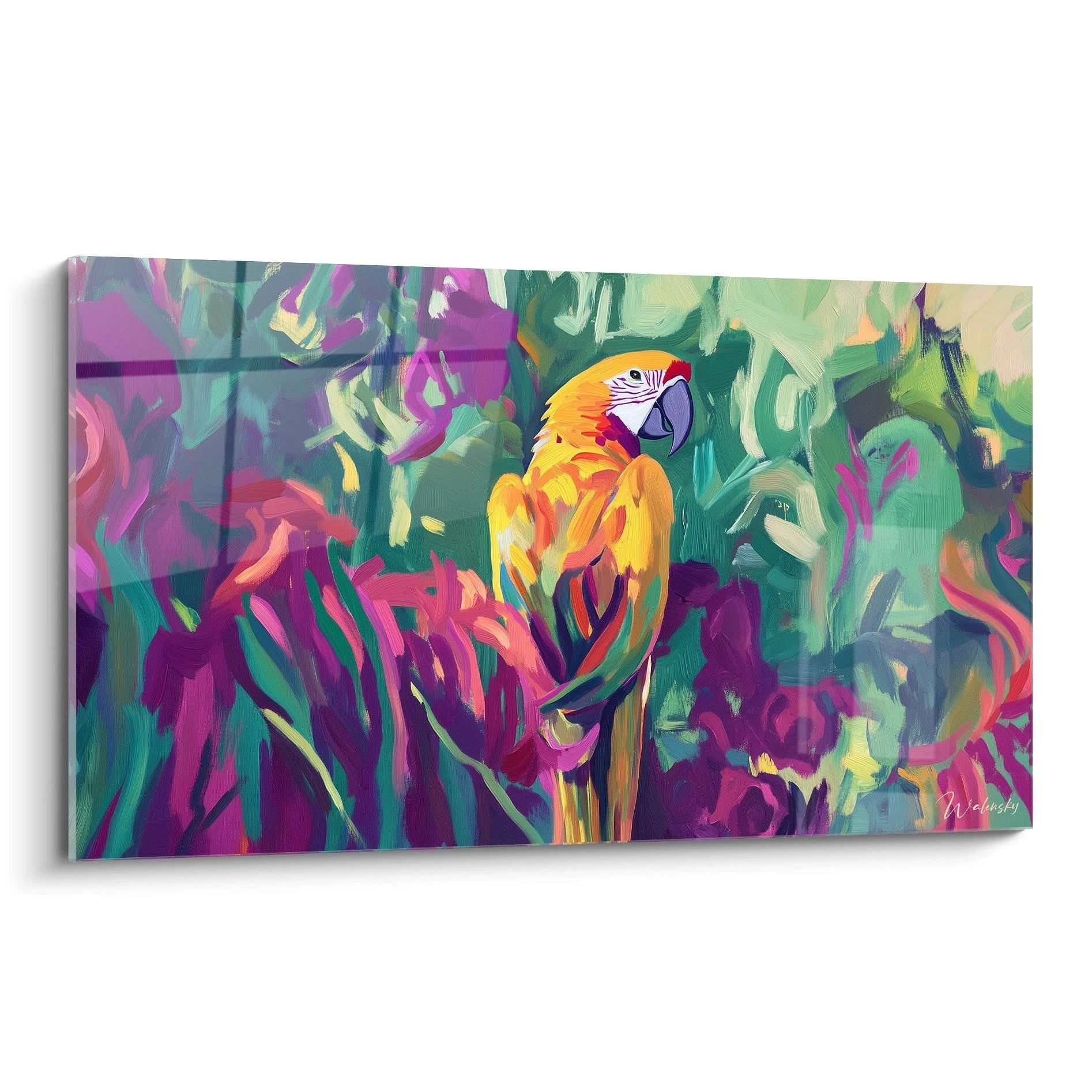
Energizing colors without aggression: coral, pale yellow, sage green, sky blue. These shades activate positive emotional responses without overstimulating your freshly awakened nervous system. They create what is called in environmental psychology a positive priming effect: your first visual emotion colors all the following.
Soothing compositions: unobstructed horizons, minimalist landscapes, soft geometric abstractions, natural scenes with depth. These visual structures allow your gaze to travel without encountering obstacles, which reduces excessive cortisol (the stress hormone, not the healthy awakening one) and facilitates the transition to full wakefulness.
What to avoid facing the bed
Some choices, however artistic they may be, sabotage your morning mood. Paintings with dark and saturated colors (deep burgundy, dominant black, anthracite gray) keep your brain in a state of low activation. Chaotic or violent compositions create a micro-dose of visual stress as soon as you open your eyes.
I have seen beautifully decorated bedrooms where the only problem was this aggressive abstract painting facing the bed. Moved to a side wall and replaced with a luminous watercolor, the change in morning mood was noticeable in less than a week.

Our favourite
Abstract landscape painting - Vibrant Horizon - scraped abstract style edition
232,90€
Discover this artworkStrategic placement: where to hang to maximize the effect
The power of a painting depends as much on its location as on its content. Your bedroom is not an art gallery: each wall plays a different role in your daily emotional experience.
Facing the bed, at eye level when lying down: this is your wake-up position. The painting should be visible without effort, ideally centered in your natural field of vision when you are on your back or side. Too high, it requires an uncomfortable cervical strain. Too low, it falls outside your passive line of sight.
Measure approximately 140-160 cm from the floor to the center of the artwork for a standard bed. This height corresponds perfectly to a comfortable viewing angle from your pillow. You want your gaze to naturally fall on this source of positivity, without forcing it.
Natural light as an amplifier
If possible, position your artwork to capture the morning light. An artwork illuminated by the rising sun becomes a natural light therapy source, doubling its impact on your mood. Pigments come alive, colors gain depth, your brain receives optimal light signals.
Avoid direct reflections that would transform your work into a blinding mirror. Test different angles before permanently drilling into the wall. Sometimes, a 30 cm shift radically changes the lighting experience.
— Our selection


Styles that concretely boost morning well-being
Beyond colors, certain artistic styles possess an intrinsic ability to improve morning mood thanks to their visual codes and cultural associations.
Luminous Impressionism : Monet and his disciples spent their lives capturing changing light. Their aquatic landscapes, gardens flooded with sunlight instantly create a feeling of freshness and renewal. For your bedroom, prioritize reproductions of morning scenes: water lilies in the dew, fields at sunrise.
Soft and organic abstraction : fluid shapes, subtle gradients, compositions that evoke movement without violence. This style allows your mind to project its own positive emotions without imposing a rigid narrative. You create your own soothing story each morning.
Pure nature photography : a forest path in the mist, a deserted beach at sunrise, mountains bathed in golden light. These images activate what researchers call attention restoration effect: your mind rests by contemplating nature, even in image.
Adapt the style to your emotional personality
Your morning mood also depends on your temperament. People who are naturally anxious benefit more from minimalist and structured artworks that calm the mind. Melancholic temperaments need warm, vibrant colors to counteract their natural tendency.
Ask yourself this question: what emotion do I need to cultivate each morning? Energy? Serenity? Inspiration? Grounding? Your answer will guide the style of artwork that truly transforms your wake-up call.

— You may also like


The sensory dimension: when a painting dialogues with your space
A painting never works in isolation. Its impact on your morning mood depends on its dialogue with your entire sensory environment: the quality of light, surrounding textures, even ambient scents.
Imagine an ocean-toned painting (deep blues, turquoise greens, foamy whites) paired with natural linen sheets, a subtle diffusion of eucalyptus, and soft lighting upon waking. Each element reinforces the other, creating a multisensory experience that amplifies the calming effect of the painting.
This synergy explains why some beautiful paintings fail to improve mood: they conflict with the overall ambiance of the room. A bright Mediterranean landscape in a room with industrial gray tones creates an uncomfortable cognitive dissonance.
Creating emotional coherence
Quickly audit your bedroom: what emotions do your wall colors, textiles, and decorative objects evoke? Your painting should be part of this emotional palette or complement it intelligently. An energizing painting in a room that is already stimulating becomes aggressive. A calming painting in an already neutral space risks monotony.
The ideal? A painting that subtly elevates the existing ambiance without creating a sudden break. Like adding a note of lemon to tea: it reveals and enhances, without dominating.
Transform your awakenings starting tomorrow morning
Discover our exclusive collection of wall art for bedroom that combines color science and soothing aesthetics to transform your morning mood.

Your morning ritual now begins on the wall
In three weeks, you will no longer remember your awakenings before. The painting you choose will become your silent companion, that visual landmark which signals to your brain: here begins a beautiful day. Not a conscious thought, but an emotional reflex anchored in your neural routine.
You will open your eyes, your gaze falling upon the colors you have carefully selected, and something subtle yet powerful will activate within you. A micro-dose of dopamine. A release of tension you didn't even know you were holding back. A slightly deeper breath of inspiration.
Start simply: identify the emotion you need each morning. Choose three colors that naturally evoke it. Find a painting, photograph, or illustration that combines these shades in a soothing composition. Hang it facing your bed, at eye level. Then observe.
Your morning mood is not a genetic or meteorological fatality. It's a daily construction that begins with what you offer to your eyes in those first vulnerable seconds of waking up. A well-chosen painting is not decoration. It’s an investment in your daily emotional balance.
Frequently Asked Questions
How long does it take to feel a real effect on morning mood?
Most people report a noticeable change between 7 and 15 days after installing their artwork. In the first mornings, the effect is mainly conscious: you actively notice this new visual presence. But quickly, your brain integrates this information into its automatic processing of waking up. After two to three weeks, improving mood becomes a conditioned reflex: you no longer consciously analyze the painting, but your limbic system reacts positively as soon as you open your eyes. The key is consistency: the same positive visual stimulus each morning creates a lasting neural anchor. If you change paintings every week, you never benefit from this deep conditioning effect.
Does a printed poster work as well as an original artwork?
Absolutely, and that's great news for your budget. The impact on your morning mood mainly depends on the composition, colors, and placement, not on the authenticity or price of the artwork. Your brain when waking up does not distinguish between an original painting and a quality reproduction. What matters is the visual and emotional stimulation you receive. Invest instead in a beautiful quality print with faithful colors and careful framing that enhances the image. A 30 euro poster perfectly chosen and well positioned will have infinitely more effect than an expensive original artwork but poorly adapted to your morning emotional need. Test first with an affordable print, validate the effect for several weeks, then invest further if you wish.
What should I do if I share my room and our tastes differ?
This situation is more common than you might think and requires a collaborative approach. Start by identifying the desired morning emotions for each person: you will often discover common ground (calmness, gentle energy, inspiration). Opt for more universal styles such as bright natural landscapes, soft geometric abstractions, or minimalist photographs that generally appeal to varied sensibilities. Avoid overly personal or polarizing subjects (portraits, religious symbols, complex conceptual art). An effective trick: choose together three colors that you both appreciate, then look for a painting that combines them harmoniously. The shared selection process also strengthens the positive effect: you subconsciously associate this painting with a moment of complicity and successful compromise, which enriches its morning emotional impact.
Explore our collections


