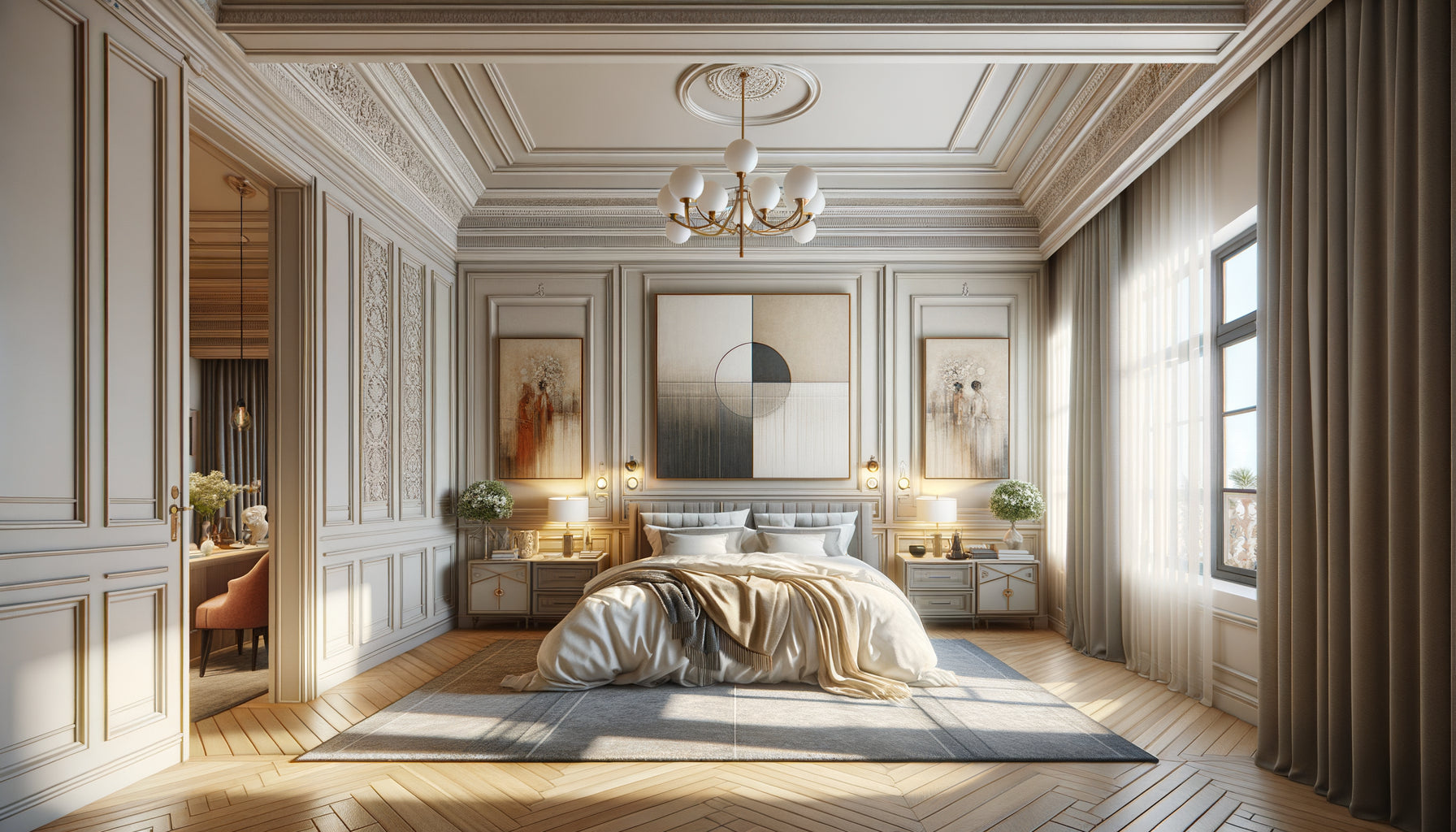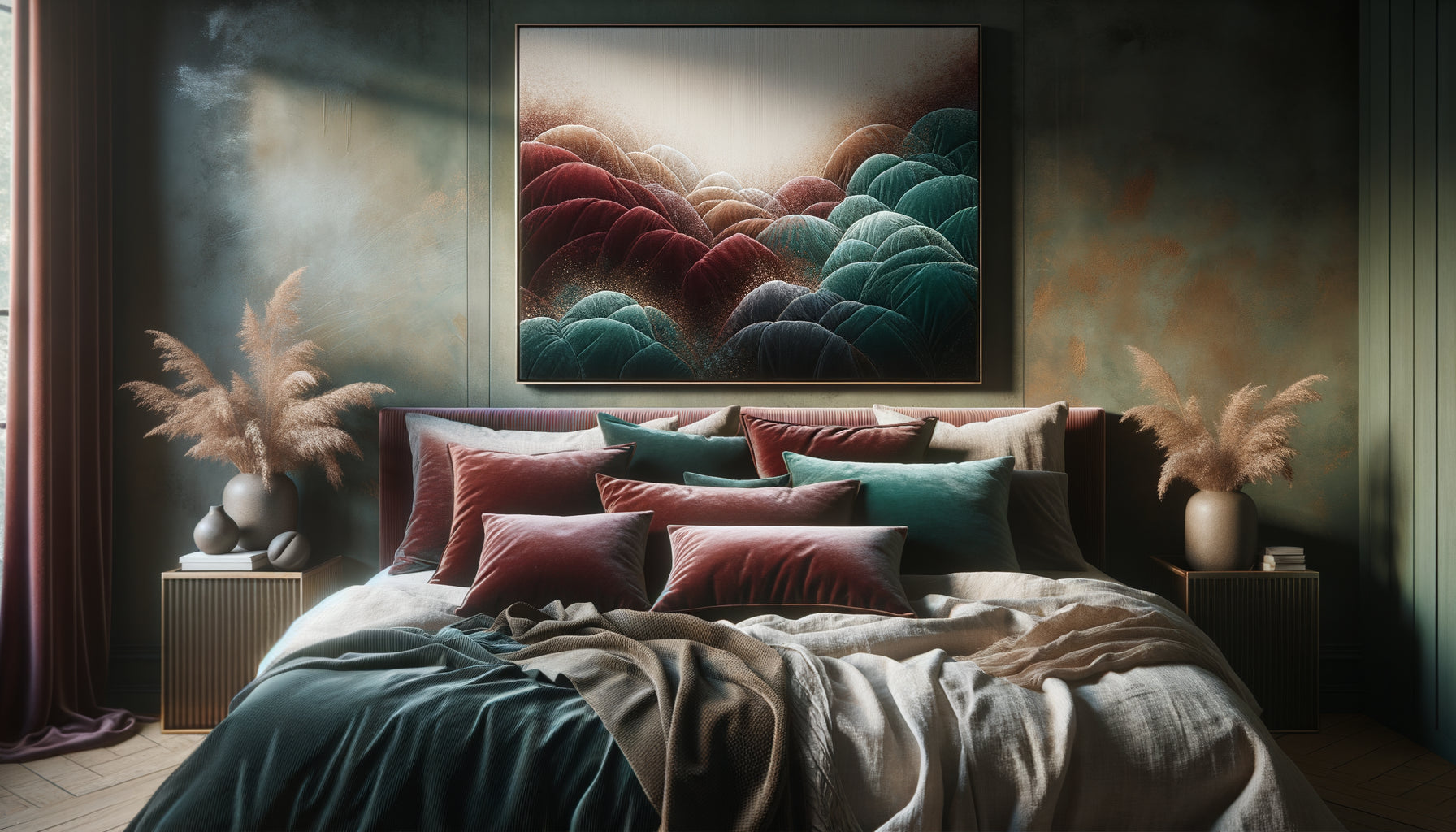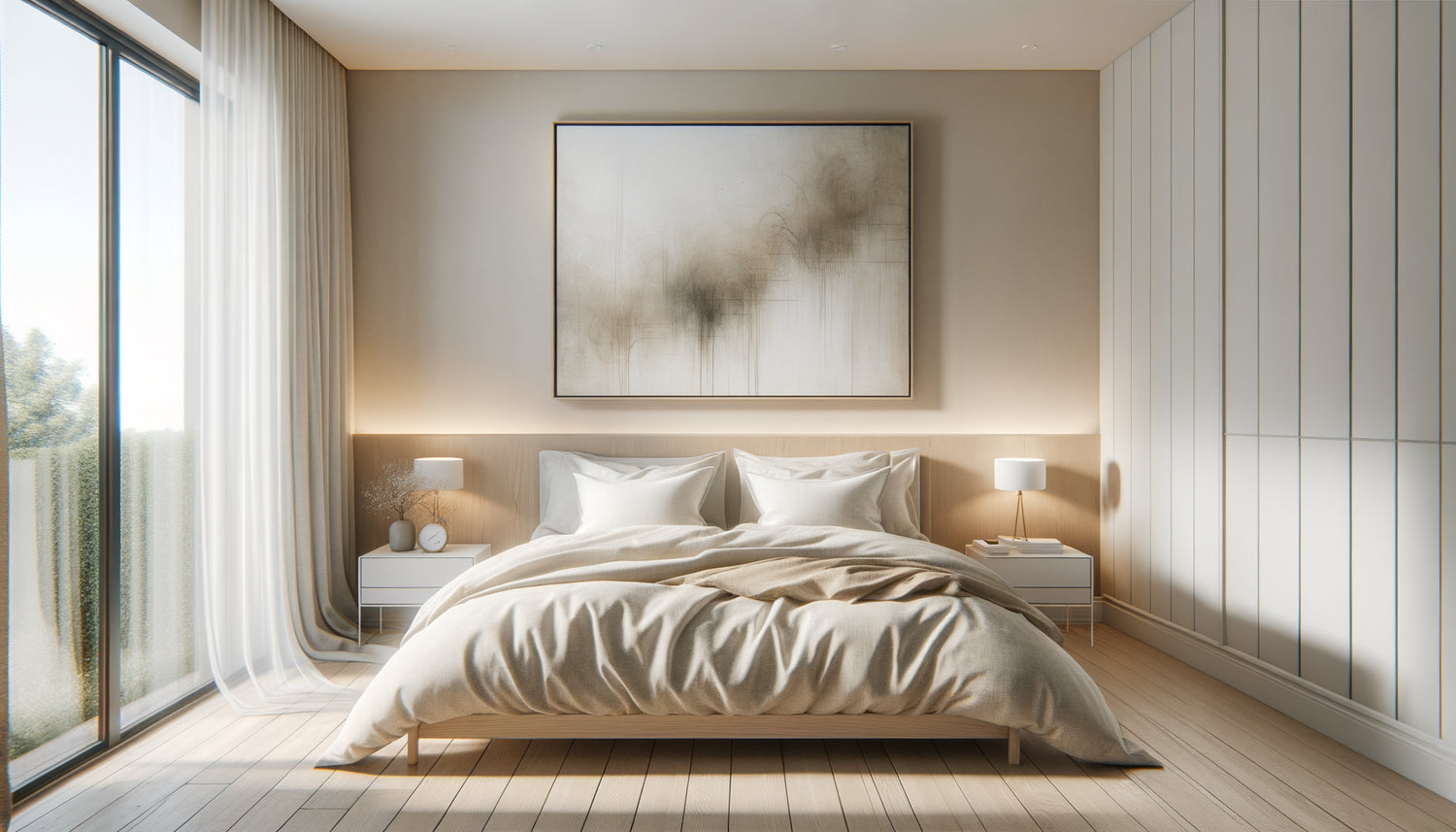
A few months ago, during a consultation with a client who complained of difficult awakenings and a feeling of oppression in her bedroom, I immediately noticed the large abstract painting with vibrant colors hanging just above her head. 'It's beautiful, isn't it?' she asked me. Beautiful, certainly, but terribly misplaced. I have experienced this scene dozens of times: superb paintings transformed into sources of discomfort by their mere location.
Here's why paintings above the bed are problematic: they create a feeling of psychological insecurity, disrupt sleep with their visual load, and pose a physical risk in case of falling. These three dimensions – mental, energetic and safety – explain why so many professionals advise against this arrangement that has become so popular on social networks.
You probably fell for a favorite painting and naturally thought about hanging it above your bed, as in those elegant hotel rooms or inspiring Pinterest photos. Maybe you've already done it and feel that slight discomfort without being able to explain it. Or conversely, you sleep perfectly well but question this rule that everyone seems to repeat without really justifying it.
Rest assured: understanding the real reasons behind this advice does not mean giving up decorating your headboard. It’s even quite the opposite. By grasping the psychological, energetic and practical issues of this strategic location, you can create a bedroom that is both aesthetically pleasing and truly soothing, where every element contributes to your nighttime well-being.
I propose we dissect together this question that my clients constantly ask me, exploring concrete arguments and elegant alternatives to transform your bedroom into a sanctuary of rest.
The psychological effect: when your brain refuses to let go
Our primitive brain has never really left the savannah. Even in your modern and secure bedroom, a primordial part of your mind remains alert, scanning for potential dangers. A painting hanging above your head subtly activates this ancestral alarm system, creating what environmental psychologists call 'the overhang anxiety'.
During my interventions, I have observed that people sleeping under a painting often describe a sensation difficult to name: a slight tension, the impression that something 'weighs' even with their eyes closed. This is not superstition; it’s neurobiology. Your parasympathetic nervous system, responsible for deep relaxation, struggles to activate fully when a heavy object is in your area of maximum vulnerability.
I accompanied a chronic insomniac who, after simply moving her large painting from above the bed to the adjacent wall, noticed a significant improvement in her falling asleep. 'It's as if an invisible weight had lifted,' she confided to me. Her brain could finally relax completely, freed from this unconscious vigilance.
This reaction is amplified by the size and subject of the artwork. An imposing piece, with aggressive colors or depicting dynamic scenes, creates a visual mental load incompatible with the relaxation necessary for sleep. Even in the dark, your spatial memory knows that this element is there, just above.
The energetic dimension: feng shui and circulation of flows
Beyond Western psychology, Eastern traditions offer a fascinating complementary insight. In my practice, I often integrate the principles of feng shui not through mysticism, but because they translate millennia-old observations about the impact of the environment on our well-being.
According to these principles, the area above the bed should remain clear to allow for a free flow of energy around the sleeper. A painting above the bed creates what is called 'pressure from above', disrupting the natural flow that should gently envelop the body at rest. This concept may seem abstract, but it exactly reflects what my clients describe: a feeling of heaviness, compression.
The bedroom, in this approach, should be a cocoon of tranquility where nothing 'falls' symbolically on you. Paintings above the bed generate a downward energy, contrary to the elevation and lightness sought during sleep. That is why feng shui masters systematically recommend moving these works to the side walls or the wall facing the bed.
I tested this principle with skepticism in my early years, before noting that my clients consistently reported an improvement in their feeling after repositioning. The correlation is too frequent to be ignored. Whether you adhere or not to the concept of energy, the concrete result remains: bedrooms without paintings above the bed promote deeper rest.

The safety risk: when aesthetics meets gravity
Let's now talk about the most pragmatic and perhaps overlooked argument: pure safety. A painting, even perfectly hung, remains an object subject to the laws of physics. Fixings that loosen over time, vibrations due to slamming doors, building structure movements, minor earthquakes, simple aging of materials – the failure factors are numerous.
I was unfortunately called urgently after an accident: a 5-kilo painting had come loose in the middle of the night, falling on a sleeping client. Mild concussion, but above all major psychological trauma. She never wanted decorative objects above any bed in her house again. This incident, although rare, illustrates a real risk that many underestimate.
Wall art above the bed represents a danger inversely proportional to its hanging quality. A heavy frame with glass can become a dangerous projectile. Even a lightweight artwork can cause injury or nighttime fright. In children's bedrooms, this risk becomes simply unacceptable – no parent should take that chance.
Beyond the fall itself, there is also the risk during removal for cleaning or redecorating. Handling an artwork above a bed requires precarious contortions, increasing the chances of dropping it or getting hurt. Even simple maintenance becomes an avoidable acrobatic exercise.
The impact on sleep quality: what studies reveal
Research in chronobiology and interior architecture converges: the visual environment of the bedroom directly influences sleep quality. A study conducted by therapeutic designers showed that bedrooms with clear walls above the bed promote a 23% faster sleep onset than those with overhead visual elements.
The reason? Your last image before closing your eyes and your first upon waking condition your mental state. An artwork above the bed never enters your natural field of vision when lying down – unless you twist your neck to look at it. It creates a phantom presence: you know it's there without being able to appreciate it, a frustrating situation for the brain.
Conversely, an artwork placed facing the bed or on a side wall naturally integrates into your field of vision. You can contemplate it from your pillow, allowing a smooth transition between wakefulness and sleep. This visual accessibility transforms the work from a potential source of anxiety into a true relaxation tool.
I always encourage my clients to observe their own reactions. Where does your gaze naturally settle when you lie down? Never towards the ceiling or just above your head. This area remains an uncomfortable blind spot that explains why even beautiful artworks lose their decorative impact while retaining their disruptive potential.

Elegant alternatives: decorating without compromising rest
Giving up artworks above the bed does not mean giving up a spectacular headboard. On the contrary, this constraint opens up to solutions that are often more visually and functionally interesting.
My first recommendation: prioritize the wall facing the bed. This is the ideal location for your favorite artwork. From your resting position, you can admire it comfortably, creating a soothing focal point that accompanies your sleep and welcomes your awakening. This arrangement transforms the work into a true sleeping companion rather than a suspended threat.
To dress the headboard itself, options are plentiful. Upholstered or carved wooden headboards create a decorative presence without risk of falling. A wall painted in a contrasting shade visually defines the sleeping area without anything hanging from it. Paneling, rattan or textured wallpapers bring sophistication and personality safely.
If you absolutely want an artistic element directly behind the bed, consider painted murals or high-end decorative stickers. These solutions adhere directly to the wall, eliminating any risk of falling while offering a visual impact comparable, if not superior, to a traditional painting. I have carried out several projects with local artists who have transformed headboards into true integrated mural artworks.
Low side shelves allow for small framed works of art to be placed in a stable position at the height of bedside tables. This arrangement creates an intimate gallery visible from bed without any overhang. You fully enjoy your favorite pieces in a secure and visually coherent arrangement.
When can the rule be bypassed? The rare exceptions
Honesty obliges me to admit that there are some situations where a painting above the bed can work. These exceptions remain rare and require very specific conditions that I check meticulously before giving my approval.
First, ultra-lightweight frameless paintings, such as canvas prints or suspended textile works, significantly reduce the physical risk. Their light weight and lack of glass make them less dangerous in case of a fall. However, the psychological impact of overhang remains, even attenuated.
Second, in bedrooms with very high cathedral ceilings, where the painting is more than 80 centimeters above the sleeper's head, the feeling of oppression decreases. The distance creates sufficient psychological separation to reduce anxiety about overhang. I furnished a loft where this configuration worked perfectly thanks to the exceptional ceiling height.
Thirdly, some people are simply immune to this sensitivity. After in-depth discussion, some clients assure me that they have been sleeping under their paintings for years. In these cases, if the fixing is impeccable and the person really sleeps well, I respect this personal choice. Comfort remains subjective, and my role is to inform, not impose.
However, even in these exceptions, I always recommend testing a temporary relocation. Remove the artwork for two weeks and observe whether your sleep, morning mood, or feeling of rest changes. This simple experiment often reveals differences that you had not consciously identified.
Ready to transform your bedroom into a true haven of peace?
Discover our exclusive collection of bedroom wall art specifically designed to create a soothing and harmonious atmosphere, with our placement tips for optimal sleep.
Create a bedroom that reflects you, without compromise
After fifteen years of designing interiors that promote well-being, I remain convinced that beautiful decor should never sacrifice comfort to style. Artwork above the bed perfectly illustrates this principle: an aesthetic trend may seem tempting without being functionally appropriate.
Your bedroom deserves more than a slavish reproduction of inspiration photos. It deserves personalized reflection that integrates your artistic tastes AND your physiological needs. By simply moving your favorite works to strategic locations – facing the bed, on the side walls, in decorative niches – you create a visually rich environment that respects your sleep architecture.
Imagine yourself in a few weeks, slipping into your redesigned bed. Your gaze naturally rests on that artwork you love, perfectly visible from your pillow. No imperceptible tension tugs at your neck. No latent worry touches your subconscious. Just you, your beautifully composed space, and a deep night's sleep ahead.
This transformation begins with a simple decision: to observe your bedroom with fresh eyes and ask yourself if each element actively contributes to your well-being or if some could be optimized. Your bedroom wall art deserves to be fully appreciated, and you deserve to sleep in peace. These two goals do not oppose – they enrich each other when you find the right balance.