I’ve seen the emotion flood my client’s face when they learned that the artist whose work they had just acquired had personally responded to their request for a dedication. I've lived this moment dozens of times in my Brussels gallery. And each time, I realize that offering a painting by a living artist creates a radically different connection than that of a work by a deceased master. It’s not about monetary value or prestige, but about a relationship with time, creation, and humanity.
Here's what choosing between a living or deceased artist brings: a unique relational dimension that transforms the artwork into a bridge between two existences, a symbolic positioning that reveals your deepest intentions, and a totally different emotional experience for the recipient.
You may have already found yourself facing this hesitation: choosing a reproduction of a great classic or investing in contemporary creation? This question particularly torments those who want to give a meaningful gift, but fear making a mistake. Rest assured: understanding this distinction will allow you to transform a simple purchase into a gesture full of meaning.
I promise you that by the end of this article, you will know exactly which direction to take depending on the message you want to convey, and how to turn your gift into an unforgettable moment.
The invisible dialogue: when the artist is still breathing
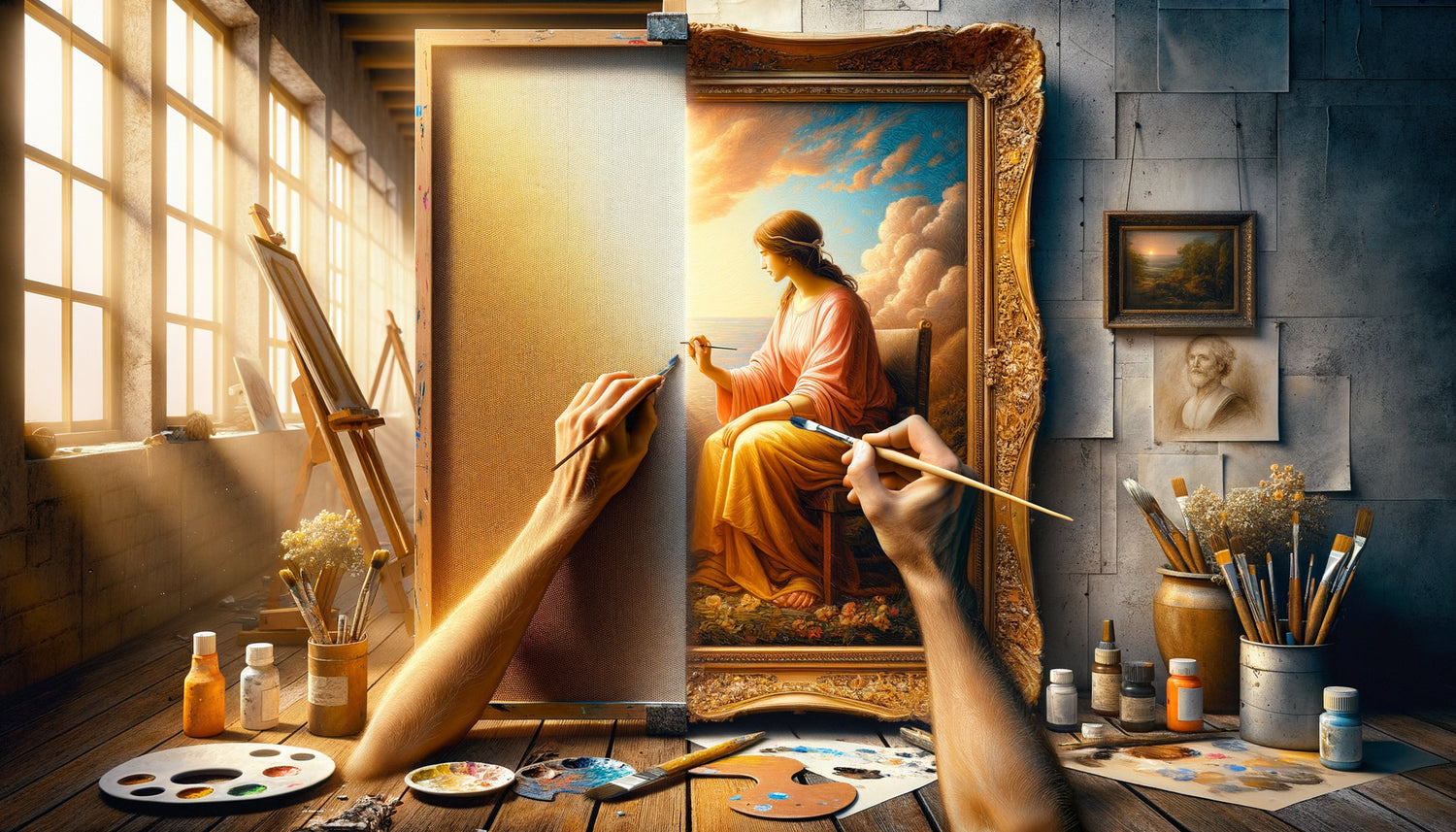
Offering a work by a living artist is offering much more than just a painting. It's creating a fascinating relational triangle: you, the recipient, and the creator who, somewhere, at this very moment, continues to paint, to reflect, to evolve. This artwork isn’t a full stop, but a comma in an ongoing story.
In my gallery, I have organized meetings between collectors and artists. The intensity of these moments radically transforms the relationship with the work. Imagine offering a painting and being able to say: The artist told me that this canvas represents his garden last spring. Suddenly, the painting is no longer a decorative object, but a fragment of shared life.
This living dimension also allows experiences impossible with a deceased artist: obtaining a personalized certificate, following the evolution of their career, discovering their new creations. Offering a painting by a living artist means integrating the recipient into a creative adventure in motion.
The value of contemporaneity
A painting by a living artist anchors the gift in the present. It says: I see you, you, now, in this moment of your life. It's a gift that breathes to the rhythm of our time, that captures current questions, contemporary aesthetics, today’s concerns. This temporal synchronicity creates a particular resonance.
The mystical heritage: the power of the disappeared
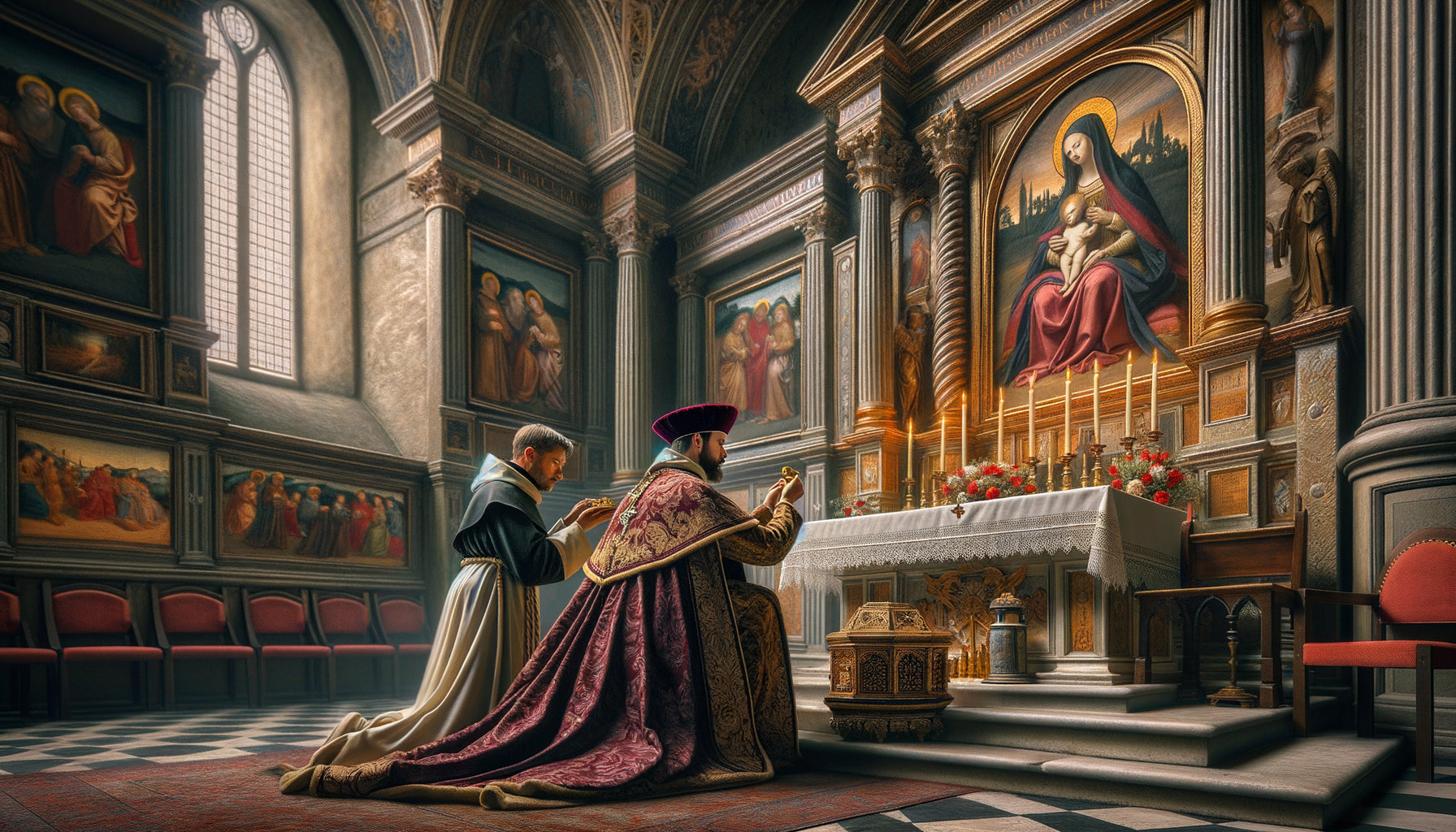
Conversely, gifting a work by a deceased artist evokes a different kind of magic. It's about invoking eternity, transcending time. These works arrive steeped in a complete history, a finished life whose every chapter is known.
When a collector buys a Miró lithograph or a Warhol screen print from me, they are not just acquiring an image. They are buying a piece of art history, a fragment of a collective narrative that we all share. The deceased artist belongs to the common heritage; their work has withstood the test of time and proven its resilience.
This patrimonial dimension gives the gift a particular weight. You are no longer simply offering a painting, but a link with past generations, a window onto a bygone era. It's saying to the recipient: I offer you something that transcends both of us.
The security of a finished history
A deceased artist also offers a form of narrative security. Their work is cataloged, analyzed, and their place in art history is established. There are no surprises, no risk of disappointment. For the giver, it's the guarantee of a choice validated by time and criticism. This stability reassures and confers on the gift an immediate cultural legitimacy.

Four radically different messages
After twenty years of guiding clients in their choices, I have identified four symbolic intentions that guide this decision between a living and a deceased artist.
Investment in the future: Gifting a painting by a young, living artist is betting on their talent, believing in their potential. It's a message of boldness and confidence. You say: I believe in what is born, in what emerges. This is particularly powerful for celebrating a new beginning, a birth, an entrepreneurial project.
Anchoring in tradition: Choosing a work by a deceased artist is valuing heritage and continuity. You affirm the importance of roots, of patrimony. This choice resonates for occasions related to transmission: wedding anniversary, retirement, family inheritance.
Active support: Acquiring a contemporary creation is also actively supporting a creator. Your purchase allows them to continue, to rent their studio, to buy their materials. This ethical dimension transforms the gift into an activist act. You say: Living art deserves our commitment.
The safe value: Opting for an established but deceased artist prioritizes patrimonial stability. It's a gift that is also thought of as a tangible investment, a protection against uncertainty. The message becomes: I offer you something durable and solid.
The recipient’s reaction: two opposing emotions
I have observed hundreds of artistic gift unboxings. Reactions differ radically depending on whether the artist is living or not.
Facing a painting by a living artist, the first question is often: Who is this artist? Then comes curiosity: searching for their work online, discovering their universe, perhaps following them on social networks. It's an active discovery, an exploration. The recipient becomes a bit of an explorer, participating in the recognition of an emerging talent. This approach creates a deeper commitment.
Facing the work of a deceased artist recognized, the reaction is often marked by reverence and surprise: Is this really authentic? There's a form of admiring intimidation, immediate respect. No explanation needed, the work speaks for itself through the notoriety of its creator. It’s an instant recognition that flatters and impresses.
The risk of judgment
Let's be honest: offering an unknown living artist carries a risk. The recipient may not understand, may not adhere to the aesthetics. You then need to accompany the gift with a story, explain your favorite thing about it, share your discovery. It’s more demanding, but also more personal. With an established artist, this risk fades behind collective validation.

Which choice for which relationship?
The nature of your relationship with the recipient should guide your choice between living or deceased artist.
For an intimate relationship (spouse, child, best friend), a living artist allows for deep personalization. You can choose a work that resonates with your conversations, your shared travels, your references. A contemporary artist whose work evokes this destination where you traveled together, this theme that you both are passionate about.
For a professional or formal relationship, a recognized deceased artist offers the security of consensus. No risk of aesthetic misunderstanding, an immediate prestige that honors without creating discomfort. It’s the diplomatic choice par excellence.
To encourage a young adult to build their own collection, a living artist is an ideal gateway. Prices are more accessible, the approach less intimidating. You invite them to become an actor in the art world rather than just an admirer of the past.
To mark a legacy or intergenerational transmission, the artist whose work has spanned decades creates a symbolic bridge between past and future. You enroll the gift in the long term, you create a transferable object.
Ready to find the artwork that will convey exactly your message?
Discover our exclusive collection of wall art to gift that will transform your intention into a tangible emotion.
Beyond choice: creating the perfect experience
Whatever your decision, the staging of the gift amplifies its meaning. For a living artist, include a personalized biography, print some photos of their studio, share the story of your discovery. Create a file that tells the creator’s story.
For a deceased artist, contextualize the work in their journey: to which period does it belong? What artistic movement does it represent? What was happening in the world when it was created? This narrative depth considerably enriches reception.
In both cases, offer a joint hanging. This shared moment extends the pleasure of the gift and creates a common memory. The work is thus inscribed in your relationship, not just on a wall.
The power of storytelling
A painting without a story remains a decorative object. A painting whose genesis is known becomes a companion. Whether the artist is living or not, take the time to build this narrative. It is what will transform your gift into a lasting presence.
Ultimately, choosing between giving a painting by a living or deceased artist is not a question of good or bad choice, but of clear intention. A living artist connects you to the present, to humanity, to the future. A deceased artist connects you to history, to eternity, to heritage. Both choices are magnificent, provided they correspond to what you really want to say.
Imagine the moment when you offer this painting. Visualize the look of the recipient who understands that you chose this work precisely for them, for what it says about your relationship, your shared values. It is this intention, more than the artist's vital status, that will make your gift an unforgettable moment.
So, what story do you want to tell?
Frequently Asked Questions
Does a living artist's work gain value like that of a deceased one?
This is a legitimate question I hear daily in my gallery. The answer is nuanced: yes, a living artist's painting can increase significantly in value, sometimes even more spectacularly than an older artwork. I have seen works purchased for a few hundred euros become worth thousands five years later when the artist gained recognition. However, it’s also riskier: not all living artists will experience a career trajectory. The key? First choose with your heart. If the work deeply moves you, it will have value for you regardless. And if you want to optimize your investment chances, look for artists with a consistent approach, presence in recognized galleries, regular exhibitions and visible evolution of their work. But frankly, offering a painting solely for its speculative dimension means missing out on the essential: the emotion it provides daily.
Does choosing a lesser-known living artist make for a less prestigious gift?
Absolutely not, and I would even say the opposite sometimes. Prestige is not measured solely by notoriety. Offering the work of an emerging living artist demonstrates your cultural curiosity, your ability to discover talents before everyone else, your independence of judgment. It's extremely sophisticated. The greatest collectors I know are precisely those who had the audacity to believe in artists before they became famous. Then, everything depends on the recipient: if it’s someone open-minded and curious, they will be flattered that you made this discovery for them. If it’s someone more conventional, indeed, an established name will reassure them more. But honestly, a truly personal gift is always worth more than a simply recognizable one. And remember: famous deceased artists were all unknown when they were alive. Someone believed in them first.
How do I know whether to choose a living or deceased artist for a specific gift?
Ask yourself three simple questions that will clarify your choice. First question: what message do you want to convey? If it’s *I believe in your future, in your ability to evolve*, opt for a living artist. If it’s *I offer you something durable and timeless*, prioritize an established or deceased artist. Second question: who is the recipient? Someone curious and open-minded will appreciate discovering a living artist. Someone more traditional will be touched by a heritage artwork. Third question: what is the context? A wedding, a birth call for contemporary and living art. Retirement, inheritance resonate better with works that have crossed time. Listen to your intuition too: if you have a crush on a work, regardless of the artist's status, it’s probably the right choice. The authenticity of your emotion will be transmitted to the recipient and make all the difference.