



Did Royal Anniversary Paintings Perpetuate the Cult of Monarchy?
October 30, 2025 · 8 min read · by Walensky
In the antechambers of European palaces, a fascinating ritual unfolded at each royal anniversary: the solemn presentation of paintings specially commissioned for the occasion. These works were never mere gifts. They told a carefully orchestrated story, that of a divine, eternal, and incontestable monarchy. Imagine Louis XIV receiving a portrait for his fiftieth birthday depicting him as victorious Jupiter, or Victoria contemplating a monumental canvas celebrating her sixty years of reign. Every brushstroke served a millennial political strategy.
Here's what these royal anniversary paintings brought: they transformed a mortal ruler into a mythological figure, engraved in the collective imagination the legitimacy of the dynasty, and created visual icons passed down from generation to generation to perpetuate popular allegiance.
Today, when we look for a painting to give as a birthday gift, we often forget this profound symbolic dimension. We fear choosing a work that is too personal, too full of meaning, or conversely too bland. Yet history teaches us that the most memorable artistic gifts are precisely those that carry a message, that build a narrative around the person being celebrated.
Rest assured: you don't need to commission an official portrait to give a meaningful painting. But understanding how royal courts used art to shape perceptions will help you choose works that truly mark people's minds and create indelible memories.
Let's explore together how these anniversary paintings transformed monarchs into icons, and what this centuries-old tradition teaches us about the emotional and symbolic power of gifted art.
Staging Power: When Every Portrait Becomes Propaganda
The paintings given at royal anniversaries were never neutral. At Versailles, every canvas commissioned to celebrate Louis XIV's birthdays followed a precise iconographic program: the king as Apollo, Alexander, or Roman emperor. These mythological representations were far from trivial. They systematically associated the monarch with divine or heroic figures, anchoring in the collective unconscious the idea of a monarchy by divine right.
The courtiers who offered these anniversary paintings knew perfectly well that they were participating in a political ritual. Painter Charles Le Brun orchestrated these commissions with the rigor of a military strategist. Every detail counted: the king's posture, the symbols of power arranged around him, the colors chosen to suggest nobility and authority.
This tradition was perpetuated in all European courts. In England, the Hanoverians received monumental family portraits for their birthdays, always structured to emphasize dynastic continuity. The message was clear: this family reigned yesterday, reigns today, and will reign tomorrow. The paintings offered thus became instruments of political legitimization, transforming a fragile reality – the power of a family – into an undeniable visual evidence.
The circuit of diffusion: from palace to popular imagination
But these royal birthday paintings did not remain confined to private salons. They were exhibited at public ceremonies, reproduced in engravings, and disseminated throughout the kingdom. This organized circulation greatly amplified their propagandistic impact. A portrait offered for the king's birthday quickly became the official image reproduced on coins, administrative documents, and public buildings.
Royal courts had understood long before the modern media era the power of visual repetition. A subject who saw twenty times the same idealized representation of his monarch would end up integrating it as a natural truth. The cult of monarchy was thus built through the accumulation of carefully calibrated images, of which birthday paintings constituted the original matrices.
Recurring symbols: decoding the secret language of royal paintings
Each painting offered for royal birthdays used a perfectly codified symbolic vocabulary. The crown, obviously, but also the globe suggesting universal domination, the ermine evoking moral purity, the lion representing strength and courage. These elements were never arranged randomly.
Court painters mastered this symbolic language like a living language. When Hyacinthe Rigaud painted Louis XIV for his seventieth year, every fold of the royal cloak told a story of majesty and eternity. The monarch's gaze, always slightly distant, suggested a superior, almost divine nature. These visual conventions created a grammar of power immediately readable by all.
Birthday paintings also incorporated subtle historical references. A monarch could be represented in a pose reminiscent of a glorious predecessor, visually establishing a prestigious lineage. This strategy transformed each birthday into a celebration not of an individual, but of an age-old dynasty, an institution transcending individuals.
Color as a political tool
The color palettes of paintings offered to sovereigns were never fortuitous. Royal purple, gold symbolizing wealth and divine light, blue evoking the sky and transcendence – each hue carried a precise symbolic charge. Painters orchestrated these colorful harmonies to produce an impression of inaccessible magnificence.
This chromatic sophistication powerfully contributed to the cult of monarchy. Faced with these dazzling canvases, the ordinary spectator viscerally experienced the distance between his modest condition and royal splendor. This aesthetic experience reinforced the acceptance of social hierarchy as a natural order of things.

Our favourite
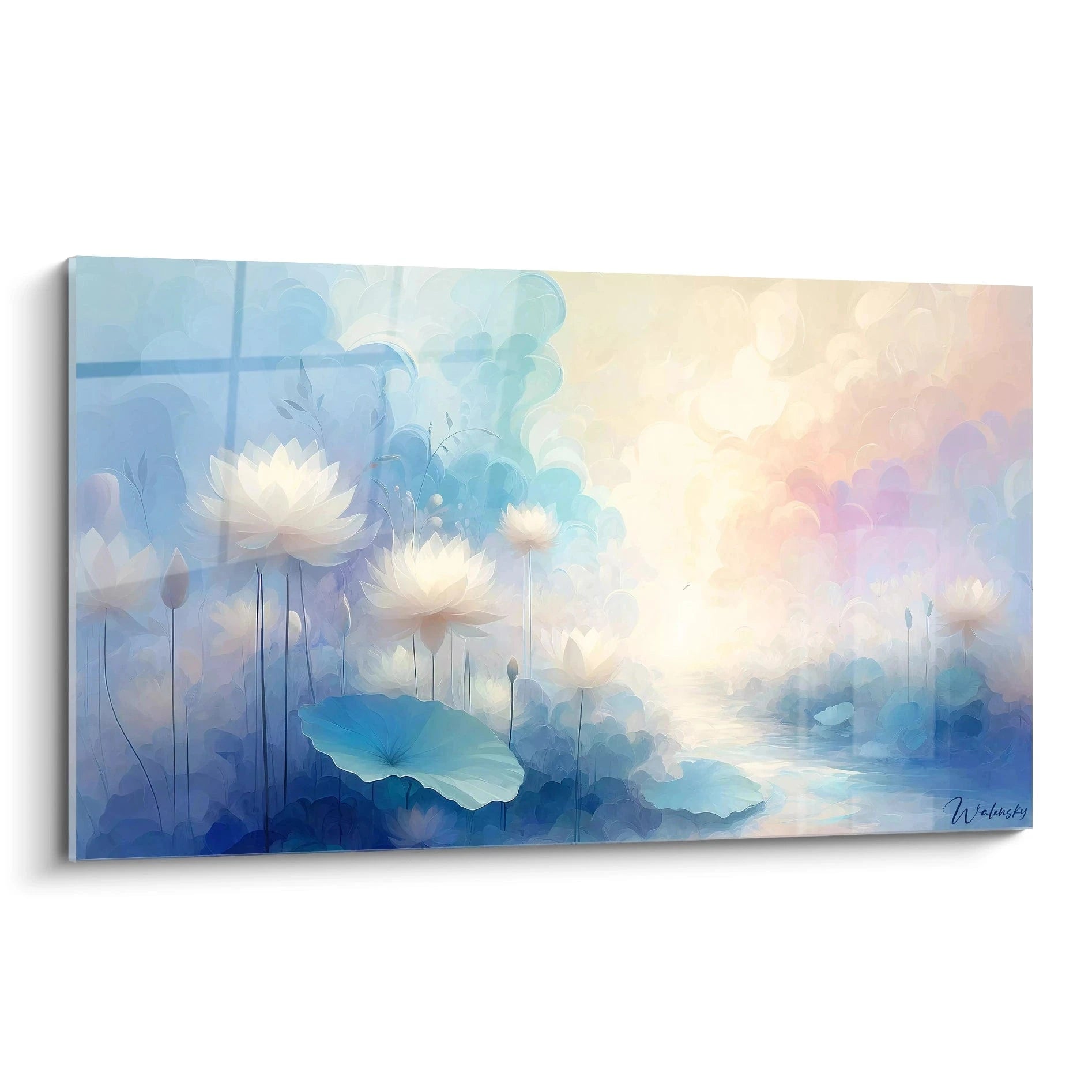
The Blooming Muses Painting - Abstract Figurative Edition
233,90€
Discover this artworkWhen a birthday becomes a national event: the theatricalization of worship
Royal birthdays were never simple private celebrations. They transformed into nationally orchestrated events with military precision. The solemn presentation of offered paintings was the climax of elaborate ceremonies, often open to the public or detailed in newspapers.
These birthday rituals functioned as political performances. When a courtier presented a painting to the king, he did not address only the monarch but the entire kingdom through the stories that would subsequently be disseminated. The painting thus became the material support of a larger spectacle, whose purpose was to periodically renew collective adherence to the institution of monarchy.
Court painters consciously participated in this theatricalization. They designed their royal birthday paintings as stage sets, with dynamic compositions creating an impression of movement and life. The monarch was never represented statically but always in action – granting a favor, leading a battle, protecting his people. These visual scenes transformed abstract power into a tangible and emotionally engaging narrative.
Orchestrated collective emotion
Chronicles of the time regularly describe the emotions of courtiers and the public during these birthday ceremonies. This emotional reaction was not spontaneous but carefully cultivated. Offered paintings functioned as emotional catalysts, triggering a sentimental adherence to the monarch that transcended simple political obedience.
This affective dimension of monarchical worship remains fascinating. It reminds us that images possess a direct emotional power, capable of shaping our attachments and loyalties in an almost unconscious way. Royal courts had intuitively understood what modern psychology confirms: we create emotional bonds with what we see regularly represented positively.
— Our selection


Dynastic memory: when the painting crosses generations
An often-neglected aspect of paintings offered at royal birthdays concerns their long-term destiny. These works were not designed for the present moment alone, but to span centuries and perpetuate dynastic memory. They hung in ancestral galleries, forming visual sequences telling the ongoing story of the ruling family.
This accumulation created a powerful impression of eternity. A young prince growing up surrounded by portraits of his ancestors embodied the idea of dynastic continuity. Successive birthday paintings thus formed a visual chain linking past, present and future, transforming family history into collective destiny.
This strategy of visual memory explains why so many monarchies invested fortunes in these artistic commissions. Each painting offered represented an investment in institutional longevity. It constituted another stone in the symbolic edifice supporting monarchical legitimacy, an edifice built image by image, generation after generation.
Portrait galleries as secular temples
The grand royal portrait galleries functioned as veritable temples of the monarchical cult. Walking through these spaces was traversing dynastic history embodied. Visitors physically experienced the temporal depth of the royal lineage, reinforcing the impression that this family was destined to reign by a kind of historical necessity.
These museums avant la lettre transformed royal birthday paintings into secular relics. They sacralized the monarchy by conferring upon it a prestigious artistic materiality. The implicit message was clear: a dynasty capable of producing such an accumulation of cultural magnificence naturally deserved its exceptional status.

— You may also like


The contemporary legacy: what this tradition teaches us today
This history of paintings offered at royal birthdays powerfully illuminates our contemporary relationship with art as a gift. It reminds us that a visual work is never neutral, that it always carries an intention, always constructs a narrative around the person who receives it.
When we offer a painting for an anniversary today, we unconsciously participate in this same symbolic dynamic. We choose a work that tells something about the person being celebrated, that reflects our vision of their identity, that visually constructs a facet of their personality. Without knowing it, we perpetuate this millennial tradition of using art to shape perceptions and create identity narratives.
The fundamental difference lies in the intention. Where royal birthday paintings served an institutional monarchical cult, our contemporary artistic gifts celebrate individuality, relational intimacy, the uniqueness of each person. But the symbolic mechanism remains similar: we use the image to say what words cannot fully express.
This historical continuity confers an unsuspected depth to the gesture of offering a painting. Each time we choose a work for someone we love, we enroll in an ancestral tradition recognizing the unique power of art to celebrate, honor and memorialize.
Create your own symbolic traditions
Discover our exclusive collection of paintings to offer that transform each anniversary into a memorable and meaningful celebration.

Offering a painting today: perpetuating a tradition by reinventing it
Understanding how paintings offered at royal birthdays functioned paradoxically frees us from the pressure of the perfect choice. These historical works teach us that what matters is not technical perfection, but the ability of an image to tell a story, to create an emotional connection, to become a memory anchor.
When you are looking for a painting for an anniversary, think less in terms of decoration than in terms of storytelling. What story do you want to tell about this person? What facet of their personality do you want to celebrate visually? What memory do you want to create that will last through the years?
Royal courts had understood that the most powerful birthday paintings were those that resonated with the deep identity of their recipient – even if this identity was often constructed or idealized. Your artistic gift has the same capacity: to reflect who the person being celebrated truly is, or who they aspire to become.
This approach transforms the selection of a painting into a deeply personal creative act. You yourself become curator, orchestrating a meeting between a person and a work likely to accompany them for years, perhaps even becoming a family heritage passed down through future generations – just like these royal portraits crossed the centuries.
The paintings offered during royal birthdays indeed perpetuated the cult of monarchy, but they also leave us with a timeless lesson: art possesses a unique power to celebrate, commemorate and build lasting identity narratives. By offering a painting today, you are not fueling any political propaganda, but honoring this fundamental truth that royal courts intuitively understood – a beautiful image, charged with intention and emotion, has the power to mark minds and hearts forever.


