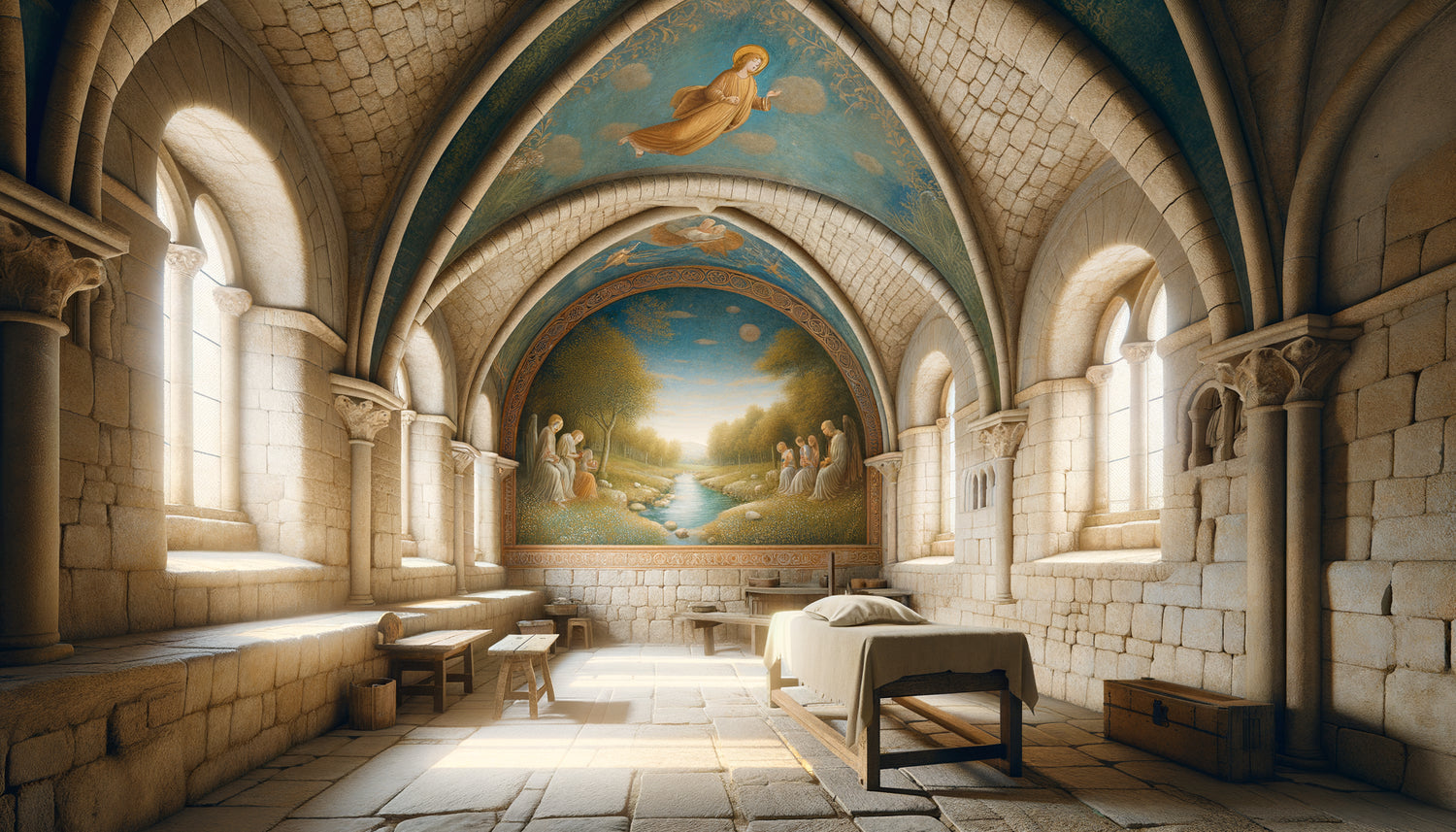
Within the silence of a restored Cistercian abbey, facing a 13th-century fresco depicting the Last Judgment, I saw a visitor sit down and cry softly. Fifteen minutes motionless. When she got up, her face had changed. This scene reminded me why I have been searching archives and crypts for twenty years: medieval monks understood something essential about the therapeutic power of images.
Here's what medieval monastic wall art reveals: a sophisticated approach to mental health through contemplative imagery, soothing symbolism, and orchestrated sensory architecture. Three pillars that transformed places of worship into true spaces of psychic healing.
Today we seek in modern medical offices what monasteries already offered: visual environments capable of calming anxiety, reorienting obsessive thoughts, giving meaning to suffering. Yet, we often ignore the millennia-old techniques these religious communities had developed with remarkable precision.
Rest assured: understanding this ancient wisdom requires no theological knowledge. The visual and psychological principles that medieval monasteries applied are universal and remarkably current.
I invite you on a journey through cloisters, infirmaries, and scriptoriums where wall art explicitly served to heal what was then called melancholia, acedia or the torments of the soul.
When walls become doctors: the medieval infirmary as a visual theater
The medieval monastic infirmary was never a bare space. Archaeological research on the abbeys of Cluny, Fontenay or Saint-Gall reveals systematic wall decoration in areas dedicated to the sick. But unlike abbatial churches adorned with apocalyptic scenes, infirmaries favored iconographic programs specifically designed to soothe.
At Prüm Abbey in Germany, 13th-century accounts explicitly mention payments to painters to decorate the infirmary with scenes of the healing Christ. The monks considered these frescoes an integral part of the treatment. In their medical writings, such as Hildegard of Bingen's Causae et Curae, they described how certain images could reorient humors and rebalance a troubled mind.
The scenes chosen followed a precise therapeutic logic: Christ calming the storm for the anxious, resurrection of Lazarus for the desperate, multiplication of loaves for those suffering from feelings of inadequacy. Each mental pathology corresponded to specific iconography. Medieval monasteries practiced, without naming it as such, a form of narrative image therapy.
Color as a visual pharmacopoeia
Monastic treatises on painting, such as Theophile’s De diversis artibus, classified pigments according to their not only aesthetic but also psycho-spiritual properties. Azure blue, expensive and rare, was reserved for spaces where melancholics resided because it was believed to have soothing virtues. Vermilion red, stimulating, adorned areas intended for lethargic patients suffering from acedia - this depressive torpor that monks particularly dreaded.
This medieval chromotherapy was not superstitious. It rested on centuries of empirical observation of the psychological effects of colors in controlled environments - monasteries being involuntary laboratories of environmental psychology.
The contemplative cloister: architecture and wall art against mental agitation
The cloister represented the therapeutic heart of the medieval monastery. Its spatial organization and wall decoration obeyed a meticulous psychological choreography. Walking through the galleries at Moissac Abbey or Santo Domingo de Silos immediately reveals the setup: each arcade offers a different sculpted or painted scene, creating a soothing narrative journey.
Monks suffering from mental disorders - particularly anxiety and obsessive thoughts - were encouraged to walk slowly in the cloister, stopping before each representation. This practice, documented in monastic rules and abbatial correspondence, combined repetitive movement, visual contemplation and guided meditation. A therapeutic triptych that modern psychology rediscovers under the name of mindfulness walking.
The sculpted capitals of the Saint-Pierre de Moissac cloister perfectly illustrate this strategy: soothing biblical scenes alternate with luxuriant plant motifs. The gaze naturally circulates from one image to another, creating a controlled distraction that interrupts mental ruminations. Current neuroscience confirms the effectiveness of this technique: directing attention towards varied but harmonious visual stimuli effectively reduces activity in the default mode network of the brain, responsible for obsessive thoughts.
The painted garden: when the impossible becomes therapy
In regions where winter made the monastic garden inaccessible for several months each year, monks painted perpetual gardens on the cloister walls. These botanical frescoes, documented notably at Saint-Savin-sur-Gartempe Abbey, compensated for the absence of nature - a factor aggravating melancholy according to monastic medicine.
This medieval intuition echoes contemporary research on nature attention restoration theory: even visual representations of nature provide measurable psychological benefits. Medieval monks understood this empirically.

Iconography of hope: how wall scenes restructured depressive thought
One of the most sophisticated aspects of monastic therapeutic wall art concerned the treatment of what we would today call depression. Monks used the term tristitia (pathological sadness) or desperatio (despair), considered spiritual illnesses requiring intervention.
In spaces where monks suffering from profound despair resided, iconography systematically privileged narratives of transformation and redemption. At Fontevraud Abbey, the infirmary presented a series of frescoes telling the conversion of Saint Paul - a paradigm of radical change. At Cîteaux Abbey, medical illuminations show precise recommendations for exposing depressives to images of resurrection.
This narrative approach to mental healing through wall art rests on a powerful psychological principle: providing alternative mental frameworks. Faced with rigid depressive thought (“nothing can change,” “I am lost”), visual narratives of transformation offer cognitive counter-examples. Modern cognitive behavioral therapies use exactly this mechanism, called cognitive restructuring.
Visualized silence: wall frescoes against psychic agitation
Medieval monasteries distinguished different types of mental disorders. Acedia - inner restlessness, inability to concentrate, flight of thoughts - particularly concerned contemplative communities. For this specific pathology, monks developed an iconography of stillness.
Cells and retreat spaces intended for monks suffering from agitation presented frescoes of saints in meditation, purified desert scenes, Christ in his solitude in the Garden of Olives. At Mount Athos Monastery, preserved almost intact, one can still see these minimalist visual programs designed to induce mental calm.
The strategy was twofold: first, visually offer what the patient could not mentally achieve (calmness, concentration); second, create an environment poor in stimuli to reduce cognitive overload. Current research on therapeutic environments validates this approach: controlled visual simplicity effectively reduces anxiety and improves emotional regulation.
Sacred geometry and repetition: medieval mandalas
Less known than narrative scenes, repetitive geometric patterns systematically adorned the vaults of monastic infirmaries. Stars, rosettes, intertwines - these complex patterns served as visual focal points for concentration exercises prescribed to mental patients.
This technique surprisingly recalls the contemporary therapeutic use of mandalas in art therapy. Medieval monks had intuitively discovered that a visual structure both complex and ordered captures attention without saturating it, creating a mental state conducive to appeasement.

The forgotten heritage: from the monastic cell to the modern medical office
Browsing today through our sterile medical spaces, with white walls devoid of any meaningful image, I measure the extent of our collective amnesia. Monasteries knew that the visual environment actively participates in the therapeutic process - a truth that modern medicine is laboriously rediscovering.
Recent studies in psychiatric hospitals show that adding appropriate wall artworks significantly reduces patient anxiety, decreases reliance on sedatives and accelerates recovery. These results would not surprise any medieval abbot overseeing a monastic infirmary.
The difference? The monks had centuries of empirical experimentation to refine their iconographic choices. They had precisely mapped which images were suitable for which mental states. This sophisticated visual pharmacopoeia was lost with the dissolution of monastic orders and modern medical rationalism that rejected the environment as a negligible therapeutic factor.
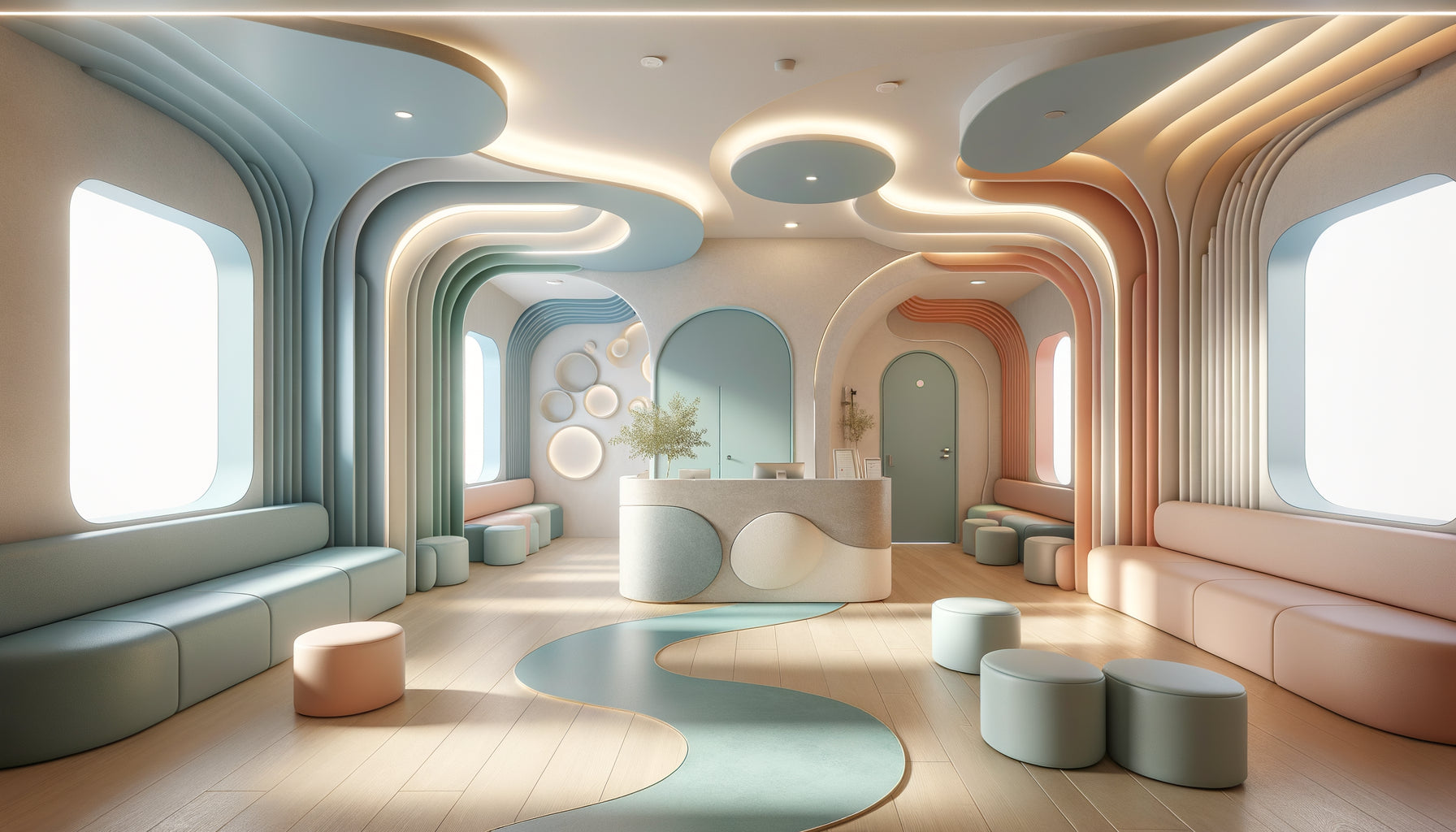
Yet, a few pioneering establishments are reintegrating these ancient principles: Scandinavian psychiatric services adorn their walls with soothing natural scenes; Swiss clinics use color therapeutically; meditation centers reproduce the contemplative architecture of cloisters. They reinvent, often without knowing it, what medieval monasteries practiced daily.
Transform your care space into an authentic place of serenity
Discover our exclusive collection of wall art for medical offices that draws inspiration from the millennial principles of monastic therapeutic art to create visually soothing and psychologically comforting environments.
Create today what monks knew yesterday
The question is no longer whether medieval monasteries used wall art to treat mental disorders - archives, archaeological remains, and medical treatises attest to this without ambiguity. The real question becomes: how to reintegrate this wisdom into our contemporary spaces ?
Start modestly: observe the spaces where you spend time during periods of stress or sadness. Are they visually nourishing or barren? A doctor's office, a recovery room, an office where anxiety rises - these places deserve the attention that monks paid to their infirmaries.
Choose your images as a prescription: nature scenes for agitation, ordered compositions for anxiety, visual narratives of transformation for mental stagnation. Medieval monastic principles, stripped of their theological language, reveal universal psychological truths.
In my own practice as a heritage restoration consultant, I have seen medical spaces transformed by the thoughtful addition of wall art. Not just any - images chosen according to the same criteria that a medieval abbot would have applied: soothing color palette, contemplative subject, balanced composition, invitation to the gaze without visual aggression.
Medieval monasteries bequeathed us much more than stones and flaking frescoes. They passed on to those who know how to look, a science of therapeutic environment of remarkable sophistication. It is up to us to decipher it, adapt it, and revive it in our contemporary care spaces.
Frequently Asked Questions about Monastic Therapeutic Art
Did medieval monks really have a scientific approach to therapeutic art?
Absolutely, although their conceptual framework differed from ours. Monasteries functioned as total institutions where the same populations lived for decades in controlled environments. This allowed for systematic observation of the effects of the visual environment on mental state. Abbots and monastic nurses kept detailed records, noting which patients responded to which interventions, explicitly including changes to wall decor. Treatises such as that of Hildegard of Bingen or the writings of Bernard of Clairvaux specifically discuss the psychological impact of images. Their methodology was not experimental in the modern sense, but their empirical accumulation of data over centuries created a form of remarkably reliable practical knowledge. Several historians of medicine consider medieval monastic infirmaries to be the first true environmental psychiatric institutions.
Can these medieval principles really be applied in a modern secular medical context?
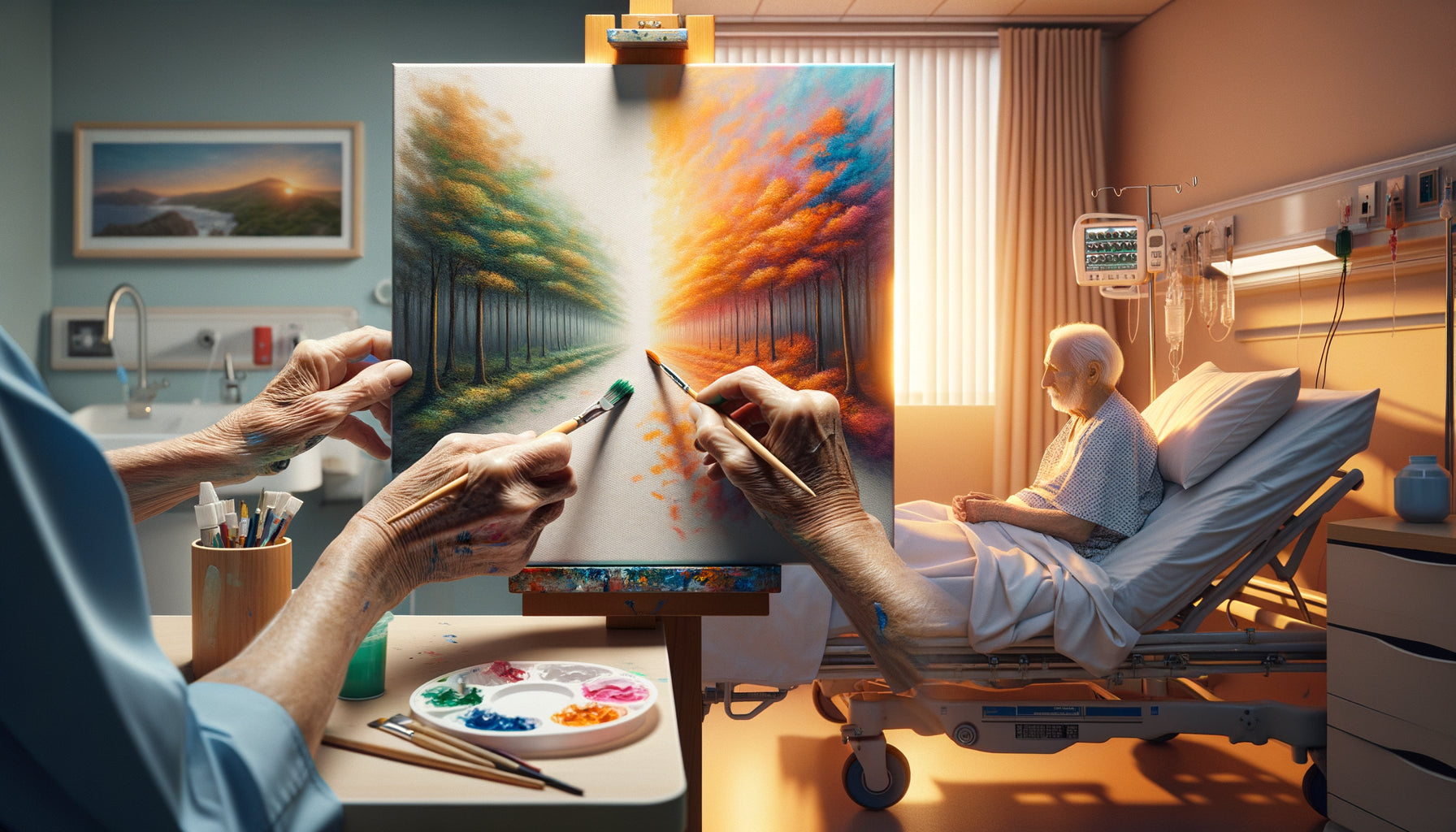
Not only is it possible, but it's already being done successfully. The key is to distinguish the specific religious content (saints, biblical scenes) from the underlying universal psycho-visual principles. For example, the monastic principle of depicting transformation scenes for depressed patients translates today into images of nature in seasonal change, landscapes at dawn (symbolizing renewal), or abstract works suggesting movement and evolution. Therapeutic colors function independently of any religious symbolism. The contemplative structure of the cloister now inspires medical corridors with regularly spaced artworks creating a soothing visual journey. Several Scandinavian hospital designers have explicitly studied monastic architecture to design psychiatric services, with measurable clinical results: a 30% reduction in patient anxiety in some studies. The theological habit has changed, but the therapeutic body remains remarkably effective.
What wall images should one choose specifically for a current care space?
Draw inspiration from the monastic logic of matching image to need. For waiting areas that generate anxiety, prioritize horizontal natural landscapes (horizons, plains, calm seas) in blues and greens - exactly what medieval infirmaries chose for anxiety. For long convalescence spaces where depression looms, opt for scenes suggesting cycles and renewal: changing seasons, sunrise, plant growth. Monks painted resurrection; we can show a field in spring - the psychological archetype remains identical. For concentration areas (medical offices, consultation rooms), monasteries used ordered geometries; today, structured abstractions or minimalist compositions serve the same function. Systematically avoid what medieval abbots proscribed for the mentally ill: scenes of violence, chaotic compositions, aggressive colors, anxiety-inducing images. Their wisdom of subtraction is as valuable as their positive choices. A therapeutic environment begins by eliminating what harms before adding what heals.