Imagine stepping through the threshold of an ancient Egyptian temple, where each column resonates with prayers and every wall is covered in mysterious symbols. In the sacred twilight, hieroglyphs dance on limestone, telling stories of healing, magic, and science. These enigmatic inscriptions adorning Egyptian healing temples pose a fascinating question: were they mere aesthetic ornaments or essential therapeutic tools?
Here's what these medical hieroglyphs reveal: they brilliantly combined visual beauty and practical function, transforming architecture into a true instrument of physical and spiritual healing, while creating an atmosphere conducive to inner transformation.
We often fantasize about a clear separation between decoration and function, between the useful and the beautiful. But the ancient Egyptians remind us that such a distinction has never truly existed. Their healing temples embodied this perfect fusion, where every visual detail served a precise therapeutic purpose.
Good news: understanding this millennial wisdom can transform our perception of modern care spaces and inspire us to create environments where aesthetics actively participate in the healing process.
In this article, I'll take you on an exploration of the secrets of Egyptian temples, deciphering the hidden function of their medical hieroglyphs, and discovering how this ancestral philosophy can inspire our contemporary interiors.
When Walls Become Doctors: The Therapeutic Architecture of Temples
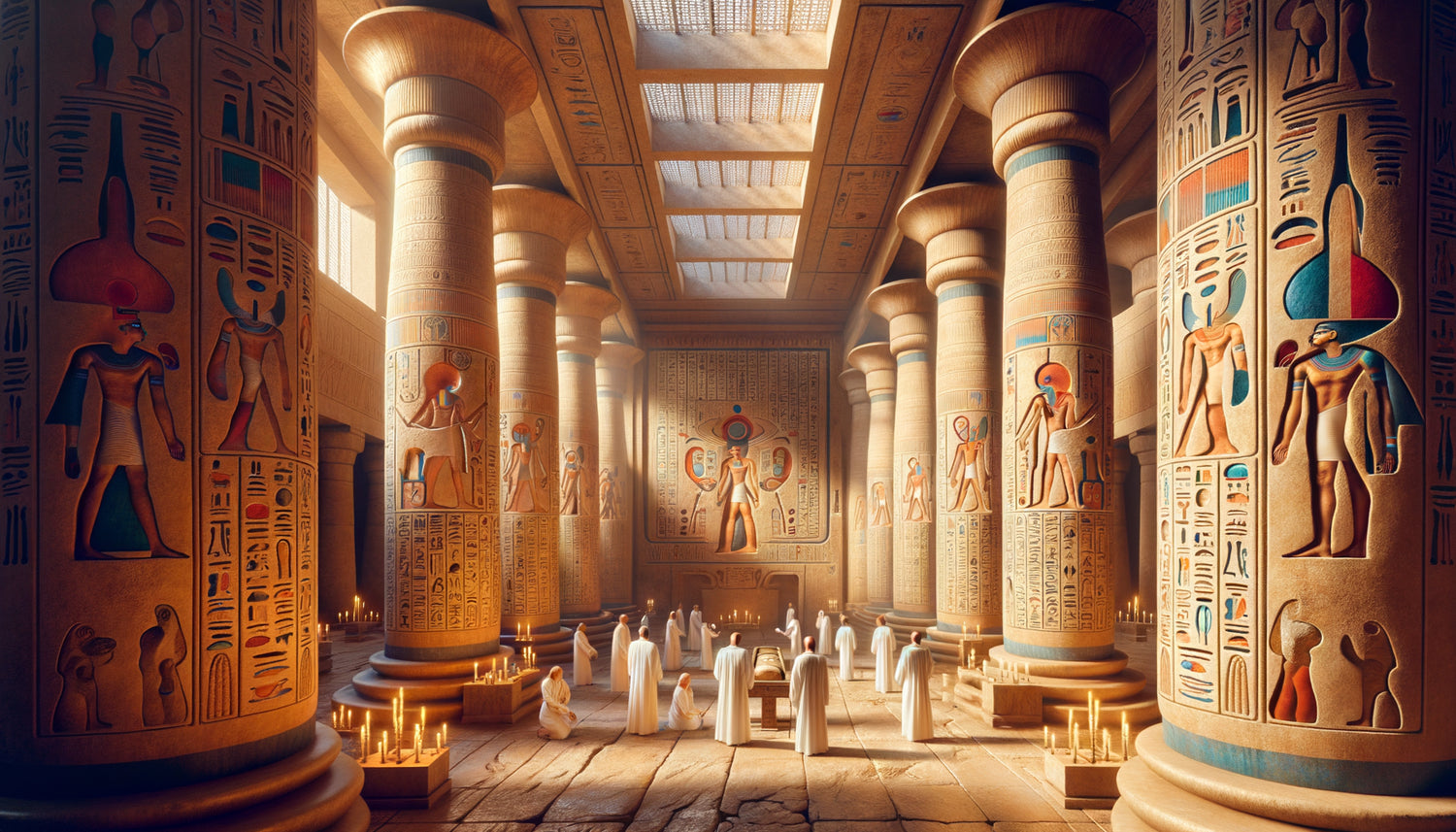
Egyptian healing temples, notably that of Kom Ombo dedicated to Sobek and Horus, or the famous Dendera temple consecrated to Hathor, were not mere places of worship. They functioned as veritable ancient hospitals, where medical hieroglyphs covered every available surface.
These inscriptions detailed with surgical precision various pathologies, pharmaceutical recipes, medical instruments used, and even surgical procedures. On the walls of the Kom Ombo temple, you can still observe today representations of surprisingly modern surgical instruments: scalpels, forceps, scissors, cauteries.
But their function went far beyond a simple memory aid for priest-doctors. These hieroglyphs created a sacred atmosphere that actively participated in the healing process. Patients, often illiterate, nevertheless perceived the visual power of these symbols, their geometric complexity, and their reassuring omnipresence.
The Dual Nature of Medical Hieroglyphs: Beauty and Effectiveness
Egyptian medical hieroglyphs embodied a holistic philosophy of health that we are only just rediscovering. Each inscription served several strategic objectives simultaneously.
Functionally, these texts constituted a veritable medical encyclopedia engraved in stone. They preserved anatomical knowledge, therapeutic formulas based on plants, minerals and animal substances, as well as magical incantations deemed essential for treatment.
The Ebers Papyrus, one of the oldest known medical treatises, finds its echo in these wall inscriptions. Healing temples transformed this knowledge into an immersive environment, where medical knowledge literally permeated the space.
Aesthetics as Medicine
But the decorative dimension was by no means secondary. The Egyptians intuitively understood what neuroscience confirms today: our visual environment profoundly influences our physiological and psychological state.
The hieroglyphs were calligraphed with extreme care, their proportions respecting the Egyptian artistic canon. The colors used – lapis lazuli blue evoking the divine sky, malachite green symbolizing rebirth, red ochre representing vitality – were not chosen at random. Each pigment carried a symbolic meaning linked to healing.
This visual beauty created what we would now call an architectural placebo effect: the patient's confidence in the place and treatment reinforced the actual therapeutic effectiveness of the remedies administered.

Hieroglyphs as an interface between two worlds
In Egyptian cosmology, disease resulted from an imbalance between the physical body and spiritual forces. The medical hieroglyphs of the temples functioned as an interface between these two dimensions.
Some inscriptions described purely pragmatic treatments: wound sutures, fracture reduction, foreign body removal. Others detailed complex rituals invoking healing deities such as Sekhmet, Thoth or Isis.
This apparent contradiction was not one for the ancient Egyptians. The hieroglyphs created a therapeutic continuum where empirical medicine and spiritual practices mutually reinforced each other. The healing temple thus became a liminal space, a threshold between the profane world of disease and the divine realm of restored health.
The patient's initiation journey
Patients followed a precise path through the temple, guided by the strategic arrangement of hieroglyphs. The inscriptions evolved progressively, from representations of diseases in the outer courtyards to formulas for healing and rebirth in the inner sanctuaries.
This architectural and visual journey constituted a true therapy through immersion, where the patient corporeally experienced their transformation from sick to healed, accompanied at each step by the appropriate medical hieroglyphs.
From Egyptian temples to modern clinics: an invisible lineage
The modern opposition between decoration and function in care spaces would have seemed absurd to the Egyptians. For them, a well-executed medical hieroglyph was simultaneously beautiful, informative, and therapeutically active.
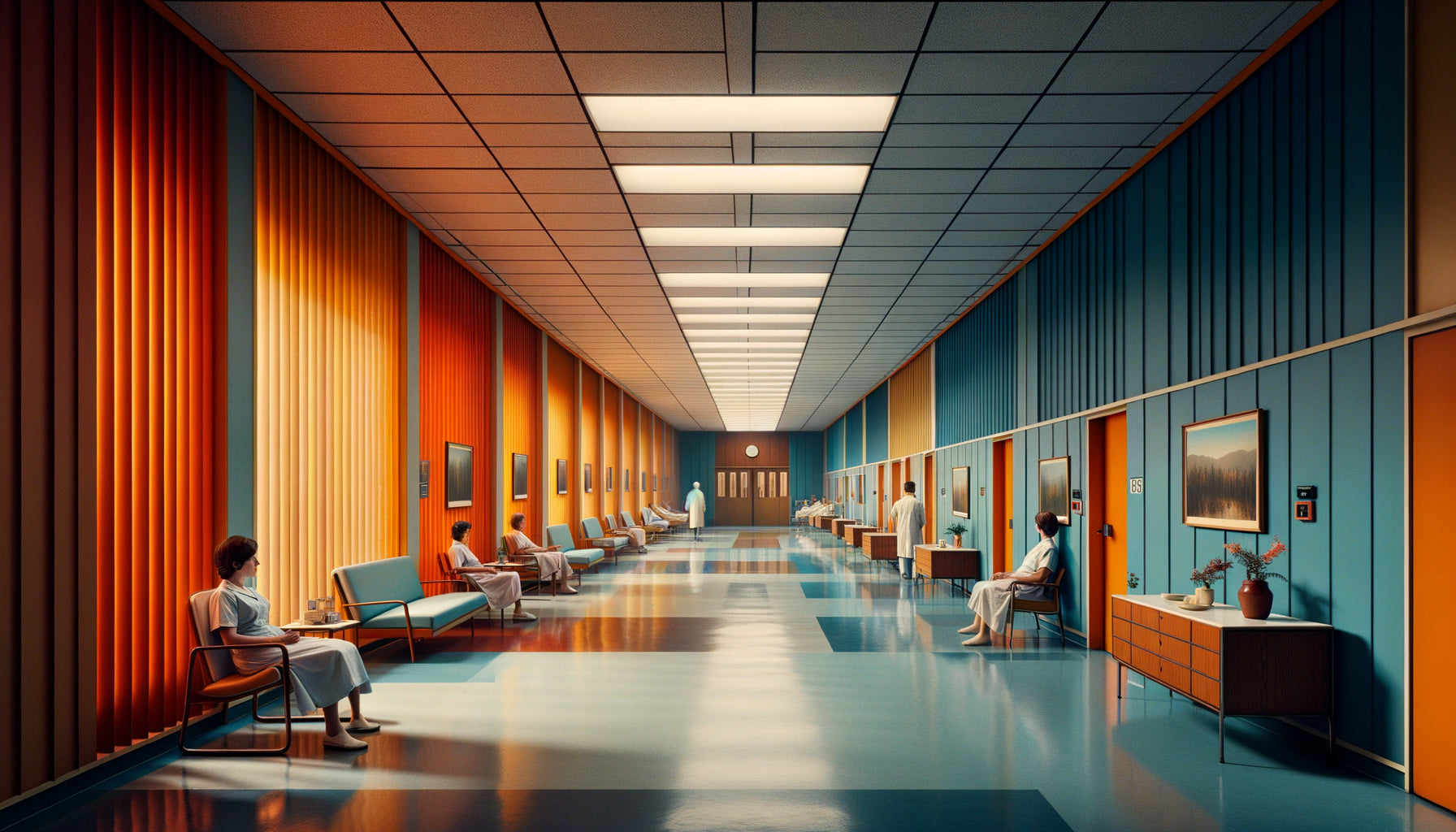
This ancestral wisdom finds a surprising relevance in the contemporary design of healthcare spaces. Research in neuroarchitecture demonstrates that the visual environment of a medical clinic measurably influences: reduction of preoperative stress, decrease in pain perception, acceleration of convalescence.
The hieroglyphs of Egyptian temples teach us that a care space should tell a story of transformation. Visual symbols, whether ancient or contemporary, create a psychological framework conducive to healing.
Inspiration for your wellness spaces
How can this philosophy be translated into our interiors? A few principles emerge from the study of Egyptian healing temples :
Visual intentionality: Each decorative element should carry a meaning, create an atmosphere, tell part of the therapeutic story of the place.
Symbolic coherence: Just as the Egyptians used specific colors and symbols for each type of healing, our care spaces can integrate visuals evoking serenity, vitality, or transformation.
Immersive journey: The spatial and visual organization can emotionally guide the patient, from the anxiety of arrival to the peace of the care received.
Transform your clinic into a modern healing temple
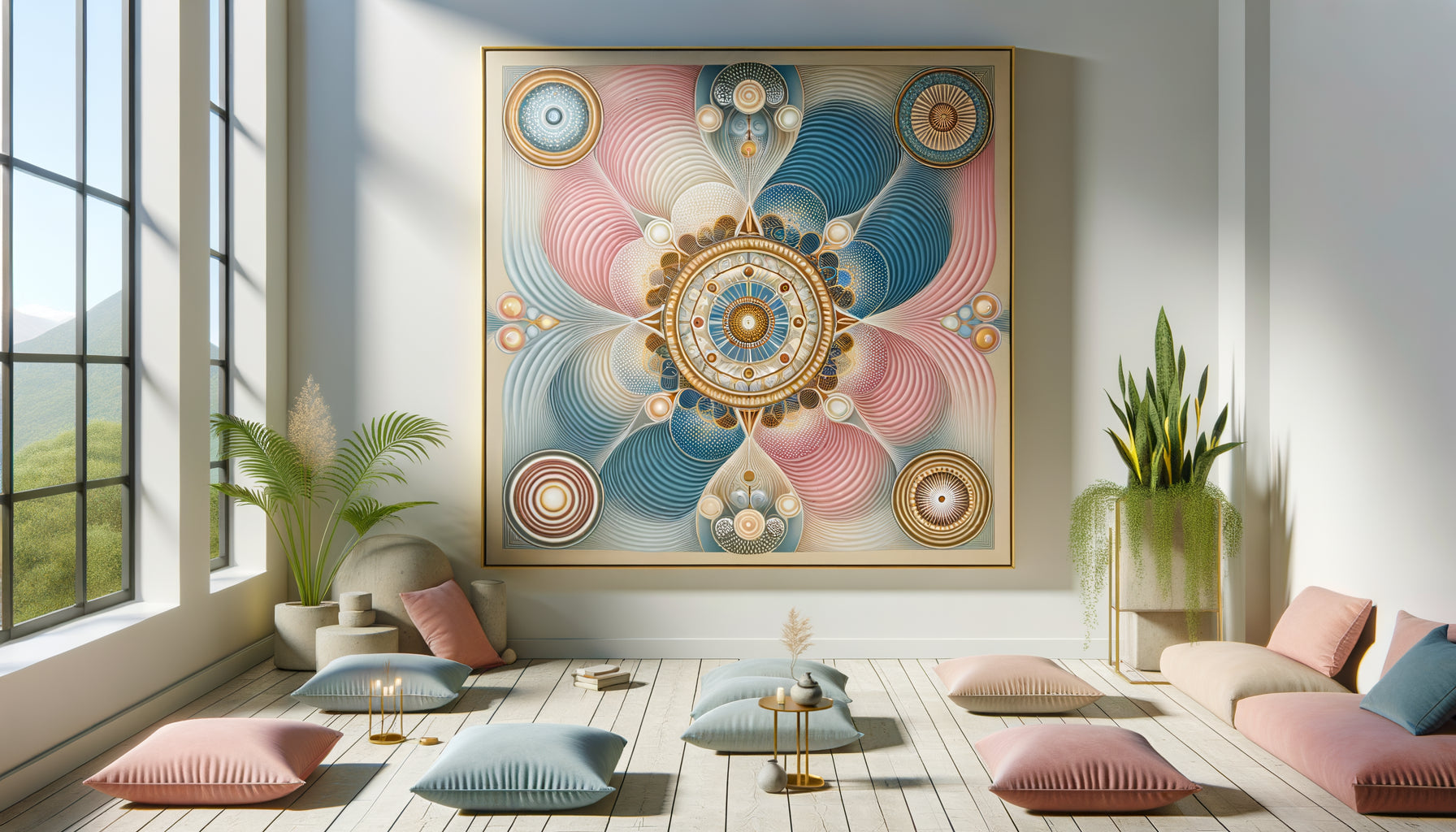
Discover our exclusive collection of wall art for medical clinics that combines contemporary aesthetics and soothing power, creating spaces where beauty actively participates in the well-being of your patients.

The Millennial Lesson: When Beauty Heals
Ancient Egyptian medical hieroglyphs teach us a profound truth: the question “decorative or functional?” rests on a false dichotomy. In ancient healing temples, these inscriptions were both, inextricably.
Their formal beauty was not superfluous luxury but an active component of the therapeutic process. Their practical function did not exclude aesthetic refinement, but required it. This perfect fusion of beautiful and useful characterizes what we might call a functional aesthetics.
Egyptian priest-physicians knew that the patient's eye, even illiterate to complex hieroglyphs, perceived their order, harmony, visual authority. This perception influenced trust, which affected physiology, which modulated healing.
When visiting today the ruins of Dendera or Kom Ombo, contemplate these millennial medical hieroglyphs. Despite erosion and centuries, they retain their dual nature: precise scientific texts and stunning works of art. This duality was not accidental but represented the central philosophy of Egyptian medicine.
Create Your Own Healing Sanctuary
Now imagine your waiting room, your consultation office, or even your personal wellness space at home. What could play the role of hieroglyphs in these contemporary environments?
Carefully chosen visual works that evoke nature, serenity, vitality. Soothing colors that reduce cortisol. Universal symbols of growth and transformation. Natural textures that reconnect to life.
Like Egyptian temples, our modern care spaces gain by visually telling a story of passage: from anxiety to trust, from pain to relief, from illness to health. This visual storytelling is not mere decoration – it's environmental medicine.
The medical hieroglyphs remind us that the visual environment is never neutral. It communicates, influences, transforms. The ancient Egyptians understood this millennia ago. We are rediscovering this wisdom today, armed with the scientific validations of environmental psychology and neuroscience.
Close your eyes for a moment. Visualize yourself in a space where every visual detail contributes to your well-being, where beauty is not a superficial addition but a therapeutic agent. This is exactly what the Egyptians created with their medical hieroglyphs in healing temples.
This millennial vision can inspire your choices today. Whether you are furnishing a medical office, a therapy space, or simply your personal sanctuary, remember: beauty can heal, and function can be magnificent. The two do not oppose – they complement, reinforce each other, create together something greater than the sum of their parts.
The hieroglyphs carved on the walls of Egyptian temples continue to whisper their secrets through the centuries: in the ideal healing space, every visual element carries an intention, tells a story, participates in transformation. Neither purely decorative nor brutally functional, but perfectly, harmoniously both.
Frequently Asked Questions about Egyptian Medical Hieroglyphs
Did the hieroglyphs of Egyptian temples contain real medical knowledge?
Absolutely! The medical hieroglyphs of Egyptian temples documented remarkably advanced anatomical, surgical, and pharmaceutical knowledge. They described procedures such as trepanation, fracture reduction, wound sutures, and hundreds of herbal remedies some of which contain active ingredients validated by modern science. These inscriptions were not superstitious decorations but true medical treatises carved in stone, preserving empirical knowledge accumulated over millennia. Egyptian priest-physicians practiced surprisingly rational medicine, even if it coexisted with magical-religious practices.
Why did the Egyptians mix medicine and spirituality in the hieroglyphs?
For ancient Egyptians, this distinction simply didn't exist. Their holistic vision considered that health resulted from a balance between physical body, spirit, and cosmic forces. The medical hieroglyphs reflected this integrated philosophy: a complete treatment included both material remedies (cataplasms, potions, surgery) and spiritual practices (incantations, rituals, offerings to healing deities). This global approach strangely resembles what we now call psychosomatic or integrative medicine. Healing temples created an environment where all these aspects converged, maximizing the chances of healing through total patient care.
How can you be inspired by Egyptian temples to decorate a modern care space?
The main teaching of Egyptian healing temples is that every visual element must serve the therapeutic intention of the place. Specifically, this means choosing artworks, colors, and symbols that create a soothing atmosphere and inspire confidence. Prioritize visuals evoking nature, growth, transformation – concepts universally associated with healing. Consider symbolic consistency: as Egyptians used blue for divine eternity or green for rebirth, select an intentional color palette. Create a visual journey that emotionally accompanies the patient, from the reception area to the treatment room. The goal is not to copy Egyptian aesthetics, but to adopt their principle: beauty that heals.