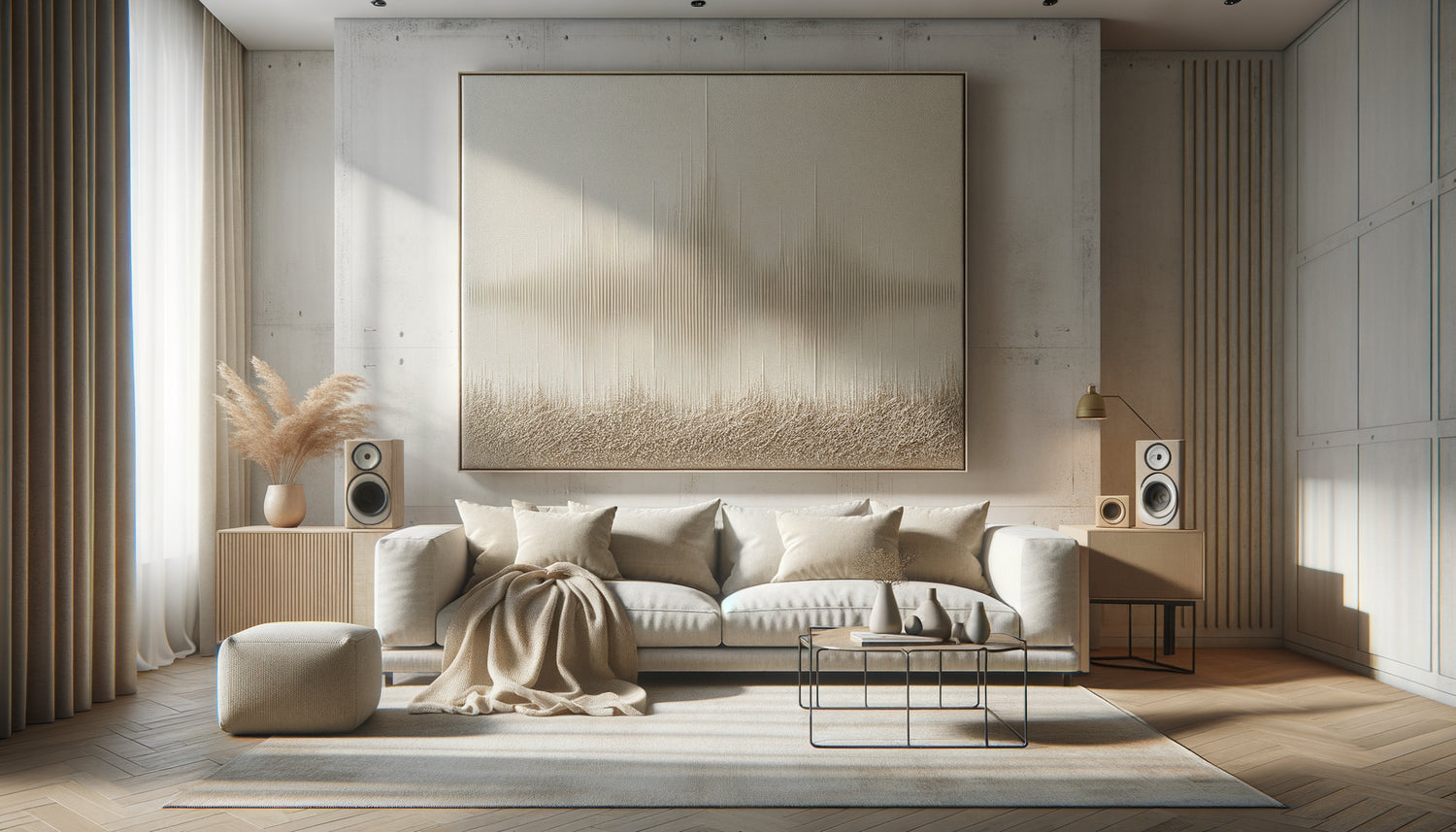
I discovered this secret by chance, during the renovation of a loft with four-meter ceilings. My client was complaining about an unbearable echo that turned every conversation into cacophony. The concrete and glass surfaces reflected sound like in an empty cathedral. It was by hanging a series of thick canvases on the bare walls that everything changed. Silence became palpable, voices regained their natural warmth.
Here's what wall art brings to your acoustics: they absorb excessive reverberations, create a soothing sound ambiance, and transform noisy spaces into havens of serenity. Not to mention that they add an incomparable aesthetic dimension.
You may have noticed this unpleasant sensation in some rooms: your voice resonates strangely, noises seem amplified, conversations become tiring. Modern architects love smooth and minimalist surfaces, but these hard materials create invisible sound pollution that affects your daily well-being.
Rest assured: improving the acoustics of a room does not require either pharaonic works or unsightly industrial acoustic panels. Wall art offers an elegant and accessible solution, combining acoustic performance and decorative refinement. I will show you how these artworks become your allies against noise pollution.
Why Your Walls May Be Tiring You Without You Knowing
Sound behaves like a tennis ball thrown against a wall. On a hard, smooth surface — concrete, painted plaster, glass, tile — it bounces back completely. These sound reverberations accumulate, overlap, creating an exhausting acoustic haze.
In a typical modern living room with its large bay windows, its glazed parquet floor and its immaculate white walls, the reverberation time can reach two seconds. This means that each sound persists for two seconds after it is emitted, mixing with the following sounds. Result: a sonic mess that forces you to raise your voice, which makes music confusing, which turns a meeting into chaos.
Wall art act as sound traps. Their textile surface, their thickness, layers of textured paint absorb some of the sound energy instead of sending it back. The thicker the painting, the more porous its support, the more effectively it captures mid and high frequencies — those that create this unpleasant reverberation sensation.
The acoustic anatomy of a performing painting
Not all wall art are acoustically equal. A simple poster under glass improves acoustics little, while a thick canvas on stretcher transforms the sound ambiance radically.
The textile backing: your first ally
A canvas made of cotton or linen stretched over a frame naturally creates an absorbent membrane. The air trapped behind the canvas and the wood of the frame forms a cavity that traps sound waves. I measured reductions in reverberation from 20 to 30% in rooms equipped with several large canvases.
The thickness of the frame plays a crucial role. A 4 cm frame offers better performance than a 2 cm frame. This depth creates a layer of air that absorbs more acoustic energy. Opt for wall art with thick frames to maximize the effect.
Surface texture: the invisible secret
Thick paint, with reliefs, impastos, worked materials, diffuses sound in multiple directions rather than sending it back directly. Abstract paintings with pronounced textures excel in this area. Each roughness breaks the sound waves, disperses them, reduces their intensity.
I found that a canvas with a paint thickness of several millimeters can improve acoustic absorption by an additional 15% compared to a flat digital print. Impasto techniques, mixed collages, and palette knife applications create these acoustically effective micro-reliefs.

Where to place your wall art for maximum acoustic effect
The strategic arrangement of your wall art multiplies its acoustic impact. Sound does not bounce evenly in a room—there are critical reflection zones where intervention is prioritized.
Walls facing sound sources constitute your first area of action. In a living room, place a large painting on the wall opposite the conversation sofa. In a dining room, cover the wall behind which discussions resonate. These surfaces receive sound waves directly and send them back to you—this is where absorption should operate.
Corners and wall-ceiling junctions accumulate low frequencies. Although wall art primarily acts on mids and highs, placing artwork in these areas improves overall acoustic balance. A triptych arranged in a corner creates a broken surface that effectively disperses reflections.
The one-third surface rule I apply: covering about one-third of your walls with absorbent elements—paintings, curtains, bookshelves—is generally enough to transform the acoustics of a room. You don't need to saturate the space. Three or four large 39x59 inch (100x150 cm) canvases in a 323 square foot (30m²) living room already produce remarkable results.
When aesthetics meets sound performance
The elegance of this solution lies in its dual function. You're not installing acoustic panels that scream their utilitarian purpose. You’re composing a personal gallery that, incidentally, improves your acoustic comfort.
Abstract paintings with muted colors—ochres, deep grays, navy blues—absorb light as they absorb sound, creating a soft and intimate atmosphere. In a home office, this combination simultaneously reduces visual and auditory fatigue.
Series compositions—diptychs, triptychs, gallery walls—multiply the absorbent surfaces while visually structuring the space. I furnished a meeting room with nine square canvases of 24x24 inches (60x60 cm) arranged in a grid. The architectural effect is striking, and participants immediately noticed the exceptional acoustic comfort.
XXL formats maximize the acoustic impact with a single piece. A 59x79 inch (150x200 cm) painting covers 32 square feet (3m²) of wall surface—the acoustic equivalent of several square meters of thick fabric. In spaces with high ceilings, these monumental formats become essential to control reverberation.

The mistakes that undo your acoustic efforts
Some common practices unfortunately sabotage the acoustic effectiveness of your wall paintings. Knowing these pitfalls will prevent you from disappointment.
Frames with glass turn your painting into a sound mirror. Glass perfectly reflects waves, completely negating the absorption of the canvas. If you want glass to protect a valuable work, choose matte anti-reflective glass which slightly attenuates this effect, but know that acoustic performance will remain mediocre.
Thin prints directly glued to the wall offer little absorption. Without the air space behind the canvas, without the thickness of the frame, the painting becomes practically as reflective as the wall itself. Always prefer canvases on frames for true acoustic performance.
Over-focusing on a single wall disrupts acoustics. If you only cover the main wall with paintings, other surfaces will continue to generate unpleasant reflections. Distribute your artworks across multiple walls for even acoustic treatment of the space.
Combining paintings and other acoustic solutions
Wall art naturally integrates into a global acoustic strategy, reinforcing the effect of other absorbent decorative elements.
Thick curtains ideally complement your canvases. Place a large painting on the wall adjacent to a window dressed with velvet or heavy linen curtains. Textile surfaces absorb complementary frequencies, creating a harmonious acoustic balance.
Rugs and carpets treat reflections from the floor while your paintings control the walls. This multi-surface approach radically transforms the sound ambiance. In a room with parquet flooring, adding a large rug and three wall paintings can halve the reverberation time.
Upholstered furniture—deep sofas, buttoned armchairs, poufs—also absorbs some of the sound. Combined with your paintings, it creates a soft acoustic envelope. I designed a reading room where the combination of four large canvases, a velvet sofa and a well-stocked bookcase produced a felt-like library acoustics, perfect for concentration.
Transform your space into a haven of acoustic serenity
Discover our exclusive collection of wall art for law firms that combines visual elegance and acoustic performance to create professional spaces where every conversation remains clear and confidential.
Your room transformed: the experience of inhabited silence
Imagine yourself in your living room, a week after installing your new wall art. You first notice this unsettling absence: the echo that accompanied your footsteps has disappeared. Your voice sounds more natural, warmer. Conversations no longer require those unconscious efforts to cover the ambient reverberation.
Music reveals nuances you haven't heard before. Instruments stand out clearly, voices gain presence. Even silence changes texture—it becomes dense, inhabited, restful rather than oppressive.
Start modestly: choose one or two large wall art for your main room. Observe the acoustic transformation. Listen to the difference before gradually covering other walls. This gradual approach allows you to adjust the balance between absorption and liveliness according to your personal preferences.
Perfect acoustics don't exist — they depend on your sensitivity, your activities, your tastes. But acoustic comfort, that you immediately recognize: it is this subtle feeling of well-being that makes you prefer certain spaces without ever really understanding why.
Frequently Asked Questions About Wall Art and Acoustics
How many artworks are needed to actually improve the acoustics of a room?
For a standard room of 20 to 30m², three to five medium to large artworks (minimum 80x100 cm) already produce noticeable results. The goal is to cover about 20 to 30% of your wall surfaces with absorbent elements. You don't need to saturate the space — a few well-placed pieces are enough. Start with two or three wall artworks on the main walls, then adjust according to your observations. Acoustic improvement is gradual: each artwork added contributes to reducing reverberation. Prioritize large formats rather than multiplying small frames, because the total absorbent surface determines effectiveness.
Can artworks really replace professional acoustic panels?
Wall artworks offer an elegant solution for residential and office spaces where aesthetics are as important as performance. They effectively absorb mid and high frequencies, responsible for that unpleasant echo sensation. However, for very strict acoustic requirements — recording studios, concert halls, dedicated home theaters — specialized acoustic panels remain superior, especially for controlling low frequencies. But for 90% of common domestic or professional situations, thick canvas artworks produce a largely sufficient acoustic improvement while enhancing your space. It is the ideal solution when you refuse to transform your interior into a recording studio.
What type of artwork offers the best acoustic absorption?
The most acoustically performing wall artworks combine several characteristics: a cotton or linen canvas (not an under glass print), a thick frame of 3 to 5 cm minimum, and a textured surface with paint reliefs. Abstract works with generous impasto excel in this area. Mixed techniques — thick acrylic, collages, superimposed materials — create irregular surfaces that diffuse sound rather than reflecting it directly. Avoid thin digital prints, glossy varnished canvases and especially frames under glass which cancel out any acoustic benefit. A hand-painted artwork with thick paint on a stretched canvas remains your best choice to combine beauty and sound performance.