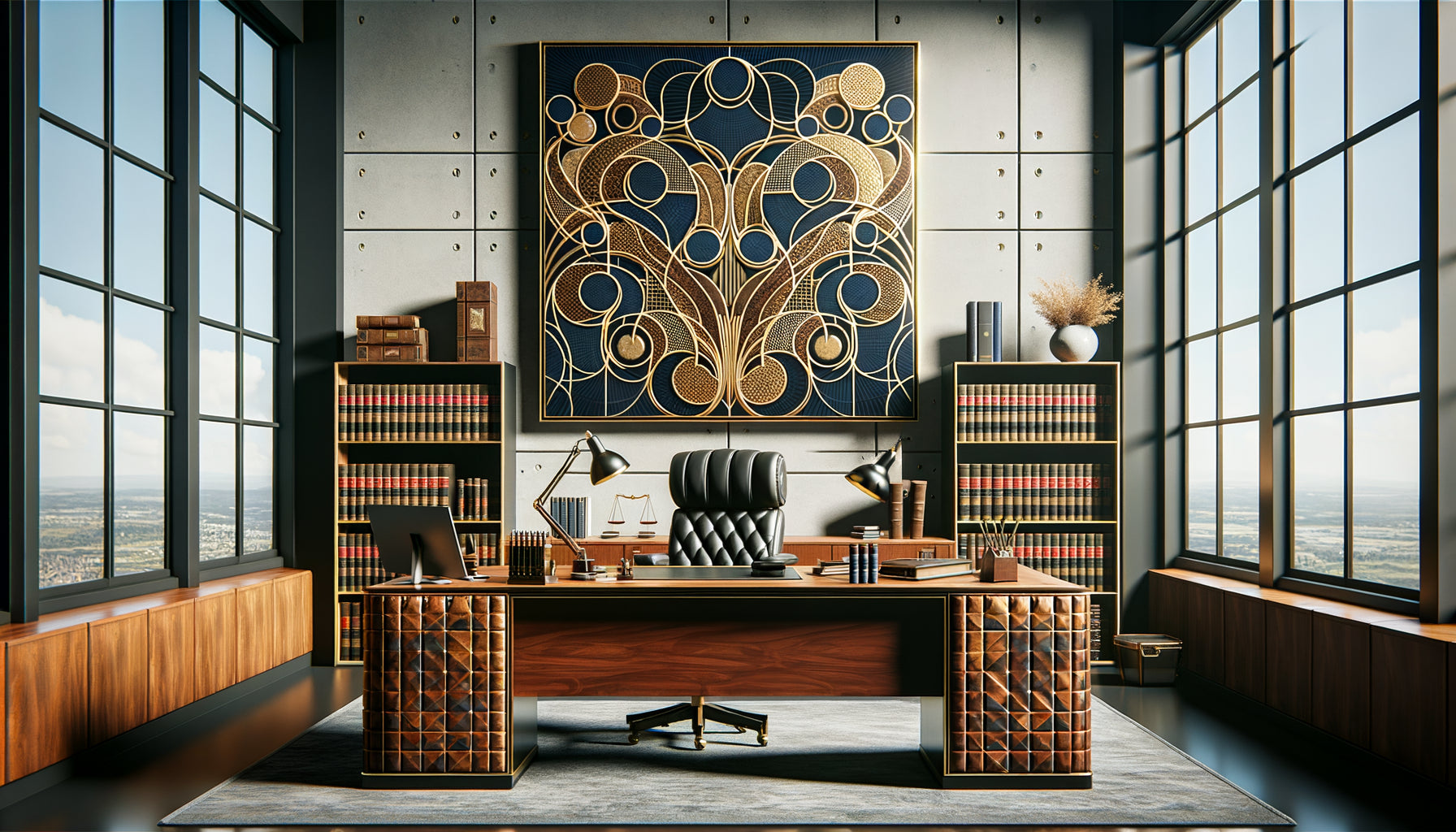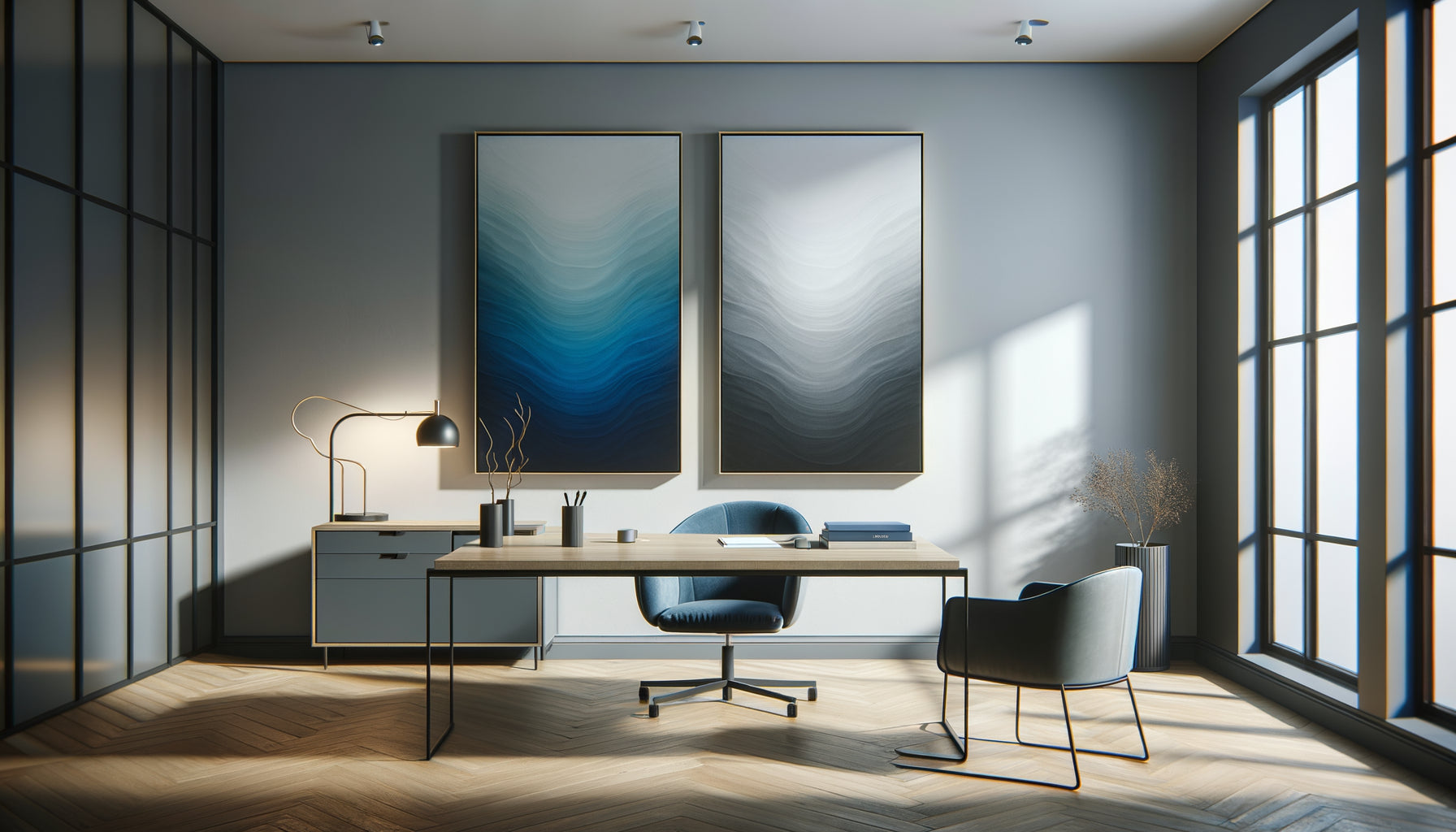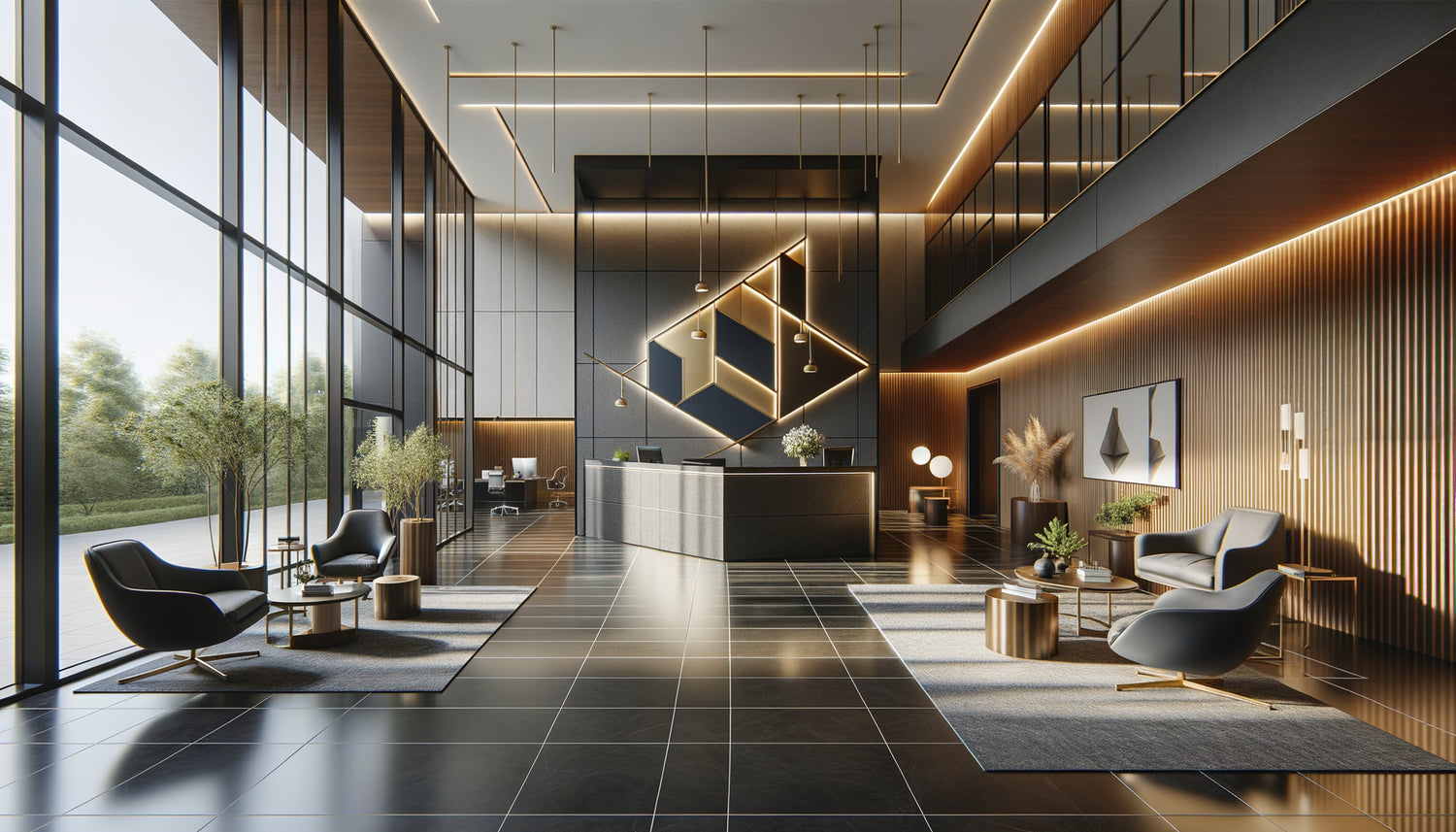
When I first crossed the threshold of this brand new law firm, nestled in a renovated building in the business district, I immediately felt that familiar disconnect: walls of clinical whiteness, impeccable designer furniture, but a strangely cold atmosphere. The young associates, bright and ambitious, had bet everything on ergonomics and technology, forgetting the essential: art as a vector of identity. Because a modern law firm is now distinguished not only by its legal expertise, but by its ability to create a memorable experience from the very first seconds.
Here's what a thoughtful artistic choice brings to a young modern law firm: instant credibility that reassures demanding clients, a clear differentiation from traditional, cumbersome firms, and a stimulating environment that attracts and retains top talent. Art is no longer a decorative luxury; it’s a strategic investment in your brand image.
The dilemma is nonetheless real: how to assert your modernity without veering into provocation? How to create a professional atmosphere while expressing your uniqueness? Young firms often hesitate between reproducing reassuring classic codes and daring to have a more audacious visual identity. This hesitation usually translates into sadly empty walls or anonymous reproductions bought in haste.
Yet, the solution exists, and it is more accessible than one might think. Contemporary artistic styles now offer an extraordinary palette for combining professional credibility and affirmed personality. It simply takes understanding which aesthetic truly corresponds to your firm’s identity and the expectations of your target clientele.
Geometric minimalism: the elegance of precision
In my consultations, I find that geometric minimalism particularly appeals to firms specializing in business law or intellectual property. This artistic style is based on pure forms, clean lines and a restricted color palette – exactly what resonates with the intellectual rigor of the legal profession.
Geometric abstract compositions immediately convey essential values: clarity, structure, mastery. A large format with clean lines in your waiting room subtly communicates your methodical approach and your ability to unravel complex situations. Geometric shapes evoke order and logic, qualities that your clients instinctively seek.
The major advantage of this artistic style for a modern law firm? Its elegant neutrality allows you to avoid any controversy while creating a lasting impression. A minimalist triptych in black, white and gold in your main conference room will affirm your modernity without ever distracting or polarizing. Geometric works possess the rare quality of being both present and discreet.
Where to integrate geometric minimalism
Prioritize transitional spaces: hallways, reception areas, waiting rooms. These works visually structure open spaces without weighing them down. In individual offices, opt for more modest formats that create a soothing focal point behind the workstation. I've seen lawyers strategically place a geometric composition facing their negotiation seat – the client's gaze naturally rests on it during silences, creating a calming effect that facilitates delicate discussions.
Lyrical abstraction: when emotion meets reason
For firms specializing in family law, social law or mediation, lyrical abstraction offers a warmer alternative. This artistic style, characterized by fluid gestures, nuanced colors and an organic composition, immediately humanizes the professional space.
I recently advised a young firm specializing in labor law that received clients in vulnerable situations on a daily basis. Their ultramodern offices paradoxically created distance. The introduction of abstract works in pastel tones – horizon blue, pearl gray, touches of copper – transformed the atmosphere. Clients spontaneously expressed feeling heard and understood before even the start of the interview.
Lyrical abstraction for a modern law firm acts as an emotional mediator. It suggests sensitivity and listening without sacrificing professionalism. Compositions with soft movements evoke fluidity and adaptability – essential qualities in conflict resolution. This artistic style demonstrates that your firm also masters both the technical aspects and the human dimension of law.

Urban architecture photography: anchoring and contemporaneity
A surprising but remarkably effective choice: urban contemporary architecture photography. This artistic style is particularly appealing to firms located in dynamic metropolises and positioned on real estate law, urban planning or corporate law.
Black and white shots of iconic architectural structures – bridges, skyscrapers, urban perspectives – create an immediate resonance with your entrepreneurial clients' professional world. These images convey ambition, vision and construction, powerful metaphors for legal support.
One of my clients, a firm of four partners specializing in startup law, opted for a series of large-format photographs depicting structures under construction: metal frameworks, graphic scaffolding, spiral staircases. The subliminal message is clear: we support your entrepreneurial edifice from the foundations. Their clients spontaneously refer to it during appointments – the art has become a conversation starter that facilitates relationships.
The narrative power of photography
Contrary to popular belief, architectural photography is not cold. Selected with discernment, it tells a story of transformation and resilience. An image of urban rehabilitation in a public law firm, aerial perspectives for an international firm, details of restored historical facades for a heritage law firm – each artistic choice becomes an extension of your positioning.
Contemporary typographic art: the weight of words
Here is an artistic style still underutilized in modern law firms: typographic art. Compositions playing on the visual strength of words, revisited legal quotes, fundamental principles put into artistic form.
This approach is particularly suitable for firms that want to affirm their core values. Imagine in your reception area a monumental work graphically declining the principles guiding your practice: integrity, innovation, commitment. Or a historical quote from great jurists, treated in bold contemporary typography.
Typographic art for a modern law firm creates a bridge between tradition and modernity. It honors the intellectual heritage of law while inscribing it within a resolutely current aesthetic. This is particularly relevant for young firms who want to prove their legitimacy while asserting their generational difference.
I accompanied a firm that commissioned a series of bilingual – French and English – typographic works reflecting their international practice. These pieces became their visual signature, taken up even in their digital identity. The chosen artistic style has become inseparable from their brand.

Controlled neo-expressionism: daring to use color intelligently
For the most daring firms, neo-expressionism offers an energetic option. Be warned: it's not about hanging any old chromatic explosion, but selecting works with mastered dynamism, where apparent spontaneity actually reveals a thoughtful composition.
This artistic style is suitable for firms positioned in innovative fields: technology law, intellectual property in creative industries, environmental law. It communicates creativity, energy and courage – values that resonate with a clientele itself disruptive.
The key? Dose precisely. A strategically placed neo-expressionist work in an otherwise restrained environment creates a memorable focal point. In a lounge area or brainstorming room, it stimulates creative thinking and radically differentiates your firm from traditional legal environments.
Balancing boldness and credibility
A modern law firm specializing in fashion and luxury law with whom I worked installed three neo-expressionist works with vibrant colors in its semi-public spaces. Result? A visual identity perfectly aligned with their industry, while maintaining the expected professionalism thanks to classic furniture and noble materials. The bold artistic style was counterbalanced by architectural restraint – the perfect balance.
Ready to transform the visual identity of your firm?
Discover our exclusive collection of wall art for Law Firms that combines professional credibility and contemporary expression.
Composing your artistic signature: the principles of harmony
Choosing an artistic style for your modern law firm does not mean standardizing all your spaces with the same aesthetic. The most successful firms compose a coherent visual symphony where different styles dialogue according to functional areas.
Your reception area deserves a strong work that immediately affirms your identity – it's your visual signature. Client meeting rooms can accommodate more soothing styles promoting concentration. Internal collaborative spaces tolerate more boldness and dynamism to stimulate the creativity of your teams.
The golden rule I consistently apply: chromatic coherence, stylistic variety. Define a palette of three to four dominant colors that will become your guiding thread, then vary artistic styles according to the functions of the spaces. A firm can perfectly combine minimalist geometry in reception, lyrical abstraction in consulting offices, and architectural photography in hallways.
Also consider rotation. The most innovative firms I work with plan for modular hanging systems that allow them to periodically renew certain works. This flexibility maintains visual freshness and allows you to adapt the artistic style to your evolving positioning.
Imagine Your Firm Transformed
Visualize for a moment: your client steps into your firm. Their gaze is immediately captured by an elegant geometric composition that structures the reception area. As they progress towards the meeting room, they discover an architectural photograph that resonates with their own entrepreneurial ambitions. During your interview, their eyes occasionally rest on a soothing abstraction that facilitates their reflection. Upon leaving, they don't just remember your legal advice – they recall the overall experience, this impression of having met professionals who master both the subtleties of law and the codes of modernity.
The artistic style you prioritize for your young modern law firm is not a superficial detail. It’s a statement of intent, a tangible element of your differentiation strategy. Start with a centerpiece in your reception area, observe reactions, then gradually build your visual identity. Your firm deserves an artistic signature as distinctive as your legal expertise.
Frequently Asked Questions About Artistic Choices in Law Firms
Do I Absolutely Need to Invest in Original Works or Can I Opt for High-Quality Reproductions?
This question comes up systematically, and my nuanced answer often surprises: for a young modern law firm, high-quality reproductions on noble supports (stretched canvas, dibond, plexiglass) offer an excellent impact-to-investment ratio. The key lies in the coherence of the artistic choice and the quality of execution, not necessarily in the uniqueness of the work. Prioritize generous formats and impeccable finishes rather than small originals lost on large walls. You can always evolve towards unique pieces as your firm grows, starting with your main reception area. What matters immediately is the relevance of the chosen artistic style to your identity and target clientele.
How Can I Avoid My Artistic Choices Aging Poorly or Appearing Outdated in a Few Years?
The anxiety of aesthetic obsolescence is legitimate, especially for a visible investment. My recommendation: prioritize artistic styles with timeless fundamentals rather than fleeting trends. Geometric minimalism, classic abstraction, or black and white architectural photography stand the test of decades without aging. Conversely, avoid color palettes too marked by current trends (such as Pantone's colors of the year) and styles too identified with a specific period. A modern law firm must reflect contemporary times without being prisoners of fashion. Another tip: invest more in neutral and structuring pieces for permanent spaces, and reserve bolder or trendy choices for areas where you can easily renew the artworks. The balance between timelessness and modernity is built within this two-level strategy.
My partners and I have very different artistic tastes. How can we find a consensus without diluting our choices?
This challenge is one of the most common in young modern law firms, and it's paradoxically an opportunity. Rather than seeking a bland compromise that satisfies no one, consider a territorial approach: each partner can express their artistic sensitivity in their personal office, while common areas adopt a unifying artistic style defined collectively according to objective criteria – your positioning, your target clientele, your shared values. Organize a workshop where everyone presents three artworks that resonate with their vision of the firm. You will quickly identify common trends: preference for abstraction or figuration, color palette, level of visual intensity. These common denominators constitute your specifications. If disagreement persists, seek the support of an external professional who will objectify choices by relating them to your image strategy. Art in a law firm is not a matter of personal taste, but of communication effectiveness.