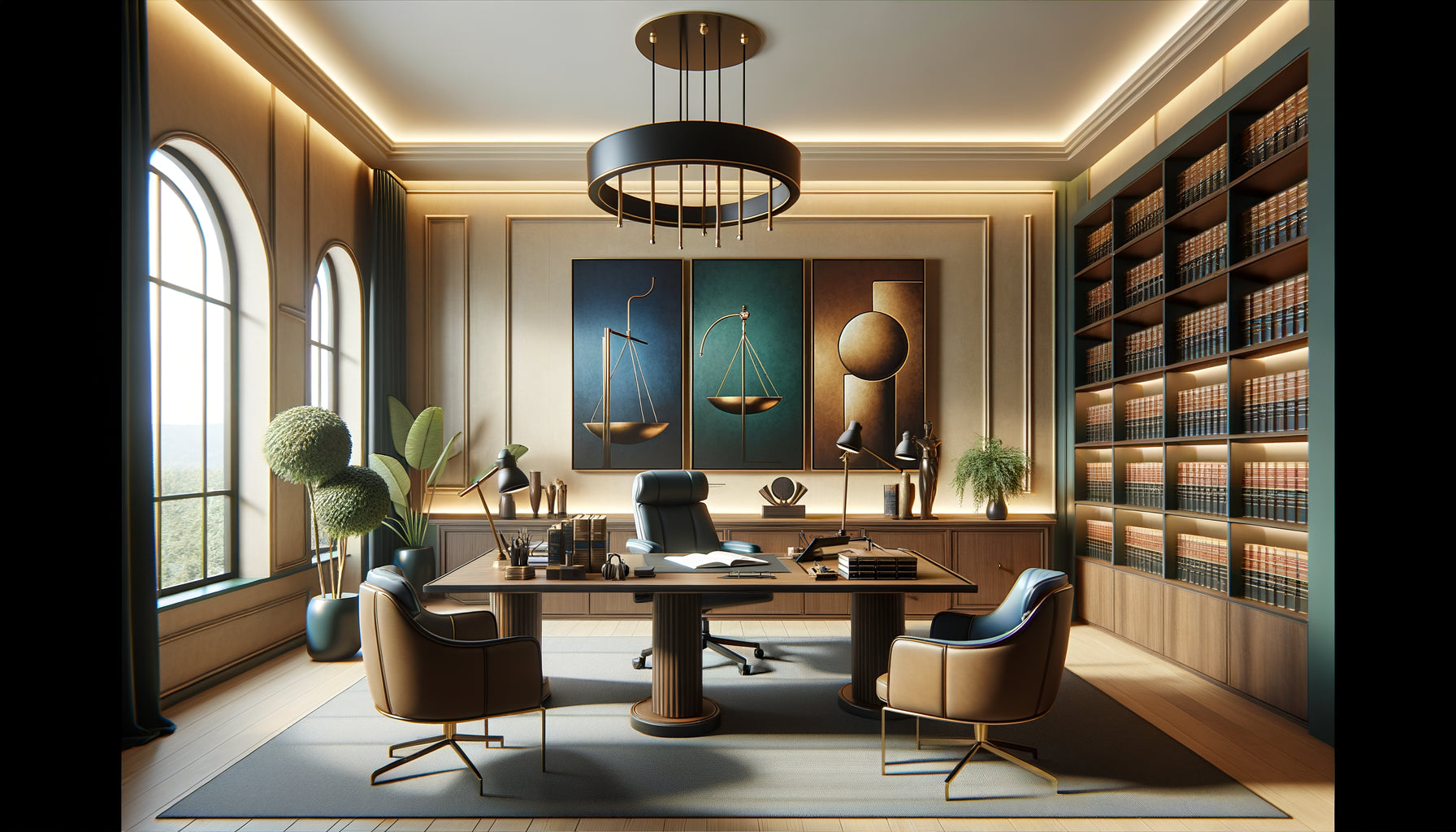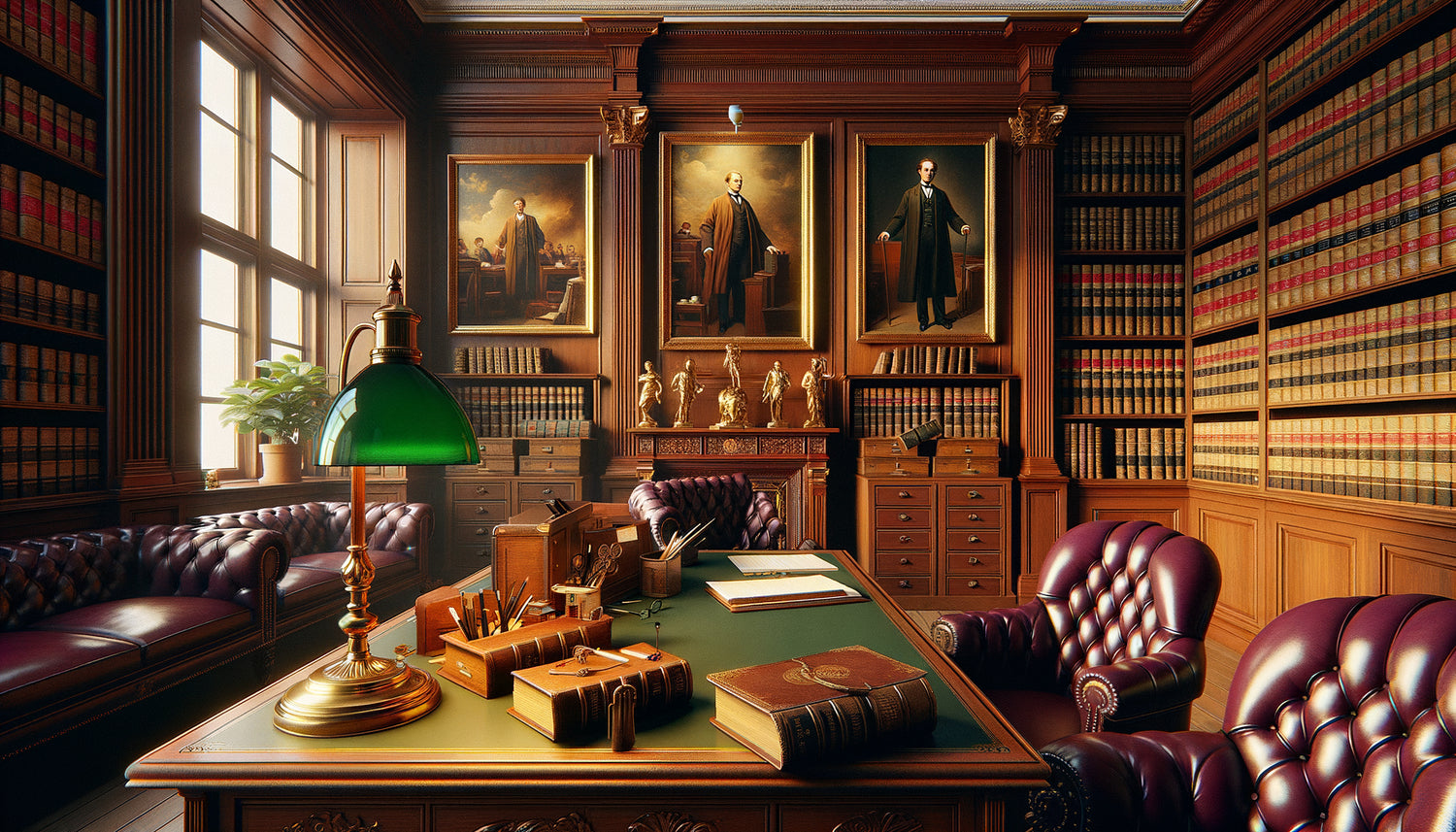
When I first walked through the doors of this notary's office founded in 1897, I was struck by the striking contrast between the original woodwork and the desperate emptiness of the walls. These historic places deserved more than a sterile neutrality. The choice of a figurative painting for a century-old notary's office is never trivial: it crystallizes the very identity of the firm, this subtle tension between tradition and modernity.
Here's what a well-chosen figurative painting brings to your notary's office: it reassures your clients by its connection to cultural heritage, it distinguishes your firm from competitors with a memorable visual signature, and it creates an environment conducive to trust during decisive moments in life. But faced with this dilemma – classic or contemporary style – many notaries hesitate, fearing betraying the heritage of their firm or, on the contrary, appearing stuck in the past. This question goes far beyond aesthetics: it engages your professional positioning. In this article, I will guide you through the visual codes, symbolic subtleties and concrete criteria to make the choice that authentically embodies your notarial practice.
The weight of heritage: why classic figurative art naturally dialogues with notary architecture
Century-old notary's offices have an architecture that speaks for itself: carved moldings, herringbone parquet floors, high ceilings. In these spaces imbued with solemnity, a classic figurative painting is an obvious historical fit. A romantic landscape from the 19th century, a Flemish genre scene or an academic portrait create a stylistic continuity that never surprises. Your clients, often in the midst of inheritance or heritage acquisition, find immediate resonance with their own concerns.
What fascinates about classic figurative art is its ability to convey immutable values. A still life with ripe fruits evokes abundance passed down from generation to generation. A French countryside landscape recalls attachment to the territory, so prevalent in notarial acts related to land. These works do not need to be explained: their visual language crosses eras effortlessly. For a notary's office whose clientele remains attached to traditions, this approach reassures and anchors your practice in a respected professional lineage.
The iconographic codes of notarial classicism
Some classic figurative motifs carry a particularly relevant symbolism for a notarial environment. Painted antique libraries, still lifes with books and goose feathers, scenes of contract signings from the past create a direct echo with your profession. Without falling into literal illustration, these figurative paintings establish an atmosphere where law, heritage, and transmission become almost palpable. I have often observed how a simple classic landscape of a rural estate could naturally initiate a conversation about land issues with a client.
When contemporary reinvents tradition: the controlled boldness of modern figurative art
Yet, more and more century-old notarial offices are daring to embrace contemporary figurative art. And this choice, far from breaking with history, can on the contrary magnify it. A contemporary painting with clean lines, its current palette, and a resolutely modern style injects new energy into these heritage spaces. It sends a powerful message: this firm honors its past while accompanying today's legal issues – PACS, SCI, anticipated transfers, complex patrimonial arrangements.
Contemporary figurative art has this rare quality of creating a harmonious contrast. In a waiting room with century-old paneling, a stylized silhouette in vibrant colors attracts the eye without jarring. It becomes a conversation starter, relaxing the often solemn atmosphere of notarial appointments. This approach particularly appeals to a younger clientele, entrepreneurs or first-time buyers, who are looking for notary advice that is both serious and accessible. Your notary firm thus affirms its double expertise: mastery of secular law and understanding of contemporary realities.
The criteria for a contemporary work respectful of the place
However, be careful: not all contemporary styles are suitable for a traditional notary office. Art that is too provocative or radical abstraction can create an unwelcome dissonance. Contemporary figurative art offers this ideal middle ground: it remains readable, narrative, recognizable, while displaying an assumed modernity. Prioritize works with timeless subjects – portraits, bodies in motion, urban architectures – treated with a contemporary sensibility. Mixed techniques, which combine pictorial tradition and modern materials, also create this bridge between eras that your professional space is looking for.

The psychology of your clients: decoding expectations according to your positioning
The choice between classical figurative and contemporary must absolutely take into account your dominant clientele. A notarial firm specializing in large family fortunes, castles and vineyards will naturally opt for reassuring classicism. These clients expect aristocratic discretion, an environment where nothing is excessive, where everything breathes permanence. A magnificent landscape by a master of the old school or a well-framed historical scene corresponds to their cultural codes.
Conversely, if your notarial office has positioned itself on supporting startups, real estate commercial structures or active urban clients, contemporary figurative becomes a differentiating asset. It signals your intellectual agility and your ability to navigate the complexities of modern law. I have accompanied several notaries in this reflection: the figurative painting is never neutral, it is an integral part of your professional positioning strategy.
The perfect balance: daring the eclectic collection in multiple spaces
Why choose? Notarial firms generally have several spaces with distinct functions. This multiplicity offers a rare opportunity: to deploy a coherent but varied collection. The main waiting room, the showcase of the firm, can accommodate an imposing classical masterpiece – think of those large 19th-century formats that command respect. This first impression establishes the historical credibility of your firm.
Individual offices, more intimate spaces for client relations, allow for more personal choices. A notary specializing in family law could install a contemporary figurative painting with soft tones, evoking intergenerational links with modern sensitivity. His colleague oriented towards business law might opt for a dynamic urban scene. The corridors and circulation areas then become transition galleries, where small classical and contemporary formats dialogue, telling the living history of your century-old firm.
Creating a coherent visual identity despite diversity
This eclectic approach nevertheless requires chromatic and thematic consistency. Define a dominant palette that respects the tones of your woodwork – often warm browns, deep greens, patinated golds. Your figurative paintings, whether they are classical or contemporary, must be part of this global harmony. The frames also play a crucial role: gilded leaf frames for antique works, clean wooden or brushed metal frames for modern pieces. This attention to detail transforms a simple accumulation into a true thoughtful collection.

The Fatal Mistakes to Avoid in a Notarial Patrimonial Firm
Certain pitfalls await the notary who wishes to decorate their office without artistic expertise. The first trap is cheap reproduction. In a century-old firm, a framed digital print instantly devalues the entire ensemble. Your clients, often collectors themselves, immediately recognize the lack of material, texture, and that physical presence offered by a true work of art. Invest in originals, even from young contemporary artists, rather than copies of famous works.
The second mistake is thematic inadequacy. I have seen firms install ultra-casual beach scenes or aggressive abstractions totally out of place. Figurative art must remain consistent with the notarial universe: dignity, transmission, inscription in the long term. Avoid overloading as well. A notarial firm is not a commercial gallery. A few strong pieces, well positioned, are infinitely better than an accumulation that disperses attention during appointments where concentration is essential.
The Question of Lighting: Reveal the Artwork Without Betraying the Architecture
A figurative painting, whether classic or contemporary, only truly comes to life under appropriate lighting. In your spaces with often reduced windows to preserve privacy, museum lighting becomes essential. Adjustable LED spotlights with a neutral color temperature highlight each work without assaulting the eye. They also create that subtle theatricality which enhances your artistic investment. Call on a specialized lighting designer: it is the detail that transforms a simple hanging into a professional staging worthy of a firm of scale.
Your notarial firm deserves an artistic signature worthy of it
Discover our exclusive collection of wall art for law firms that combines classic prestige and assumed modernity to affirm the unique identity of your century-old firm.
Visualize Your Firm Transformed: Living Tradition and Respectful Modernity
Imagine your clients stepping into your notary’s office. Their gaze is immediately captured by this masterful figurative painting that dialogues with the architecture without competing with it. Whether classic or contemporary, it tells your story, affirms your values, and creates that unique atmosphere where serenity and dynamism blend. Conversations begin differently; waiting becomes a moment of contemplation rather than anxiety.
Your century-old notary’s office is not a frozen museum but a living space that welcomes your clients' life projects. The artistic choice you make – classic figurative to anchor your historical legitimacy, contemporary to signal your intellectual modernity, or a mixed collection to affirm your ability to navigate between eras – is yours. There is no single answer, only the one that resonates authentically with your practice and your ambitions.
Start by identifying the space that would benefit most from an artistic intervention. Consult galleries specializing in notarial and legal art. Take the time to observe how each work changes the energy of your space. And above all, trust that intuition that has guided you throughout your career: you know how to recognize what is right, balanced, and meaningful. Your office deserves it, your clients will notice it, and you will gain that daily pride in practicing in a place that truly resembles you.
Frequently Asked Questions about Choosing a Figurative Painting for a Notary’s Office
Could a contemporary painting shock a traditional notary clientele?
This concern is legitimate but often unfounded if you respect certain principles. Contemporary figurative art remains recognizable and narrative, unlike radical abstraction. Choose works with timeless subjects – portraits, landscapes, scenes of life – treated with a modern but restrained style. Avoid garish colors or overly experimental compositions. A quality contemporary painting, well framed and professionally lit, exudes an elegance that transcends generational divides. I have found that even the most conservative clients appreciate the visual freshness brought by a well-chosen modern work, as it signals a living office that honors the past while accompanying the present. The essential thing is that the artwork breathes dignity and reflection, fundamental values of your profession, regardless of its creation era.
What size painting should be prioritized for the main waiting room of a century-old notary’s office?
In a spacious notary's office, typical of old architecture, never underestimate the impact of a large format. For a main wall in a waiting room, aim for a minimum width of 120 to 150 cm. A figurative painting of this scale has the presence needed to structure the space without being overwhelmed by high ceilings and imposing woodwork. Conversely, a small canvas lost on a large wall creates an unfortunate imbalance. However, always adapt the size to the specific proportions of your space: a panoramic horizontal format suits long walls between two doors, while a vertical format enhances a niche or a transom window. Experiment with cardboard templates before purchasing. And don't forget the rule of thirds: your painting should ideally cover about two-thirds of the width of the furniture or space above which it is hung to create a harmonious visual balance.
Should you favor established artists or can you bet on emerging talents?
This question relates to investment as much as it does to aesthetics. For your centerpiece in the main waiting room, an established artist brings immediate credibility. Cultured clients may eventually recognize the name or style, reinforcing the image of discernment of your notary's office. However, authentic works by old masters often exceed reasonable budgets, and contemporary artists reach considerable sums quickly. Emerging talents represent a sensible alternative for your secondary spaces: you obtain original quality artworks at accessible prices, while supporting living creation. Prioritize artists with degrees from recognized schools, regularly exhibiting in galleries, with a consistent approach. Their rating may also increase, turning your decorative purchase into a heritage investment. The essential thing is that each figurative painting, whatever the status of its creator, authentically dialogues with your architecture and professional values. The sincerity of the choice counts more than the notoriety of the signature.