Imagine entering an 18th-century library. The heavy mythological paintings that once dominated the walls have given way to delicate arabesques, floral garlands, and playful medallions. This shift is not accidental: it tells a silent revolution in how European aristocracy conceived of knowledge, pleasure, and intimacy.
Here's what this transformation brings: a new lightness in the art of living, rediscovered intimacy with books, and a celebration of intellectual pleasure freed from heavy conventions. You may have wondered why some antique interiors breathe heaviness while others invite contemplative wandering. The answer lies in that pivotal moment when Rococo libraries chose grace over grandeur. Rest assured: understanding this evolution requires no expertise in art history. I invite you to discover how this decorative metamorphosis reflects a profound change in our relationship with knowledge and beauty, and how it continues to inspire our most refined interiors today.
When the gods leave the libraries
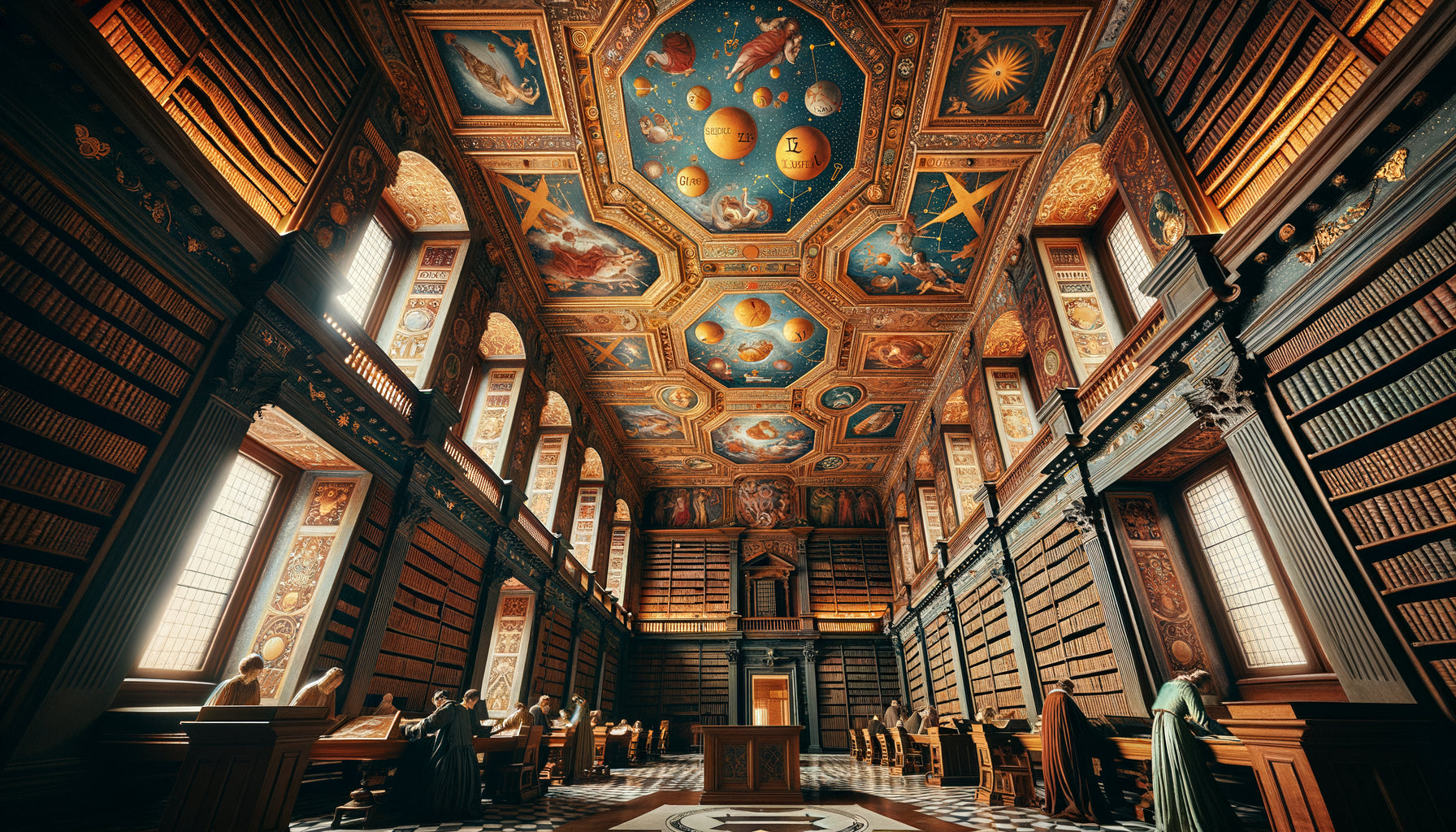
Baroque libraries of the 17th century resembled secular cathedrals. On their walls, monumental narrative cycles unfolded the exploits of Hercules, Ovid's Metamorphoses, or allegories of cardinal virtues. These imposing frescoes transformed the act of reading into a solemn ceremony, where the reader constantly felt observed by great figures from antiquity.
This aesthetic corresponded to a vision of knowledge as power and prestige. Aristocratic libraries were theaters where social legitimacy was played out. Owning books was not enough: it was necessary to embed them in a decor that proclaimed the owner's erudition, his lineage with the great minds of the past.
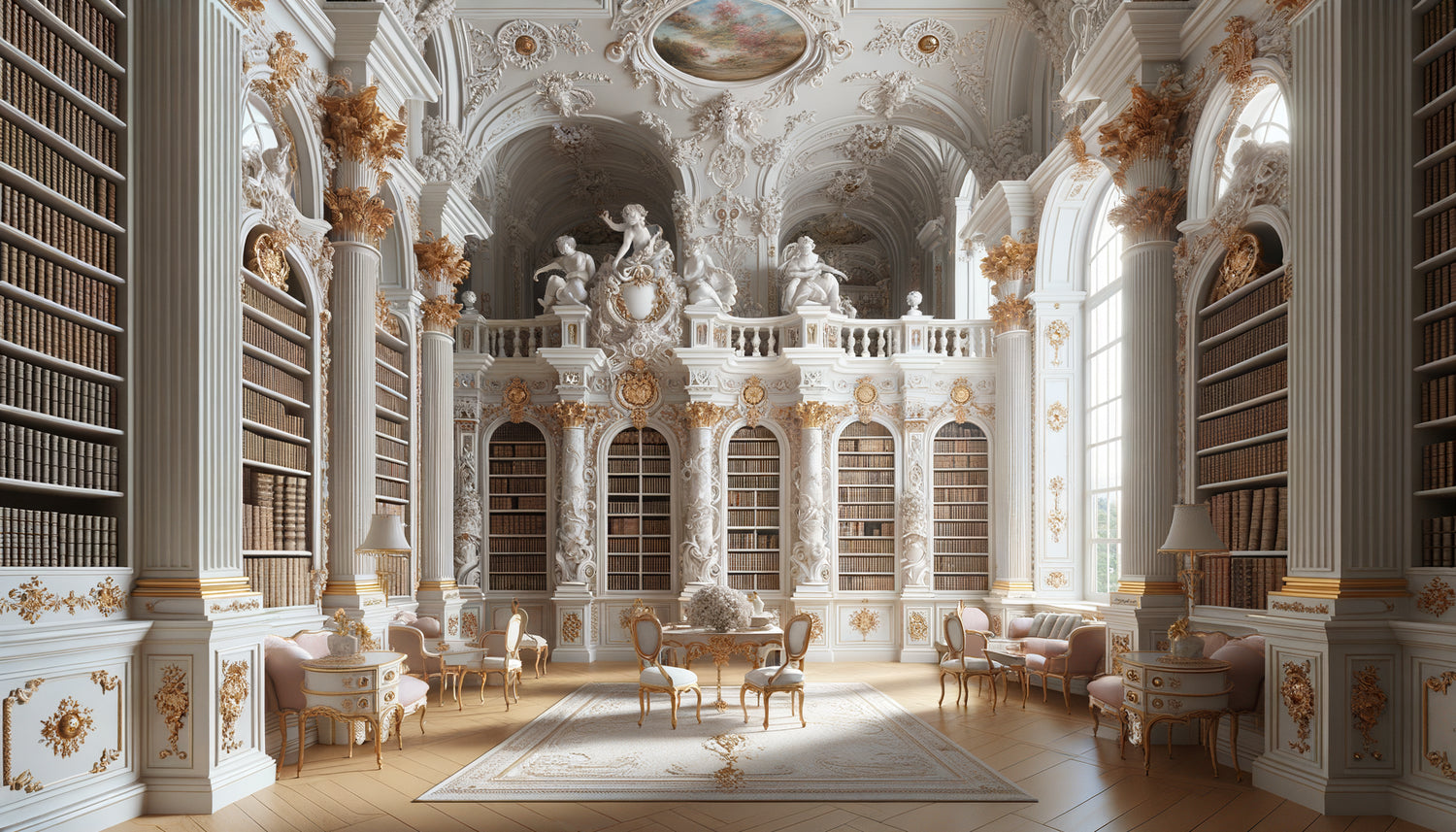
But around 1720, something shifts. The grand narrative cycles begin to disappear from Rococo libraries, replaced by lighter ornaments: asymmetrical shells, vegetable tendrils, rustic medallions. This is not a simple fashion effect. It is the symptom of a profound cultural revolution that redefines the relationship with books and intellectual intimacy.
Rediscovered intimacy: the library as refuge
Rococo is born from a new aspiration: that of intimacy. After the overwhelming splendor of Versailles, French aristocracy aspires to warmer, more personal spaces. Salons multiply, reading rooms become havens of peace where one can finally be alone with their thoughts.
In this context, grand narrative cycles suddenly appear as visual constraints. Their solemnity imposes a mode of reading, dictates an intellectual posture. Rococo ornaments, on the other hand, free up space. They do not tell a story, they do not convey a moral message. They simply wrap the reader in an atmosphere of lightness and grace.
Pleasure versus Duty
Rococo libraries celebrate the pleasure of reading rather than the duty of being educated. Light ornamentation – garlands of flowers, playful putti, pastoral scenes – create a relaxed atmosphere. Reading is no longer an exercise in secular piety but a refined entertainment.
This evolution reflects the influence of literary salons, dominated by women such as Madame de Pompadour or Madame du Deffand. These circles prioritize witty conversation, clever remarks, and intellectual elegance. Rococo libraries become extensions of these salons: spaces where knowledge is savored rather than imposed.

The Revolution of Formats: From Folio to Paperback
The abandonment of grand narrative cycles coincides with a material transformation of the book itself. Imposing folios gradually give way to more manageable formats: octavo, twelvemo. Books become objects that can be held in one hand, carried into a garden, read comfortably in an armchair.
This miniaturization transforms the architecture of libraries. Walls are no longer used solely to display heavy bound volumes as trophies. They now welcome more varied collections, more personal: novels, correspondence, poetry collections. The light ornamentation of rococo perfectly corresponds to this diversity. It does not crush books under the weight of an iconographic discourse: it accompanies them with discretion.
The Eye Finally Free to Wander
In a baroque library, the gaze is constantly solicited by large mural compositions. In a rococo library, it can finally settle, wander among light ornaments, rest on a delicate console, Chinese porcelain, a painted medallion. This visual freedom reflects a new conception of culture: not as a fixed corpus of knowledge to be venerated, but as a garden where each person gathers what they like.
Rococo ornamentation functions as visual punctuation marks: they rhythm the space without saturating it, create breaths, contemplative pauses. They invite the eye to dance rather than kneel.
The Influence of Cabinets of Curiosities
Rococo libraries draw inspiration from the aesthetics of curiosity cabinets. These spaces collected, without hierarchy, exotic shells, scientific instruments, antique medals, and taxidermied animals. Their logic was not narrative but associative, poetic.
By abandoning grand narrative cycles, libraries adopt this same logic of juxtaposition. Light ornaments – rockwork, stylized shells, Asian motifs – evoke the diversity of the world rather than the coherence of a story. They transform the library into a microcosm where knowledge from Europe and elsewhere, antiquity and modernity, seriousness and whimsy coexist without hierarchy.

A modernity that still inspires
This rococo revolution is not just a thing of the past. It continues to inspire our most successful contemporary libraries. Even today, interiors that breathe intellectual serenity favor discreet ornaments over monumental statements.
Think of Scandinavian libraries with their clean lines punctuated by a few carefully chosen objects. Or Parisian home libraries where delicate moldings frame eclectic collections. All inherit this rococo intuition: the decor of a library should complement reading, not dominate it.
Create your own atmosphere of lightness
To recapture this spirit in your interior, prioritize elegant simplicity. A few delicate frames rather than a mural. Objects that dialogue with your books without eclipsing them: an antique porcelain, a framed herbarium, a botanical print. The idea is not to copy the rococo style, but to understand its philosophy: let the space breathe, create visual resting points, invite serene contemplation.
Transform your library into a haven of serenity
Discover our exclusive collection of Library Wall Art that celebrates lightness and timeless elegance, to create the atmosphere of intellectual refinement you dream of.
Conclusion: grace versus gravity
The abandonment of grand narrative cycles by rococo libraries was not an impoverishment but a liberation. By choosing lighter ornamentation, the aristocracy of the 18th century reinvented the reading space as a place of intimacy and pleasure. This silent revolution still speaks to us today: it reminds us that the most beautiful interiors are not those that impress, but those that invite you to linger, to dream, to read. Start with a single gesture: choose a delicate ornament that will dialogue with your books rather than dominate them. You'll see how the space suddenly breathes differently, how reading becomes what it should be again: an intimate and free pleasure.
FAQ : Your questions about rococo libraries
What exactly characterizes a rococo library?
A rococo library is recognizable by its light and asymmetrical ornamentation: stylized shells, plant tendrils, delicate medallions, often in pastel or gold tones. Unlike Baroque libraries with their large narrative frescoes, it favors grace and intimacy. The woodwork is finely carved but never imposing. The goal is to create an elegant setting for books, not to crush them under an iconographic discourse. If you visit 18th-century castles, look for these spaces where the eye can rest: this is the signature of rococo, an art of mastered lightness.
Can we be inspired by the rococo style in a modern library?
Absolutely, and it's even one of the best sources of inspiration for creating a soothing contemporary library. The spirit of rococo is not just about gilding and curves: it is above all a philosophy of light decor. In a modern interior, this translates into subtle choices: a few delicate moldings rather than an overloaded wall, carefully chosen decorative objects, a soft color palette. The rococo idea of prioritizing the pleasure of reading over the exhibition of knowledge remains deeply relevant. Think elegant minimalism rather than ostentatious accumulation.
Why do light ornaments create a better reading atmosphere?
Research in environmental psychology confirms it: a cluttered decor fatigues the eye and disperses attention. The light ornaments of rococo work differently: they create visual resting points without imposing a narrative. Your brain doesn't have to decipher a complex scene, it can simply appreciate a harmonious form before returning to your book. That’s the difference between soothing background music and a noisy conversation. In a library, the decor should accompany concentration, not compete with it. Rococo ornaments, through their elegant discretion, create exactly this atmosphere of serenity conducive to prolonged reading and intellectual pleasure.