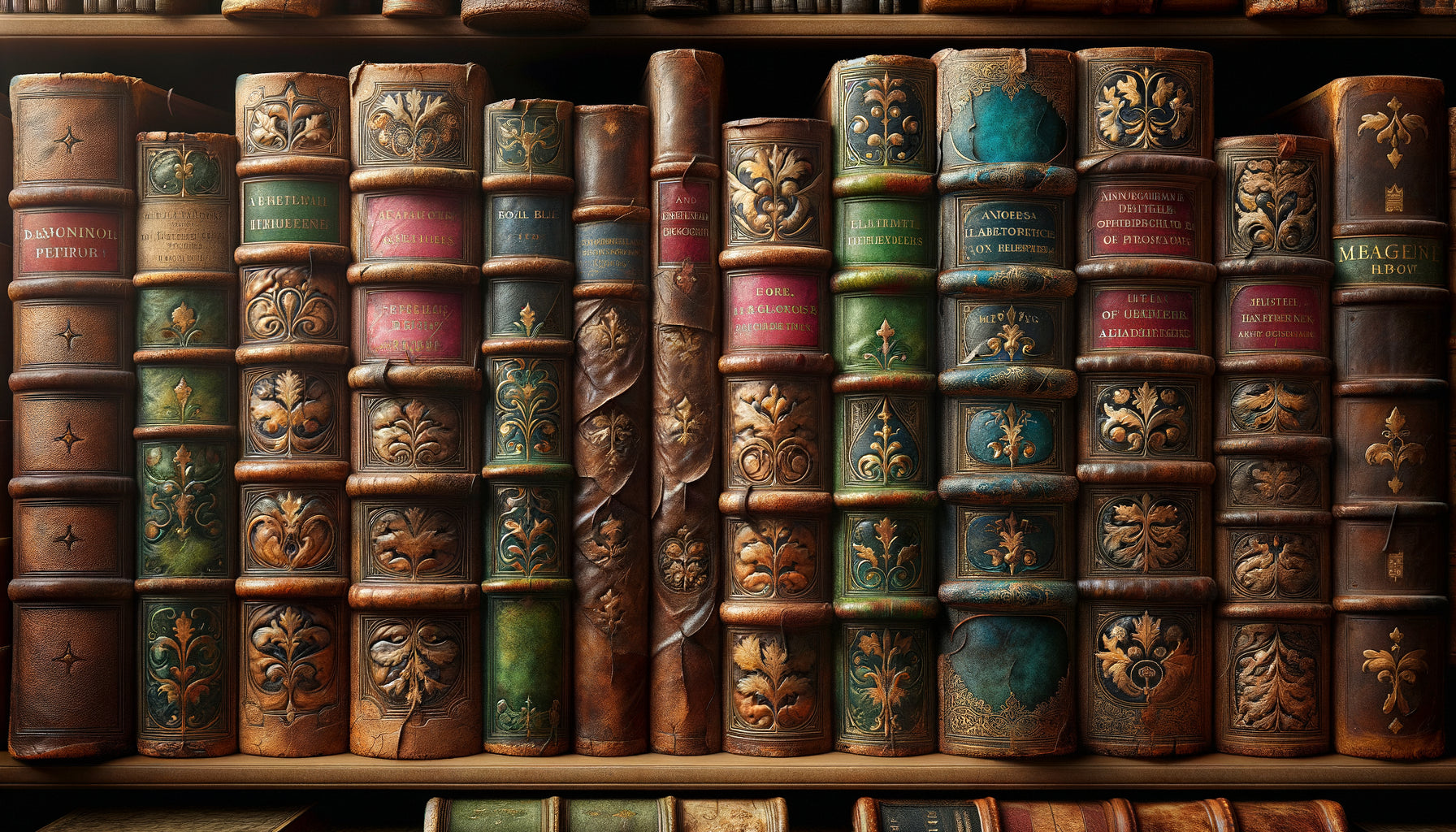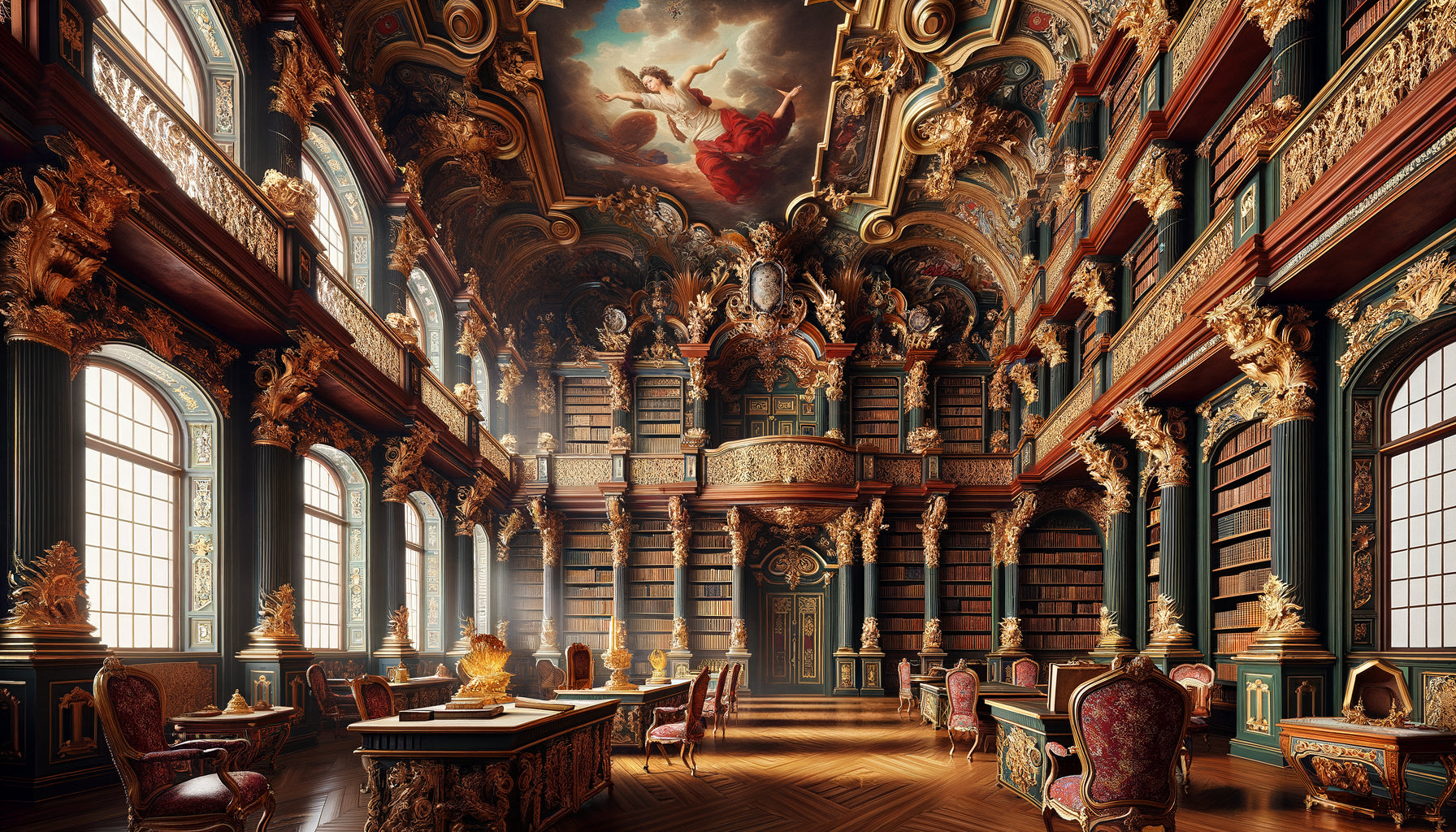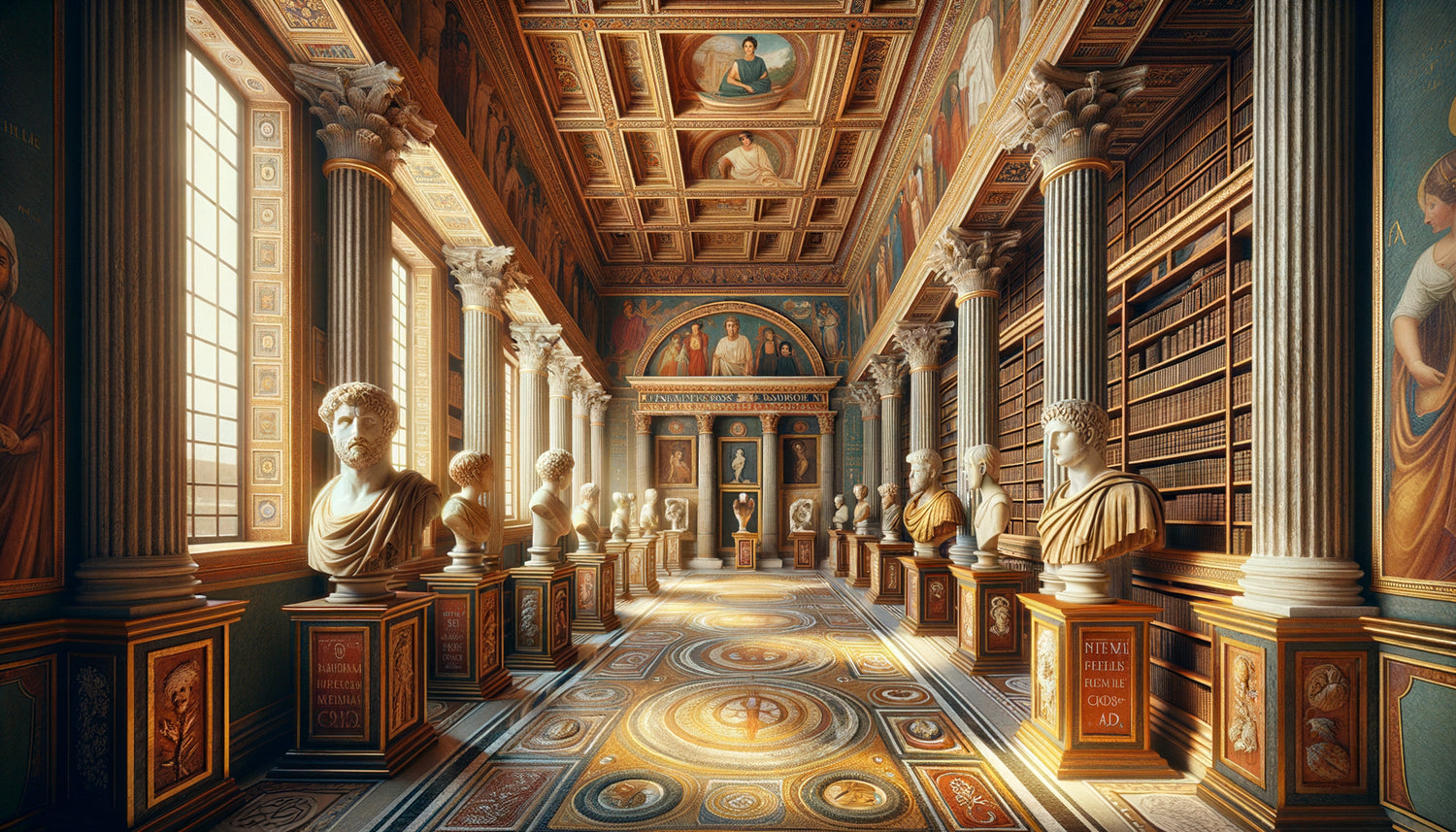
Look up in an old library. There, between leather bindings and patinated gilding, faces watch you. Serious or melancholic glances, frozen in golden frames. These portraits of writers, philosophers, poets seem to guard the place like silent sentinels. Who decided one day that books were not enough, that it was also necessary to summon the souls of their creators?
Here's what this tradition reveals: a timeless dialogue between the reader and the author, a sacralization of written thought, and a sophisticated way to transform a reading space into a temple of knowledge.
Many dream of creating a personal library that breathes elegance and history. But how to infuse this atmosphere of great European libraries without falling into fake decoration? How to truly honor the masters of literature?
The good news is that this millennial tradition obeys precise codes, rooted in the history of art and culture. By understanding its origins, you can recreate this magic in your own interior, with authenticity and depth.
Let's explore together this decorative ritual that transforms a simple room filled with books into a sanctuary of thought.
Ancient roots: when philosophers joined the gods
It all begins in ancient Rome. Patrician libraries did not simply align papyrus scrolls. They welcomed sculpted busts of Greek thinkers: Homer, Aristotle, Plato. These marble or bronze effigies were not mere ornaments. They materialized the idea that wisdom had a face, that knowledge was embodied.
In the Villa of the Papyri in Herculaneum, buried by the eruption of Vesuvius in 79 AD, archaeologists discovered a library adorned with dozens of sculpted portraits of philosophers. The cultured owners of the time were thus creating an intellectual pantheon, an Olympus of letters where the masters of different schools of thought dialogued.
This practice translated a profound conviction: reading an author is conversing with him. The portrait made this conversation almost tangible, creating a spectral but comforting presence. Romans did not read alone; they read surrounded by their spiritual guides.
The Renaissance studiolo: intimacy with geniuses
In the 15th century, Italian humanists revived this tradition with a new fervor. The studiolo – this private study room – becomes the perfect setting to celebrate classical and contemporary authors. Federico da Montefeltro, Duke of Urbino, had realized in his studiolo a series of trompe-l'oeil portraits representing twenty-eight illustrious men: Homer is alongside Dante, Cicero dialogues with Petrarch.
These author portraits are no longer sculpted but painted, often in medallions or false niches. Painting allows for more nuances, more humanity. Facial features and expressions can now be distinguished, sometimes even a book open in the thinker's hands. The library becomes an intellectual space of contemplation, almost mystical.
The golden age of monastic and aristocratic libraries
In the 17th and 18th centuries, the tradition of author portraits in libraries reached its peak. Monastic libraries rivaled each other in splendor. At Wiblingen Abbey in Germany, at Strahov in Prague, reading rooms resembled cathedrals of knowledge, adorned with frescoes depicting the Fathers of the Church and great theologians, while painted portraits decorated the walls.
The French and English aristocracy followed suit. In castles and mansions, the library became a reception room as well as a workspace. Hanging portraits of great authors testified to the owner's refinement, their belonging to a cultured elite. Molière, Racine, Shakespeare, Milton: their faces adorn the paneled walls, creating a gallery of immortals.
These portraits function as social markers. They proclaim: “Here, we think. Here, we honor the mind.” They distinguish the true library – a place of reflection and erudition – from a simple bookcase.
The choice of authors: a mirror of the reader's soul
Which authors deserved the honor of being portrayed? This choice was far from trivial. It revealed the intellectual affiliations of the library owner. A philosopher of the Enlightenment would display Voltaire and Rousseau. A conservative royalist would prefer Bossuet and Fénelon. An English romantic would celebrate Byron and Shelley.
Author portraits thus transformed the library into a visual manifesto of the reader's convictions. They also created a form of benevolent pressure: how could one not stand intellectually straight when Montaigne or Descartes observe you from their frame?

The democratic revolution of the 19th century
The 19th century marks a turning point. With the rise of lithography and mechanical reproduction of images, author portraits become accessible beyond the aristocracy. The cultured bourgeoisie can now adorn their personal library with engravings depicting Hugo, Balzac, or Goethe.
Editors themselves are participating in this movement. They publish illustrated editions including the author's portrait on the frontispiece. This practice strengthens the link between the work and its creator, humanizes the act of reading. The reader no longer simply consumes a text; they meet a person.
In the burgeoning public libraries of this era, portraits of authors serve a pedagogical function. They embody the republican ideal of education for all. Children from working-class families discover the faces of Molière or La Fontaine, tutelary figures of a cultural heritage now shared.
Why this tradition persists today
In the digital age, why do we continue to hang portraits of authors in our libraries? Because this practice responds to deep psychological needs.
First, it creates historical continuity. By displaying Shakespeare or Proust, we enroll ourselves in a lineage of readers that spans centuries. We affirm our belonging to a timeless intellectual community.
Next, these portraits exert a form of inspiring presence. They transform the library into a creative workshop. How many aspiring writers have found the courage to put pen to paper feeling the benevolent gaze of their masters from the wall?
Finally, they offer a human counterpoint to the abstraction of books. The aligned bindings can seem impersonal, even intimidating. The faces of the authors recall that behind each text, there was a life, doubts, passions. They demystify literature without devaluing it.
How to choose your author portraits today
To create your own literary gallery, prioritize authenticity. Select authors that you have actually read, whose works have marked your journey. A portrait of Dostoevsky only makes sense if *Crime and Punishment* has truly shaken you.
Vary the eras and styles to create a visual dialogue. A living library blends classics and contemporaries, thinkers and novelists, French and international voices. This diversity reflects the richness of your intellectual universe.
Pay attention to the aesthetic quality of the reproductions. A pixelated or poorly framed portrait breaks the charm. Invest in quality prints, on thick paper, with frames that dialogue with your furniture.
Transform your library into a literary sanctuary
Discover our exclusive collection of Library Wall Art that captures the essence of the greatest authors with elegance and authenticity.

Create Your Personal Pantheon
You now hold the keys to a millennial tradition. These author portraits are not mere decorations: they are the guardians of your literary universe, silent witnesses to your readings, companions to your solitary reflections.
By integrating them into your library, you're not copying a trend. You're perpetuating a ritual that connects the first Roman collectors with bibliophiles today. You affirm that reading is not a solitary act but a conversation across time.
Start modestly. Choose a first portrait, that of the author who changed your perspective on the world. Hang it near your favorite books. Observe how it transforms the atmosphere, how it invites you to sit down, open a volume, and let yourself be carried away.
Then, over time, as you read and discover new works, build your gallery. Let it evolve with you, a faithful reflection of your intellectual journey. Your library will then become much more than furniture: a portrait of your soul, populated by the faces of those who have nourished it.
Frequently Asked Questions About Author Portraits in a Library
Which authors should I choose to start my portrait collection?
Start with the authors who have truly marked your reading journey. There's no obligation to follow an academic canon. If Virginia Woolf moved you, she deserves a place as much as Shakespeare. Authenticity is more important than prestige. For a harmonious first selection, opt for three to five authors covering different eras: an ancient classic (Molière, Cervantes), a 19th-century author (Hugo, Austen), and a modern one (Camus, Hemingway). This diversity creates an interesting visual dialogue. Also think about aesthetic balance: vary the styles of portraits, the periods of creation, to avoid monotony. Your library will then tell your personal literary story, not that of a textbook.
Where should I place author portraits in my library?
The ideal placement depends on your layout, but some principles work universally. Portraits look best hung above shelves, creating a frieze that crowns your books. This arrangement echoes the design of historical libraries. If your shelves reach the ceiling, integrate portraits between sections of books, creating visual pauses that rhythm the library. For a small space, a single focal portrait above your reading chair creates an elegant point of focus. Avoid scattering portraits throughout the room: their strength comes from their dialogue with the books. Group them to create a true literary gallery, a dedicated space where looks and texts respond harmoniously.
Are author portraits suitable for modern libraries?
Absolutely, and they even find renewed relevance there. In a contemporary interior, author portraits create a sophisticated contrast between tradition and modernity that is the charm of today's spaces. The trick is to adapt the style of reproductions: prioritize clean graphic formats, minimalist frames in light wood or matte metal, contrasted black and white prints. Stylized portraits or contemporary illustrations of classic authors work perfectly. This approach respects the spirit of tradition while fitting into today's aesthetics. The mix of eras testifies to the permanence of literature: Shakespeare remains current in a minimalist loft, Baudelaire dialogues with Scandinavian design. The key lies in the consistency of your selection and the quality of its presentation.