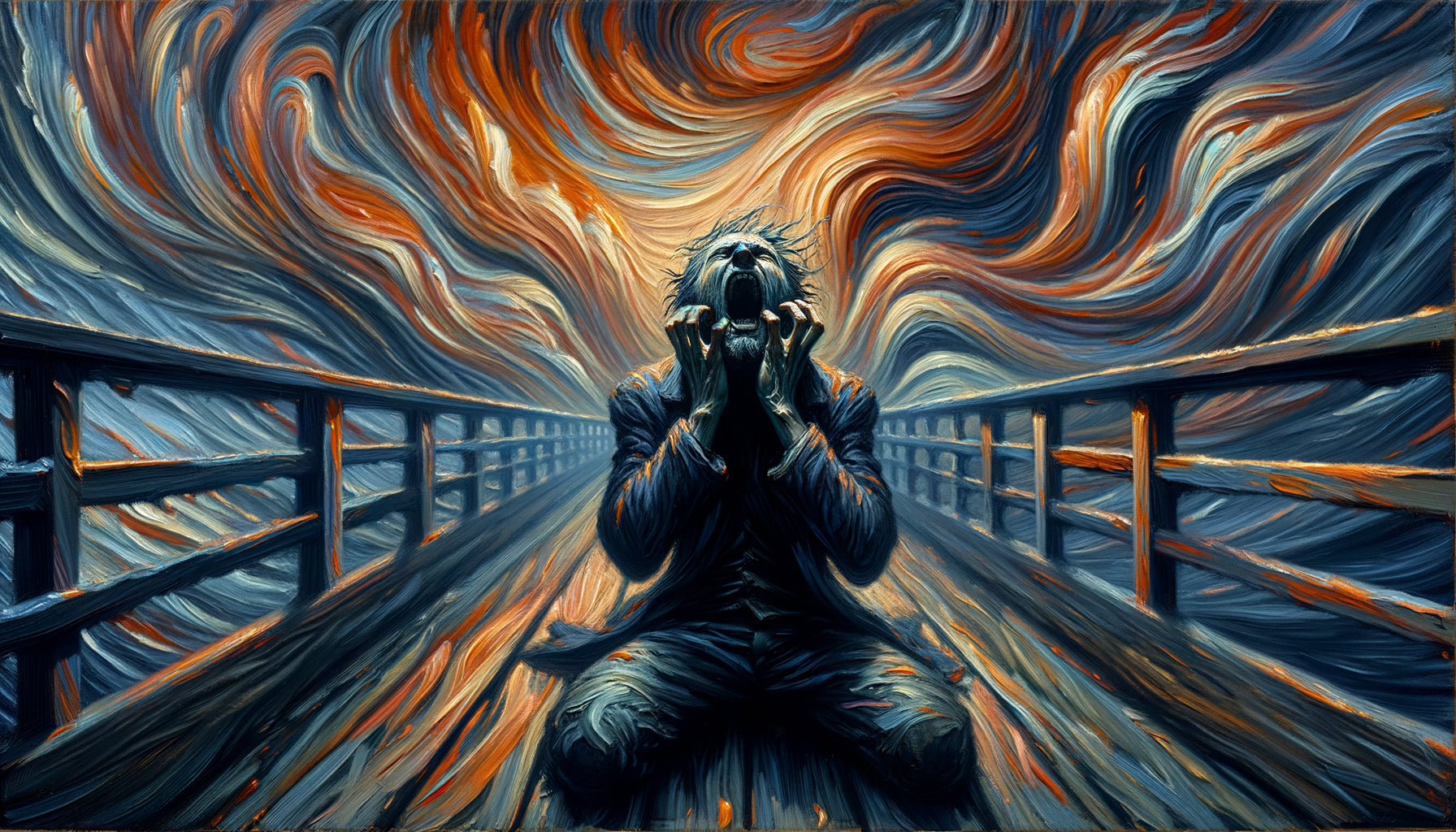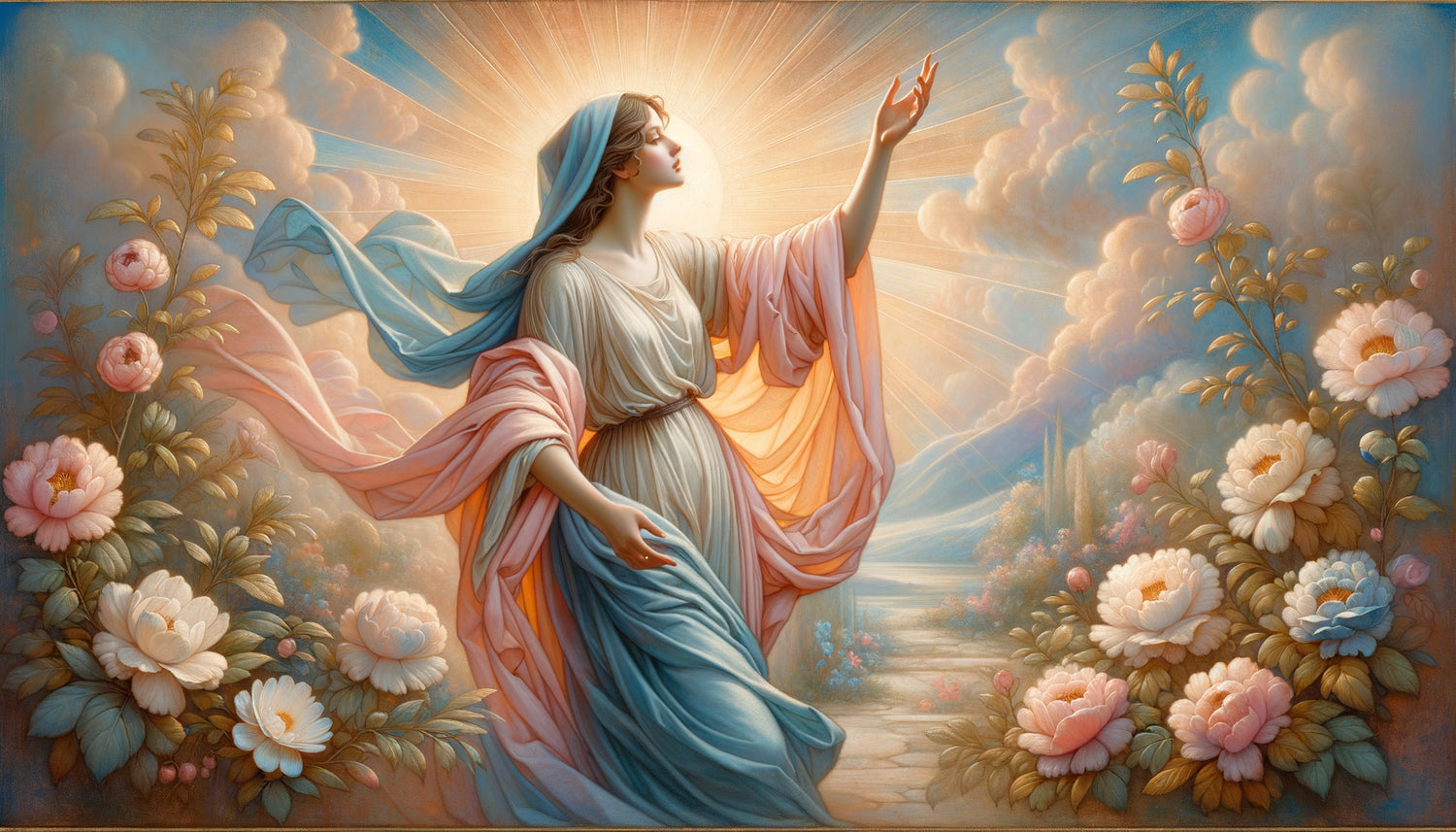
There are canvases that stop us dead in our daily rush. These works where the light seems to emerge from the shadows, where each brushstroke whispers that after winter always comes spring. Hope in art is not just wall decor: it's a visual breath, a pictorial antidote to the surrounding cynicism that transforms our interiors into sanctuaries of resilience.
Here’s what hope in painting brings to your living space: a luminous presence that dialogues with your morning mood, a visual narrative of rebirth that accompanies your moments of doubt, and that particular energy of works that refuse resignation. Three silent promises hung on your wall.
How many times have you felt helpless facing the news, seeking a visual counterweight to this saturation of anxiety-inducing images? Your walls remain neutral, inert, when they could become allies in your quest for emotional balance. Rest assured: you don't need a doctorate in art history to understand how optimistic symbolism in painting can truly change the atmosphere of a room. I will show you how some works have crossed centuries carrying a message of rebirth, and how to intelligently integrate them into your daily life.
When color refuses to surrender: hope as a pictorial manifesto
Observe Botticelli's Spring: this floral explosion is not naivety, it’s a political statement. Painted in Florence during times of instability, this painting affirms that beauty has the right to exist despite chaos. Hope in art often takes this form: a colorful middle finger to adversity.
Turner, with his incandescent suns piercing industrial mists, was not simply documenting landscapes. He asserted that even in England's sooty Industrial Revolution, light always finds its way. His vibrant golds and oranges transformed pollution into luminous poetry.
In your living room, a reproduction of these works doesn’t function as a simple ornament. It creates an emotional focal point, a place where the gaze comes to rest when the mind races. The warm colors of hopeful paintings – those sunny yellows, tender greens, and celestial blues – subtly influence our emotional chemistry.
The visual codes of pictorial optimism
Optimistic symbolism in painting obeys a precise grammar. Ascending lines (trees rising towards the sky, staircases, birds in flight) create a dynamic of elevation. Light sources positioned on the horizon suggest a radiant future. Human figures turned towards the light literally embody hope.
Klimt, in his golden portraits, enveloped his subjects in spirals and luminous geometric patterns. This profusion of ornamentation was his way of asserting that life deserves to be celebrated down to its smallest details. Each gold leaf applied constituted an act of faith in beauty.
Rebirth after the storm: artworks born from the ashes
Art history is full of works where hope emerges directly from trauma. After World War I, artists did not sink into total despair: they invented new forms of visual optimism.
Chagall, a refugee, painted lovers floating above burning villages. His canvases rejected physical and emotional gravity. The rebirth in painting often takes this dreamlike form: a parallel world where the laws of gravity do not apply, where bouquets of flowers defy bombings.
Matisse, confined to bed after his operation, created his most joyful cut-out gouaches. Unable to hold a brush, he cut out shapes with scissors and orchestrated ballets of pure colors.
Hope is not the absence of darkness
The most powerful paintings about rebirth never deny the night. Caravaggio mastered this paradox: his dark backgrounds made his lighting miraculous. Optimistic symbolism gains credibility when it acknowledges the shadow. A sunrise only makes sense after the night has been crossed.
Rembrandt, in his late self-portraits, painted a face marked by age and trials, but illuminated by a golden light that suggested hard-earned wisdom. This mature form of hope – not juvenile recklessness, but conscious resilience – resonates particularly in our contemporary interiors.

Compose your own gallery of visual resilience
Integrating hope in art into your decor requires more reflection than a simple impulsive purchase. Where does your gaze settle during difficult times? It is there that an optimistic work will deploy its maximum power.
In a home office, a reproduction of Van Gogh's
For a bedroom, prioritize dawn or spring scenes. Monet's Impression, soleil levant, with its morning mist crossed by orange light, creates an atmosphere of daily renewal. Each awakening becomes a symbolic rebirth.
The color associations of optimism
The symbolism of optimistic painting dialogues with your existing decorative palette. Bright yellows (lemon, gold, saffron) amplify the energy of a south-facing room. Soft greens (jade, celadon, mint) bring a regenerating freshness to Nordic spaces. Sky blues create a feeling of vertical expansion, particularly valuable in low ceilings.
Avoid contradictory associations: a radiant painting lost in a dark and cluttered environment will lose its impact. Visual hope needs space to breathe, appropriate lighting to reveal its nuances, and an entourage that does not immediately contradict it.
The new masters of contemporary hope
Contemporary art extends this tradition of renaissance in painting. David Hockney, with his Yorkshire landscapes in saturated colors, celebrates exuberant vegetation with the intact wonder of a child. His pink and electric blue trees do not document nature: they offer an amplified version of it, overflowing with optimism.
Yayoi Kusama, despite a career marked by psychiatric hospitalizations, covers the world with colored dots. Her Infinity Rooms transform obsession into cosmic celebration. This alchemy – transforming suffering into wonder – may represent the ultimate form of hope in art.
Street artists like Shepard Fairey or Kobra create monumental murals carrying universal messages. Their colorful figures, often inspired by cultural icons, act as totems of hope in urban space. Transposed into wall reproductions, they bring the same rebellious and optimistic energy into private interiors.
Digital art and perpetual renaissance
Digital creators are reinventing optimistic symbolism with the tools of the 21st century. Infinite loops, fluid metamorphoses, neon palettes create an aesthetic of permanent transformation. In a world of screens, this form of art affirms that change can be a source of wonder rather than anxiety.
Installing a digital artwork in an electronic frame allows you to modulate your daily dose of visual optimism. In the morning, an explosion of bright colors; in the evening, a more soothing composition. This adaptability perfectly meets contemporary emotional rhythms.
Transform your walls into a manifesto of optimism
Discover our exclusive collection of artwork inspired by famous artists that inspire hope and light into every room in your home.

Living daily with hope hanging on the wall
A work carrying hope in art is not an ordinary decorative purchase: it's an emotional companion. After a few weeks, you will notice how your gaze instinctively seeks it during difficult mornings, how it anchors your daily rituals.
Create visual dialogues: combine a bright painting with soft textiles, living plants, warm lighting. The optimistic symbolism in painting acts as a catalyst that reveals and amplifies the other positive elements of your environment.
Some collectors create “walls of resilience”: an evolving assembly of artworks, personal photographs, quotes that constitute a visual archive of their own renaissance. Each element documents a moment when hope triumphed over discouragement.
Art carrying hope does not need to be expensive to be effective. A carefully chosen and properly framed reproduction delivers the same message as an inaccessible original. What matters is intentionality: consciously deciding to invite light into your living space.
Imagine yourself in six months, going through a complicated period. Your gaze falls on that painting of rebirth that you installed today. Its colors remind you that others have survived worse. Its ascending shapes suggest that no situation is definitive. This simple visual presence imperceptibly changes your mental posture. You straighten your shoulders. You breathe deeper. You choose hope again, guided by this silent alliance between art and life.
Start today: identify the wall you see first each morning. That's where your visual ally will have the most impact. Look for a work whose colors literally make you smile. Trust that instinctive reaction: your body recognizes what your mind needs. Hope in art begins with this simple decision to give optimistic beauty a permanent place in your daily life.
Frequently Asked Questions about hope and optimistic symbolism in painting
How to recognize a hopeful work of art in painting?
Optimistic works generally present identifiable visual characteristics: a palette dominated by warm or bright colors (yellows, golds, soft greens, sky blues), compositions with ascending lines or visible sources of light, and subjects evoking renewal such as sunrises, springs, blooming flowers, or human figures moving towards the light. Beyond formal codes, rely on your immediate emotional reaction: a true work of hope provokes a physical sensation of openness, lightness, or expansion in the chest. If you feel your breathing deepen and your shoulders relax in front of a painting, it is probably because it carries this effective optimistic symbolism. The history of its creation also counts: many major works of hope were created in adverse contexts, which gives them a particular emotional credibility. A joyful canvas painted from comfort does not resonate the same way as a celebration of light created in the heart of darkness.
Where to place a painting symbolizing rebirth in my interior?
The optimal location depends on your lifestyle and emotional needs. For maximum impact on your daily mood, prioritize the wall you see first upon waking up or when returning home – these transition moments particularly benefit from a positive visual anchor. In a home office, position the work facing your workstation rather than behind you: it will become a point of refocusing during times of professional discouragement. Passages (hallways, entrances) are suitable for welcoming these paintings that create an emotional continuity between rooms. Pay attention to lighting: a luminous work placed in a dark corner loses 70% of its impact. Make sure it benefits from natural light or install accent lighting. Avoid overloading the surrounding wall: visual hope needs space to breathe, a neutral zone around that allows the eye to fully focus on the optimistic message. Finally, consider the height: the center of the painting should be at eye level (approximately 145-150 cm from the floor) to create a direct and comfortable dialogue.
Can we mix different styles of optimistic painting in the same room?
Absolutely, provided you respect a few principles of visual consistency. The connecting thread should not be the artistic style but the emotional intention: several works from different periods (an Impressionist landscape, a contemporary abstraction, a naturalist photograph) can coexist harmoniously if they share the same color palette or the same message of elevation. Create visual families by proximity of tones rather than stylistic similarity. A gallery wall mixing eras works particularly well when establishing rhythms: alternate large and small pieces, horizontal and vertical formats, figurative and abstract works. This diversity tells us that hope takes a thousand faces throughout human history. However, limit yourself to a maximum of three styles per room to avoid visual cacophony. Framing plays a crucial unifying role: frames of similar color (even if the styles vary) create an overall consistency. Some collectors choose a thematic "narrative thread" – light, water, trees, skies – which allows very diverse works to be associated around a common subject carrying rebirth and optimism.