


What to Avoid When Buying Art Impulsively After Moving In?
December 8, 2025 · 10 min read · by Walensky
I still remember the couple who walked into my studio one Saturday morning, three days after getting the keys to their loft. They wanted everything, right away. Six paintings purchased in two hours. I saw them again six months later: four artworks relegated to the basement, a hefty bill, and above all that palpable frustration of having missed something. I've observed this scenario for fifteen years as an art acquisition advisor. The post-move euphoria creates a toxic cocktail: anxiety-inducing blank walls, available budget, desire to assert one's identity. Result? Impulsive art purchases that turn enthusiasm into regret. Yet, avoiding these traps doesn't require expert knowledge or superhuman patience. Simply understanding what really happens when you hang a work of art in your home, and how to transform this impulse into an informed decision. Here are the mistakes I see repeating constantly, and above all how to avoid them to create a collection that truly resembles you.
The bare walls syndrome: when urgency dictates your choices
The first week in a new space is like a theater scene without scenery. This visual emptiness creates an unconscious pressure that few of my clients anticipate. Proportions seem wrong, acoustics are strange, the light is harsh. Your brain screams: "Fill these spaces!" And that's precisely where the trap begins.
I accompanied an architect – someone who works with space daily – who succumbed to this urgency. She invested 3,000 euros in an abstract series found on Instagram, solely because its dimensions matched the living room wall. Six months later, once her true lifestyle habits were established, she realized that this wall received a harsh light in the evening that massacred the nuances of the work. The ideal location? It was eventually the hallway she initially thought “too narrow”.
The solution is not to live with bare walls for months. It's to accept a phase of active observation. Note where you naturally settle down to read, where your gaze rests in the morning while having coffee, which spaces you mechanically traverse. This data is worth all the world’s layout plans. A work of art is not a decorative filler, it is a daily presence that dialogues with your rituals.
The three-week rule
Impose a minimum waiting period of twenty-one days before any impulsive art purchase. It's not arbitrary: it’s the time needed for your perception of a space to stabilize. Photograph your rooms at different times of the day. You will discover that this “perfect” wall in full sun becomes gloomy at 5 p.m. in winter. That this ignored alcove captures magical light on spring mornings. These revelations radically transform your acquisition priorities.
The illusion of instant love
« It was love at first sight! » How many times have I heard that phrase, only to be followed a few months later by « but now I’m not so sure... »? Artistic crushes do exist, certainly. But in the frenetic context of an installation, they are often tainted by other emotions: excitement for a new beginning, a desire to mark your territory, a need to show that you have “succeeded.”
I myself made this mistake with a monumental sculpture. New apartment, new professional status, intoxicating vernissage. I signed the check that very evening. Three months later, this imposing piece was suffocating my living room, creating a visual tension every time I passed by. True love, the kind that lasts, resists distance and time. If a work obsesses you after fifteen days of separation, then you have something.
Try this technique that I apply systematically: take a photo of the artwork, set it as your phone’s wallpaper for a week. You will see it thirty, forty times a day in various contexts. If it annoys you after three days, imagine living with it for ten years. If on the contrary it continues to nourish you, you have probably identified a real connection. This trivial method avoids many costly disillusionments.

Our favourite
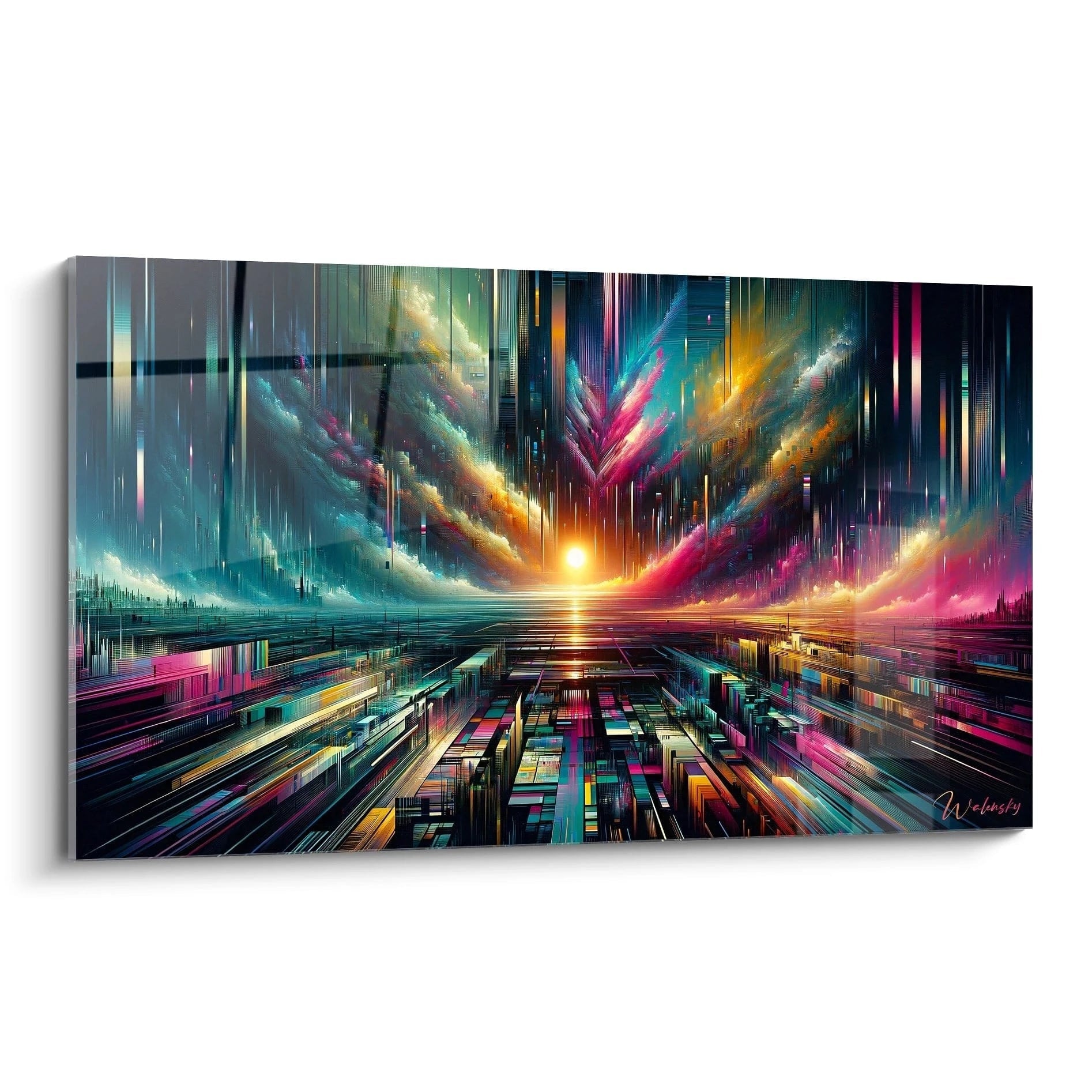
Golden Time Tunnel Wall Art - Cosmic Journey - Abstract Spiral Edition
233,90€
Discover this artworkThe trap of forced coherence
« I want a Scandinavian style, so I’m only looking for minimalist black and white works. » This phrase always triggers an alarm signal in me. Wanting an immediate stylistic coherence after installation leads to sterile uniformity. You are not a showroom, your interior does not have to look like a polished Pinterest board.
A collector I advise owns a classic Haussmannian apartment: moldings, herringbone parquet flooring, marble fireplace. He almost invested in romantic landscapes “to match the style.” Fortunately, he was patient. Six months later, after living in the space, he cracked for an ultra-contemporary urban photographic series. The contrast created a fascinating tension that gives personality to the place. Visitors remember this apartment, where forced coherence would have produced a forgettable decor.
Your space will evolve, your taste too. Buying a “collection” all at once is freezing an identity that has not yet had time to reveal itself. The most memorable interiors tell a layered story, with happy accidents, legacies, progressive discoveries. This richness is not decreed on moving day.
Start with a Signature Piece
Rather than buying five average pieces, invest in one statement piece that will become your emotional anchor point. Let it converse with the space for a few months. Subsequent acquisitions will naturally resonate or contrast with this first presence. This organic approach avoids the visual cacophony of rushed purchases.
— Our selection


The Emotional Budget Mistake
Moving into a new place is often accompanied by a dangerous financial euphoria. “I saved on renovations, I can treat myself to decor!” This reasoning ignores a harsh reality: the first months always reveal unforeseen expenses. That custom-made bookcase that becomes essential. That sound system you didn't realize you needed. Those thermal curtains when winter arrives.
One client spent 8,000 euros on artwork during the first month. By the third month, she discovered that her windows let in an unbearable street noise. Insulation work: another 6,000 euros she no longer had. Result? She had to sell two pieces urgently, with a typical discount of 40%. Beyond the financial loss, this situation tarnished her enjoyment of the remaining works, now associated with that bitter memory.
Establish an art acquisition budget representing a maximum of 15% of your total decoration budget, and spread it out over a minimum of twelve months. This discipline protects you from emotional decisions made in the heat of the move. It also allows you to adjust your choices based on true priorities that emerge over time. A work purchased serenely provides infinitely greater pleasure than one acquired in budgetary haste.

The Instant Expert Syndrome
The internet has created a fascinating illusion: that you can become an art connoisseur in just a few hours of browsing. My clients sometimes arrive with impressive technical vocabulary, pointed references, but a sensitivity still underdeveloped. They know how to talk about art without yet knowing what they really like.
This mismatch produces “intellectually justified” but emotionally empty purchases. This screen print by a sought-after artist bought because “it's a good investment.” This abstract oil painting acquired because “the gallery owner said it was the trend.” Six months later, these works provoke nothing. They are correct, defensible, dead.
Your initial ignorance is a chance, not a handicap. It gives you access to a visceral reaction, uncorrupted by market codes. I have seen seasoned collectors lose this ability to be surprised, shocked, moved. They buy with their brain, more than with their gut. After an installation, when everything is new and your references are shaken up, it's the worst time to intellectualize your artistic choices.
The visual journal technique
For the first few months, create a folder on your phone where you save every image that provokes a strong reaction. Without filter, without judgment. That kitsch landscape on a garage calendar. That Instagram photo of a stranger. That ad that stops you. After three months, patterns emerge: recurring colors, obsessive themes, textures that attract you. This emotional mapping is better than all expert advice for guiding your first purchases.
— You may also like


The oversight of the evolutionary dimension
Here's the question I consistently ask and which destabilizes: "In five years, do you plan to have a child? Change careers? Live abroad?" These perspectives radically transform the relevance of an artistic acquisition. Is this monumental work compatible with a future move? Will this provocative photographic series survive the arrival of a baby?
A young couple invested heavily in large-format artworks for their loft. Two years later, career change, classic apartment with partitioned rooms. None of the works passed through the doors or integrated into the new proportions. They sold everything at a loss. This costly mistake could have been avoided with a simple projection: prioritize medium formats, modular and transportable.
After an installation, we often think that this place is definitive. Statistically, the average occupancy duration of a home in France is seven years. Your artistic acquisitions must integrate this potential mobility. This does not mean renouncing your crushes, but weighing them with a minimum of pragmatism. A collection of twenty small works reinvents itself in any space. Three three-meter canvases lock you into a specific spatial configuration.
Ready to dress your walls with discernment?
Discover our exclusive collection of wall art for Apartment that accompanies your reflection without rushing your choices.

Transforming impulse into intention
Avoiding the pitfalls of impulsive art purchases after installation doesn't mean killing spontaneity. It simply means introducing a decompression chamber between emotion and action. This delay doesn't weaken desire, it purifies it. Imagine yourself in six months, in that armchair you don’t know where to place yet, contemplating this artwork you are about to acquire. If this projection makes you smile, if you feel a form of quiet evidence, then go for it.
The most beautiful collections I've seen have been built slowly, almost accidentally. A first foundational work. Six months of living with it. Then a second that enters into visual conversation with the first. One year of observation. A third that deliberately disrupts the emerging harmony. This temporality respects your evolution, that of your space, that of your gaze. It transforms buying art into an act of identity construction rather than a race to fill space.
Your walls can wait. Your true crush, however, will not abandon you if it has to wait three weeks. And if a work is sold during your reflection time? Perhaps it's a sign that it wasn't meant for you. This frustrating philosophy at first becomes liberating: it eliminates regret, the wrong purchase, deferred disappointment. Each artwork that ultimately enters your home then carries an unshakable legitimacy. It doesn’t furnish a void, it nourishes a space that has truly become yours.
FAQ : Your questions about buying art after installation
How long should I really wait before buying my first artwork?
There is no universal timeframe, but I recommend a minimum of three weeks for small decorative pieces, and two to three months for significant artistic investments. This period allows you to observe how natural light evolves in your space, where you actually spend your time, and which walls naturally attract your gaze. Some of my clients have waited six months before their first major acquisition and never regretted it. The point is not to respect an arbitrary calendar, but to feel that you intimately know your space before introducing a permanent artistic presence. A good indicator: when you stop discovering new angles or new spatial habits, you are probably ready.
How to differentiate a true crush from a post-move impulse?
True favorites withstand the test of absence. If you think about a work several days after having seen it, if it appears in your conversations, if you find yourself imagining exactly where it could live in your home, then it's probably authentic. Impulse, on the other hand, is characterized by an irrational urgency: “I must have it now or never.” Another crucial difference: a true favorite comes with a form of serenity, even in excitement. Impulse generates a subtle anxiety, a fear of missing out. Technically, impose upon yourself to review the work three times in different states of mind: tired, energetic, contemplative. If it touches you on each visit, you have something solid. Also be wary of group purchases: social validation artificially amplifies attraction.
Can I really create a consistent collection by buying gradually?
Not only is it possible, but it's the only method that produces authentic consistency rather than forced. The most interesting collections do not follow a predetermined plan; they tell a personal story that unfolds over time. Each acquisition reflects who you were at that particular moment, creating an emotional stratification far richer than a group purchase. Consistency emerges naturally from your constant sensibility, even if your tastes evolve. A collector I accompany has works acquired over fifteen years, in seemingly disparate styles: documentary photography, geometric abstraction, organic sculpture. Yet, a subtle guiding line connects them all: they all explore the tension between order and chaos. This unconscious consistency appeared retrospectively; it was not planned. Trust your inner voice; it possesses a deeper logic than any decorative strategy.
Explore our collections


