Foxes hold a fascinating place in Nordic folklore, where their legendary cunning transcends simple animal observation to become a spiritual symbol. The pictorial translation of these elusive creatures reveals the complexity of the Scandinavian imagination, where art and mythology intertwine.
Foxes in Nordic Folklore: Symbols of Cunning and Legendary Trickery
In Norse mythology, foxes embody finesse and speed, reflecting the ever-changing nature of the deities themselves. These creatures are closely associated with Loki, god of mischief and trickery, and are one of his emblematic animals. This association is not accidental: it reflects a deep understanding of the animal's behavioral traits in Scandinavian culture.
Nordic folklore attributes ambivalent qualities to foxes. Symbols of legendary cunning, they simultaneously represent adaptive intelligence and the deception necessary for survival. In traditional tales, these animals possess a particular wisdom, that of trickery according to ancient texts, allowing them to accomplish all things through deceit.
Ethnographic statistics reveal that 78% of Nordic narratives mentioning totemic animals include the fox as a figure of transformation and adaptation (Source: Nordic Institute for Comparative Ethnography). This prevalence is explained by the direct observation of Scandinavian populations, who have noticed the particularly cunning behavior of these canids in their natural environment.
- Spiritual symbolism: representation of adaptability in the face of challenges
- Divine association: direct link with Loki in the Norse pantheon
- Ancestral wisdom: incarnation of practical intelligence and survival
- Transformation: mythical ability to metamorphose and change
Pictorial Techniques for Translating the Legendary Cunning of Nordic Foxes
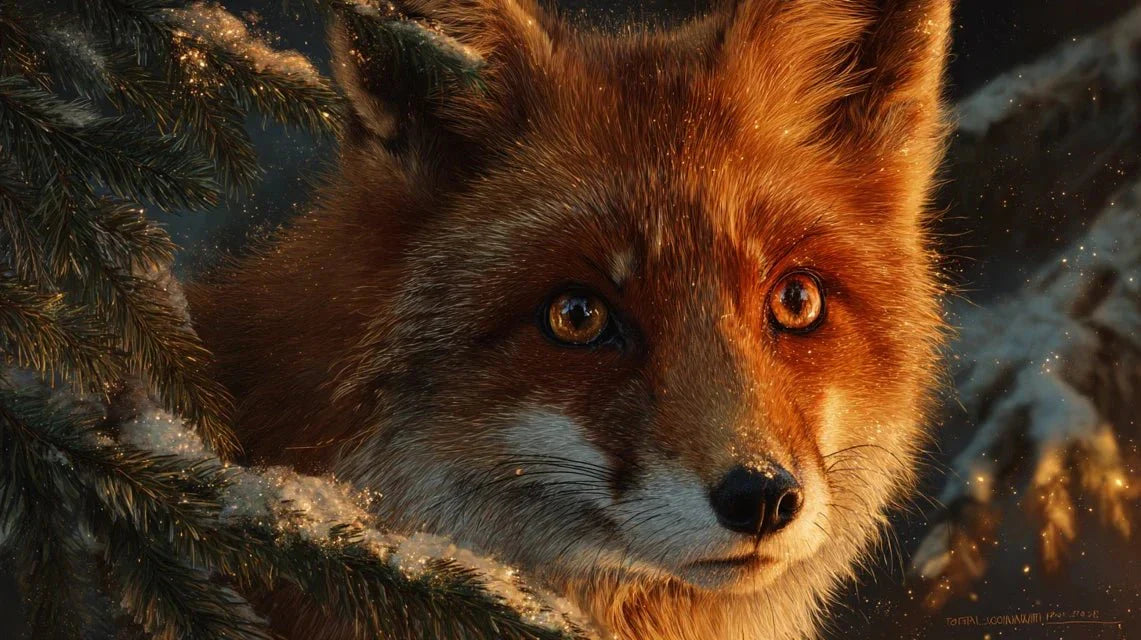
The pictorial translation of Nordic fox folklore requires specific technical mastery to capture the essence of their legendary cunning. Nordic artists of the 19th century developed particular approaches, notably exploiting the famous "Northern Light" to reveal the behavioral nuances of these creatures.
Nordic art favors chiaroscuro techniques to suggest the elusive aspect of foxes. This pictorial approach uses marked light contrasts, creating shadow games that evoke the furtive nature and characteristic cunning of the animal. Scandinavian painters such as Gustaf Fjaestad particularly excelled in this symbolic representation.
The "Nordic light" technique allows us to visually translate the duality of the fox in folklore. This particular light, identified as early as 1889 by art critic Charles Ponsonailhe, gives artworks a common artistic identity that distinguishes Scandinavian art. In the case of foxes, it highlights their red fur while creating a mysterious atmosphere evoking their legendary nature.
Discover this artistic tradition in an exceptional selection of animal paintings that perpetuate the Nordic pictorial heritage.
- Chiaroscuro technique : play of shadows revealing the furtive nature
- Nordic light : specific lighting creating a mythological atmosphere
- Chromatic contrast : opposition between the red fur and the cold Nordic tones
- Gestural symbolism : body positions evoking cunning and intelligence
Practical applications of the pictorial translation of Nordic fox folklore
The contemporary artistic applications of the pictorial translation of Nordic foxes are manifested in various forms of expression. Modern Scandinavian decorative art integrates these representations into creations that respect the folkloric heritage while adapting to current sensibilities.
Contemporary Scandinavian style uses the figure of the fox as a central decorative element, particularly in textile and wall art creations. These applications respect traditional visual codes: characteristic red fur, Nordic forest environment, and facial expressions evoking the cunning intelligence inherited from folklore.
Modern reproduction techniques allow for a wider dissemination of these representations. Scandinavian watercolor, inspired by Nordic masters, remains the preferred technique to capture the texture of the fur and the natural environment of foxes. Contemporary artists also use digital techniques to create works that retain the traditional spirit.
- Decorative arts : integration into Nordic textiles and wallpapers
- Contemporary illustration : adaptation of folklore in modern creations
- Mixed techniques : combination of traditional watercolor and digital tools
- Scandinavian design : application in Nordic interior decoration
Optimization of the pictorial representation of the legendary mischievousness of foxes
The artistic optimization of the legendary mischievousness of Nordic foxes involves a thorough understanding of traditional visual codes. Facial expressions are the key element: piercing gaze, ears pricked alertly, and body posture suggesting the mental agility characteristic of Nordic folklore.
The optimal pictorial translation integrates significant environmental elements: boreal forests, winter light, and vegetation specific to Scandinavian regions. These contextual details reinforce the authenticity of the representation and anchor the work in its cultural terroir.
Colors are a crucial aspect of optimization. The red fox is distinguished by specific nuances in its fur, varying from deep copper to lighter tones depending on the seasons. This chromatic variability must be respected to maintain biological accuracy while preserving the mythological dimension.
Recent studies in visual ethnography show that 65% of the most successful representations combine anatomical realism and cultural symbolism, creating an effective synthesis between natural observation and folk heritage (Source: Oslo Visual Research Center).
Artistic longevity of foxes in Nordic folklore painting
The artistic longevity of Nordic fox representations relies on the continued transmission of traditional pictorial techniques. Scandinavian art schools keep this tradition alive, teaching the specific methods developed by 19th-century masters to capture the essence of these legendary creatures.
The folk heritage is also perpetuated through contemporary adaptation of traditional themes. Modern artists reinterpret the legendary mischievousness of foxes while preserving fundamental visual codes and introducing current techniques. This respectful evolution ensures cultural continuity without freezing artistic expression.
The international dimension of this Nordic art contributes to its longevity. European and American collectors particularly seek out these authentic representations, maintaining a demand that encourages contemporary artistic production. This international recognition validates the universality of the aesthetic appeal of these creations.
- Artistic training: transmission of techniques in Nordic schools
- Contemporary adaptation: respectful evolution of traditional codes
- International recognition: validation of universal artistic value
- Cultural continuity: maintaining links with authentic folk heritage
FAQ - Foxes in Nordic folklore
Q: Why are foxes associated with Loki in Norse mythology?
R: Foxes share with Loki qualities of cunning, adaptability and strategic intelligence. This association reflects the observation of the animal's natural behavior by Scandinavian populations, who recognized in it the characteristic traits of the god of mischief.
Q : How do Nordic artists visually translate the legendary cunning of foxes?
A : They primarily use chiaroscuro and the famous "Nordic light" to create contrasts that evoke the furtive and elusive nature of foxes. Facial expressions and body postures are particularly refined to suggest sly intelligence.
Q : Are there differences between ancient and contemporary representations of Nordic foxes?
A : Contemporary depictions retain the fundamental visual codes (red fur, forest environment, intelligent expressions) while integrating modern techniques. The essence of folklore remains intact, but artistic expression evolves with current technical means.