In this renovated Marais industrial loft, noise bounced off every smooth surface to the point of making conversations impossible. My client, a music producer, dreamed of a space that was both acoustically performing and aesthetically impeccable. That's where I discovered the power of printed acoustic textiles, true works of art that eat sound without sacrificing beauty.
Here's what printing on acoustic textile concretely brings: a measurable noise reduction up to 85% in conversational frequencies, total creative freedom to personalize your walls, and textile elegance that radically transforms the atmosphere of a room. Fiber density then becomes the magical parameter that orchestrates this double performance.
You may have already installed classic acoustic panels in your space, but they look like soulless industrial plates. Or you hesitate between sound performance and decorative consistency, convinced that you have to choose. This frustration, I experienced for years on my high-end tertiary and residential construction sites.
Good news: advances in textile digital printing now allow combining acoustic density and exceptional visual definition. I tested dozens of configurations on my projects of gourmet restaurants, recording studios and urban lofts to identify the densities that really work.
In this article, I reveal how to choose the perfect fiber density for your printed acoustic textile, whatever your sound constraint or aesthetic ambition.
Fiber density: this invisible parameter that changes everything
When I talk about fiber density to my clients, their eyes often widen. Yet, it is this technical characteristic that determines whether your printed acoustic textile will be a simple wall decoration or a real tool for sound comfort.
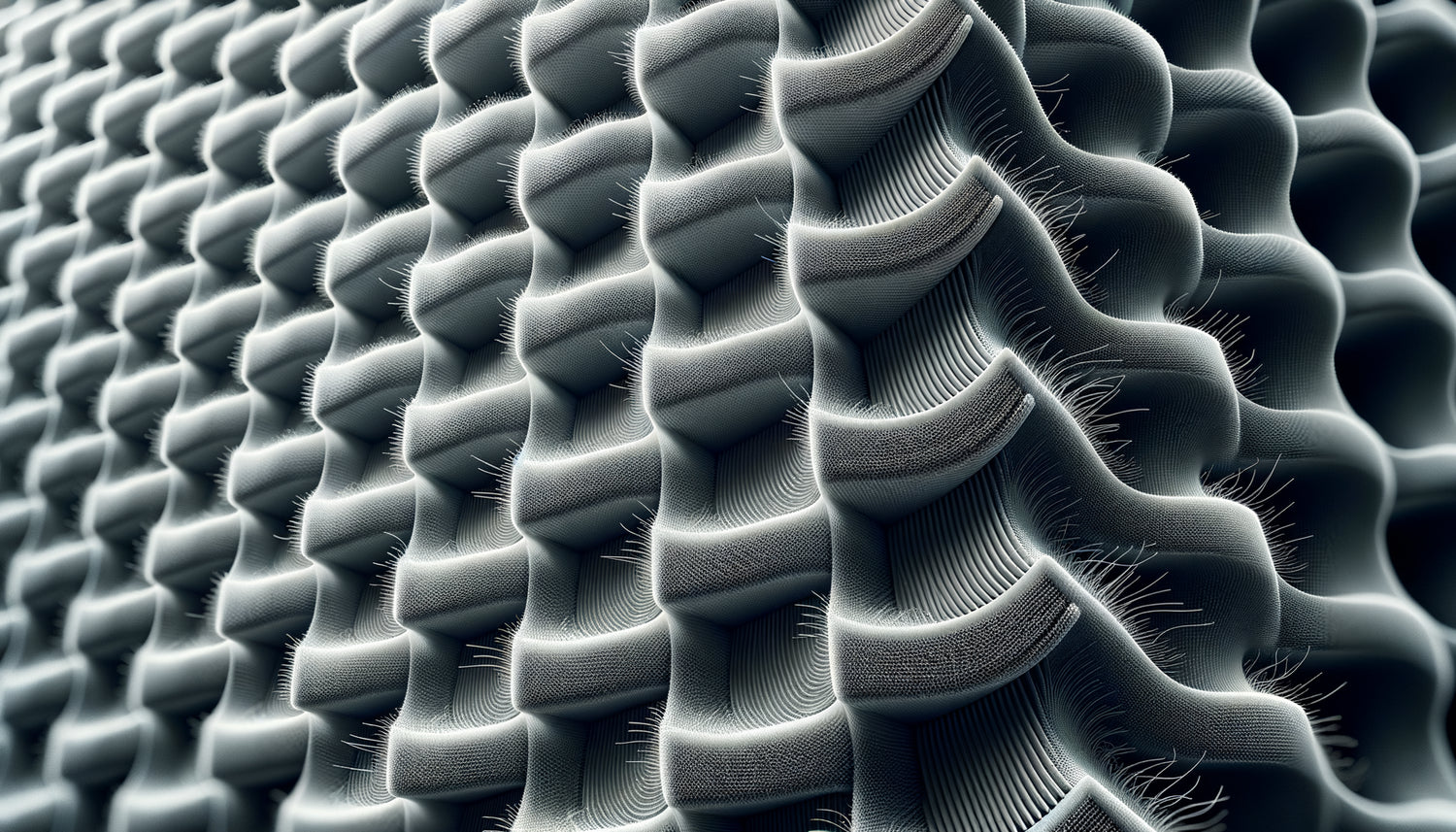
The fiber density is measured in grams per square meter (g/m²). The higher it is, the more material the textile contains per unit area. This microscopic thickness creates a labyrinth where sound waves get lost, rub against the fibers, and transform their energy into tiny heat.
From an acoustic point of view, a density between 200 and 400 g/m² represents the sweet spot for absorbing mid and high frequencies, those of the human voice that create this unpleasant reverberation effect in contemporary spaces. Below 200 g/m², the textile lets too much sound through. Beyond 500 g/m², you gain little absorption but lose flexibility of installation and print rendering.
How the textile structure traps sound
Imagine a dense felt like a miniature forest. Each fiber acts as a tree that slows down the sound wind. The spaces between fibers create pockets of air where waves fragment. As density increases, this trap becomes more effective.
I measured this difference in a restaurant with 80 covers: with a textile of 180 g/m², the sound level remained at 78 dB during peak hours. By switching to a textile of 320 g/m², we dropped to 68 dB, which is one-third the perceived noise sensation. The acoustically printed textile literally swallowed up parasitic conversations.
Visual quality: when density meets ink
Let's now talk about what makes these textiles magical: the ability to print any pattern, photograph or graphic creation on them. But be careful, the density of fibers directly influences the visual rendering of your printing on acoustic textile.
A textile that is too loose (less than 200 g/m²) has an uneven surface where ink penetrates unevenly. Result: grainy gradients, colors that bleed slightly, approximate sharpness. For an architect's office or an art gallery, this is unacceptable.
Conversely, an optimal density between 280 and 350 g/m² offers a virtually homogeneous printing surface. The fibers are tightly enough to receive the ink without smudging, while retaining that slight textile texture which brings warmth and depth to the image. It is this subtle texture that actually differentiates an acoustically printed textile from a simple photographic canvas print.
The balance between absorption and definition
On a hotel suite project in Lyon, I printed a monumental vegetal mural on a 300 g/m² textile. The definition was exceptional: every leaf vein, every shade of green remained precise even at 30 cm. Simultaneously, this textile panel absorbed 70% of reverberations, creating that muffled atmosphere characteristic of exceptional places.
UV digital printing or sublimation technology now allows us to work on these dense textiles without compromising chromatic richness. The 320 g/m² polyester acoustic fibers that I prefer perfectly accept pigment inks, guaranteeing visuals that stand the test of time without fading.

The three reference densities according to your needs
After forty projects integrating printing on acoustic textile, I have identified three density profiles that cover 90% of situations. Each offers a specific compromise between sound performance and visual rendering.
Light density (220-260 g/m²): For quiet residential spaces where the main goal is decorative with a slight acoustic complement. Perfect for a bedroom or home office. The print remains beautiful, sound absorption is moderate (absorption coefficient αw ≈ 0.40). The textile retains ideal flexibility for stretched installations.
Medium density (280-330 g/m²): My default choice for 70% of my projects. This range offers the best acoustic/visual balance. Significant sound absorption (αw ≈ 0.65-0.75), excellent print definition, easy handling. Ideal for coworking spaces, restaurants, professional lounges, showrooms.
High density (350-420 g/m²): Reserved for very noisy environments requiring maximum absorption. Recording studios, conference rooms, open-plan offices with over 100 workstations. Absorption can reach αw ≈ 0.85. The textile becomes more rigid, the print slightly less contrasted but perfectly exploitable for large format graphic or photographic visuals.
Adapt the density to your actual context
In this Parisian medical practice, we opted for a 290 g/m² textile printed with soothing nature-inspired motifs. The waiting room, previously cacophonous with its 15 people, has become serene. Patients notice it instantly: you can finally make a phone call without everyone following the conversation.
For a prestige car showroom, I recommended 340 g/m² with the print of dynamic visuals in very high definition. Sound absorption had to be maximum to enhance the muffled silence associated with luxury, while preserving the spectacular visual impact of the 8 meters of textile panels.
The additional parameters that refine performance
Fiber density forms the foundation, but other characteristics of printed acoustic textiles modulate final performance. Ignoring these parameters risks disappointment despite a well-chosen density.
Textile thickness plays independently of density. A 3 mm textile at 280 g/m² absorbs differently from a 5 mm textile at the same density. The thicker it is, the better the performance in low frequencies. For conversations only (medium and high), 3-4 mm are sufficient. To control musical ambiance, aim for 5-7 mm.
Surface structure influences ink distribution. Velvety surface textiles offer a luxurious feel and slightly higher absorption, but can attenuate fine details of the print. Smooth surfaces favor visual sharpness but can create micro-sound reflections if too compact.
Distance from the wall multiplies acoustic efficiency. A 300 g/m² textile placed directly on a rigid wall absorbs about 60% of incident sound. The same textile mounted on a frame creating 5 cm of air space can reach 80% absorption. This layer of air itself becomes a formidable acoustic trap.
Certification and objective measurements
Always request the sound absorption coefficient (αw) measured in a laboratory according to ISO 354 standard. A good acoustically printed textile of medium density (300 g/m²) should display an αw between 0.60 and 0.75. This objective data protects you from unverifiable marketing promises.
For visual quality, request real printed samples before validating your order. Check the sharpness of details, the uniformity of color blocks, the chromatic fidelity under different lighting conditions. A well-printed 320 g/m² textile should reveal the subtle nuances of a photograph while preserving this textile texture that humanizes space.

Installation and durability: what density changes concretely
An often overlooked aspect: fiber density directly influences the ease of installation and long-term performance of your textile acoustic print.
Lightweight textiles (220-260 g/m²) are easily stretched over frames, cut with a cutter, accept light magnetic fixing systems. Perfect for temporary or modular installations. However, they may relax slightly with humidity and require retensioning after a few years.
Medium (280-330 g/m²) textiles offer excellent dimensional stability. Once installed, they maintain their perfect flatness for 8 to 10 years without intervention. Their weight remains manageable for classic wall installations with tension rails or aluminum frames. This is the density I chose for luxury boutiques where maintenance-free durability is crucial.
Dense textiles (350-420 g/m²) require reinforced supporting structures. Their relative rigidity paradoxically facilitates certain self-supporting or suspended installations. In an auditorium, I suspended 400 g/m² panels printed with geometric patterns: their perfectly flat hold without a rigid frame created a striking sculptural lightness effect.
Fire resistance and ERP standards
For public establishments, acoustically printed textiles must imperatively comply with M1 classifications (old standard) or B-s1, d0 (Euroclasses). Fiber density does not directly influence this fire resistance, which depends on the chemical treatment of the fibers, but denser textiles generally facilitate obtaining these certifications.
Ensure the fire retardant treatment remains effective after printing. Some hot printing processes can alter fire-retardant properties. Reputable manufacturers test and certify their printed acoustic textiles in their final configuration, including inks.
Transform your walls into functional acoustic artworks
Discover our exclusive collection of wall art for real estate agencies that combines professional aesthetics and acoustic comfort to enhance your reception areas.
Your space transformed: silence and beauty reconciled
Imagine walking into your office tomorrow morning. No more aggressive echo when you talk on the phone. Less auditory fatigue after a day of meetings. Instead, a wall that breathes serenity, adorned with a visual that tells your identity, inspires your teams, and impresses your clients.
This transformation begins with a simple technical choice: the right fiber density for your printed acoustic textile. Between 280 and 330 g/m² for most professional and residential projects requiring high standards. This medium density guarantees measurable sound absorption (65 to 75% of reverberations) while preserving photographic print quality.
Don't wait until noise becomes unbearable or your bare walls scream their emptiness. Contact a specialized manufacturer, request samples of textiles printed in different densities, test them in your real environment. Your ear and your eyes will instantly tell you which one truly transforms your space.
Beauty and silence are no longer incompatible. They intertwine together, fiber after fiber, in the intelligence of a textile that absorbs sonic chaos while revealing your aesthetic vision.
Frequently Asked Questions
What acoustic textile density should I choose for my first project?
To start safely, opt for a density of 300 g/m², the Swiss army knife of acoustic textile printing. This medium density offers an excellent compromise between sound performance (reducing reverberations by 65 to 70%) and impeccable print quality. It is suitable for most spaces: offices, living rooms, meeting rooms, shops, restaurants. You can easily install it on a standard frame without any special structural reinforcement. Always request a printed sample of 30x30 cm before ordering your complete panels: this will allow you to check the sharpness of the details, the color fidelity and the feel of the textile. If your environment is particularly noisy (more than 75 dB), or conversely very quiet, you can then adjust to 350 g/m² or 260 g/m², respectively.
Does a dense acoustic textile retain the quality of a photographic print?
Absolutely, and it is even one of the recent revolutions in acoustic textile printing. Textiles from 280 to 350 g/m² perfectly accept high resolution digital printing (up to 1440 dpi) with UV inks or sublimation. The dense and regular surface of these textiles guarantees a homogeneous reception of the ink, without smudging or visible halftone effects. I have installed large format photographic reproductions (3x2 meters) on 320 g/m² textile where every detail remained perfectly sharp, even when viewed from 50 cm. The slight texture of the textile even adds an extra depth compared to a glossy photo print. For graphic visuals, logos or typography, the definition is exemplary up to text sizes of 8 points. Favor saturated colors and marked contrasts which sublimate the textile rendering while maximizing the visual impact at a distance.
How can you concretely measure the acoustic improvement brought by a printed textile?
The acoustic improvement of a printed textile is objectively measured with a sound level meter (free smartphone app sufficient for an initial assessment). Measure the ambient noise level in dB before installation, then after, under identical occupancy conditions. A medium density textile (300 g/m²) covering 30% of the wall surface typically reduces the noise level by 6 to 10 dB, which represents a halving of the perceived noise sensation. More concretely: if conversations are intelligible at 8 meters before installation, they will only be intelligible at 4 meters after, creating natural privacy bubbles. The reference scientific parameter is the absorption coefficient αw: 0.65 means that 65% of the sound energy is absorbed. Request this data from your supplier, measured according to ISO 354. Subjectively, you will notice reduced auditory fatigue at the end of the day, better concentration and more fluid exchanges without raising your voice.