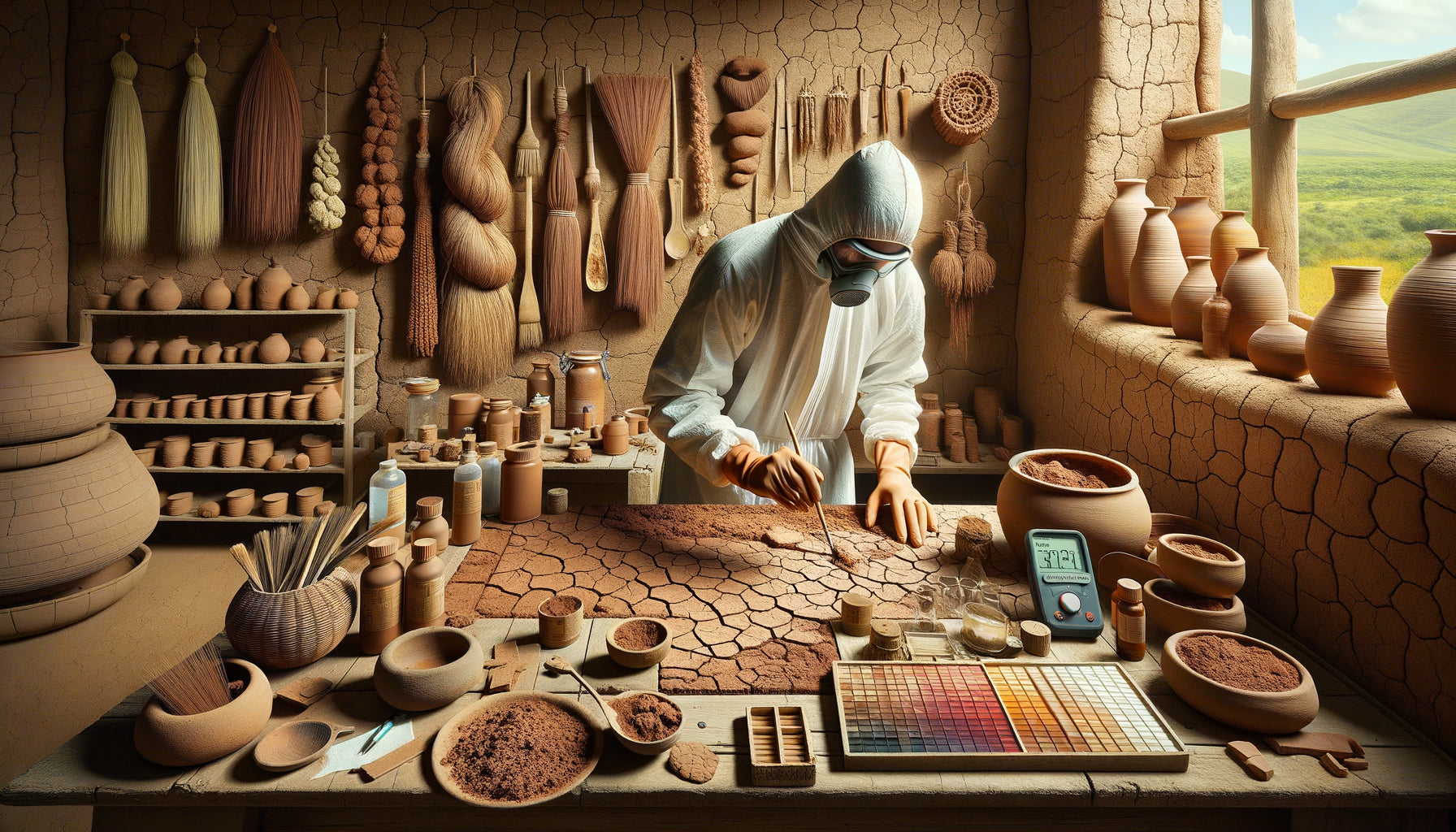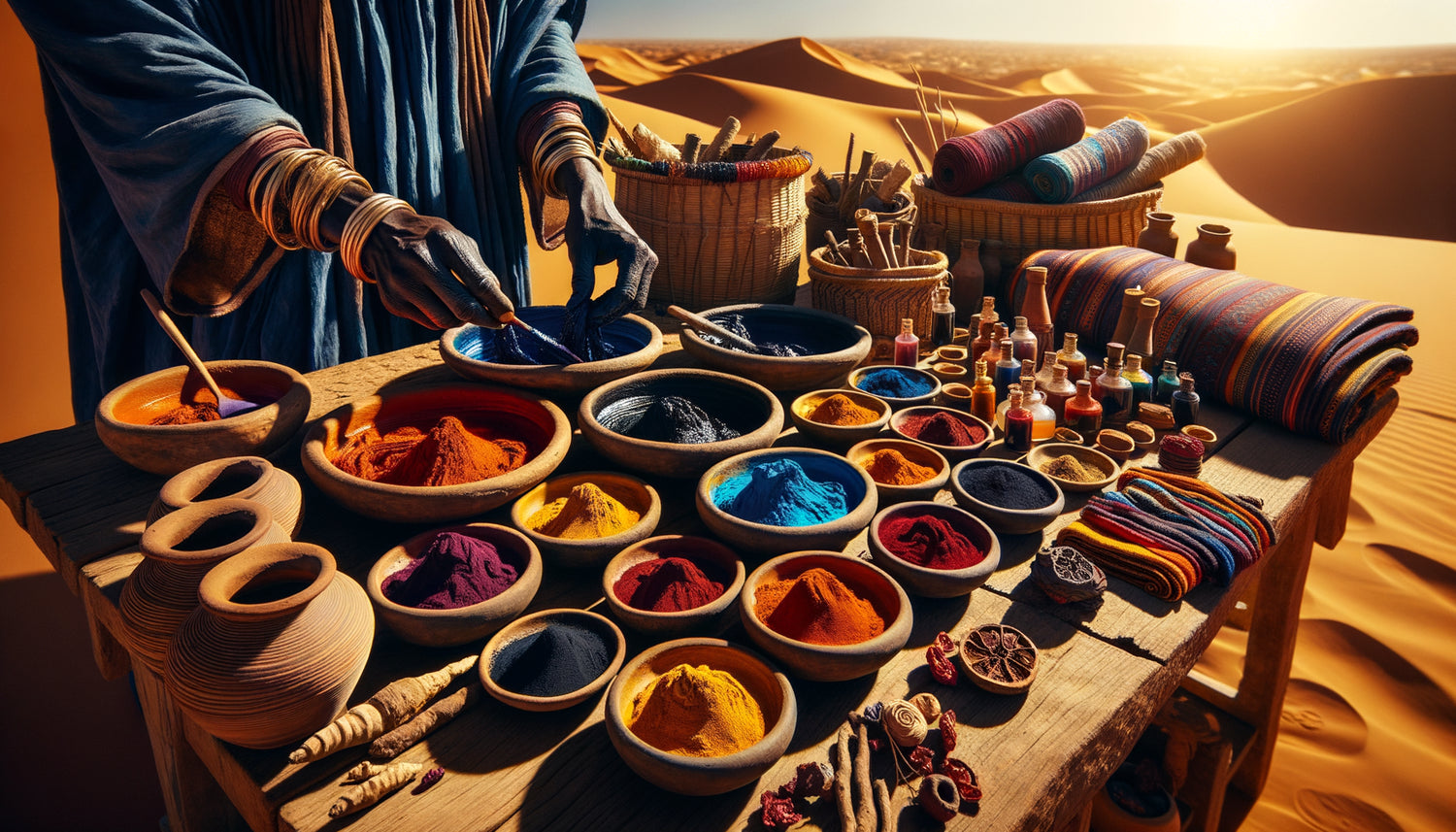
When I set up my natural dye workshop on the edge of the Moroccan desert, I quickly realized that the Sahara offers no forgiveness. The textiles I proudly hung in the sun lost their vibrancy within weeks, transforming my deep indigos into faded blues, my purple madder into ghostly pinks. This relentless light, this extreme heat: the most radical testing ground for anyone working with vegetal pigments.
Here's what the stability of vegetal pigments under the Saharan sun reveals: a lifespan ranging from 3 to 18 months depending on botanical origin, a degradation acceleration up to 4 times greater than in temperate climates, and ancestral fixing techniques capable of miraculously prolonging their chromatic intensity.
You may have acquired a beautiful Berber textile, a Tuareg tent, or are considering incorporating naturally dyed works into your interior. But this question haunts you: how long will these colors survive the light? Especially if you dream of displaying these pieces near a window flooded with sunlight.
Rest assured. Understanding the mechanisms of photodegradation of vegetal pigments under extreme conditions does not mean giving up their beauty. On the contrary, this knowledge will allow you to intelligently preserve these chromatic treasures and make informed choices for your decoration.
I am going to share with you fifteen years of observation on the actual behavior of vegetable dyes facing Saharan radiation, the secrets of desert artisans, and how to transpose this wisdom into your contemporary interior.
The desert as an unforgiving revealer: understanding light aggression
The Sahara is not simply a sunny place. It's a concentration of photochemical aggression where three devastating factors converge for vegetal pigments: UV irradiance 40% higher than in European latitudes, solar reflection amplified by the clear sand which doubles exposure, and almost absolute aridity which weakens textile fibers.
In my Merzouga workshop, I conducted a simple but revealing experiment. I exposed twenty samples of fabrics dyed with different vegetable sources: indigo, henna, madder, cochineal, turmeric, pomegranate peels, logwood. Some benefited from traditional alum mordanting, others did not. All were hung facing south, without protection.
The first signs of degradation appeared in less than three weeks for the most fragile pigments. The turmeric, this bright yellow derived from the rhizome, turned beige in forty days. A brutal lesson on the vulnerability of simple-structured colorants to desert ultraviolet rays.
The scale of resistance: from fleeting to resilient
My observations made it possible to establish a clear hierarchy of stability. Vegetal pigments are divided into three categories facing intense Saharan sun:
The Fugitives (3-6 months): turmeric, safflower, cornflower, unmoranted woad. These dyes offer vibrant but ephemeral shades. Under the Saharan sun, their molecular structure quickly disintegrates. I have seen a weld yellow lose 70% of its intensity in four months of direct exposure.
The Moderates (6-12 months): madder with light mordant, onion skins, pomegranate peel, some cochineal reds. These dyes exhibit intermediate resistance. They gradually fade but retain an acceptable chromatic presence during a Saharan year.
The Resilient (12-18 months and more): fermented indigo, henna on protein fibers, madder on alum and iron mordant, logwood fixed with copper. These champions of stability possess complex molecular structures that resist photo-oxidation. My oldest indigo, prepared using the traditional fermentation method, still retains 60% of its depth after eighteen months of continuous Saharan exposure.
Workshop secrets: how desert artisans defy the sun
The Tuareg weavers and Berber dyers did not wait for modern science to understand the fragility of plant pigments. Their ancestral techniques integrate remarkably effective protection strategies.
Multiple mordanting constitutes their first line of defense. Unlike classic European practice, which applies a single mordant bath (usually alum), Saharan artisans practice sequential mordanting: alum, then pomegranate tannins, then a final bath in iron or copper. This stratification creates multiple chemical bonds that deeply anchor the pigment into the fiber.
I tested this method on wool dyed with madder. The result? A prolongation of chromatic stability by nearly 40% compared to simple mordanting. After twelve months in the Saharan sun, my multiple-mordanted samples retained a richness of tone that I had rarely observed.
The protective over-dyeing technique
Master dyers passed on to me a fascinating practice: the sacrificial over-dye. After obtaining the desired color, they apply a final very light bath of an inexpensive fugitive dye. This surface layer absorbs UV aggression first, protecting the plant pigments deep down during critical initial exposure periods.
It's counterintuitive but brilliant. When I applied this method with a turmeric over-dye (which is ultra-fragile) to a precious indigo, the turmeric faded in a few weeks as expected, but the underlying indigo remained intact, preserved during that vulnerable period.
Saharan artisans also practice shade drying rather than direct sun drying after dyeing. This patience allows pigment-fiber bonds to stabilize gradually before initial UV exposure, increasing final resistance by 20 to 30%.

Science of the Desert: Understanding Accelerated Photodegradation
Why is the Sahara so destructive to plant pigments? The answer lies in the synergy of several extreme environmental factors.
Intensified UV radiation is the primary aggressor. At an altitude of 800 meters near the Atlas Mountains, with exceptionally pure and dry atmosphere, UV flux reaches levels 40 to 50% higher than in temperate regions. These energetic photons literally break the molecular bonds of organic dyes.
Sand reflection dramatically amplifies exposure. Sand dunes reflect up to 60% of solar radiation, creating a multidirectional light bombardment. A suspended textile is not only subjected to direct sunlight but also to that reflected by the ground, walls, and the entire environment.
Extreme aridity weakens the fibers themselves. With relative humidity often below 10%, textiles lose their natural suppleness. Fibers become brittle, cellular structures become disorganized, facilitating UV penetration into the heart of pigment molecules.
Finally, thermal variations accelerate chemical reactions. My measurements show daily temperature differences of 40°C between cold nights and hot days. These thermal cycles activate and reactivate oxidation processes that decompose plant pigments.
The Water Factor: A Saharan Paradox
Paradoxically, I discovered that even rare exposures to humidity in the desert accelerate degradation. During brief morning dew periods, fibers absorb moisture, swell slightly, and then dry quickly. This repeated hydration-desiccation cycle weakens pigment-fiber bonds and increases photochemical vulnerability.
Textiles stored in mud houses, with their thermal inertia and natural protection against humidity, exhibit significantly better stability of plant pigments than those exposed outdoors or in poorly insulated modern structures.
Translating Saharan Wisdom into Your Modern Interior
How can these teachings from the desert protect your naturally dyed textiles and artworks in your contemporary home?
Even if your Parisian or Lyon living room seems far removed from the rigors of the Sahara, a south-facing window can generate significant UV irradiance, especially in summer. The plant pigments of your precious Berber textiles or artisanal hangings remain vulnerable.
The two-meter rule is your first line of defense. Position naturally dyed pieces at least two meters away from windows directly exposed to the sun. At this distance, UV intensity decreases by 60 to 70%, significantly extending chromatic stability.
Window UV filters offer exceptional protection. These transparent films block up to 99% of ultraviolet rays while allowing visible light to pass through. I have equipped my showroom with these protections, and the difference is spectacular: my exposed textiles last two to three times longer than before.
Seasonal rotation: an intelligent exposure strategy
Take inspiration from museum practices: rotate your precious textiles according to the seasons. Expose pieces with plant pigments during autumn and winter, when solar irradiance is naturally reduced by 50%. During spring and summer, reposition them on walls perpendicular to windows or in spaces with indirect lighting.
This rotation not only preserves colors but also renews your decor with the seasons, creating a living and evolving interior.
For framed artworks, opt for museum-quality anti-UV glass. Admittedly more expensive, they guarantee maximum protection while preserving transparency and color fidelity. It is an investment that can extend the life of your pieces by decades.

Choosing your pigments: anticipating durability from acquisition
When selecting naturally dyed textiles or artworks, some clues allow you to assess their future resistance to light.
Always ask the artisan or seller about the type of mordant used. Multiple alum and tannin mordanting guarantees better stability than simple or absent mordanting. Traditional Berber and Tuareg pieces generally benefit from these proven ancestral techniques.
The initial color depth is a reliable indicator. A very deep indigo, almost black, has received multiple successive dye baths. This pigment saturation gives it a chromatic reserve: even after partial degradation, it retains a beautiful colored presence. Conversely, a pale or light shade has little margin before visible discoloration.
Favor plant-based pigments known for their resistance: indigo, well-fixed madder, henna on wool, logwood. Be wary of bright yellows (often fleeting turmeric) and vibrant oranges (unstable safflower) if you anticipate significant light exposure.
The pigment authenticity certificate
Serious artisans are increasingly documenting their plant sources and techniques. A certificate specifying the botanical origin of plant-based pigments, the type of mordanting, and the creation date allows you to assess the expected durability and preserve the history of the piece.
I have started providing this information with each textile from my workshop, and my clients appreciate this transparency which helps them make informed choices for their decoration.
Celebrate the ephemeral and durable beauty of ancestral dyes
Discover our exclusive collection of African paintings that capture the essence of natural Saharan pigments, protected by modern techniques to durably illuminate your interior.
Embrace patina: when discoloration becomes beauty
After fifteen years in the desert, I developed a different philosophy on the stability of plant-based pigments. Perhaps the question is not only “how long will they last?” but also “how does their evolution enrich the object?
Traditional Saharan textiles proudly bear their solar patina. An unevenly faded indigo tells the story of its exposure to desert wind, oblique rays of the setting sun. These chromatic irregularities create visual depth, an authenticity impossible to artificially reproduce.
In Japanese wabi-sabi philosophy, this evolving imperfection is the very essence of beauty. A textile with plant-based pigments that gradually pales does not degrade: it matures, accumulates experience, becomes unique.
Some of my clients now collect textiles specifically for their potential transformation. They deliberately expose these pieces to natural light, photographing their chromatic evolution over the seasons. This conscious approach transforms the “vulnerability” of plant-based pigments into a continuous creative process.
Of course, this works better with some pieces than others. A precious ritual textile deserves maximum protection. But a contemporary decorative tapestry can beautifully evolve, visually telling the passage of time in your interior.
Conclusion : living with the light of the desert
The stability of plant pigments under the intense sun of the Sahara therefore varies from three months for the most fragile dyes to eighteen months and more for well-fixed, resilient tints. But this duration is only one aspect of the equation.
Understanding the mechanisms of photodegradation, adopting the protection techniques passed down by desert artisans, consciously choosing your pieces according to their future exposure: that's how you intelligently preserve these chromatic treasures in your contemporary interior.
Imagine your living room bathed in natural light, where a magnificent Berber textile unfolds its deep indigo blues, protected by UV-resistant glass and strategically positioned. Visualize these plant colors lasting through the years, aging with grace rather than degrading brutally.
Start today: assess the light exposure of your current textiles, reposition those that are exposed to direct sunlight, and consider installing UV filters for your most exposed windows. Each protective gesture prolongs the chromatic life of your precious pieces.
The light of the Sahara taught me respect for plant pigments, their fragility, but also their extraordinary resilience when treated with wisdom. This knowledge is now yours.
Frequently Asked Questions
Can I restore a textile whose plant pigments have already faded in the sun?
Unfortunately, photodegradation of plant pigments is an irreversible process: the coloring molecules have been chemically destroyed by UV rays. No treatment can recreate them. However, all is not lost! You can call on a specialized dyer for a respectful re-dyeing that revives colors without completely masking the original patina. This technique requires great mastery to harmonize unevenly discolored areas. Some textile restorers also offer localized natural pigment retouching on the most affected areas, preserving the overall integrity of the piece. Prevent rather than cure: from the acquisition of a naturally dyed precious textile, immediately adopt good protection practices. If you notice the beginning of discoloration, it is an alarm signal to reposition the piece away from intense light sources before degradation becomes too pronounced.
Are plant pigments less resistant than synthetic dyes?
This is a complex question that deserves nuance. Historically, one of the drivers for the development of synthetic dyes in the 19th century was precisely their better lightfastness. High-quality modern synthetic pigments do indeed offer superior resistance to photodegradation, potentially lasting for decades even with intense exposure. However, not all synthetic dyes are created equal: low-end dyes can degrade as quickly as some fleeting plant pigments. Moreover, the best natural pigments such as traditional fermented indigo exhibit remarkable durability, sometimes comparable to certain synthetics. The real difference lies in the patina quality: a plant pigment often ages with more grace, developing subtle and harmonious nuances, whereas a synthetic one may simply fade uniformly. The choice between natural and synthetic therefore depends on your priorities: maximum durability, aging aesthetics, ecological values. In my workshop, I prefer resistant plant pigments, properly fixed, for clients who appreciate their authenticity and accept their natural evolution.
How to identify if a textile has been dyed with authentic plant pigments?
Authenticating plant pigments can be delicate, but several clues guide you. Firstly, chromatic irregularity is often a positive sign: traditional natural dyes generally show slight variations in tone, richer and more complex nuances than the uniform flats of industrial synthetics. Observe carefully both sides of the textile: natural pigments penetrate deeply into the fibers, creating relatively homogeneous coloration front-to-back, while some inexpensive synthetic dyes remain more superficial. The smell can also reveal clues: freshly dyed textiles sometimes retain subtle vegetal or earthy notes. The pH test (with a simple indicator paper) on a discreet area can differentiate certain traditional mordants from synthetic fixatives, but requires some expertise in interpretation. When facing a seller, don't hesitate to ask precise questions about the botanical origin of the dyes, the mordanting techniques, the place of production. Authentic artisans are happy to share this information with pride and detail. Beware of abnormally low prices: traditional vegetable dyeing is laborious and expensive. Finally, for valuable pieces, specialized laboratories can perform spectrometric analyses that precisely identify the colorant molecules present, formally distinguishing natural and synthetic.