The first time I walked Coldharbour Lane at dawn, I understood that the walls of Brixton tell a story that few museums dare to whisper. Between two windows of Afro-Caribbean shops, a monumental portrait of David Bowie stands alongside vibrant murals celebrating Marcus Garvey and Olive Morris. These facades transformed into visual manifestos are not mere urban decorations: they embody the living memory of a community that has shaped the identity of this London neighborhood since the 1950s.
Here's what the Brixton wall art reveals: artistic resilience in the face of discrimination, an assumed celebration of African and Caribbean roots, and a permanent dialogue between heritage and modernity. These works transform public space into an open-air gallery where every color, every painted face dialogues with the soul of the neighborhood.
You may have visited cities where street art seems disconnected from its environment, plastered soullessly on anonymous facades. In Brixton, it's the opposite: each mural is a chapter in a collective saga, a cry of belonging that refuses erasure.
I invite you to discover how these colorful walls have become the guardians of a diasporic identity and why they inspire designers and decorators around the world today.
The roots of a mural expression anchored in history
The wall art of Brixton was not born from an aesthetic trend, but from a existential necessity. When the first waves of immigration from Jamaica, Trinidad and Barbados arrived in London after the war, Brixton became their anchor point. Faced with institutional racism and daily discrimination, walls became spaces for claiming.
In the 1980s, after the riots that shook the neighborhood, local artists took up brushes to transform anger into beauty. The Nuclear Dawn mural by Brian Barnes, created in 1981, already represented this desire to denounce injustices while celebrating the dignity of the African Caribbean community.
These first murals established a unique visual language: vibrant colors from the Caribbean, Rastafarian symbols, portraits of black historical figures. Each work became an act of cultural resistance, affirming that this diasporic identity would never be erased from London's streets.
When walls become living archives
Unlike conventional galleries, the wall art of Brixton functions as an archive accessible to all. The monumental mural of Olive Morris on Brixton Road recalls the fight of this black activist against police brutality. The portrait of Cherry Groce, painted after her tragic death in 1985, transforms a drama into a permanent memorial.
These works create a visible historical continuity, allowing new generations of the African Caribbean diaspora to connect with their heritage without going through institutional filters. Walls become silent teachers who teach identity pride.
Diasporic aesthetics: visual codes and symbolism
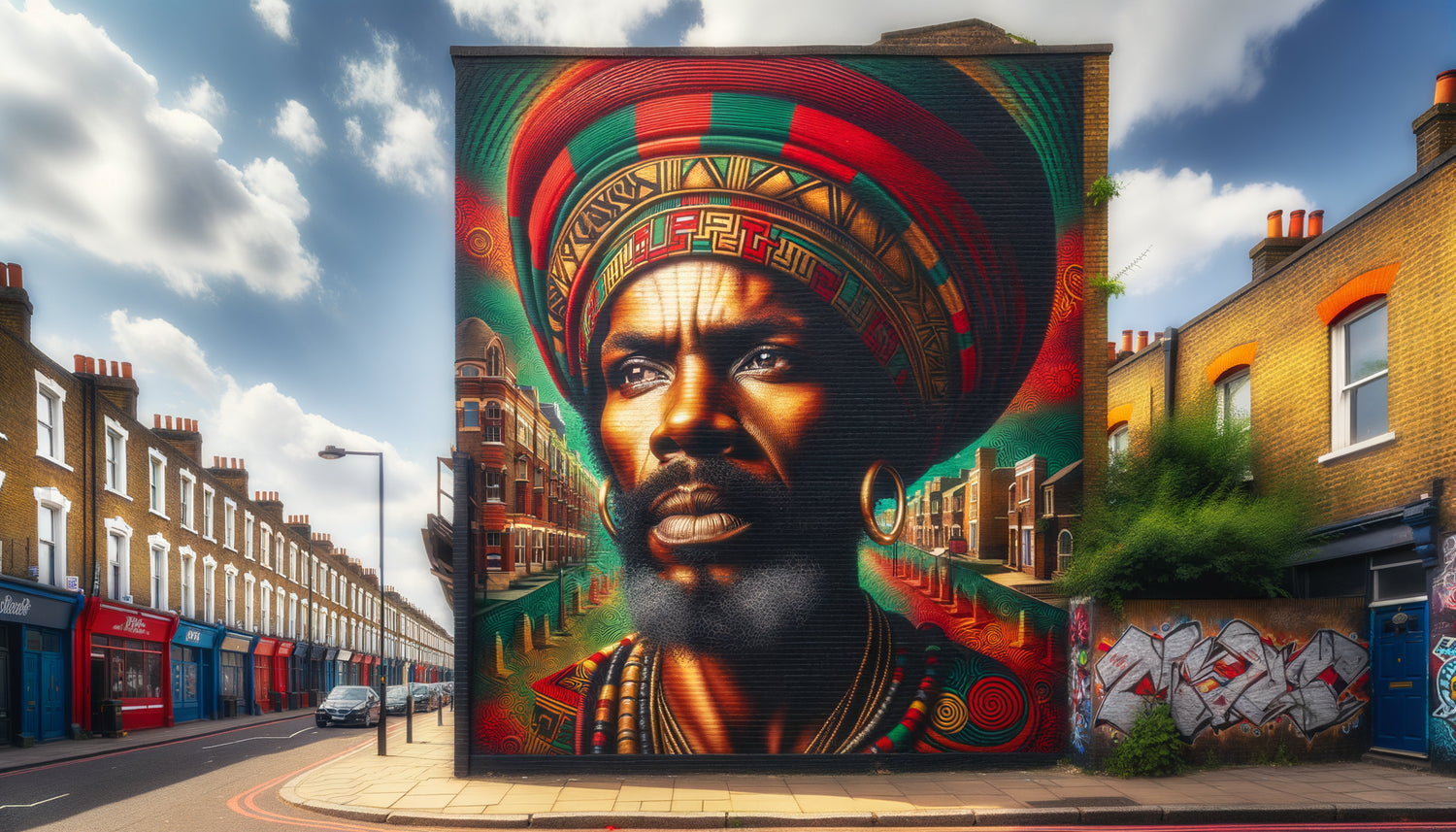
Analyzing the dozens of murals that dot Brixton, we can distinguish a recurring visual vocabulary deeply rooted in African and Caribbean cultures. Colors are never neutral: the red, gold and green of Pan-Africanism dominate many compositions.
Artists like Dreph, whose Afrofuturist style permeates several neighborhood walls, blend ancestral references and urban modernity. His portraits of black women with sculptural hairstyles celebrate natural beauty while challenging Eurocentric standards. These works become aesthetic manifestos that now influence contemporary design.
Rastafari symbolism appears frequently: lions of Judah, Ethiopian stars, references to Haile Selassie. These elements are not simply decorative; they constitute a shared visual grammar for the diaspora, a language that unites Kingston, Accra and Brixton in the same cultural conversation.
The Caribbean palette as an identity signature
The saturated hues that explode on the facades of Brixton immediately evoke the tropical landscapes of the Caribbean. This chromatic choice is not innocent: it visually warms a London neighborhood often gray, creating an atmosphere reminiscent of the sunny origins of its inhabitants.
This colorful approach now influences interior design trends. The shades of deep turquoise, burnt orange and fuchsia found in Brixton's wall art inspire collections of contemporary paintings that seek to capture this diasporic energy.

Portraits of resistance: the heroic figures immortalized
Walking through Brixton is crossing the gaze of giants. The monumental portrait of Bob Marley near the market is not just a musical tribute; it's an affirmation that Caribbean culture has transcended its islands of origin to become a global phenomenon.
Further on, the faces of Marcus Garvey, Rosa Parks and Nelson Mandela create a constellation of Black heroes that visually rewrites history. These murals correct a glaring absence in traditional British public space, where statues rarely honor figures from the African diaspora.
This deliberate choice to represent Pan-African leaders and civil rights activists transforms the streets into an educational space. Children grow up surrounded by these powerful faces, naturally integrating that their cultural heritage deserves celebration and respect.
The unsung heroes of everyday life
Beyond celebrities, Brixton's mural art also immortalizes little-known local figures. This approach democratizes heroism: the market vendor, the street musician, the Jamaican grandmother who raised three generations in the same building. These portraits affirm that diasporic identity is built as much in everyday acts as in major historical struggles.
Between preservation and gentrification: contemporary tensions
The irony is not lost on me: while Brixton's mural art celebrates the authenticity of the African Caribbean community, it paradoxically contributes to making the neighborhood attractive for gentrification. Developers are now using these murals in their real estate brochures, selling an “urban authenticity” that gradually drives out long-time residents.
This tension poses a crucial question: how to preserve the cultural integrity of these works when their very success threatens the community they represent? Some artists now refuse to create new murals in areas undergoing rapid gentrification.
Yet, the walls continue to resist. Collectives like Brixton Mural Collective are fighting to ensure that each new work is co-created with the local community, thus avoiding commercial exploitation. This vigilance transforms mural art into a continuous political act.

The influence on contemporary design and interior decoration
The aesthetic developed on the walls of Brixton now extends beyond the neighborhood's borders. Interior designers draw on this visual vocabulary to create spaces that celebrate African Caribbean heritage in a contemporary way.
Geometric patterns inspired by Akan textiles, vibrant color palettes, stylized portraits: all these elements migrate from facades to interiors. This trend responds to a growing demand for living spaces that reflect multiple cultural identities rather than disembodied minimalism.
Tableaux inspired by the street art of Brixton offer a powerful alternative to conventional decoration. They bring soul and history into a living room or office, transforming a domestic wall into an identity statement. This approach redefines decor as an act of cultural affirmation rather than simple embellishment.
Bring the energy of walls into your interior
You don't need to live in Brixton to capture this diasporic energy. Choosing a work that dialogues with this joyful aesthetic of resistance transforms your personal space into an extension of this cultural movement. Afrocentric portraits, compositions with Caribbean colors, visual references to Pan-Africanism: all options to anchor your decor in a larger narrative.
Transform your walls into a cultural celebration
Discover our exclusive collection of African paintings that capture the vibrant spirit and powerful identity of the diaspora, for an interior that tells your story.
When walls become living heritage
The street art of Brixton teaches us a fundamental lesson: diasporic identity is not a frozen legacy but a continuous conversation between past and present. These murals evolve, are repainted, dialogue with current events while maintaining a cultural thread.
Unlike museum works protected behind glass, these mural creations live, age and transform at the pace of the neighborhood. This assumed impermanence reflects the very nature of the diasporic experience: rooted but adaptable, proud but evolving.
For anyone seeking to understand how art can embody a community, Brixton offers a rare model where each brushstroke is an act of memory, each color a declaration of existence. These walls whisper that African Caribbean identity in London is not a footnote, but a central chapter written in monumental letters on the urban stone.
By integrating this aesthetic into our personal spaces, we extend this conversation, becoming participants in a cultural narrative that transcends geographical boundaries to celebrate the resilient creativity of the diaspora.
Frequently Asked Questions
Why is Brixton wall art so important to the African Caribbean diaspora?
Brixton wall art functions as a living and accessible archive that preserves the collective memory of a community long marginalized in British public space. Unlike traditional cultural institutions, these murals belong directly to the neighborhood, created by and for its residents. They correct a historical absence by celebrating Black heroic figures rarely honored elsewhere, while visually asserting that African Caribbean identity is an integral part of London's fabric. For generations born in Brixton, these walls become silent teachers who impart cultural pride and transmit stories of resistance and creativity. This permanent visibility in public space transforms collective perception: it affirms that this community is not passing through, but fundamental to the neighborhood’s identity.
How can I incorporate the aesthetics of Brixton wall art into my interior decor?
You can capture this cultural energy by choosing works that engage with diasporic visual codes: Afrocentric portraits celebrating natural beauty, vibrant color palettes inspired by the Caribbean (turquoise, burnt orange, fuchsia pink, emerald green), or compositions incorporating Pan-African symbols. The approach is not to literally copy a street mural, but to select pieces that carry the same intention of identity celebration. A large painting with a stylized portrait, works with saturated colors that warm up the space, or compositions mixing African geometric patterns and contemporary aesthetics work particularly well. The goal is to create a focal point in your living room or office that tells a cultural story, transforming your wall into a personal statement rather than simple neutral decor.
Is Brixton wall art threatened by the gentrification of the neighborhood?
It is indeed a major tension that concerns the local artistic community. Ironically, the success and international recognition of this wall art makes Brixton more attractive to real estate developers, who sometimes use these murals in their marketing campaigns to sell an “urban authenticity.” This dynamic can gradually drive out long-time residents who can no longer afford rising rents. However, local collectives are mobilizing to preserve the integrity of these works: they demand that each new mural be co-created with the community, refuse commissions from developers without a local connection, and systematically document these creations to ensure their memory. This vigilance transforms wall creation into a continuous political act, reminding us that these works first belong to the Brixton African Caribbean community, not to newcomers seeking to consume its aesthetics.