In the Sudanese desert, in the shadow of the forgotten pyramids of Meroë, I felt that shiver only archaeologists know: witnessing millennia-old frescoes defying our academic categories. These murals, veritable jewels of cultural hybridization, tell a story far more complex than simple Egyptian domination over Nubia. They whisper a fascinating truth: religious syncretism as an act of supreme artistic creation.
Here's what the murals of the Meroë tombs reveal to us: a deliberate fusion between the Egyptian and Nubian pantheons, creating unique syncretic deities that transform our understanding of ancient funerary art, offer unprecedented visual codes for contemporary decoration, and bear witness to an intercultural dialogue of astonishing modernity.
For a long time, historians have simplified these representations as mere copies of Egyptian traditions. This reductive vision has deprived the world of the understanding of an extraordinary artistic phenomenon: the conscious creation of a hybrid visual language, where each deity becomes a cultural manifesto.
But recent research in Nubian archaeology is overturning this reading. The tombs of Meroë are not provincial annexes of Egyptian culture, but laboratories of spiritual and aesthetic creativity.
I invite you to delve into this fascinating mystery, where funerary art becomes a source of inspiration for our contemporary decoration.
The Kingdom of Meroë: A Crossroads of Pictorial Civilizations
The kingdom of Meroë, which dominated Nubia between the 3rd century BC and the 4th century AD, represents much more than a regional power. It was a cultural melting pot where Egyptian traditions met indigenous Nubian beliefs, creating an unprecedented visual alchemy.
The murals discovered in the burial chambers illustrate this synthesis. Unlike Theban tombs, rigid in their iconography, the frescoes of Meroë display remarkable compositional freedom. Meroitic artists dared what Egyptians would never have imagined: to merge divine attributes.
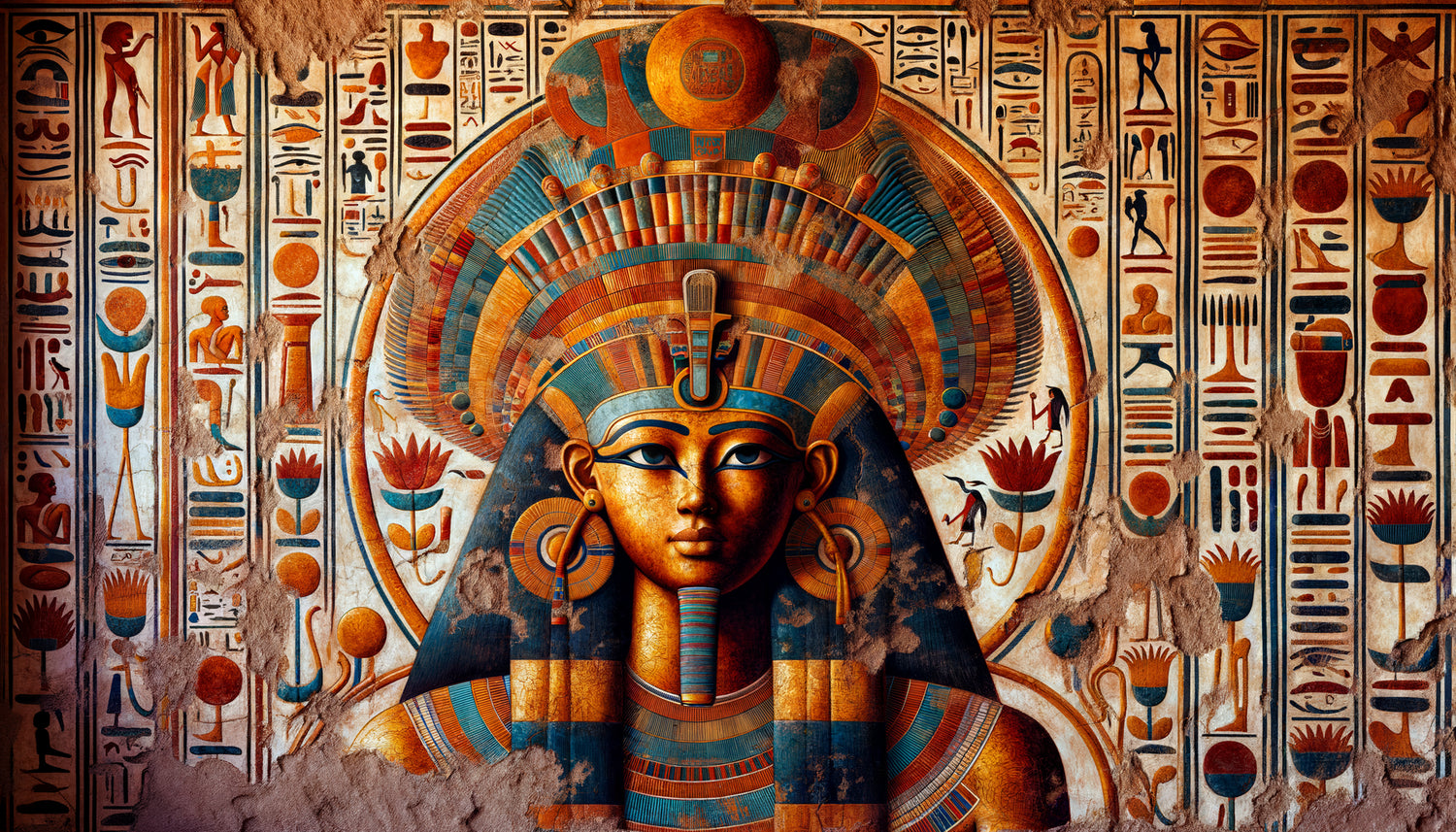
On the ochre and cobalt blue walls, we discover figures with lion heads wearing Hathor's crowns, goddesses with lioness heads brandishing the Egyptian ankh while sporting typically Nubian jewelry. This iconographic hybridization is not accidental; it is programmatic.
Apedemak and Amon: When Gods Meet on Sacred Walls
The most emblematic figure of this Egyptian-Nubian syncretism is undoubtedly Apedemak, the Nubian lion god. In the tombs of Meroë, he never appears in his purely local form. Artists systematically associated him with visual elements borrowed from Amon-Rê, the Egyptian sun deity.
I have spent hours studying these representations. Apedemak often bears the solar disk of Amun, his Nubian warrior attributes coexist with the Was Egyptian scepter. This syncretic deity transcends cultural boundaries to create a new theological and aesthetic language.
The colors used are also evidence of this fusion. The Egyptian gold yellow blends with the Nubian earthy reds. The pigments reveal mixed techniques, borrowing from both pictorial traditions. Each fresco becomes a declaration of complex cultural identity.
The pictorial technique: a blend of expertise
The artists of Meroë did not simply juxtapose symbols. They developed a unique pictorial technique, merging Egyptian geometric rigor with Nubian expressive fluidity. The outlines remain sharp, typical of pharaonic art, but the postures gain dynamism, a Nubian characteristic.

Mother goddesses: Isis meets Nubian fertility deities
In wall paintings, representations of women offer a particularly rich ground for observing religious syncretism. Isis, the quintessential Egyptian goddess, is given characteristics of Nubian mother goddesses.
The frescoes show her with a composite hairstyle: the traditional Egyptian crown topped with ostrich feathers, a Nubian emblem of fertility and renewal. Her clothing blends fine Egyptian textiles with Nubian geometric patterns, creating an unprecedented wardrobe aesthetic.
What fascinates about these syncretic representations, is their intentionality. The Meroitic artists did not make iconographic errors through ignorance. They deliberately built a hybrid visual pantheon, affirming the equal dignity of both cultural traditions.
Scenes of divine nursing perfectly illustrate this synthesis. Isis nurses the deceased pharaoh according to Egyptian tradition, but in a Nubian architectural setting, with typically local offerings arranged around her. Every detail counts, every element tells the story of the kingdom's double cultural affiliation.
Why these frescoes captivate contemporary creators
The current enthusiasm for Meroë wall paintings in design circles is no coincidence. These millennial works offer lessons in composition, cultural fusion and chromatic boldness that resonate with our contemporary aesthetic concerns.
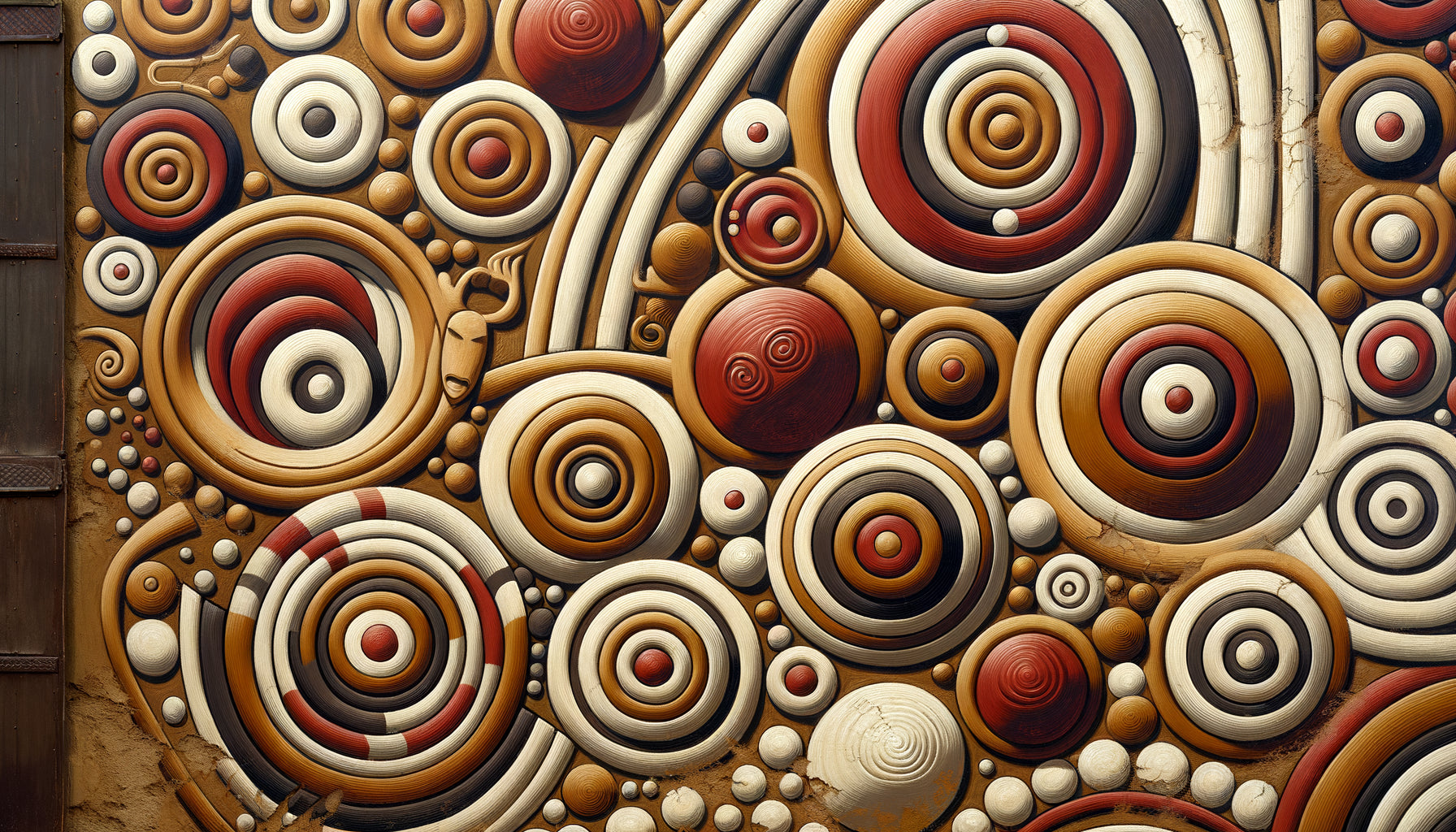
Meroitic color palettes, combining ochres, deep blues, intense blacks and touches of limestone white, inspire interior designers today. These timeless harmonies bring historical depth to modern spaces while maintaining a surprising visual freshness.
The visual syncretism of the tombs of Meroe foreshadows our multicultural era. In a globalized world where influences constantly cross each other, these ancient artists teach us how to create authentic syntheses rather than simple decorative juxtapositions.
The Meroitic Inspiration in Your Interior
Integrating the spirit of Meroitic frescoes into your decor does not mean literally reproducing funeral scenes. It is about adopting their philosophy: harmony in diversity, respectful fusion of influences, controlled chromatic boldness.
Nubian geometric motifs blend wonderfully with contemporary minimalism. The stylized figures of syncrétique divinities bring a spiritual presence without falling into kitsch exoticism.

The archaeological verdict: an intentional and sophisticated syncretism
After decades of academic debates, the scientific consensus is now clear: yes, the wall paintings of the tombs of Meroe represent Egyptian-Nubian syncrétique divinities. But this simple answer masks a much richer reality.
This religious syncretism was not a cultural confusion, but a deliberate theological and artistic creation. The Meroitic elites, aware of their double heritage, commissioned these frescoes to affirm an assumed hybrid identity.
Recent iconographic analyses, combined with linguistic studies of the Meroitic inscriptions accompanying the frescoes, confirm this intentionality. Every attribute, every color, every posture is the result of a conscious artistic and spiritual choice.
The tombs of Meroe are therefore not imperfect copies of Egyptian models, but original creations asserting a unique visual theology. They bear witness to a cultural sophistication that deserves our admiration and in-depth study.
Let the spirit of Meroë inspire your walls
Discover our exclusive collection of African paintings that captures this extraordinary fusion between ancestral traditions and contemporary aesthetics, transforming your space into a living art gallery.
Transform ancient inspiration into vibrant decor
Imagine your living room inhabited by the spirit of these visionary artists, these creators who, two millennia ago, dared to transcend cultural boundaries. The Meroë murals teach us that an authentic interior is never monolithic but always a dialogue.
Start modestly: a decorative element inspired by Nubian art, a palette of colors reminiscent of the ochres and blues of Meroitic frescoes. Let this first touch dialogue with your other decorative influences.
The heritage of Meroë’s syncretic divinities whispers this truth to you: beauty is born from respectful encounter, not uniformity. Your interior can become that place of harmonious synthesis, where each culture retains its voice while participating in a common choir.
Today, choose a wall. Just one. And offer it the historical and spiritual dimension that the tombs of Meroë have embodied for centuries. Your space will never be quite the same again.
Frequently Asked Questions
What really differentiates the paintings of Meroë from classical Egyptian frescoes?
The fundamental difference lies in the syncretic intentionality. While Egyptian art maintained a strict iconographic orthodoxy, the Meroë murals deliberately fuse the divine attributes of two distinct pantheons. You will find deities bearing simultaneously Egyptian and Nubian symbols, in compositions that would have been unthinkable in Thebes or Memphis. This creative freedom, combined with mixed pictorial techniques and enriched color palettes, makes Meroitic frescoes unique works of art, testifying to an assumed hybrid cultural identity rather than a simple provincial imitation.
How to integrate the aesthetics of Meroitic frescoes into a modern interior without falling into cliché?
The key lies in embracing a syncretic spirit rather than literal reproduction. Prioritize authentic color palettes: warm ochres, deep blues, matte blacks with touches of white. Opt for stylized Nubian geometric patterns rather than complex figurative scenes. Contemporary African artworks inspired by this tradition often offer this successful synthesis between historical reference and current design. The goal is to capture the Meroitic philosophy – harmony in diversity – by creating visual dialogues between different cultural influences in your space, just as the artists of Meroe did on their sacred walls.
Why does the religious syncretism of Meroe fascinate so many contemporary creators?
The Egyptian-Nubian syncretism deeply resonates with our multicultural era. In a world where influences constantly cross, the tombs of Meroe offer a historical model of successful cultural fusion, where no tradition dominates the other but where all together create something new. For designers and decorators, these millennial frescoes demonstrate that it is possible to create a coherent and sophisticated aesthetic by combining different heritages, without diluting their respective authenticity. This lesson in balance and mutual respect in artistic creation inspires today all those who seek to go beyond simple decorative eclecticism to achieve a true harmonious synthesis, full of meaning and history.