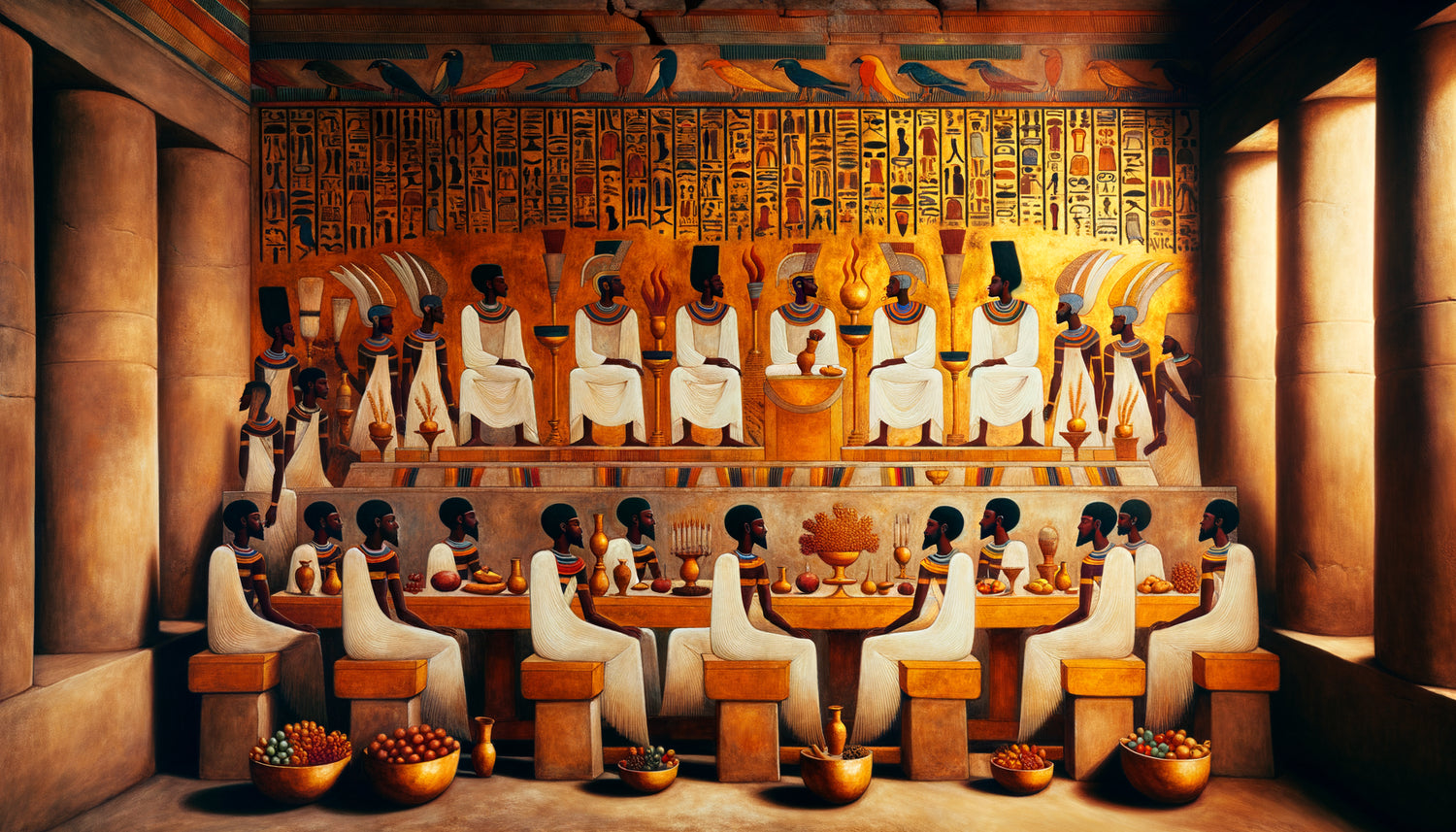
In the silence of the Nubian desert, more than 200 kilometers north of Khartoum, I discovered what would transform my vision of ancient funerary art. On the ochre walls of an underground chamber dating back 2000 years, eternal guests toast, laugh, and share generous dishes. These wall paintings from the Meroitic tombs do not mourn death – they celebrate life with an intensity that gripped my gut.
Here's what the Meroitic banquet scenes reveal: a philosophy of immortality founded on abundance, a precise social mapping of Nubian elites, and visual codes of rare sophistication that continue to inspire contemporary creators.
We are conditioned to think of funerary art as dark, austere, meditative. The Meroitic tombs shatter this illusion. They express something radically different: death as an extension of the feast, the afterlife as an eternal reception room. This vision changes our entire relationship with the representation of passage.
After fifteen years studying ancient Nubian civilizations and incorporating their motifs into contemporary decoration projects, I realized that these banquet paintings are not mere ornaments. They constitute a complete visual language, a symbolic technology that transforms the funerary space into a place of perpetual life.
In this article, I take you deep into the pyramids of Meroë to decode why these scenes of feasts dominate the Meroitic funerary iconography – and how their visual power transcends millennia.
The Kingdom of Meroe: When Nubian Africa Reinvented Eternity
Between 300 BC and 350 AD, the Kingdom of Meroë shone over the Nile Valley, in the heart of present-day Sudan. This sophisticated Nubian civilization combined Egyptian influences, local African traditions, and its own innovations to create a unique visual culture.
The Meroitic tombs stand out radically from their Egyptian counterparts. Where Thebes multiplies scenes of judgment and navigation in the afterlife, Meroë prefers laden tables, amphorae of wine, attentive servants. This difference is not insignificant: it translates a different conception of immortality.
The Meroitic elites – kings, queens, priests, generals – were buried under slender pyramids with steep slopes. But it is in the funerary chapels adjacent to them that the true visual spectacle unfolds. On these walls plastered with fine plaster, Meroitic artists painted with mineral pigments: red and yellow ochres, charcoal black, lime white, precious Egyptian blue.
Abundance as a Passport to Eternity
Why banquets? The answer lies in the Meroitic theology of survival. For these Nubians, the afterlife was not a place of abstract spiritual transformation, but the sublimated continuation of earthly existence. The deceased had to find there everything that constituted their social power: their status, their wealth, their pleasures.
The banquet scenes function as visual guarantees of eternal abundance. By depicting tables laden with breads, fruits, roasted poultry, jars of beer and wine, their perpetual presence was magically ensured. The image did not describe – it created the reality of the afterlife.
This logic is found in the very composition of the wall paintings. The deceased often appears seated on an elaborate seat, facing a low table overflowing with food. Servants present offerings to him. Sometimes other guests – family members, companions of the elite – accompany him. The scene faithfully reproduces the aristocratic banquets given by the powerful rulers of Meroë.
I was struck, during my research at the site of Begrawiya, by the ethnographic precision of these representations. One can distinguish the varieties of breads, the specific shapes of wine glasses, even the codified gestures of service. These details are not decorative: they certify the authenticity of the eternal feast.
The visual codes of prestige
Each element of the Meroitic banquet scenes encodes a social information. The size of the deceased, always greater than that of the other figures, signals his rank. The clothing – pleated tunics, elaborate shawls, multiple jewels – displays his wealth. Precious objects – metal tableware, sculpted furniture – testify to his power of accumulation.
But it is the nature of the foods represented itself that speaks loudest. Wine, imported from the Mediterranean at great expense, marked access to international trade networks. Certain meats – beef, antelope – implied prestigious hunts or considerable herds. Rare fruits signaled irrigated gardens, therefore an expensive hydraulic control.

When painting becomes architecture of immortality
The wall paintings of the Meroitic tombs do not merely represent: they structure the funerary space according to a precise symbolic geometry. The banquet scenes generally occupy the east and north walls of the chapels, orientations associated with solar rebirth and vital freshness.
This arrangement is never random. It's part of a visual choreography that guides the gaze of those who have come to honor the deceased. Upon entering the chapel, one first discovers scenes of preliminary offerings, then the main banquet, and finally the concluding rituals. The eye completes a journey that mimics the temporal unfolding of the feast.
I observed this narrative logic in the best-preserved tombs, such as that of Queen Amanishakheto at Begrawiya North. The paintings create a true immersive staging. The painted guests seem to turn towards the center of the room, where living visitors stood, as if inviting them to join the eternal banquet.
A sophisticated symbolic palette
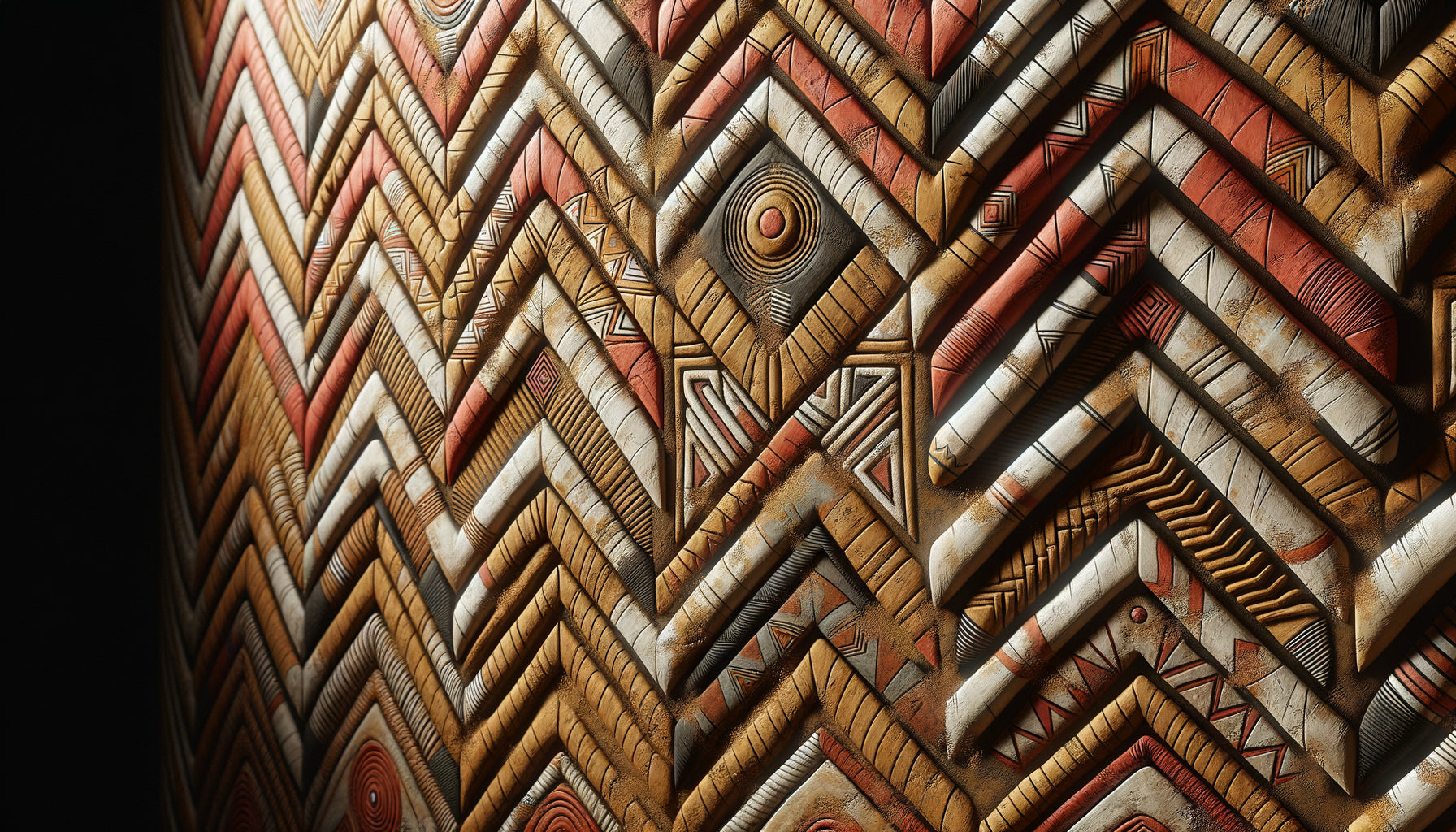
The colors used in these banquet scenes also carry precise meanings. The red-ochre, the dominant color of the deceased's clothing, evokes both the Nubian desert – a space of sacred power – and the vitality of blood. Black, far from being funereal, represents the fertile soil of the Nile, therefore regeneration.
Egyptian blue, an expensive pigment made by firing silica, copper, and calcium, appears on the most prestigious elements: jewelry, royal headdresses, ceremonial tableware. Its rarity itself makes it a status marker, visible even in the afterlife.
Meroitic banquets and dialogue with Egypt
It is impossible to understand the Meroitic murals without mentioning their complex relationship with Egyptian art. Meroe had centuries of cultural exchange with its powerful northern neighbor. Some visual codes are clearly borrowed: the composite profile representation, the horizontal registers, certain hieroglyphic symbols.
But the banquet scenes mark a clear break. Egyptian funerary iconography favors religious rituals, deities, and trials of the soul. The Meroites, on the other hand, celebrate social conviviality, shared pleasure, generous hospitality – core values of the pastoral African societies they inherited.
This difference reveals a conscious africanization of initially Egyptian visual traditions. Meroitic artists did not copy: they adapted, transformed, created an original synthesis. The clothing depicted blends Egyptian linen tunics and Nubian leather wraps. Hairstyles combine pharaonic wigs and traditional African braids.

The feast as collective memory
Beyond their individual magical function, the tomb banquet scenes of Meroë also served as social memory records. By depicting the participants in the feast, they immortalized the networks of alliance, family hierarchies, and patronage relationships that structured Meroitic society.
Some wall paintings include inscriptions in cursive Meroitic – a script derived from hieroglyphs that we still only partially decipher. These texts probably name the guests depicted, thus creating an eternal social map.
For the living who visited these chapels during regular funeral commemorations, these images functioned as visual memory aids. They recalled who had shared the rank of the deceased, who was to perpetuate their cult, what social obligations survived death.
An Art in Service of Dynastic Continuity
In the royal tombs of Meroë, the banquet scenes take on an additional political dimension. By showing the deceased ruler surrounded by their court, feasting in abundance, they legitimized the power of their successors. The message was clear: the dynasty continues to prosper, even beyond death.
This function of dynastic propaganda explains the exceptional richness of some wall paintings. The tombs of great kings like Natakamani or powerful queens like Amanitore display banquets of astonishing visual complexity, with dozens of characters, tiered table architectures, and streams of servants.
Let the spirit of ancient Africa inspire your interior
Discover our exclusive collection of African paintings that capture the symbolic power and visual richness of the great Nubian civilizations.
The Contemporary Legacy of Meroitic Banquets
What fascinates me about these wall paintings from the tombs of Meroë is their surprising relevance. Their conception of funerary art as celebration rather than lamentation resonates with our contemporary sensibilities. We too seek to honor our dead by celebrating what they loved, what they lived.
Contemporary African designers and artists are rediscovering these banquet scenes as a source of inspiration. Their ochre and black palette, their balanced composition, their symbolism of abundance nourish an Afro-centric aesthetic that rejects primitivist clichés.
In my own decoration projects inspired by Nubian art, I often incorporate Meroitic visual codes: generous coffee tables, rhythmic horizontal compositions, earthy colors accented with touches of intense blue. This millennial visual grammar instantly creates an atmosphere of warm hospitality and cultural sophistication.
The wall paintings of the Meroitic tombs also remind us that funerary art can be joyful without being disrespectful, celebratory without being frivolous. They offer an alternative to dominant Western representations of death, often marked by dark mourning and austere contemplation.
Why these scenes still speak to us
So why did these Nubians from two millennia ago choose to paint banquets in their tombs? Because they understood something profound: immortality is not a spiritual abstraction, but the perpetuation of what defines us socially.
We are the meals we share, the conversations around tables, the generosity we show our guests. By representing these moments on the walls of their tombs, the Meroitics engraved in stone and color the very essence of their identity.
These banquet scenes also constitute an irreplaceable anthropological testimony about the daily life of the Meroitic elites. They show us how people sat, what they ate, how they served, who shared a table with whom. No text could convey this knowledge with such visual precision.
For us, inhabitants of a fragmented world where rituals of commensality are crumbling, these ancient images resonate with a particular nostalgia. They remind us of the power of sharing a meal as social cement and spiritual experience.
When you contemplate a reproduction of these Meroitic wall paintings – in a museum, a book, or integrated into your decoration – you are not simply looking at ancient funerary art. You are dialoguing with a civilization that dared to represent eternity as a generous feast, death as a permanent invitation, the afterlife as a room where guests never leave the table.
This vision radically transforms our relationship to heritage, memory, and the representation of those who preceded us. It invites us to conceive the continuity between the living and the dead not as a traumatic rupture, but as an expanded banquet where each generation takes its turn at the table.