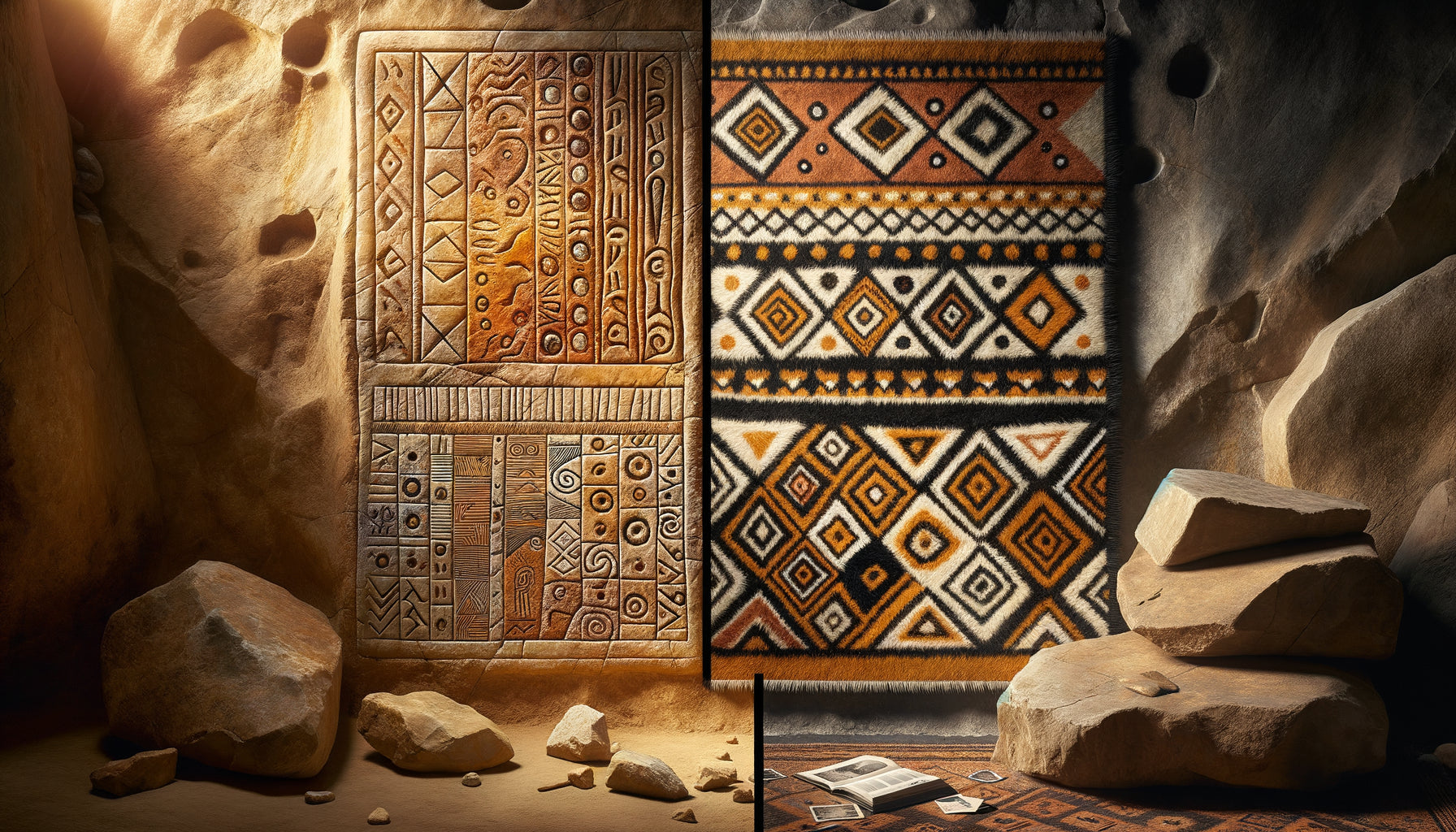
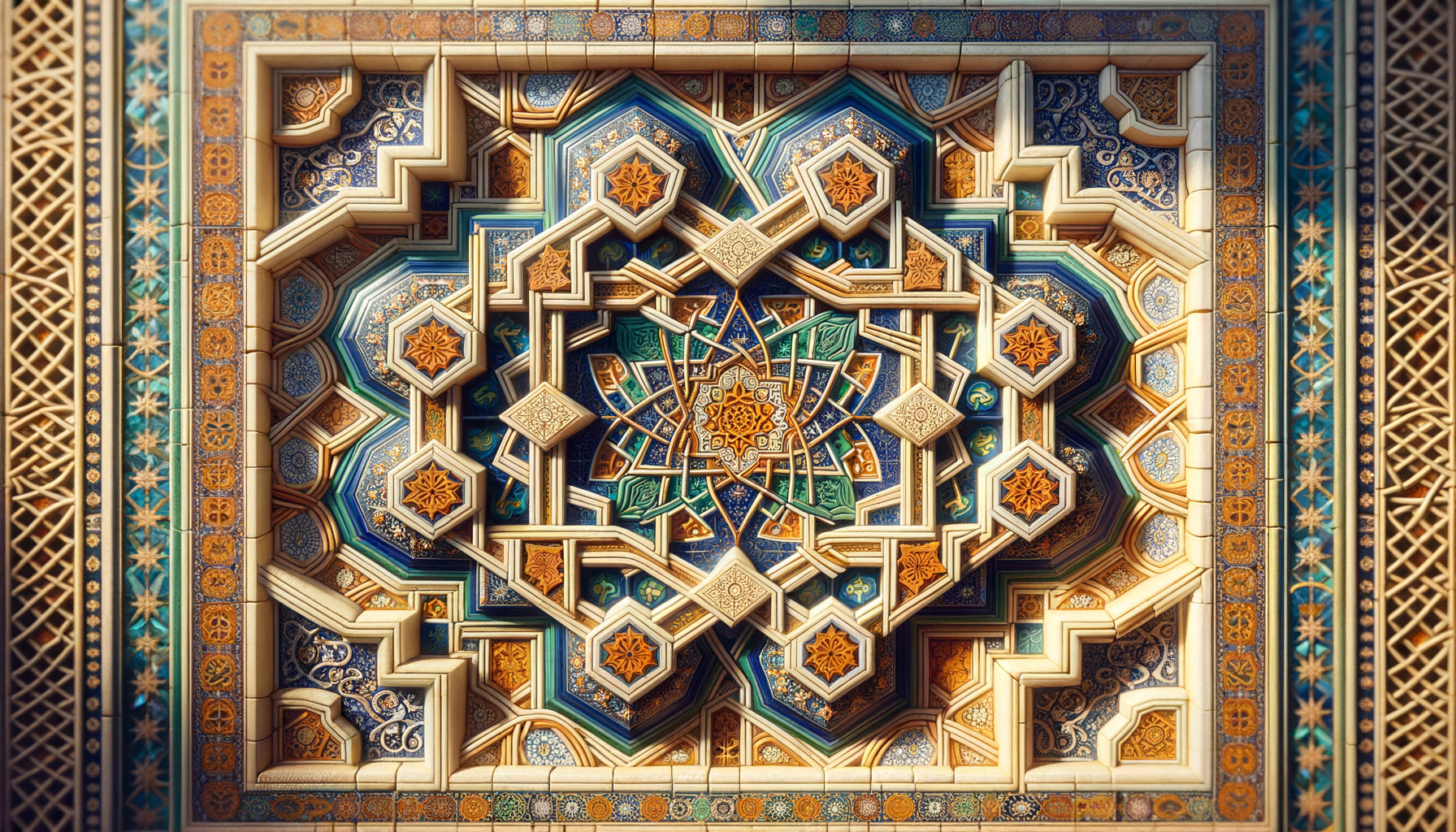
Imagine ancient frescoes, colorful and vibrant, defying the whims of a legendary river. Year after year, the swollen waters of the Nile engulfed Nubian villages, lapped at the walls of temples, transforming the land into fertile mud. Yet, on these flooded walls, Sudanese murals endured. Not for a few years. For centuries. How did Nubian artists achieve this technical feat that our modern paintings would be quite incapable of reproducing?
Here's what this ancestral technique reveals: exceptional chemical mastery, an intimate understanding of local materials, and expertise that transformed the Nile’s clay into a protective shield. Three secrets that allowed frescoes to resist extreme humidity, devastating floods, and time that erases all.
Today, we admire these Sudanese murals in museums, behind climate-controlled display cases. We photograph them, study them, celebrate them. But we often forget the technical prowess they represent. In a world where our modern walls suffer from the slightest water infiltration, where our paintings flake off after a few humid winters, how did these ancient artists create works capable of surviving annual floods?
The answer lies not in a miracle, but in an empirical science of remarkable sophistication. A science born of observation, passed down from generation to generation, perfected over the course of floods. And this ancestral knowledge has much to teach us about durability, climate adaptation, and intelligent material choices.
I invite you to delve into the secrets of this exceptional fixing technique. To understand why the Nile, far from being the enemy of frescoes, was paradoxically their guardian. And to discover how this millennial wisdom still resonates with our contemporary concerns about eco-construction and sustainability.
The magical binder: when egg meets gum arabic
At the heart of the fixing technique for Sudanese murals was a composite binder of remarkable ingenuity. Nubian artists did not rely on a single ingredient: they combined egg white, gum arabic extracted from local acacias, and sometimes curdled milk or casein.
This recipe was far from arbitrary. Egg white, rich in albumin, created an impermeable protein film as it dried. Gum arabic, a complex polysaccharide, provided flexibility and exceptional adhesion. Together, these components formed an elastic membrane that accompanied the movements of the support without cracking.
But the genius lay in the proportions. Too much egg white, and the surface became brittle. Too much gum, and humidity would dissolve it. Master painters adjusted their mixture according to the wall's exposure, the season, its height relative to the usual flood level. This empirical knowledge of chemical properties, without scientific vocabulary to describe it, represented a form of applied chemistry with astonishing precision.
The Ritual Preparation of the Binder
The production of the binder for Sudanese wall paintings followed a precise protocol. Egg whites were beaten with acacia branches until a light foam was obtained, then left to stand so that the bubbles disappeared. Gum arabic was dissolved in Nile water itself, filtered through linen to remove impurities. This river water contained specific minerals that strengthened the adhesive properties of the mixture.
The result? A stable, translucent emulsion that penetrated deeply into the support while forming a protective layer on the surface. A technique that our modern acrylic paints struggle to match in terms of longevity against moisture.
The Secret of the Support: The Plaster That Drank Water Like an Intelligent Sponge
The fixing technique did not begin with the paint, but well before, with the preparation of the wall. Nubian artisans applied a base plaster composed of Nile clay, finely chopped straw, and sand. This composition was not insignificant: it created a porous support, capable of absorbing moisture and then releasing it gradually.
Unlike our modern plasters which seek to completely waterproof, the plaster of Sudanese wall paintings was designed to breathe. During floods, water penetrated the micropores, slightly swelling the structure, then slowly evaporated once the river level subsided. This cycle of absorption and desorption, far from damaging the frescoes, stabilized them.
The incorporated straw played a crucial structural role. Its fibers created a three-dimensional network that prevented cracks from spreading. Like in modern reinforced concrete, but with entirely biodegradable and local materials, this vegetal armature guaranteed the flexibility necessary for humidification cycles.
Successive Layers: A Microscopic Architecture
Walls intended to receive Sudanese wall paintings generally received three layers of plaster. The first, very coarse, rich in long straw, ensured adhesion to the sun-dried brick wall. The second, finer, regularized the surface. The third, composed of almost pure clay mixed with crushed limestone, created a smooth and slightly alkaline support that favored pigment fixation.
This alkalinity was not accidental. It recalls the principle of Italian fresco painting, where pigments react chemically with fresh lime. In the case of Sudanese wall paintings, the limestone created a high pH environment that allowed pigments to form stable chemical bonds with the support.

Pigments and minerals: the palette born of desert and river
The colors of the Sudanese murals came exclusively from local mineral sources. Red and yellow ochre extracted from ferruginous soils, black carbon obtained by calcination of wood, purified kaolin white, rare azurite blue sometimes imported from Upper Nubia. These mineral pigments possessed exceptional chemical stability to water.
Unlike organic pigments which degrade rapidly in humid environments, the iron oxides and other minerals used in Sudanese murals were inert. The waters of the Nile could bathe them without dissolving them, without altering their crystalline structure. Moreover: alternating humidity-dryness sometimes contributed to a slight surface crystallization that reinforced their adhesion.
The grinding of pigments followed strict rules. The finer the particle, the better the coverage, but the more it risked being carried away by water. Masters found the ideal compromise: grains fine enough for an intense color, but large enough to anchor in the micro-cavities of the plaster. This optimal grain size varied depending on each pigment and was passed down orally, from master to apprentice.
When water becomes an ally: mineralization by floods
Here is the fascinating paradox of Sudanese murals: the Nile's floods did not destroy the frescoes, they consolidated them. The river's water, loaded with dissolved minerals, deposited at each flood a microscopic film of silicates and carbonates on the paintings. Over the centuries, these deposits created a kind of natural mineral varnish.
This process, similar to petrification, gradually transformed the pictorial layer into a semi-mineral crust of remarkable hardness. Organic binders (egg, gum) were partially mineralized, replaced molecule by molecule by inorganic compounds. The fresco became literally an integral part of the wall, no longer a simple surface application but a profound chemical transformation.
Periods of receding water played just as crucial a role. Slow evaporation allowed mineral salts to crystallize in the superficial layers without creating destructive efflorescences. Capillary action of the support, carefully controlled by the composition of the plaster, evacuated residual humidity without entraining the pigments.
The natural cycle as a conservation process
Archaeologists have found that the best-preserved Sudanese murals were those that had undergone the most flood cycles. Those artificially protected from floods paradoxically showed more degradation. This counterintuitive finding is explained by the synergy between the fixing technique and the hydraulic environment.
The Nile was not an enemy to be fought, but a partner in conservation. Nubian artists intuitively understood what we are rediscovering today: working with natural forces rather than against them produces more durable results.

Final application: the protective glazing technique
Once the fresco was completed, the masters applied a final protective layer. This glazing was composed of highly diluted gum arabic, sometimes supplemented with pistachio resin or incense. This transparent layer, applied with a wide brush in fluid strokes, unified the surface and created an additional hydrophobic barrier.
The moment of application was critical. Too soon, the glazing mixed with the pigments and created runs. Too late, it did not adhere properly. The artisans waited until the paint was dry to the touch but still slightly damp in depth, creating an optimal chemical bond between the layers.
Some Sudanese murals received several layers of glazing, applied at regular intervals. Each new layer was more diluted than the previous one, creating a concentration gradient that avoided visible demarcation lines. This technique produced remarkable optical depth, a brilliance that seemed to come from within the fresco.
Let this millennial wisdom inspire your interior
Discover our exclusive collection of African artworks that capture the essence of these ancestral techniques and bring the majesty of the Nile into your living space.
The Living Legacy of Empirical Science
The technique of fixing Sudanese wall paintings offers us much more than just an archaeological curiosity. It embodies a philosophy of making: observing one's environment, using local resources, transforming constraints into assets. The Nubian artisans had neither microscopes nor chemical analysis, but they possessed something more valuable: patient observation, passed down and refined over generations.
Today, as we seek sustainable alternatives to industrial products, this ancestral wisdom resonates with a troubling actuality. Natural binders, mineral pigments, breathable supports, techniques adapted to the local climate: all principles that ecological architecture is rediscovering and reinventing.
Sudanese wall paintings remind us that there were, and still are, other ways of creating, building, decorating. Ways in harmony with natural cycles, which transform time into an ally rather than an enemy. Ways that produce works capable of crossing the centuries without losing their luster.
Close your eyes. Imagine yourself standing before one of these millennial frescoes, in the cool gloom of a Nubian temple. The colors still vibrate, intense and deep. Red ochre tells the stories of forgotten pharaohs. Kaolin white captures light as if it were on its first day. And you now know that this beauty is not a miracle, but the fruit of an exact science, infinite patience, a profound understanding of the elements. The next time you choose a decoration for your interior, perhaps you will remember these anonymous artists who painted for eternity, armed only with eggs, gum and Nile mud.
Frequently Asked Questions about Sudanese Wall Paintings
Can this technique be reproduced today for our interiors?
Absolutely, and it is increasingly sought after! The technique of fixing Sudanese wall paintings relies on simple and accessible ingredients: egg whites, gum arabic (available in art stores), natural mineral pigments. Many contemporary artists are rediscovering these methods to create ecological and sustainable frescoes. For domestic use, you can adapt the recipe by preparing a plaster based on natural clay mixed with lime, then using an egg-gum binder for your pigments. This approach is particularly suitable for humid rooms such as bathrooms, where modern paints often peel off. The advantage? Non-toxic, breathable materials, and a unique aesthetic with textures and depths impossible to reproduce with industrial paint. Several workshops even offer courses to learn these ancestral techniques adapted to our contemporary interiors.
Why don't modern paints resist humidity as well?
The fundamental difference lies in the design philosophy. Sudanese wall paintings were designed to work with humidity, while our modern paintings attempt to block it out completely. Synthetic binders (acrylics, vinyl) create an impermeable membrane that, when pierced by a microscopic crack, traps moisture and causes peeling. Conversely, the Nubian system based on egg and gum arabic on porous support allows for constant moisture circulation without destructive accumulation. Moreover, our modern pigments are often organic and degrade in humid environments, while the mineral oxides used in Sudan are chemically inert. Finally, Nile floods brought progressive mineralization that consolidated the frescoes, a process absent in our interiors. That is why more and more architects specializing in heritage restoration and eco-construction are drawing inspiration from these millennial techniques to develop solutions adapted to old buildings and humid climates.
Where can we see examples of these Sudanese wall paintings today?
Unfortunately, the construction of the Aswan Dam in the 1960s permanently submerged many Nubian sites, resulting in the loss of irreplaceable treasures. Fortunately, international rescue campaigns have made it possible to document and sometimes relocate some frescoes. You can admire exceptional examples of Sudanese wall paintings at the National Museum of Khartoum in Sudan, which has the largest collection. The British Museum in London and the Egyptian Museum in Berlin also preserve remarkable fragments. The Nubia Museum in Aswan, built specifically to preserve this threatened heritage, offers an extraordinary immersion with full-size reconstructions. For those who cannot travel, many museums now offer high-definition virtual tours that allow you to observe the technical details of these works. Some Coptic churches in southern Egypt and northern Sudan, which remained above Lake Nasser level, still feature in situ wall paintings, offering the authentic experience of these sacred spaces where the fixing technique continues to defy time.