In the dusty alleyways of Mogadishu, I first pushed open the door of an aqal soomaali, these traditional Somali houses whose interiors tell a thousand stories. What immediately struck me was not the luxury of the materials, but the poetic intelligence with which each decorative element responded to the climate, the light, and the ancestral nomadic life. Somali artists were not simply decorating their interiors: they were sculpting them like functional poems, where every geometric motif, every woven mat, every carved gourd carried a precise intention.
Here's what traditional Somali interior decoration brings: a harmony with the desert environment that naturally regulates temperature, a powerful cultural identity transmitted through patterns and colors, and a nomadic flexibility where every decorative object is also a utilitarian one.
You might think that traditional African interiors all look alike, drowned in clichés of rustic huts without sophistication. You are seeking this cultural authenticity for your own space, but references are lacking, and explanations remain superficial. How did these artists transform simple materials into true habitable works of art? What was their decorative philosophy?
Rest assured. The interiors of traditional Somali houses reveal a remarkable system of decoration, where the nomadic way of life meets Islamic geometric aesthetics. I invite you to discover these ancestral techniques that inspire designers around the world today.
Architecture as the first decorative gesture
Somali artists began their decorative work from the architectural design stage. Traditional houses, whether they are nomadic aqal or sedentary mundul, were conceived as habitable sculptures. The structure itself constituted the first aesthetic element.
In coastal areas, artisans covered the walls with a bright white lime, creating a striking contrast with the intense blue of the Indian Ocean. This whiteness was not just aesthetic: it reflected heat while offering an immaculate canvas for wall decorations. The interiors benefited from this diffused, soft and soothing light.
Traditional Somali houses integrated decorative wall niches called godob, carved directly into coral or stone walls. These alcoves served to display precious objects: carved gourds, ceramic incense burners, embroidered fabrics. Each niche was bordered with painted or engraved geometric motifs, transforming storage into a personal art gallery.
Woven mats: carpets and tapestries of nomads
If you enter a traditional Somali house, the first thing that caresses your feet is the woven mats called dariiq. Somali artists, mostly women, created these textile works from doum palm fibers, reeds or local grasses.
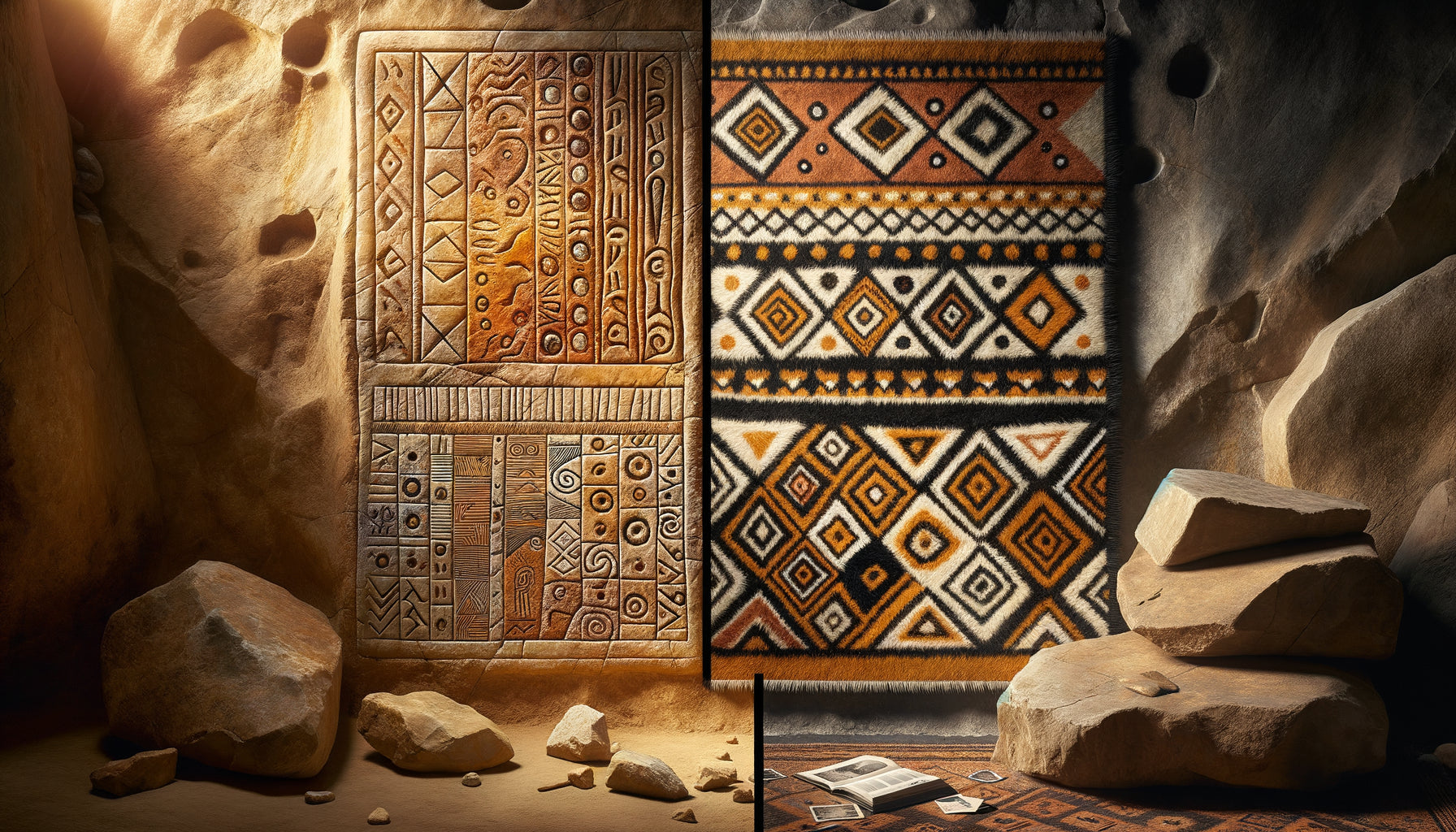
Interior decoration was inevitably marked by these mats with complex geometric patterns: interlocking lozenges, broken lines, repetitive chevrons. Natural colors – ochre, brown, deep black – were obtained through vegetable dyeing. Some artists added touches of scarlet red or indigo, creating visual compositions of surprising modernity.
These mats did not only cover the floor. In traditional homes, they also adorned the walls, creating thermal and acoustic insulation while bringing a warm texture. Somali interiors played on this layering of textile layers, creating a rare depth of visual in minimalist spaces.
The hidden symbolism of patterns
Each geometric pattern told a story. Zigs represented the paths traveled by nomads, interlocking diamonds symbolized family protection, parallel lines evoked the desert dunes. Somali artists thus transmitted their vision of the world through interior decoration, transforming each house into an open book on their culture.

Engraved gourds and sculpted objects: the art of detail
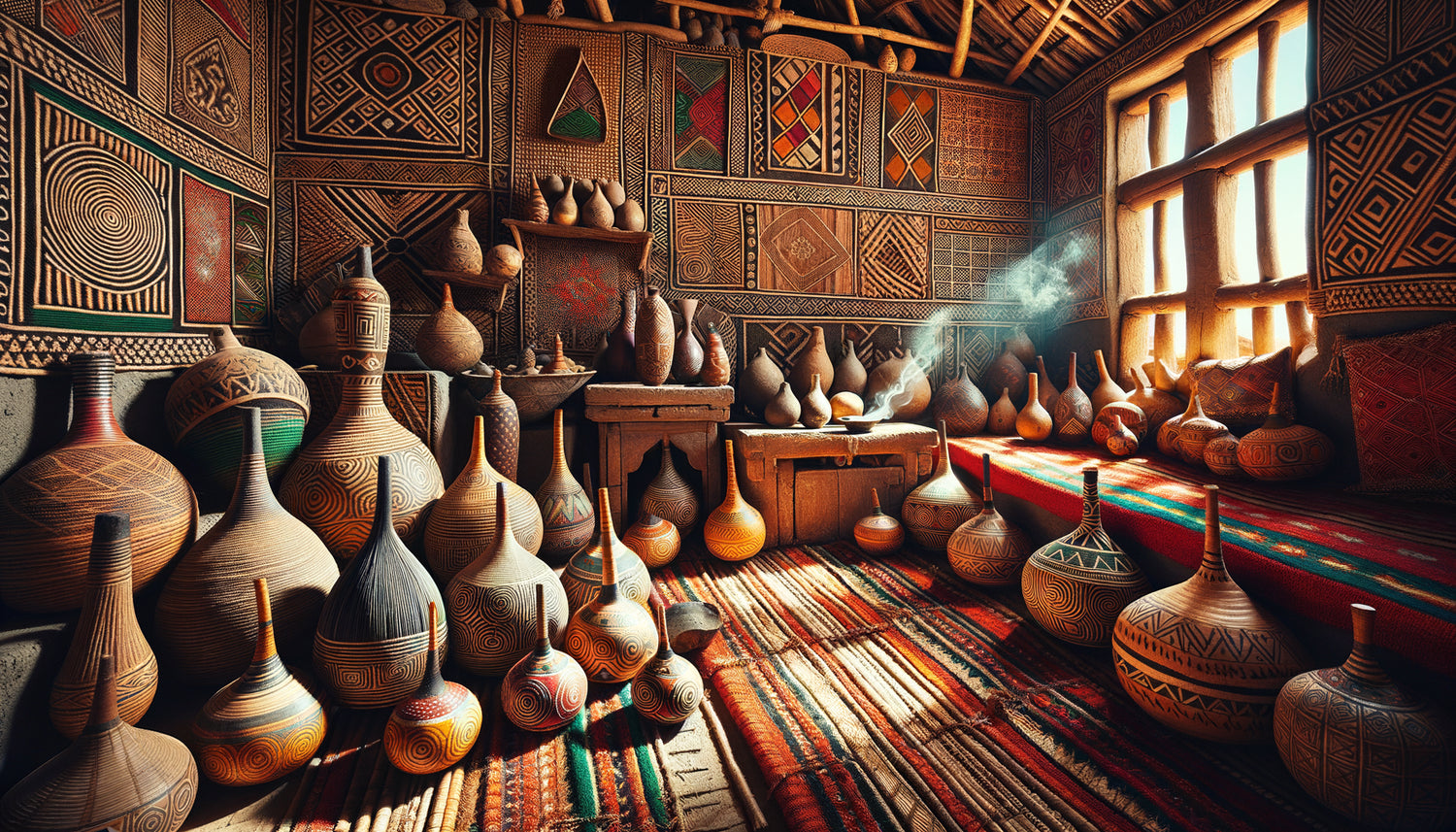
Somali traditional homes were enlivened by functional decorative objects. Gourds, dried fruits of the gourd tree, became exceptional pieces in the hands of artists. Engraved with stylized floral motifs and geometric compositions, they served to store milk, water, cereals.
The engraving technique, called qoris, revealed infinite patience. Somali artists used heated points to gently burn the surface of the gourd, creating contrasts between the natural golden brown and the burnt black. The most beautiful pieces were hung on walls or placed on shelves, true sculptures in space.
Carved wooden containers, especially large food platters (haag), also participated in the decoration of interiors. Artisans engraved their perimeter with geometric friezes, sometimes inlaid with pieces of bone or metal. These everyday objects elevated to the rank of works of art characterized the Somali aesthetic approach: no separation between beauty and utility.
Embroidered textiles and colorful sails: the palette of interiors
Somalian traditional homes were animated by embroidered textiles that brought color and movement. Women artists created garbasaar, these large sails with vibrant hues – saffron orange, deep violet, vibrant turquoise – which they embroidered with gold or silver thread.
These fabrics did not remain in chests. They dressed living spaces, stretched as curtains to divide rooms, draped over ropes to create intimate alcoves, or simply spread on cushions and beds. The interiors of traditional homes played on this textile theatricality, where colors changed according to occasions, seasons, moods.
Somalian embroideries favored stylized floral motifs and abstract compositions. Unlike geometric mats, embroidered textiles brought a touch of curves and flexibility, creating visual balance in the decoration of interiors. The influence of trade routes with India and the Arabian Peninsula was reflected in these sophisticated embroidery techniques.

Incense and perfumes: decorating through invisible senses
The decoration of traditional Somali interiors was not limited to the visible. Artists understood that the olfactory atmosphere radically transformed the experience of a space. The dabqaad, these decorated terracotta incense burners, constantly diffused fragrances of incense, myrrh, sandalwood.
These decorative objects, often engraved with floral or geometric motifs, were strategically placed in traditional homes. The fragrant smoke created a light visual haze that softened contours and gave interiors a mystical dimension. Somali artists mastered this art of multisensory decoration, where sight and smell collaborated.
The walls themselves were sometimes coated with scented pastes mixed with lime, slowly releasing their fragrances over the hours. This holistic approach to interior decoration reveals a sophistication that our contemporary spaces have often lost.
Play of light and shadow: architecture as living decoration
Somali artists excelled in natural light management. The interiors of traditional homes integrated strategic openings – small latticed windows, carved wooden moucharabiehs – that created changing games of light and shadow throughout the day.
These wooden screens, carved with Islamic geometric motifs, filtered the intense sunlight creating moving projections on the white walls. The decoration thus became alive, animated, never frozen. Interiors breathed in time with the sun, transforming the space into an aesthetic sundial.
The carved doors deserve a special mention. Woodworkers created massive shutters adorned with copper nails arranged in geometric patterns, engraved panels depicting stylized floral compositions. These doors constituted the decorative transition between the hostile exterior and the sanctified interior of traditional houses.
Transform your interior with authentic African flair
Discover our exclusive collection of African artworks that captures the geometric essence and chromatic richness of the traditional arts of East Africa.
Contemporary heritage: reinventing Somali decoration
Today, the principles of interior decoration in traditional Somali homes inspire designers and architects around the world. This functional minimalist approach, where every object is beautiful and useful, resonates with contemporary concerns about overconsumption and meaning.
The geometric patterns of Somali mats reappear on Scandinavian textiles. The calabash engraving techniques influence contemporary ceramics. The idea of multisensory decoration – integrating scents and textures – returns to the heart of reflections on well-being habitat.
Integrating the spirit of traditional Somali homes into your interior does not mean reproducing it identically. It is about drawing inspiration from this philosophy of enriched simplicity: prioritize natural materials, create texture games, let the space breathe, choose objects that tell a story. A single authentic woven basket, a carved calabash displayed as a sculpture, a textile in desert colors are enough to infuse this nomadic soul into your space.
Imagine your living room transformed by this ancestral decorative wisdom. Natural materials dialogue, geometric patterns soothe the eye, subtle scents welcome your guests. You have not created a museum interior, but a living space where every element has been chosen for its beauty and usefulness. Start simply: replace an industrial rug with a hand-woven mat, hang an embroidered textile in saffron colors, place a terracotta incense burner in a corner. These simple gestures reconnect your interior to centuries of aesthetic wisdom, and your space finally breathes.
Frequently asked questions about traditional Somali interior decoration
What materials did Somali artists primarily use to decorate interiors?
Somali artists favored natural and local materials perfectly suited to the climate: doum palm fibers for woven mats, dried gourds engraved for decorative containers, carved wood for doors and screens, white lime for walls, terracotta for incense burners, and cotton textiles embroidered with metallic threads. This restricted material palette did not prevent great decorative richness, as artists compensated with the complexity of motifs, the finesse of execution, and the intelligence of compositions. Natural pigments – ochres, indigo, carbon black – were used to color mats and textiles. The Somali approach was characterized by this ability to create sophisticated decoration with simple resources, a philosophy that inspires today's eco-design and sustainable decor movements.
How to integrate the aesthetics of Somali interiors into a contemporary decor?
Successful integration relies on the spirit rather than literal copying. Start with the color palette: combine natural neutrals (off-white, sand beige, earth brown) with touches of intense colors (turquoise, saffron, terracotta), as was done in traditional Somali homes. Introduce handcrafted woven textiles – mats, baskets, hangings – that bring texture and authenticity. Prioritize functional decorative objects: an engraved gourd as a vase, a woven basket for storage, an embroidered textile as a cushion. Create filtered light games with screens, sheer curtains, lamps that project geometric shadows. Finally, adopt the multisensory philosophy by integrating natural fragrances (incense, essential oils) and tactile textures. The goal is to capture this atmosphere of sophisticated simplicity, where every element counts and tells a story.
What was the cultural significance of decorative motifs in Somali homes?
The geometric patterns that adorned the interiors of traditional Somali homes were never purely ornamental: they constituted a visually meaningful language. Zigzags evoked nomadic journeys across the desert, interlocking diamonds symbolized protection and family unity, parallel lines represented dunes and the infinite horizon. Some motifs had a protective function, inspired by pre-Islamic traditions and reinterpreted within the framework of Islamic geometric aesthetics. Colors also carried their symbolism: white represented purity and spirituality, red vital force, indigo protection against the evil eye. This coded decoration allowed to transmit family history, clan identity and cultural values without words, creating interiors that educated as much as they embellished. Somali artists, in particular women weavers and embroiderers, were the guardians of this collective visual memory.