

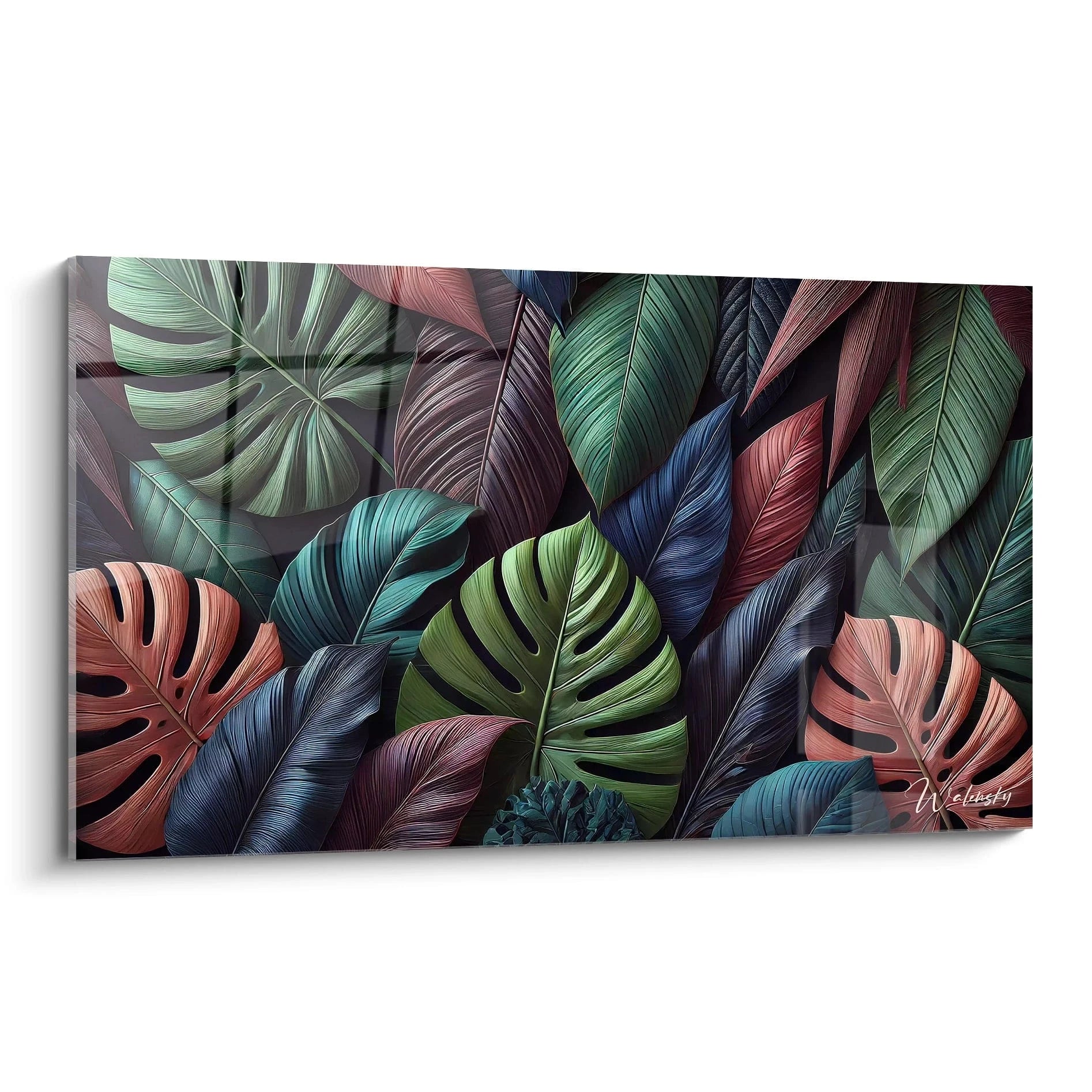






Change Your Art to Redecorate Without a Full Renovation
October 11, 2025 · 18 min read · by Walensky
Looking at your living room and feeling that dull frustration: the space lacks personality, the walls seem bland, but the idea of doing a complete overhaul discourages you before you even start.
You imagine the work, moving furniture, a significant budget... And yet, you cross this space every day that doesn't really reflect you, that doesn't inspire you.
You may have already tried changing some cushions, added a plant here and there, but the effect remains disappointing. The problem seems too big for these small touches.
It's normal to feel overwhelmed by this situation. The real reason for your previous failures? You are trying to transform the whole while it only takes changing the element that visually structures the entire space.
By the end of this article, you will know exactly how to transform your interior by strategically replacing a few paintings, and you will already visualize your new decor that finally reflects you.
Why do your walls hold the secret of a successful transformation?
Your walls represent 80% of the visual impact of your room, but paradoxically, it's where most people invest the least. Imagine your living room as a blank canvas: paintings are the main colors that set the tone for the entire composition.
📖 Customer testimonial: "I had just moved in and my living room looked like a waiting room. I replaced the three generic small reproductions with a warm-toned modern triptych. The next day, my guests asked me if I had repainted the walls!"
Conversation with a decor expert
The rule of three glances: When you enter a room, your eye first rests on vertical elements (the walls), then on volumes (furniture), and finally on details. Mastering the first glance automatically influences the perception of everything else, and you will see results from day one.

What Does Your Current Décor Really Reveal About Your Blocks?
You're probably experiencing one or more of these situations: your guests compliment politely your "lovely home" without particular enthusiasm, you never find the perfect angle to photograph your living room, or you subconsciously avoid spending time in certain rooms.
These signals don't reveal a lack of taste on your part, but rather the absence of a unifying element that would give meaning to your whole. It’s like a talented orchestra without a conductor: all the elements are there, but harmony is missing.
Imagine your current décor as a book whose pages were out of order: the story is beautiful, but it needs a narrative structure to reveal its full potential.
The Trap of Decorative Accumulation
Contrary to what magazines suggest, multiplying decorative objects doesn't necessarily create more personality. It’s often the opposite: too many elements of equal importance create a visual cacophony.
It’s like trying to follow several conversations simultaneously: the more "voices" there are, the less you hear the overall message. Your brain gets tired trying to prioritize all this information.
This dispersion prevents you from creating a clear atmosphere and gives you the impression that your interior lacks consistency, when all it takes is to designate a "soloist" for the whole ensemble to find its melody.
🔍 5-Second Test: Ask someone close to you to look at your living room for 5 seconds then close their eyes. What comes to mind first? If the answer is vague or generic, it's a sign that no element structures the space.
The Illusion of "Neutral" Décor
Many think that by staying in neutral tones and classic shapes, they avoid taste mistakes. In reality, this approach often creates bland spaces that tell no story.
It’s like wearing only beige clothes: you don't shock anyone, but you don't mark anyone either. Your interior becomes a backdrop rather than a space that resembles you.
This excessive neutrality deprives you of the positive energy that your home can bring, and prevents you from creating those moments of daily happiness that we feel in a space that truly inspires us.
The Myth of the Universal "Good Size"
How many times have you hesitated in front of a painting wondering if it was "the right size"? This obsession with perfect proportions often hides the fear of making the wrong choice.
In reality, a painting that touches you emotionally will naturally find its place, even if it doesn't respect academic rules. Your feeling is more important than measurements to the nearest centimeter.
This search for technical perfection paralyzes you and prevents you from trusting your instinct, which is after all your best guide to create a space that resembles you.
🎯 The 3 signs of a space that needs restructuring:
- The gaze that flees: Your eyes don't find a natural anchor point and dart around the room. This means no element guides attention to a visual resting area. The impossible photo: You never manage to frame your room in a satisfactory way. This is a sign of a lack of visual hierarchy, like a melody without a memorable refrain. Low spirits: You don't feel any particular pleasure when entering the room. This reveals the absence of an element that speaks to you personally and creates an emotional connection with the space.The trigger: art as a personal language
What really makes the difference is the presence of one or more elements that tell your story. It's like having a signature: paintings become your unique way of expressing yourself in space. Unlike furniture which responds to practical needs, wall art reveals who you are and creates that distinctive atmosphere that your guests remember.
The protagonist rule: Every successful room has a main element that sets the tone, and other elements come to support it. The more this element resembles you, the more memorable your space becomes and the more it recharges you every day.
| ❌ Scattered approach | ✅ Structured approach | 💡 Why it works | 🎯 Immediate benefit |
|---|---|---|---|
| Multiplying small decorative objects | Choosing 1-2 striking artworks | The eye finds a clear anchor point | Feeling of organized and soothing space |
| Searching for the "perfect" style | Prioritizing personal emotion | Authenticity creates more impact | Pride and attachment to your space |
| Avoiding "taste mistakes" | Embracing your preferences | Personality attracts more than neutrality | Authentic compliments from guests |
| Following the rules of proportions | Trusting your feelings | Emotion guides better than measurements | Immediate and lasting satisfaction |

The 3-step method to transform your space
Rest assured: you're not going to become a decorator overnight, and that’s a good thing! This progressive approach will allow you to build your new decoration like cultivating a garden: étape par étape, en laissant chaque changement révéler le suivant. At the end, you will have not only a transformed space, but also the satisfaction of having created something that truly resembles you.
🗺️ Your roadmap: We’ll first clear the space by removing what clutters it (like weeding), then plant strong elements (your new artworks), and finally adjust the details to create perfect harmony. Each step reveals a growing level of satisfaction.
Step 1: Clear the space to see clearly
Starting by clearing the space may seem counterintuitive when you want to decorate, is like cleaning a canvas before painting: you need to see what you really have to know what you want to create. This step will give you immediate satisfaction and a fresh look at your room.
What you’ll need for this step
- Your hands and your critical eye: No need for complex tools, just your ability to assess what you really like. Trust your first impression when looking at each item: it reveals your true feelings without the justifications that your mind adds afterwards.
- A camera (even your phone): Photographing your room allows you to see it objectively, as if you were discovering it for the first time. The lens reveals imbalances that your accustomed eye no longer notices daily.
- A notebook to note down your feelings: Writing what you feel when facing each item helps you identify your true tastes, beyond external influences. It's your personal compass for future choices.
Now, let’s move on to concrete action
How to proceed without getting discouraged
Photograph your room from several angles: Take 4-5 photos from different viewpoints, as if you were going to sell it. This emotional distance reveals the elements that work and those that unnecessarily clutter the space.
⏱️ Time: 10 minutes | ✅ Successful when: You see areas that you like and others that bother you | ⚠️ Attention: Don't look for the perfect photo, photograph reality: it’s the starting point, not the final goal.
Identify items that visually clutter your space: Look at each decorative object and ask yourself: "Would I want to show it to a friend?" If you hesitate, it doesn’t bring you real joy and can be temporarily removed.
⏱️ Time: 15 minutes | ✅ Successful when: You have a pile of “maybe” items to store | ⚠️ Attention: Don't throw anything away permanently, just put it in a box: you can re-evaluate later with a fresh eye.
Create a temporary neutral space: Remove all wall decorations to see your bare walls. It’s like a blank page that allows you to visualize possibilities without being influenced by the existing.
⏱️ Time: 20 minutes | ✅ Successful when: You feel a mix of strangeness and freedom | ⚠️ Attention: This feeling of "emptiness" is normal and temporary: it prepares your eye to appreciate the new elements.
✨ Step 1 Checkpoint: You should feel a sense of liberated space and see wall areas that "call" for something. If you feel destabilized, that's perfect: it means you have broken your visual habits. You are ready to consciously choose what will truly please you.
— Our selection


OUR RECOMMENDED PRODUCTS
Step 2: Choosing Your Art with Intention
Now that you see clearly, you will be able to choose consciously rather than reactively. This step is the most exciting: you will discover your personal style and create this visual signature that will transform your space. The effect will be visible from the first artwork hung, and each addition will amplify the transformation.
Your Selection Tools
- Your photos from step 1: They show you the areas that have the most visual impact in your room. Generally, it's the main wall you see when entering, and the walls perpendicular to your living zones (sofa, table).
- Your emotional feeling: Trust your first reaction to a painting. If you smile spontaneously or feel calmed, then the artwork resonates with you. Rational explanations always come after emotion.
- The rule of 3 glances: A good painting attracts you at first glance, intrigues you on the second, and reveals details on the third. It's a sign of a work that won't tire you.
The Selection Process
Define your main impact zone: Identify the wall that structures your room, usually the one facing your sofa or the entrance. This is where your first painting will have the most effect and set the tone for the entire space.
⏱️ Time: 5 minutes | ✅ Successful when: You clearly visualize which wall naturally attracts attention | ⚠️ Attention: Don't choose a default wall: prioritize the one that faces you when you are in your favorite position in the room.
Choose your main painting: Select a work that personally moves you, without worrying about other people's opinions. It is your visual signature; it should resemble you and please you every day.
⏱️ Time: 30-60 minutes of searching | ✅ Successful when: You feel like living with this artwork daily | ⚠️ Warning: Avoid overthinking it: if you need to convince yourself that a painting is beautiful, it's probably not right for you.
Plan the exact location: Visualize your artwork at eye level (between 1.50m and 1.60m from the floor for the center of the piece). Use a piece of paper the same size to test the placement before buying.
⏱️ Time: 10 minutes | ✅ Successful when: The location feels natural and balanced | ⚠️ Warning: A painting that is too high gives the impression of "floating" and loses its emotional impact.
🎯 Validation of step 2: You should feel positive anticipation at the thought of seeing your artwork in your space. If you have doubts, take the time to let your choice mature for a few days: the right painting will continue to attract you, others will lose their charm.
Step 3: Create overall harmonyWith your main artwork in place, you are now going to create a harmonious visual conversation. This is the step where you go from "amateur decorator" to "creator of atmosphere": you orchestrate a coherent ensemble that reveals your personality while creating a soothing and inspiring space. The final result will surprise you with its richness and authenticity.
Elements of composition
- Your main artwork as reference: It now dictates the overall atmosphere of your room. Observe its dominant colors, its style, its energy: all your other decorative choices will resonate with it rather than compete with it. The rule of three: Three elements create a perfect visual balance: your main artwork, a secondary element (smaller painting or object), and a color accent (cushion, plant, book). More than three elements risk recreating clutter.Breathing spaces: Leave empty areas around your strong elements so they can "breathe" and reveal all their beauty. It's the silence that gives strength to music.
The final orchestration
Hang your main artwork: Take the time to center and level your piece well. A crooked painting, even by a few degrees, creates an unconscious visual discomfort that ruins all the desired effect.
⏱️ Time: 20 minutes | ✅ Successful when: The artwork seems "naturally" in place | ⚠️ Warning: Use a spirit level or your phone app: the eye can be deceived by the lines of the room.
Add colorful accents: Pick up a color from your artwork and incorporate it into 1-2 small items in the room (pillow, object, book). This creates a subtle visual unity that makes "everything goes together" naturally.
⏱️ Time: 15 minutes | ✅ Success when: You feel that the elements "talk to each other" | ⚠️ Attention: Avoid exact copy-paste: look for nuances of the same color rather than perfect repetitions.
Reintegrate selectively your old items: Pick up one or two objects from your "maybe" pile if they harmonize with your new ambiance. You may discover that some elements reveal a new beauty in this transformed context.
⏱️ Time: 10 minutes | ✅ Success when: Each element has its reason to be | ⚠️ Attention: Less is more: if you hesitate, leave it in the box. You can always add later.
🌟 Final validation: Sit in your usual position and observe your room. You should feel a quiet satisfaction and a desire to stay. If you want to take a photo to share it, that's when the transformation has succeeded!
The maturation rule: Let your new decor "rest" for 48h before adding anything. Your eye needs time to get used to it and reveal any necessary adjustments. Patience is the ally of decorative success.
You now master the basics of space transformation, but a few expert subtleties can make the difference between a satisfactory result and a truly impressive one. These details will give you that edge that makes people regularly ask for your decorating advice.
💎 Pro tip: Directional lighting multiplies the impact of your artworks. A simple adjustable lamp or a wall sconce that illuminates your artwork at an angle reveals textures and intensifies colors, creating a true "gallery effect" in your living room. It's this detail that transforms a well-decorated decor into a professional ambiance.
Frequent question from our readers
"I'm afraid of getting tired of a painting that I love today... How can I be sure my choice will last?"
This concern is very understandable and actually reveals that you want to do well! In reality, a painting that genuinely moves you reveals new facets over time, like a song you discover more with each listen. The real risk of boredom comes from "reasonable" choices made by default rather than by passion. Trust your crush : it's the one that will best accompany you in the long run.
🔍 Durability test: Before finalizing your purchase, keep the image of your favorite artwork as your wallpaper for a week. If you continue to appreciate it after seeing it daily, it's a sign of a lasting choice.
— You may also like


Traps to avoid to preserve your success
Now that you know the method, I want to protect you from common mistakes that can compromise your beautiful transformation. These mistakes are tempting because they seem logical, but they often reveal "defensive" rather than creative reflexes.
- ⚠️ Wanting to harmonize everything perfectly: The desire to "match" all elements is understandable, but it often creates a rigid and impersonal result. A slight mismatch brings life and authenticity. Look for complicity rather than similarity: your items should complement each other, not repeat themselves.
- ⚠️ Giving in to the pressure of others' opinions: Asking too many people for advice dilutes your personal vision and makes you lose confidence in your choices. Everyone projects their own tastes and limitations. Listen to technical advice, but keep your aesthetic decisions: it’s your space, it should reflect you.
- ⚠️ Filling empty spaces too quickly: Nature abhors a vacuum, you might be tempted to "complete" your decor quickly. Resist this impulse! Breathing spaces are essential to reveal the beauty of your strong elements. A slightly "under-decorated" space is always more elegant than an overloaded one.
- ⚠️ Underestimating the importance of quality: Saving on printing or support quality is a false economy that is immediately apparent. A beautiful artwork poorly printed or framed loses 70% of its impact. It's better to have one quality artwork than three mediocre reproductions.
- ⚠️ Neglecting the hanging: A magnificent artwork hung badly loses all its magic. Taking the time to properly center, level, and secure your work is an integral part of decorating. Careful hanging reveals the respect you have for your art and your space.
🎯 Your safety checklist: Before considering your decor finished, check that you enjoy entering the room, that your gaze naturally finds resting areas, that you want to show this space to your loved ones, and that you feel "at home" more than before. If any of these points are missing, identify what bothers you before adding anything.
— In the same vein


Frequently Asked Questions
The impact is visible from the first artwork hung, but allow 2-3 weeks for your eye to fully adjust and reveal any potential adjustments. The real magic happens gradually: you will discover details of your artwork and harmonies with your furniture that you did not notice at the beginning. It's like moving into a new home: each day reveals new satisfactions.
A single quality artwork has more impact than five cheap reproductions. Allow 100-300€ for a work that will really transform your space, against 20-50€ for items that risk disappointing you quickly. It's a long-term investment: divided by the years of use, it represents a few euros per month for daily pleasure.
Small spaces benefit even more from this approach as each element has proportionally more impact. A well-chosen artwork visually "enlarges" the space by creating depth and directing attention to the walls rather than clutter. Even with imposing furniture, the right artwork creates balance and brings lightness to the whole.
Choose sellers who offer satisfaction guarantees and detailed photos showing textures. Carefully read the dimensions and imagine the work in your space by cutting a piece of paper to the same dimensions. If you are hesitating between two artworks, choose the one that evokes the most positive emotions: it is your best guide.
A careful hanging makes the difference between "amateur" and "professional". An artwork tilted, misaligned or poorly lit loses 50% of its impact. Invest in a good hanging system and take the time to properly position your work: this is what reveals your attention to detail and your respect for your art.
Your new decorative life begins now
In a few weeks, you will look at your living room with pride et you will wonder how you managed to live for so long in a space that didn't resemble you. Your guests will immediately notice the change and compliment you on your "good taste" - but the best thing is that you will finally feel at home, in a space that tells your story.
This transformation goes far beyond decoration: You have learned to trust your instinct, to create harmony from simple elements, and to reveal your personality in your environment. These skills will serve you in all aspects of your life where aesthetics and well-being meet.
The hardest part was understanding the mechanism - and that's done! Now, all you have to do is choose your first artwork and take that first step towards transformation. Each day spent in your new space will remind you that you have the power to create the beauty around you.
🚀 Your mission, should you choose to accept it: Today, take a photo of your main wall and imagine your ideal artwork on it. This simple visualization will activate your creativity and put you in motion towards the transformation you deserve. The future begins with a single decided gesture.
Also read: 🌸 Discover how to adapt your artworks to the seasons
</div
Explore our collections


