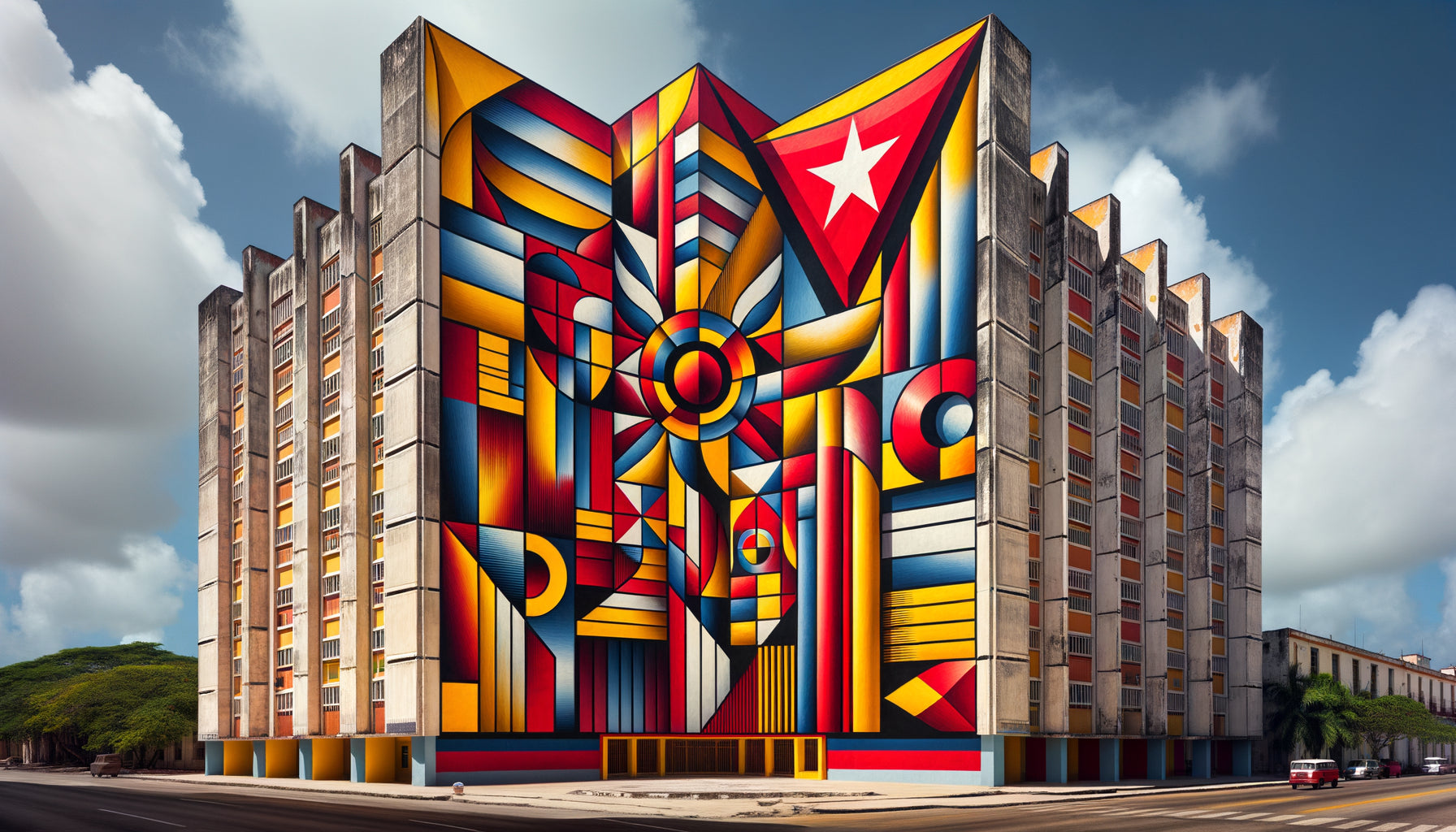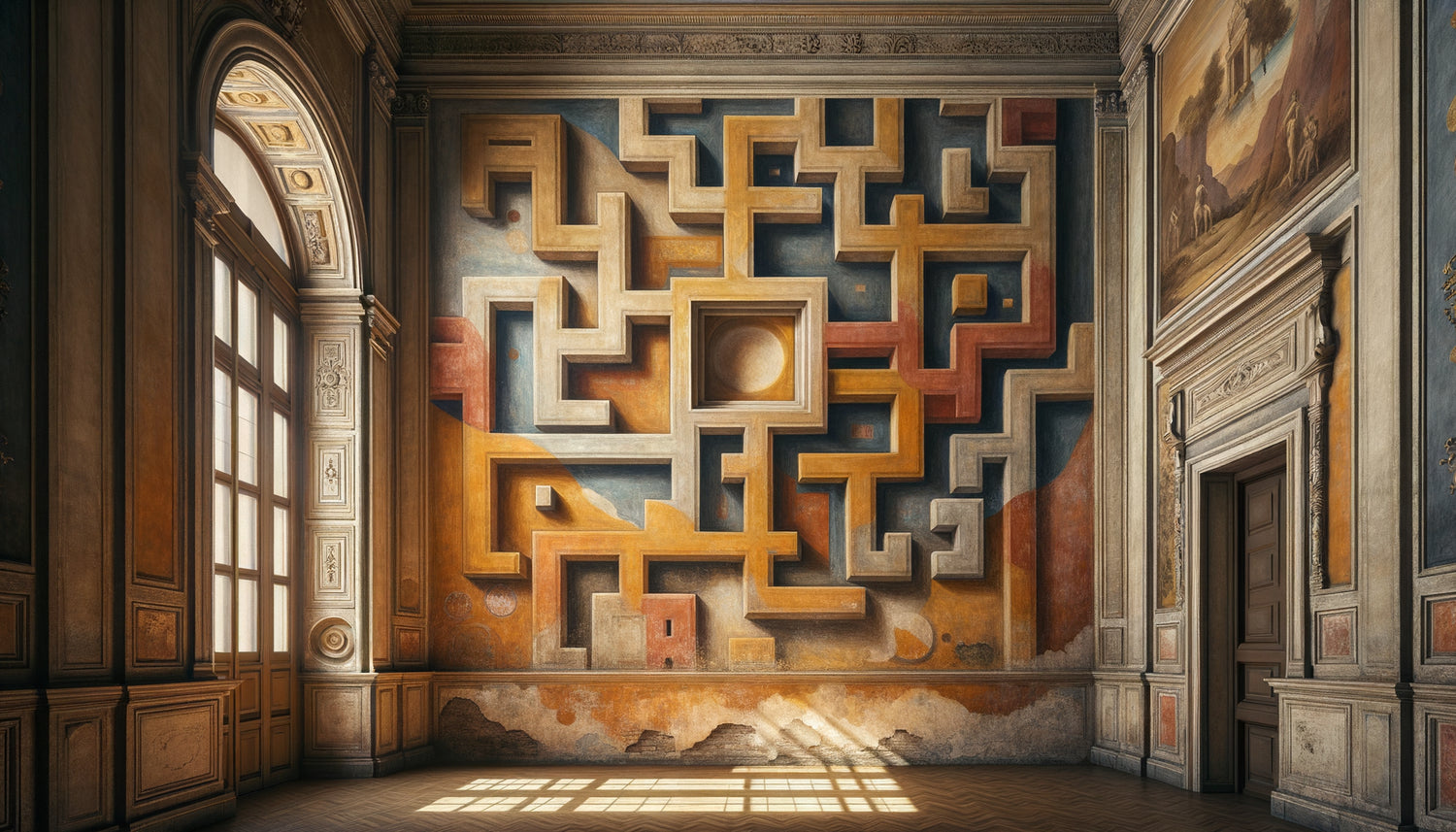
Imagine a moment the walls of a baroque palace illuminated by touches of intense ultramarine, vibrant vermilion, bright Naples yellow. These abstract mural frescoes that adorned the aristocratic homes of the 17th century owed their splendor only to pigments from distant lands. Yet, behind each brushstroke lay an invisible economic battle: that of import taxes on pigments which literally transformed the palette of artists and the aesthetics of abstract wall art of the time.
Here's what import taxes on pigments brought to 17th century abstract mural art: a constrained chromatic revolution, the emergence of new composition techniques, and paradoxically, unprecedented creativity in the use of local resources. Three transformations that shaped the visual identity of an entire era.
You admire these abstract wall compositions in history books of art and wonder why some periods seem bolder than others? Why this explosion of brown and ochre earth tones in some frescoes, while others radiate deep blues? The answer is not only found in aesthetic choices, but in the economic realities that dictated access to materials.
Rest assured: understanding these historical dynamics sheds new light on our contemporary appreciation of abstract wall art. These constraints of yesterday forged an aesthetics that continues to influence creators today.
I invite you on a journey to the heart of the 17th century to discover how import taxes on pigments redrew the contours of abstract mural art and why this story still resonates in our modern interiors.
When economics dictated color: the blue gold of lapis lazuli
In the 17th century, ultramarine was not simply a color: it was a symbol of wealth comparable to gold. Extracted from lapis lazuli imported from Afghanistan via Venetian trade routes, this pigment suffered from exorbitant import taxes that multiplied its price by ten, sometimes twenty.
For fresco artists working on large-scale abstract wall compositions, this economic reality imposed draconian choices. Contracts precisely stipulated the amount of ultramarine to be used, down to the gram. Artists then developed a strategic approach: concentrate precious pigments on focal points, creating compositions where the eye was guided by the chromatic scarcity itself.
This economic constraint paradoxically engendered an aesthetic innovation. Abstract wall art of the 17th century is characterized by these areas of intense colors surrounded by more neutral passages, a technique that will become a stylistic signature well beyond the initial budgetary necessities.
Local alternatives: birth of a territorial palette
Faced with prohibitive taxes, artists turned to local resources. In Italy, the lands of Siena and Umbria dominated wall compositions. In Flanders, yellow ochres and red earths structured a distinctive regional aesthetic. This territorialization of palettes created national visual identities in 17th-century abstract mural art.
Vermilion under surveillance: when red cost a fortune
Vermilion, this intense red derived from cinnabar imported from Spain or produced synthetically, was another victim of import policies. Customs duties imposed by European commercial powers transformed this pigment into a luxury material reserved for the most prestigious commissions.
The abstract mural paintings of the 17th century bear witness to this organized scarcity. Artists compensated by using alternative pigments: madder red, less vibrant but grown locally, or even red earths, more muted but exempt from taxes. This forced substitution profoundly modified the aesthetics of wall compositions of the time.
Observe carefully the works of this period: reds are often earthier, more organic than vibrant. It is not a deliberate stylistic choice but a pragmatic adaptation to the economic constraints imposed by taxes on imported pigments.

Guilds and monopolies: mural art held hostage
The guild system further exacerbated the impact of import taxes. In Amsterdam, Antwerp or Florence, merchants' corporations held monopolies that were added to already exorbitant customs duties. For an artist working on a large-scale abstract wall composition, access to rare pigments required complex negotiations and considerable budgets.
This economic structure explains why 17th-century abstract mural art was largely reserved for an aristocratic or ecclesiastical elite capable of absorbing these costs. More modest domestic compositions favored restricted palettes, creating a visual hierarchy directly linked to financial capabilities.
The ingenuity of workshops: secret recipes and substitutions
Faced with these constraints, workshops developed jealously guarded recipes to stretch expensive pigments. Mixing ultramarine with lead white allowed covering larger surfaces. Combining vermilion and red lacquer created complex shades at a lower cost. These substitution and extension techniques characterize the pragmatic approach of 17th-century wall art.
When geopolitics redrew frescoes
Commercial wars between European powers directly impacted the availability of pigments. A blockade of a trade route could deprive a workshop of its supply of indigo for months. Conflicts with the Ottoman Empire disrupted the arrival of certain oriental dyes essential to abstract mural compositions.
This geopolitical instability forced artists into permanent flexibility. 17th-century wall murals often bear the traces of these adaptations: unfinished areas awaiting a specific pigment, chromatic substitutions in progress, compositional adjustments dictated by material availability rather than initial artistic vision.
This abstract wall art from that era becomes a valuable historical document, testifying to trade flows, diplomatic tensions and economic realities that shaped 17th-century Europe.

The contemporary legacy: from constraint to inspiration
This history of taxes on pigment imports strangely resonates with our time. Economic and logistical constraints that shaped 17th-century abstract wall art echo contemporary concerns about sustainability, ethical sourcing of materials, and creativity under constraint.
Restricted palettes imposed by yesterday's taxes now inspire designers and decorators seeking elegant chromatic sobriety. These abstract wall compositions, born of economic limitations, have become aesthetic references that we now seek to reproduce by choice rather than necessity.
When you contemplate a 17th-century fresco, you don't just see a work of art: you observe the result of a permanent negotiation between artistic vision and economic reality, between creative ambition and material constraints. This creative tension has produced a unique aesthetic, characterized by a strategic use of color that continues to influence contemporary abstract art.
Reinterpreting history in our modern interiors
Understanding how pigment taxes shaped abstract wall art invites us to rethink our relationship with color in our living spaces. This historical approach, where every shade had a cost and value, can inspire more thoughtful decor, where touches of intense color become visual events rather than constant saturation.
Transform your interior with the timeless elegance of wall art
Discover our exclusive collection of abstract paintings that capture this chromatic sophistication inherited from the great masters, without the economic constraints of the 17th century.
From historical frescoes to contemporary walls
The aesthetic lessons learned from this period when import taxes dictated the palette of artists remain surprisingly relevant. Contemporary abstract wall art often borrows from this chromatic economy: compositions structured around a few strong colors, neutral breathing spaces that highlight colored accents, a clear visual hierarchy.
This historical approach reminds us that the greatest aesthetic innovations often arise from constraints. The taxes on pigments that seemed to hinder the creativity of 17th-century artists actually engendered deep reflection on the expressive value of each color, on the power of a restricted palette, on the impact of a strategically placed chromatic touch.
Today, when we choose an abstract wall artwork for our interior, we can draw inspiration from this historical wisdom: prioritize quality over quantity, value the impact over accumulation, create compositions where every chromatic element counts. Abstract wall art thus becomes a dialogue between past and present, between constraint and freedom, between economy and expression.
Conclusion
The history of taxes on pigment imports in the 17th century reveals a fascinating truth: the most beautiful artistic creations sometimes emerge from the strictest constraints. These abstract mural paintings, born in a context of imposed chromatic austerity, have developed a sophisticated aesthetic that continues to inspire our contemporary interiors.
By understanding how economic realities shaped 17th-century wall art, we learn to appreciate the works of this period differently and to reflect on our own relationship with color and decoration. Each shade becomes intentional, each composition tells a story that goes beyond pure aesthetics to touch upon humanity, trade, geography, and creative ingenuity.
Let yourself be inspired by this history lesson to create in your home a space where every visual element counts, where color is not simply decorative but narrative, carrying meaning and emotion. Abstract wall art, heir to these historical constraints transformed into creative opportunities, offers you this possibility of dialogue between eras, timeless sophistication, and mastered elegance.