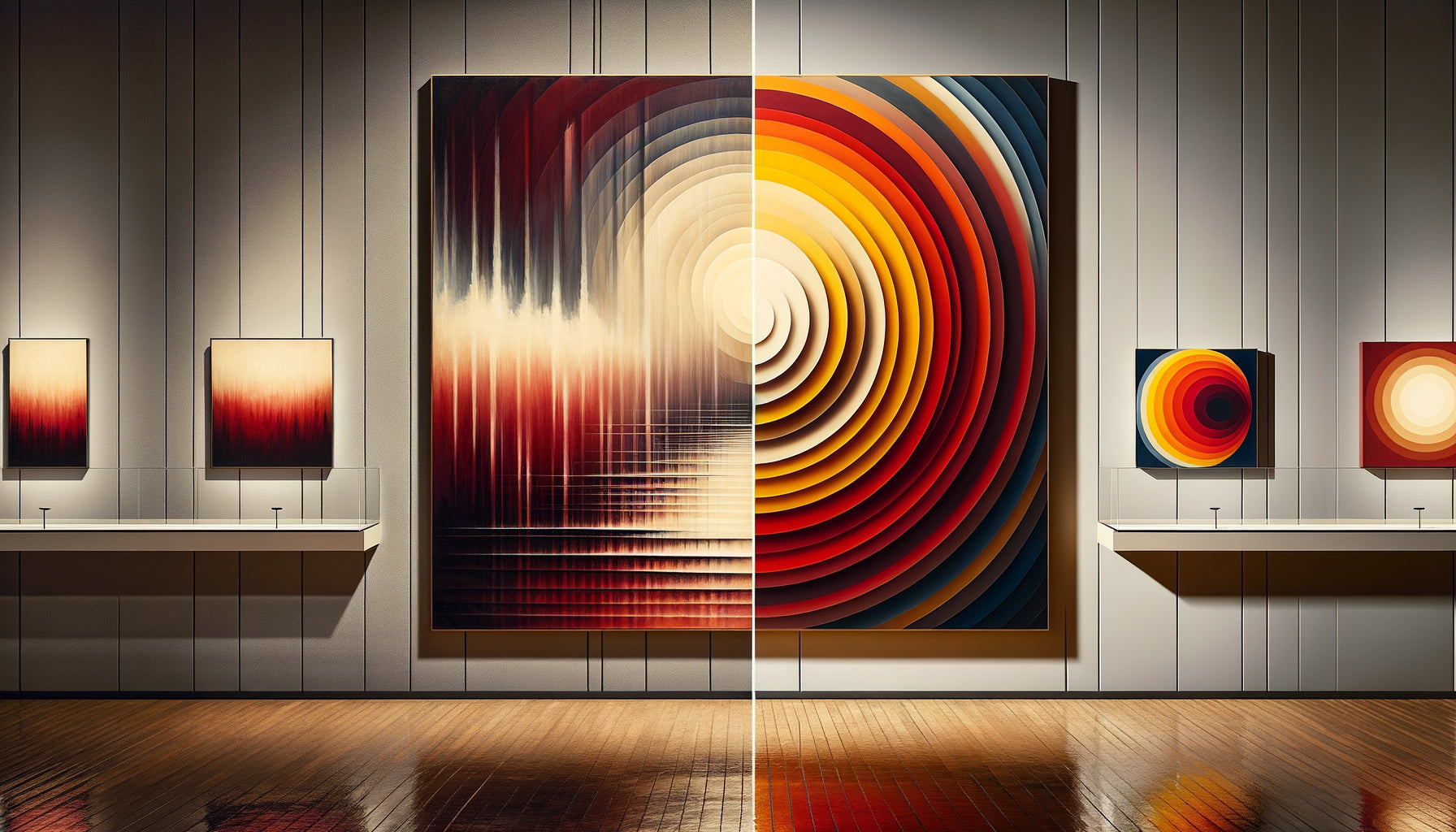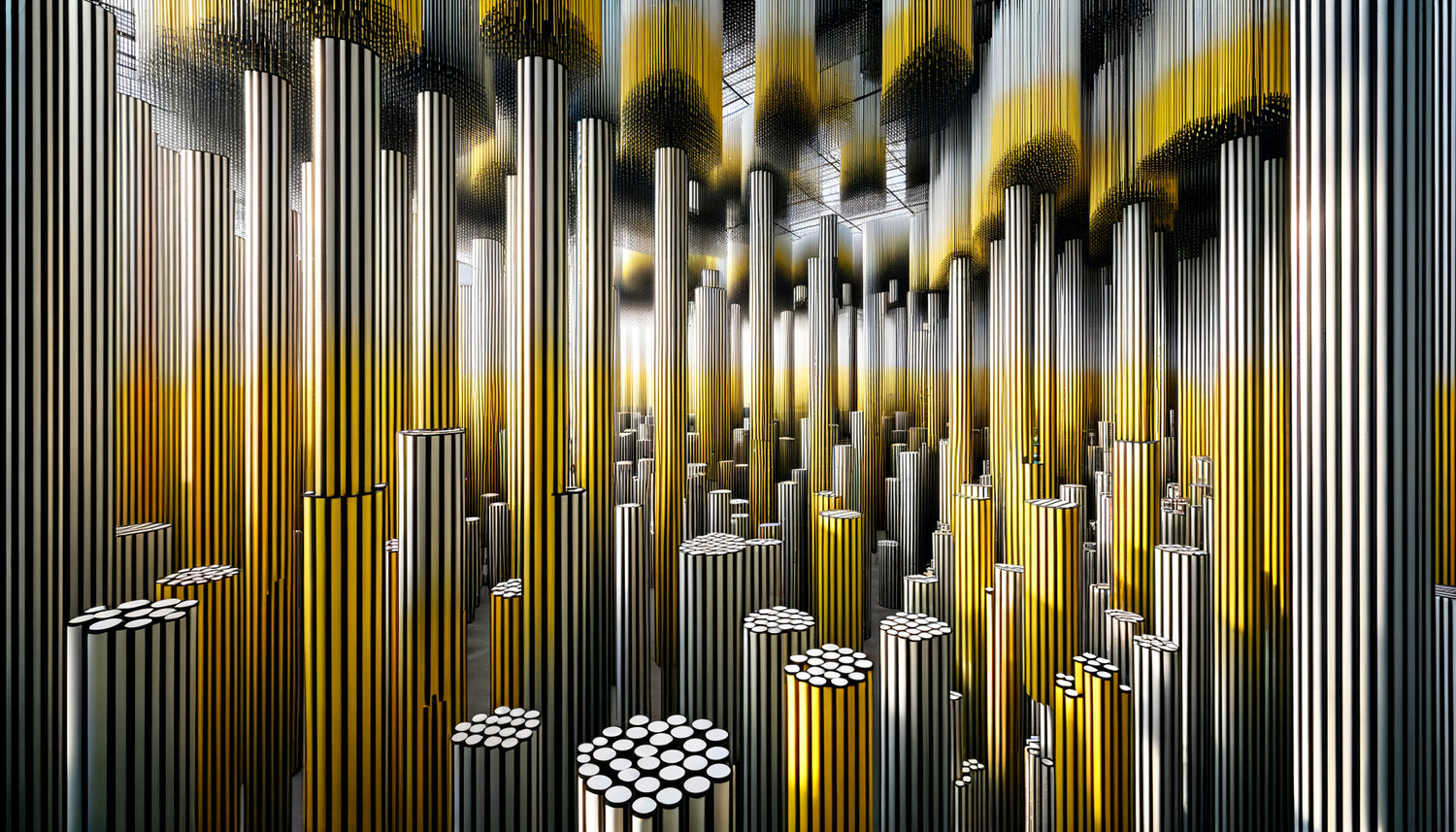
Imagine walking through a curtain of suspended metal rods. With each step, the space transforms. Lines multiply, vibrate, creating hypnotic moiré patterns that seem to be born from emptiness. You are no longer a spectator: you are the activator of the work. This is exactly what Jesús Rafael Soto revolutionized with his abstract penetrables, monumental installations that redefined our relationship with kinetic art.
Here's what Soto's method brings: a fascinating understanding of visual perception, an inexhaustible source of inspiration to create movement without movement, and aesthetic keys to transform any space into an immersive experience.
The problem? When you look at a photo of a Soto penetrable, you don't really understand. Frozen images only capture a fraction of the magic. The vibrant superposition, that feeling of infinite depth and perpetual movement, escapes reproduction. You see wires, rods, but not the vibration.
Good news: the principles developed by Soto over fifty years are perfectly decodable. Even better, they can inspire your approach to spatial composition, whether you're decorating an interior or simply trying to understand why certain abstract works instantly hypnotize you.
I take you behind the scenes of a Venezuelan genius who transformed abstraction into total physical experience.
The founding principle: dissociation of planes
It all starts with Soto's brilliant observation in the early 1950s. The Venezuelan artist was then working on optical paintings where lines and patterns created visual interference. But he wanted to go further: not suggest movement, but create it actually in space.
His revelation? Physically separate graphic elements into several distinct layers. Instead of painting lines on a flat surface, Soto began suspending metal wires in front of striped backgrounds. This spatial dissociation created something extraordinary: when the viewer moved, the two planes interacted optically, generating vibrations that existed neither on the background nor on the wires, but in the space between the two.
It is this principle of superposition that will become the DNA of all his abstract penetrables. Soto understood that the feeling of vibration was born from the visual encounter between independent elements. The brain tries to fuse what it sees, but the discrepancies create a delicious perceptual instability.
The geometry of ambiguity
In his early experiments, Soto used vertical lines on the background and vertical rods in suspension. Simple in appearance, but devilishly effective. When the two series of verticals visually overlap with a slight offset, the moiré effect appears: these phantom undulations that seem to move when nothing actually moves.
This perceptual ambiguity is essential. It creates a tension between what the eye captures and what the brain interprets. Soto's vibrant superposition plays on this zone of uncertainty where depth becomes impossible to evaluate precisely.
The invention of penetrables: when abstraction becomes habitable
In the mid-1960s, Soto took a revolutionary step. His experiments on vibrant superposition led him to a radical idea: what if the viewer could physically enter the work?
The penetrables were then born, these monumental installations composed of thousands of flexible rods suspended from ceiling to floor. The first abstract penetrable presented in 1967 caused a shock. Soto no longer creates just an object to look at: he builds a total vibratory environment.
The magic operates on several levels. First, even before entering it, the visitor perceives the optical density created by the superposition of thousands of rods. From afar, the installation seems to form a semi-opaque, vibrant, almost liquid wall. The lines multiply visually, creating phantom depths.
Then comes the immersive experience. By penetrating the work, your body moves the rods that oscillate, collide, create new spatial configurations. Each movement generates a cascade of visual vibrations. Superpositions change constantly: what you saw upon arrival no longer exists.
Perceptual multiplication
Soto had precisely calculated the density of his abstract penetrables. Too far apart, the rods would not create enough visual interference. Too close together, they would form an opaque curtain without ambiguity. It was necessary to find the perfect vibratory balance: dense enough for the eye not to be able to grasp each individual element, airy enough to allow transparency and movement.
This optimal density generates what I call perceptual multiplication. When you look through several layers of rods, each layer adds its own visual texture. The result? A superposition of five, ten, twenty simultaneous planes that create a dizzying depth and this characteristic vibration.

The technical secrets behind the vibration
How did Soto technically orchestrate this feeling of vibrant superposition? Several essential parameters come into play, and their combination makes all the difference between a simple curtain of wires and a hypnotic work.
First element: rhythmic repetition. Soto always used identical elements, spaced regularly. This uniformity is crucial. The brain detects the pattern, anticipates regularity... and is constantly destabilized by the interferences that break this expectation. The stems of an abstract penetrable are all the same, but their superposition creates a paradoxical visual irregularity.
Second element: the fineness of the components. Soto favored very thin rods – often translucent plastic tubes or nylon threads. This finesse is strategic: it maximizes transparency while maintaining a strong visual presence when the elements overlap. A single thin thread is almost invisible, but one hundred superimposed thin threads create a considerable optical density.
Third element: absolute verticality. Almost all of Soto's penetrables use strictly vertical lines. Why? Because verticality amplifies the superposition effect when moving laterally. The slightest horizontal movement creates a spectacular visual shift between the layers of stems. The effect would be less powerful with diagonals or horizontals.
The role of monochrome color
A detail often overlooked: Soto generally used a single color for his abstract penetrables – often white, black, or a uniform bright shade. This monochromaticism is not an aesthetic limitation, it is a perceptual necessity.
The vibration is born from spatial confusion, not from colored contrasts that would allow the brain to easily distinguish between the different layers. By keeping everything in the same hue, Soto forces the eye to rely solely on geometry and superposition to interpret depth. Result: the vibrant sensation reaches its maximum intensity.
The bodily experience of abstraction
What makes Soto's penetrables truly unique in the history of abstract art is that they engage the whole body, not just the gaze. This physical dimension exponentially amplifies the sensation of vibrating superposition.
When you walk through a penetrable, you feel the stems brushing against your skin, your clothes. You hear their slight tinkling. You perceive the gentle resistance they offer to your progress. All these sensory stimuli reinforce visual perception. Your brain simultaneously integrates tactile, auditory and visual information, creating a synesthetic experience of abstraction.
This multisensory approach was revolutionary. Soto understood that vibration should not remain purely an optical phenomenon. By making it physically palpable, he transformed abstraction into a total, almost meditative experience.
The temporality of superposition
Another fascinating aspect: each passage through an abstract penetrable is unique. The stems you have moved continue to oscillate after your passage, temporarily changing the superimpositions for subsequent visitors. The work is therefore in perpetual reconfiguration.
This integrated temporality makes the penetrable a living abstract sculpture. Unlike a frozen painting, Soto's installation constantly changes appearance according to the interactions it receives. The vibrant sensation is never exactly the same from one moment to the next.

Soto's legacy in contemporary space
Today, Soto's approach continues to influence designers, architects and artists. His principles of vibrant superposition find surprising echoes in various fields.
Open partitions that separate spaces while maintaining partial transparency take up this principle of perceptual multiplication. Some contemporary architectural facades use double skins – two spaced translucent walls – creating exactly those moiré effects that Soto explored. Even some textiles and wallpapers play on superimposed patterns to generate depth and vibration.
Soto's fundamental teaching? Visual richness does not require formal complexity. With ultra-simple elements – lines, stems – repeated and cleverly superimposed, one can create an infinite perceptual complexity. It is a valuable lesson for anyone seeking to design visually captivating spaces or compositions.
Abstract penetrables also demonstrate that art can be participatory without being gimmicky. Soto did not add interactivity for the principle: spectator participation was necessary for the very existence of the work. Without the movement of the visitor, the vibrant superposition remains potential, dormant.
Want to bring this vibration into your interior?
Discover our exclusive collection of abstract paintings
Your gaze will never be the same
Now that you know the secrets of Soto, you will never look at abstraction in the same way. You will understand how a few simple geometric principles – dissociation of planes, rhythmic repetition, calculated superposition – can generate extraordinary perceptual richness.
The next time you visit a kinetic art exhibition, take the time to move, to shift your point of view, to observe how the layers interact. The vibration is there, between the elements, in that immaterial space where your brain tries to reconcile what it sees.
And if you create, draw, or design spaces: think superposition. Think partial transparency. Think perceptual multiplication. Soto's lessons on vibrant sensation extend far beyond the realm of art to touch something fundamental about our way of perceiving depth, movement and space.
Abstraction is not just a matter of intellect or theory. As Soto brilliantly demonstrated with his penetrable works, it can become a total physical experience that engages all your senses and transforms your relationship to the visual world.
Frequently Asked Questions about Soto's Art
Can you really touch Soto’s penetrable works?
Absolutely, and it's even essential! Unlike traditional artworks where touching is forbidden, Soto's abstract penetrables are designed to be walked through, touched, physically experienced. This bodily interaction is an integral part of the work. Soto wanted visitors to completely immerse themselves in the installation, for their body to become an element of the composition. The flexible rods are robust enough to withstand thousands of passages. Not entering a penetrable is missing the essential part of the experience that the artist created. The sensation of vibrant superposition reaches its maximum intensity when you are inside, surrounded on all sides by oscillating lines that visually multiply in every direction.
Why do photos of the penetrables never do justice to the real work?
Photography freezes a single moment while the very essence of Soto's abstract penetrables lies in movement and continuous transformation. The sensation of vibrant superposition changes radically depending on your position, your angle of view, your distance. A photo captures only one of these infinite possibilities. Moreover, the camera does not reproduce human binocular perception – we see with two eyes that naturally create a sense of depth that a flat image cannot restore. Finally, the physical, tactile, auditory and immersive experience is totally absent from a photograph. That's why seeing a penetrable in person is always a revelation, even for those who are familiar with Soto’s work through images.
How to integrate Soto’s principles into a contemporary interior?
Several approaches can be used to adopt Soto's vibrant superposition principles at home. You can install semi-transparent partitions with repetitive geometric patterns that create moiré effects depending on the viewing angle. Vertical slat curtains, when partially open, naturally generate these superpositions. Some luminaires with pierced shades project multiple shadows that overlap onto walls, creating this characteristic optical vibration. For a more direct approach, you can hang wires or metal chains in front of a striped wall - the effect will be immediate and adjustable to your desires. The key is to play with repetition, partial transparency and multiplication of visual planes to recreate this perceptual richness that Soto mastered perfectly.