Rooster painting: its unique characteristics
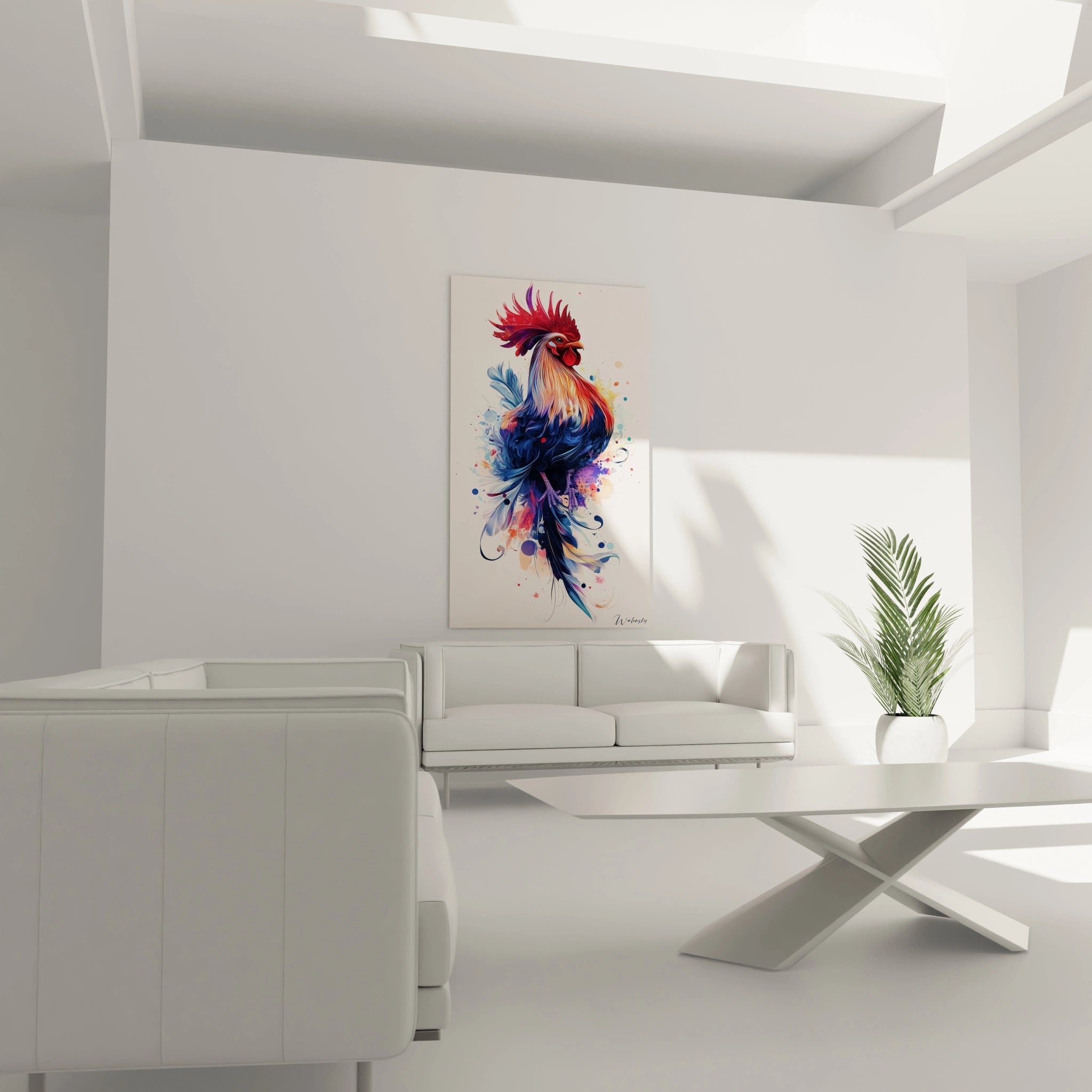
This rooster painting captivates immediately through its dynamic composition and color explosion. The work presents a majestic rooster with extraordinarily detailed plumage, standing proudly against a bright background. The haughty posture of the animal, with its flaming red crest and body in rich tones, creates a striking first impression of nobility and vitality.
What distinguishes this rooster painting from other similar works is the innovative approach to its colors and texture. The fowl's feathers are rendered with stunning realism while incorporating whimsical elements, notably color splashes that seem to dance around the main subject. This unique technique gives this rooster painting a contemporary dimension while preserving the natural majesty of the depicted animal.
How this multicolor rooster painting is structured
The composition of this multicolor rooster painting is remarkably balanced despite its apparent dynamism. The main subject occupies the vertical center of the work, slightly offset to the left, thus creating perfect visual balance. The rooster is represented in profile, head held proudly high, accentuating its majestic posture and imposing character.
The guiding lines of the rooster painting primarily follow the animal's natural silhouette. This verticality is counterbalanced by colorful projections extending horizontally, creating visual tensions that energize the entire composition. The gaze is naturally attracted to the fowl's head, focal point of the work, before descending along its body to subtle details of its feet and tail.
The colors of the rooster painting and their harmony
The color palette of this rooster painting is both rich and harmoniously orchestrated. Dominant colors articulate around:
- A vivid and deep red for the crest and certain neck feathers
- An intense navy blue that constitutes the majority of the body
- Orange and golden tones that illuminate the neck and breast plumage
- Touches of violet that bring depth and mystery
- Turquoise and azure splashes that create striking contrast
This color harmony of the rooster painting is based on a learned balance between warm and cool tones. Warm tones (reds, oranges) are primarily concentrated on the upper part, while cool tones (blues, violets) dominate the lower part. This distribution creates visual tension that draws the gaze and guides it through the entire composition, offering a rich and varied contemplative experience.
Textures and technical details of the artistic rooster painting
The textures visible in this artistic rooster painting testify to exceptional technical mastery. Feathers are rendered with remarkable precision, each detail seeming to have been meticulously worked to reproduce their silky appearance and natural overlap. One can clearly distinguish different plumage qualities: fine and long tail feathers, dense and short body feathers, and more rigid crest feathers.
The light effect in this artistic rooster painting is particularly striking. Light seems to come from multiple sources, creating subtle reflections on the plumage that reinforce the impression of volume and movement. Zones of strong luminosity alternate harmoniously with deep shadows, sculpting the rooster's form and conferring three-dimensional presence despite the surface's flatness. This sophisticated technique of rendering light contributes greatly to the realism and visual impact of the work.
What makes this colored rooster painting unique
The uniqueness of this colored rooster painting lies in its perfect balance between anatomical realism and creative freedom. The artist has captured with precision the physical characteristics of the rooster - its distinctive silhouette, its proportions, plumage structure - while allowing itself daring artistic interpretations in the treatment of colors and textures.
The color splashes surrounding the main subject constitute the most distinctive element of this rooster wall decoration. These chromatic projections seem to emanate from the animal itself, as if its vital energy manifested visibly in the space surrounding it. This striking effect creates an impression of movement and life that transcends simple static representation, making this colored rooster painting a truly dynamic and captivating work.
Depth and details of the rooster painting
The visual experience of this rooster painting varies considerably depending on viewing distance. From afar, the work presents a clear and imposing rooster silhouette, with vibrant colors and majestic posture creating an immediate impression of power and vitality. The overall color harmony and balanced composition are perfectly perceptible from this distance.
Approaching this artistic farm rooster painting, one discovers a multitude of fascinating details that enrich the visual experience. Subtle plumage textures become visible, revealing meticulous work in rendering each element. The color splashes that appeared homogeneous from afar reveal themselves to be complex compositions of droplets, streaks, and spots of varying shapes. This richness of detail invites prolonged contemplation, offering each glance a new discovery.
Where and how to enhance your flamboyant rooster painting
To enhance this flamboyant rooster painting, the ideal environment would be a space in neutral tones that allows the work's vibrant colors to express themselves fully. A white, light gray, or beige wall would constitute a perfect background to make the deep blues and bright reds of the plumage stand out. A bright room without direct sun exposure would preserve the integrity of the colors while allowing full appreciation of their nuances.
Lighting plays a crucial role in enhancing this rooster painting. Directional lighting, like an LED spot at neutral color temperature (around 4000K) directed toward the work at a 30-degree angle, would highlight reliefs and textures of the plumage while avoiding unwanted reflections. To complete the ambiance, discrete decorative elements in the blue or red tones present in the painting would create visual harmony throughout the room.