


Famous Bridges Impressionist Wall Art
Our Tableau Ponts célèbres Impressionniste collection celebrates the iconic architecture of bridges through the prism of Impressionism. Each artwork captures the changing light and reflections on the water that inspired Monet and his contemporaries. From ponts impressionnistes sur toile to vibrant touches of color, this series pays homage to emblematic structures such as the pont japonais of Giverny or the Parisian bridges. Ideal for lovers of art impressionniste architectural, this collection brings elegance and poetry to your interior.
 Bridge and Water Lilies Painting - Impressionist Garden - Normandy Edition233,90 €
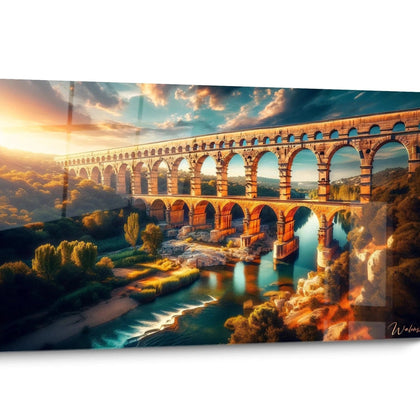
 Pont Du Gard Painting No. 1 - France Around the World Edition233,90 €
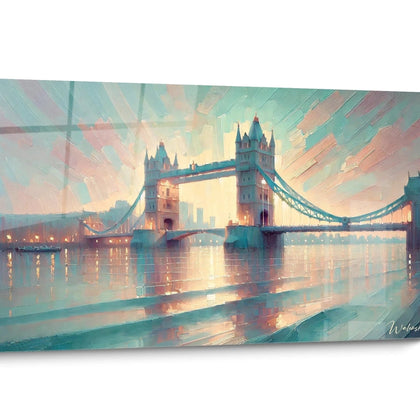
 Tower Bridge Wall Art N°1 - England Around the World Edition233,90 €
Explore further
In Famous Bridges Impressionist Wall Art
All about Famous Bridges Impressionist Wall Art
- Impressionist Bridge Wall Art Presentation
- Light and Fluvial Architecture
- Masterworks and Reinterpretations
- Large Format Display
The famous impressionist bridge paintings embody a fascinating encounter between nineteenth-century engineering and the pictorial revolution that transformed artistic perception. These monumental representations capture metallic and stone structures beneath changing skies, immortalizing works such as Monet's Japanese Bridge in Giverny, the London Waterloo Bridge, or Parisian railway bridges in a symphony of vibrant colors and atmospheric light. Acquiring such large-format reproductions allows you to integrate this dynamic tension between human construction and sensitive observation into contemporary spaces demanding striking visual presence.
The Impressionist Approach to Fluvial Structures and Metal Architectures
The famous impressionist bridge painting radically transforms how urban and rural infrastructure is represented. Unlike the technical engravings of the period, movement artists prioritized atmospheric variations rather than architectural precision. This revolutionary approach makes each work a unique temporal study, where the same bridge appears transformed according to the time of day, season, or weather conditions.
How do aquatic reflections redefine spatial perception in these compositions?
Liquid surfaces occupy a structuring function in these representations, visually doubling the architecture through fragmented symmetries. Rapid brushstrokes and juxtaposed colors create vibrant mirrors where arches and pillars dissolve into chromatic undulations. This optical dissolution generates a particularly striking perceptual depth on imposing formats, amplifying the immersion effect for the modern observer seeking artwork capable of visually transforming contemporary architectural space.
Temporal series and their contemporary decorative translation
Monet, notably with his Charing Cross Bridge series and multiple views of the Saint-Lazare railway bridge, established a revolutionary serial methodology. For the enthusiast seeking a famous impressionist bridge painting today, this approach offers bold staging possibilities: installing multiple interpretations of the same structure in a hallway or extended circulation space creates a visual narrative sequence that dialogues with the viewer's physical movement. This decorative strategy exploits the temporal dimension inherent in these works.
Why did industrial metal structures fascinate the movement's masters?
The emergence of railway and metal bridges coincided with impressionism's rise, these new architectures symbolizing the industrial modernity painters wanted to integrate into their visual vocabulary. The interplay of girders and rivets offered complex shadows and light games, particularly captivating beneath smoky station skies or morning mists. For today's large-format reproduction buyer, these compositions bring softened industrial sophistication through the impressionist color palette, perfect for contemporary professional spaces or lofts with exposed structures seeking refined historical resonance.
Integrating a famous bridge painting in the impressionist style into a personal collection also creates precise cultural grounding, evoking the golden age of European urban transformation while maintaining aesthetic universality that transcends ephemeral decorative trends.
Impressionist Bridge Masterworks and Their Monumental Visual Legacy
The Japanese Bridge at Giverny: botanical icon and structural meditation
Among famous impressionist bridge paintings, representations of the Japanese bridge in Monet's Giverny garden occupy a singular place. This emerald-green arched structure, submerged by wisteria and reflected in water lilies, transcends its architectural function to become a contemplative portal. Later versions, with quasi-abstract violet and orange hues, testify to a progressive dissolution of form in favor of pure impression. For contemporary residential spaces seeking calming yet chromatically bold artwork, these compositions offer rare balance between serenity and color intensity.
What role do London bridges play in the urban mist series?
The Westminster Bridge, Waterloo Bridge, and Charing Cross Bridge series created by Monet during his London stays constitute incomparable atmospheric explorations. The industrial fog of the Thames transforms these massive Victorian structures into spectral silhouettes, bathed in violets, pinks, and sulfurous yellows. These monumental works, reproduced in large format, generate a ghostly presence particularly suited to spaces requiring sophisticated contemplative atmosphere. Variations in mist density between versions allow choosing between subtle evocation and intense chromatic assertion.
Parisian railway bridges and industrial modernity
The Pont de l'Europe at the Gare Saint-Lazare, immortalized by Caillebotte and Monet, represents the confluence of technical prowess and modern urban life. The compositions show black metal structures silhouetted against locomotive smoke, with anonymous pedestrians crossing these new aerial boulevards. For contemporary professional environments or urban apartments seeking visual dialogue with metropolitan infrastructure, these representations offer direct historical resonance with current mobility and urban transformation issues.
How to identify museum-quality reproduction for these specific subjects?
Acquiring a large-format famous impressionist bridge painting requires particular attention to subtle color nuances: aquatic reflections demand faithful rendering of juxtaposed cool and warm tones, while skies must preserve the complex gradations characteristic of the movement. Generous dimensions amplify the immersive effect of visible brushstrokes and apparent texture, fundamental elements of the original impressionist experience. Favoring reproductions respecting brushwork granularity guarantees wall presence that transcends mere decoration to become daily perceptual experience.
Monumental Display of Impressionist Bridges in Contemporary Architecture
Why do imposing formats amplify the perceptual impact of these compositions?
Famous impressionist bridge paintings reach their full expressive potential when deployed in monumental dimensions. The movement's characteristic techniques – visible brushstrokes, pure juxtaposed colors, absent defined contours – require a scale enabling complete experience of optical distance where elements blend harmoniously. A generous format of 150 to 200 centimeters transforms a wall into a temporal window toward the misty Thames or Giverny gardens, creating illusionistic depth that smaller formats cannot reproduce.
Installation strategies to maximize architectural effect
Installing a large-format famous impressionist bridge painting requires specific spatial approach. Horizontal compositions depicting London bridges integrate ideally above low furniture or in widened corridors, their panoramic format accentuating perception of horizontal amplitude. Conversely, vertical views of the Japanese bridge with lush vegetation suit narrow, tall spaces, drawing the gaze upward. The optimal observation distance – approximately twice the work's diagonal – must be anticipated to guarantee the color fusion effect characteristic of the movement.
Dialogue between historical infrastructure and current residential space
Integrating these representations in contemporary interiors establishes fascinating historical counterpoint. Streamlined modern furniture lines contrast with vibrant impressionist texture and form dissolution, creating productive visual tension. Palettes dominated by aquatic blue-greens and golden ochres naturally harmonize with contemporary materials like polished concrete, glass, or brushed steel, while bringing the chromatic warmth often absent from minimalist environments.
Lighting considerations to preserve chromatic integrity
The subtle nuances of changing skies and aquatic reflections in a famous impressionist bridge painting require particular attention to ambient lighting. Direct sun exposure progressively degrades delicate pigments, particularly violets and pinks characteristic of twilight scenes. Indirect natural light or artificial sources with neutral color temperature (3500-4500K) preserve chromatic fidelity while avoiding reflections that disturb reading of textured brushstrokes.
Why choose a famous impressionist bridge painting for a professional office?
These works bring immediate cultural sophistication while maintaining universal visual accessibility. Unlike hermetic abstractions, bridges remain identifiable while offering the perceptual complexity characteristic of the movement, subtly stimulating attention without distracting.
How to combine multiple impressionist bridge representations in the same space?
Favoring seasonal or temporal variations of the same subject (the Japanese bridge in spring then autumn) creates thematic coherence while illustrating the movement's fundamental serial approach. Alternating horizontal and vertical formats generates dynamic visual rhythm along circulation paths.
Are famous impressionist bridge paintings suitable for high-traffic spaces?
Absolutely. Their generally harmonious palette and universally understood subject make them appropriate for halls, waiting rooms, or reception spaces where artwork must communicate immediately without requiring contextualization, while resisting repeated observation thanks to their chromatic and textural richness.
Further reading


