









Schipperke Dog Street Art Canvas
The Painting dog Schipperke Street Art transforms your interior with a touch of urban art bold. This collection celebrates the Schipperke, a small black dog emblematic, revisited in a contemporary graffiti style. Each street art canine wall decoration captures the rebellious energy of street art while honoring the lively and loyal character of this Belgian breed. Perfect for lovers of urban art with pedigree dogs, these creations bring dynamism and personality to your space, blending canine passion and modern aesthetics.
 Turquoise Blue Schipperke Savoring a Pizza - Colorful Urban Art - Schipperke Edition273,90 €
 Dynamic Schipperke Canvas Crossing an Explosion of Multicolored Graffiti - Urban Movement - Schipperke Edition273,90 €
 Black and Gray Puppy Graffiti Urban Style Painting - Intense Gaze - Schipperke Edition273,90 €
Explore further
In Schipperke Dog Street Art Canvas
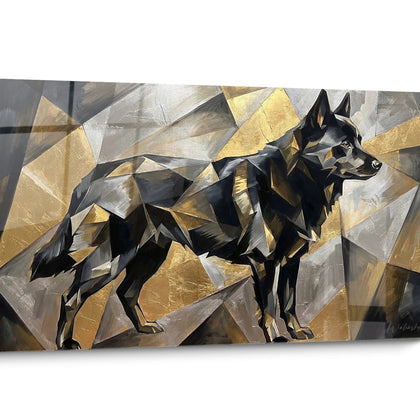
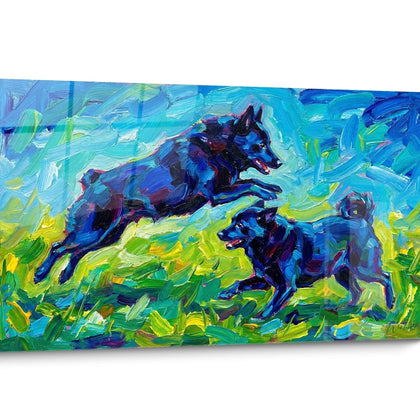
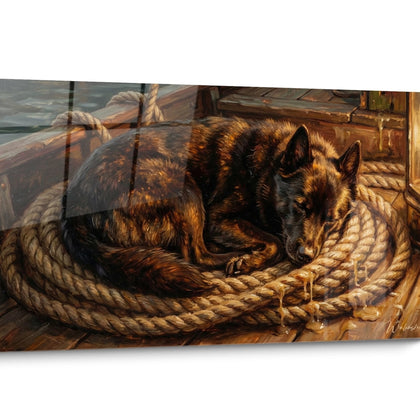
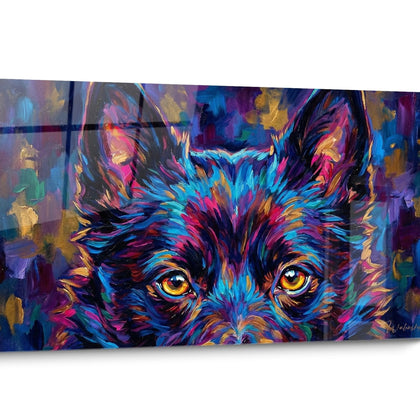
All about Schipperke Dog Street Art Canvas
- Schipperke Street Art Canvas Presentation
- Urban Art and Canine Aesthetics
- Visual Impact in Large Format
- Bold Contemporary Decoration
The Schipperke Street Art dog canvas reinvents canine iconography through the explosive lens of contemporary urban art. This emblematic Belgian breed, recognizable by its compact silhouette and characteristic black coat, becomes the protagonist of a mural decoration revolution. The alliance between the Schipperke's ancestral heritage and the visual codes of graffiti creates a captivating aesthetic tension for residential or professional spaces seeking an affirmed visual identity. Monumental formats amplify the graphic power of these creations where virtual tags, digital dripings and chromatic explosions transform the Flemish barge dog into a contemporary pop culture icon.
Street Art Universe Applied to the Flemish Schipperke
The Schipperke Street Art dog canvas transcends simple animal representation by incorporating the emblematic techniques of the graffiti movement born in American metropolises in the 1970s. The distinctive morphology of the Schipperke - its erect triangular ears, its natural lack of tail, its dense ruff of hair - becomes the support for bold visual experimentations. Contemporary artists superimpose digital paint drips, controlled splatters and stylized tags that dialogue with the deep black outlines of the small Belgian shepherd.
Why does the Schipperke lend itself to urban aesthetics?
This breed with a lively and protective temperament finds natural resonance with the rebellious energy of street art. Historically a guardian of Flemish barges and vermin hunter, the Schipperke embodies an urban vigilance that harmonizes with the contestatory spirit of mural frescoes. Its compact silhouette and piercing gaze create powerful focal points when magnified by neon color projections or typographic contrasts inspired by underground lettering.
Graphic techniques adapted to monumental formats
Large-scale creations allow full deployment of visual strategies from the urban movement. Digitally simulated aerosol gradients encircle the canine figure, while virtual stencils add repetitive geometric patterns. The use of fluorescent palettes - electric pinks, saturated cyan blues, acid greens - contrasts with the absolute black of the Schipperke's coat, creating a striking optical vibration visible from several meters away. To explore other chromatic interpretations of this breed, the colored Schipperke dog canvas collection offers complementary approaches to urban codes.
Visual codes of the graffiti movement reinterpreted
The compositions integrate fragmented typographic elements, directional arrows characteristic of graffiti crews, and degraded wall textures evoking concrete surfaces of industrial environments. This visual stratification transforms each representation into a decorative manifesto that simultaneously tells the story of an ancient canine breed and that of a contestatory artistic movement that has become a global cultural phenomenon.
Decorative Power of XXL Formats in Contemporary Environment
The Schipperke Street Art dog canvas reaches its full expressive potential when it occupies substantial wall surfaces. Generous dimensions allow the technical details of street art rendering - simulated paint micro-droplets, transparency variations in chromatic overlays, grainy texture of tagged backgrounds - to reveal their complexity to the naked eye. In industrial lofts with raw walls, creative professional spaces or Scandinavian minimalist interiors, these monumental creations function as visual anchor points that completely restructure spatial perception.
How to scale this artwork in a double-height space?
Accentuated vertical volumes - stairwells, mezzanines, cathedral-like spaces - particularly benefit from vertical compositions where the Schipperke is represented in an alert position, muzzle lifted upward. This orientation exploits the breed's natural tendency to monitor its territory by standing up, creating an upward dynamic that guides the eye. Color trails that soar toward upper areas amplify this verticality while visually balancing the imposing proportions of tall walls.
Integration strategies in open environments
Open-plan spaces like residential or commercial open layouts require artworks capable of visually defining zones without physical partitioning. A Schipperke Street Art dog canvas of significant dimensions installed on a central bearing wall instantly creates a psychological boundary between living area and dining zone, between reception and collaborative space. The color projections and graphic gestures of the urban style generate visual radiation that influences the atmosphere over several square meters around it.
Interaction with contemporary raw materials
The Schipperke street art aesthetic resonates perfectly with material vocabularies prized in contemporary architecture: exposed polished concrete, exposed metal structures, stripped old brick, aged industrial flooring. This stylistic convergence between the canine artwork and its architectural environment creates narrative coherence where the underground spirit and raw authenticity dialogue harmoniously. Imposing dimensions ensure this visual conversation dominates the space rather than blending discreetly into it.
Identity Affirmation Through Urban Canine Decoration
Choosing a Schipperke Street Art dog canvas for your interior is a decorative act laden with multiple cultural meanings. This selection simultaneously reveals an appreciation for Belgian canine heritage, an affinity with alternative artistic movements, and a desire to escape conventional decoration codes. Real Schipperke owners find in these stylized representations a contemporary celebration of their companion, while urban art enthusiasts discover an unexpected application of graffiti codes to the animal universe.
Which buyer profiles seek this artistic fusion?
Authentic urban culture enthusiasts who reject standardized reproductions of Keith Haring or Banksy turn to these original interpretations where the subject's uniqueness - an uncommon breed to the general public - guarantees visual exclusivity. Creative professionals furnishing communication agencies, design studios or coworking spaces find distinctive iconography that communicates innovation and nonconformism. Contemporary animal art collectors appreciate this audacious reappropriation of a historic breed through the visual languages of the 21st century.
Creating contrasting ambiances through chromatic shock
The injection of saturated colors typical of street art into neutral or monochrome environments generates productive decorative tension. A Scandinavian interior with white, gray and natural wood tones transforms radically when a Schipperke Street Art dog canvas deploys its aggressive magentas, harsh yellows and electric blues. This strategy allows maintaining a soothing decorative base while introducing a localized energetic catalyst that invigorates the whole without overwhelming it. The inverse approach also works: in a dark industrial loft with cold tonalities, the chromatic explosion of the Schipperke street art brings warmth and vitality.
Dialogue with other urban artistic expressions
These canine creations naturally integrate into decorative ensembles already incorporating references to underground culture: upcycled pallet furniture, personalized typographic neons, repurposed vintage objects, black and white photographs of urban scenes. The Schipperke becomes the animal representative of a coherent decorative ecosystem celebrating authenticity, industrial handcrafted work and creative reappropriation. This thematic coherence amplifies the impact of each individual element while telling a comprehensive decorative story.
What is the visual durability of these street art animal creations?
Unlike ephemeral trends, the Schipperke Street Art dog canvas benefits from aesthetic permanence based on the convergence of three timeless elements: human fascination with canine representations spanning all artistic eras, the now-established cultural legitimacy of street art in museum institutions, and permanent appeal for atypical canine breeds. This triple anchoring guarantees decorative relevance that transcends fleeting interior design fashions.
How do these artworks influence visitor experience?
Installing an imposing format representing a Schipperke reinterpreted according to urban codes immediately transforms the social dynamics of a space. Visitors are naturally drawn to this unexpected combination, triggering conversations about the breed's Flemish origins, graffiti techniques, or personal aesthetic choices. The artwork functions as a relational trigger that reveals cultural affinities and facilitates exchanges around shared references concerning contemporary art and dog passion.
Is the Schipperke Street Art dog canvas suitable for high-traffic commercial spaces?
Professional environments receiving diverse clientele - concept boutiques, fusion restaurants, waiting rooms of creative liberal professions - particularly benefit from these creations that combine thematic accessibility and artistic sophistication. The canine subject possesses immediate emotional universality, while the street art treatment signals a modern and uninhibited brand identity. This duality allows simultaneously reaching a broad public while projecting a distinctive and memorable image.


