


Realistic Bodybuilding Wall Art
The Weightlifting Realistic painting captures the intensity and power of the fitness world with striking realism. This collection celebrates the aesthetics of the sculpted body, the determination of athletes, and the energy of gyms. Perfect for bodybuilding and sports art enthusiasts, it transforms your gym, home gym, or personal space into a place of motivation. Each piece represents muscle sculpture with authenticity, inspiring self-improvement and perseverance every day.
 Gripping Barbell Hands Painting - Strength and Determination - Bodybuilding Edition242,90 €
 Craftsman Carpenter Painting - The Art of Manual Work - Bodybuilding Edition273,90 €
 Bodybuilder Training Painting - Strength and Determination - Bodybuilding Edition273,90 €
 Bench Press Wall Art - Maximum Intensity - Bodybuilding Edition273,90 €
 Sculptural Male Torso Wall Art - Strength and Anatomy - Bodybuilding Edition228,90 €
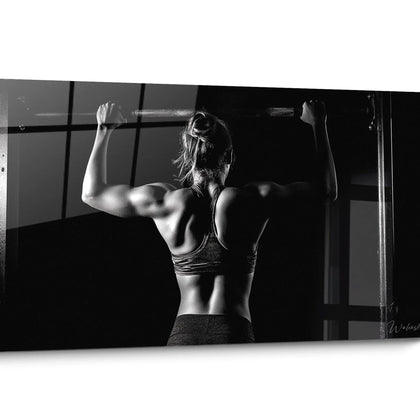
 Bodybuilding Gym Wall Art - Strength and Determination - Bodybuilding Edition228,90 €
 Raw Strength Wall Art - Power and Determination - Bodybuilding Edition228,90 €
Explore further
In Realistic Bodybuilding Wall Art



All about Realistic Bodybuilding Wall Art
- Presentation Realistic Weightlifting Artwork
- Visual Training Programs
- Motivation and Performance
- Gym Setup
A realistic weightlifting artwork transforms your workout space into a true performance zone. Unlike generic visuals, these faithful representations of exercise techniques and muscle groups offer an immediate visual reference to optimize each movement. Whether you install your equipment in a converted garage, a dedicated room, or a multifunctional space, having anatomically precise visual support ensures impeccable technical execution. These large-format creations become educational tools as well as decorative elements, accompanying your physical progress on a daily basis. Investing in functional decor reflects your serious commitment to body transformation and the pursuit of measurable results.
Visual Reference for Perfect Technical Execution
A realistic weightlifting artwork serves as a permanent guide to maintaining impeccable form during your intense workouts. Detailed anatomical representations illustrate precisely the muscle engagement sought at each phase of the movement, eliminating approximations that lead to injuries or plateaus.
How does a realistic visual improve body awareness?
The constant presence of precise anatomical illustrations reinforces the neuromuscular connection essential for strength gains. Each glance at your artwork between sets mentally reactivates the optimal motor schema, particularly crucial during complex multi-joint exercises like bench presses or squats. This method of active visualization, used by professional athletes, becomes accessible directly in your training environment.
Progressive training cycle planning
Large-format visuals allow you to integrate progressive exercise sequences, clearly illustrating the difference between variations for beginners and advanced versions. This visual progression facilitates the periodization of your programs, essential to avoid physiological adaptation and maintain constant gains. For an even more complete training space, explore our collection of modern weightlifting artwork which offers complementary visual approaches.
Instant postural correction during exertion
During execution under load, mentally checking each technical point becomes difficult. A realistic weightlifting artwork positioned in your direct line of sight offers this instant visual correction. Details such as spinal alignment, scapular position, or optimal joint angle become immediately comparable, transforming each repetition into a motor learning opportunity. This method of self-correction significantly reduces dependence on mirrors, often sources of postural compensations.
Memorization of specific warm-up protocols
Mobilization and muscle activation sequences gain effectiveness when visually recalled before each workout. A realistic visual support integrating these preparatory protocols guarantees their systematic application, drastically reducing the risk of injuries related to insufficient preparation. This preventive discipline distinguishes casual practitioners from serious athletes seeking longevity in their practice.
Psychology of Performance and Mental Visualization
Why does realistic imagery amplify daily motivation?
The psychological impact of a realistic weightlifting artwork goes far beyond simple decoration. Faithful representations of muscle development create a constant visual anchor of your physical goals. This daily exposure to desired results activates the neural circuits associated with intrinsic motivation, making your training sessions non-negotiable rather than optional.
Neuroscience confirms that repeated exposure to performance visuals reinforces neural pathways linked to engagement and perseverance. Each pass by your training space becomes a subliminal reminder of your ambitions, particularly effective during periods of fatigue or doubt where giving up seems tempting.
Pre-Workout Visualization Technique
Elite athletes systematically use mental visualization before competitions. Having a anatomically accurate visual support transforms this abstract technique into a concrete practice accessible daily. Before each session, take a few minutes to mentally observe the movements depicted to neurologically prepare your nervous system to optimally recruit the targeted muscle fibers.
This structured mental preparation measurably improves the quality of maximal voluntary contractions, particularly on muscle groups that are difficult to activate, such as the back muscles or hamstrings. Realistic imagery provides the precise mental template necessary for this optimal activation.
Managing Plateaus and Maintaining Consistency
Plateaus are an integral part of the physical development journey. During these frustrating phases, a realistic muscle training chart serves as a visual reminder of the fundamentals often neglected in favor of excessive weights. Returning to the illustrated basics frequently restarts progress by correcting imperceptible technical drifts that accumulate gradually.
Creating an Environment Dedicated to Transformation
The intentional design of your training space communicates the seriousness of your approach to your subconscious. A generic environment produces generic results, while a visually optimized space with realistic references promotes concentration and intensity. This environmental consistency eliminates mental distractions, allowing for complete immersion in each set and maximizing the temporal efficiency of your sessions.
Spatial Optimization for Private Gyms
What positioning maximizes functional utility?
The strategic placement of a realistic muscle training chart directly determines its impact on your performance. Unlike purely decorative elements, these visual supports require functional positioning aligned with your main exercise areas. Installing the visual facing your bench press or in the axis of your squat rack ensures natural consultation during recovery times.
Large format sizes are particularly suitable for dedicated spaces where the viewing distance allows simultaneous appreciation of multiple exercise sequences. This panoramic view facilitates mental planning of your circuits or supersets without requiring a cumbersome paper support. The visual autonomy thus created streamlines your transitions between exercises, maintaining the cardiovascular intensity complementary to resistance training.
Integration into Multifunction Home-Gyms
Domestic training spaces frequently combine several disciplines: weight training, cardio, mobility. A realistic muscle training chart then serves as a unifying focal point, visually delimiting the area dedicated to resistance training. This visual segmentation of the space improves the mental transition between different training modalities, particularly in multi-purpose rooms that also serve as offices or storage.
Adaptation to Specific Architectural Constraints
Garages, basements, or attics transformed often have structural peculiarities: exposed beams, sloping walls, long spaces. Large format visuals remarkably adapt to these atypical configurations, transforming architectural constraints into opportunities for enhancement. A long wall ideally accommodates a progressive sequence of exercises, while a restricted space benefits from a vertical visual concentrating information.
Complementarity with Existing Equipment
The visual harmony between your chart and your training equipment reinforces environmental consistency. The metallic tones of dumbbells, racks, and machines naturally dialogue with realistic representations with marked contrasts. This aesthetic continuity professionalizes the whole, creating an atmosphere conducive to intense concentration rather than distraction.
Investing in a visually optimized environment reflects your long-term commitment to your physical development. This strategic decision goes far beyond simply acquiring a decorative item, constituting a functional tool accompanying each step of your athletic progress.
FAQ - Frequently Asked Questions about Realistic Muscle Art Prints
Is a realistic muscle art print suitable for both beginners and advanced athletes?
Absolutely. Beginners benefit from detailed technical references to build a solid motor foundation, while advanced practitioners use these visuals to refine subtle technical details often overlooked. Progress is achieved through deepening the understanding of the same visual support.
How to choose between different styles of realistic muscle art prints?
Prioritize anatomical representations corresponding to your priority goals: hypertrophy, maximum strength, or muscular endurance. Visuals clearly illustrating eccentric and concentric phases are particularly suitable for programs focused on tempo control, while muscle recruitment diagrams better serve functional approaches.
What size to choose for a realistic muscle art print in a garage gym?
Large formats (over 120cm) maximize readability at a distance during physical exertion. In a standard 20-25m² garage, a 150-180cm visual becomes visible from all training angles without requiring movement, thus optimizing the fluidity of your sessions.


