


Prehistoric Basilosaurus Wall Art
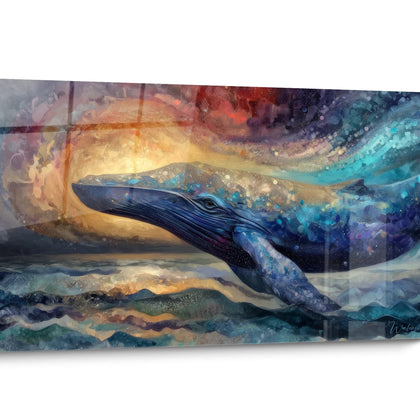
The Prehistoric Basilosaurus Painting transports you to the oceanic depths of the Eocene era. This collection celebrates the majesty of the basilosaur, a fascinating ancestor of modern cetaceans. Each artwork captures the power and elegance of this prehistoric marine creature with striking realism. Perfect for enthusiasts of paleontology and ancient animal art, this gallery transforms your interior into a true journey through time. Discover these unique artistic representations that combine science and aesthetics.
 Prehistoric Whale Wall Art - Basilosaurus Aquatic Renaissance - Basilosaurus Edition273,90 €
 Prehistoric Basilosaurus Wall Art - Giant of Ancient Abysses - Basilosaurus Edition273,90 €
 Basilosaurus in the Ocean Depths Wall Art - Abyssal Majesty - Basilosaurus Edition242,90 €
Explore further
In Prehistoric Basilosaurus Wall Art


All about Prehistoric Basilosaurus Wall Art
- Description Painting Basilosaurus Prehistoric
- Diving into the ancestral cetacean era
- Paleontological arrangement and ambiance
- Symbolism and scientific fascination
The prehistoric Basilosaurus painting represents much more than a simple marine evocation: it celebrates one of the very first giants of the oceans, this serpentiform cetacean having reigned in the seas of the Eocene 40 million years ago. Unlike classic artistic representations of marine life, this mural captures the essence of an ancestral marine reptile with an elongated body, formidable jaws, and a unique silhouette that testifies to the extraordinary evolution of marine mammals. Perfect for paleontology enthusiasts, lovers of antediluvian creatures, and collectors seeking a large-scale piece evoking the depths of time, this painting transforms any space into a natural history gallery. If you are looking for other visual interpretations inspired by this legendary creature, explore also our Painting Basilosaurus collection to discover different artistic universes around this iconic living fossil.
Prehistoric Basilosaurus Painting: A Visual Journey to the Eocene
The prehistoric Basilosaurus painting immediately transports your gaze to a bygone era when the oceans were home to creatures whose proportions defy contemporary imagination. This large-scale mural representation highlights the exceptional morphology of the Basilosaurus, this "king lizard" wrongly named which turns out to be a primitive marine mammal, a distant ancestor of modern whales. Its serpentine body, which can reach up to 18 meters in length, is restored with anatomical precision that delights lovers of faithful paleontological reconstructions.
Fossilized anatomy and scientific reconstruction
The main appeal of a prehistoric Basilosaurus painting lies in its ability to visually restore the unique morphological characteristics identified by paleontologists: a elongated skull with differentiated teeth (heterodonty), anterior limbs transformed into vestigial flippers, and a sinuous spine testifying to the evolutionary transition between terrestrial and aquatic life. These anatomical details, when integrated into a large-format artistic composition, create a fascinating temporal window to the middle Eocene. Neighboring collections like the Abstract Basilosaurus Painting offer a contemporary reinterpretation of this creature, where the prehistoric approach favors scientific rigor and documented reconstruction.
What geological period does the Basilosaurus represent in wall art?
The prehistoric Basilosaurus painting systematically anchors its subject in the Eocene, this geological period extending from 56 to 34 million years before our era, during which the oceans were warming and marine mammals were diversifying their forms. This precise temporal contextualization radically distinguishes these representations from generic evocations of marine life. Backgrounds can integrate characteristic paleoenvironmental elements: turquoise, shallow waters of the Tethys, silhouettes of archaic sharks like Otodus, or primitive shoreline vegetation. This stratigraphic precision confers an exceptional narrative depth to your space, transforming a simple wall into a true visual time capsule.
Visual impact of serpentiform proportions
The elongated and sinuous silhouette of the Basilosaurus offers unique compositional possibilities for large-scale panoramic formats. Unlike modern cetaceans with massive, fusiform bodies, this Eocene predator presented an exceptional length/width ratio that lends itself beautifully to extended horizontal arrangements. A prehistoric painting depicting this creature in a hunting or undulating swimming posture generates a fluid visual dynamic that naturally guides the eye along the entire length of the work, creating a particularly effective kinetic effect in long spaces such as corridors, long offices, or waiting rooms.
Create a Paleontological Atmosphere with a Prehistoric Basilosaurus Artwork
How to Integrate an Educational Dimension into Your Decor?
The prehistoric Basilosaurus artwork transcends the simple decorative function to become a true visual educational tool, particularly relevant in spaces with an educational, scientific or cultural purpose. Modern cabinet of curiosities, personal library, science teacher's office or scientific institution reception room: all these environments benefit from the presence of a quality paleontological reconstruction. The representation of this ancient marine mammal invariably sparks questions and discussions about evolution, marine paleoecology and past climate changes. For more stylized interpretations of the same subject, the Expressionist Basilosaurus Artwork Collection offers less literal but equally evocative approaches.
Decorative Associations with Paleontological Themes
Installing a prehistoric Basilosaurus artwork naturally calls for decorative additions consistent with the paleontological universe: framed fossil reproductions, authentic ammonites under glass, miniature reconstructions of other Eocene creatures, mural paleogeographic maps or reference books on display. This coherent thematic approach gradually transforms your space into a contemporary natural history cabinet. The dominant tones in these prehistoric representations – deep blues evoking ancient waters, ochres and sepia recalling fossiliferous sediments, aquatic greens suggesting warm seas – harmonize particularly well with natural materials such as aged wood, raw stone or patinated leather.
Which Spaces Particularly Value This Type of Representation?
The generous dimensions characteristic of a quality prehistoric Basilosaurus artwork find their full expression in specific spaces: entrance halls of academic institutions, conference rooms of natural history museums, reception areas of marine research centers, or main rooms of residences of passionate paleontologists. Verticality can also be exploited in certain compositions showing the Basilosaurus in a vertical position, emerging from the depths, creating a dramatic effect in stairwells or double-height spaces. For a more dreamlike atmosphere blending science and imagination, the Fantastic Basilosaurus Artwork Collection offers compositions where paleontological realism meets artistic imagination.
Lighting Adapted to Paleontological Reconstructions
Highlighting a prehistoric artwork requires particular attention to preserve the atmosphere of the depths of time while revealing anatomical details. Indirect lighting slightly dimmed, reminiscent of the luminosity filtered by deep waters, reinforces immersion in the Eocene universe. Directional spotlights can strategically accentuate certain elements: the characteristic dentition, the unusual proportions, or the textures evoking the skin of a primitive marine mammal. This differentiated lighting approach creates visual depth that amplifies the dramatic impact of the composition, particularly effective during nighttime visits or in conditions of low natural light.
Symbolism and Scientific Scope of the Prehistoric Basilosaurus Artwork
Visual Witness of Cetacean Evolution
The prehistoric Basilosaurus artwork visually embodies one of the most remarkable evolutionary transitions in natural history: the reconquest of the oceans by terrestrial mammals. This creature represents a crucial link in the lineage leading to today's whales and dolphins, with its hind limbs still present but vestigial, testifying to a quadruped past. Owning a wall representation of this species is to display a fascination for deep evolutionary processes and major biological metamorphoses. This symbolic dimension resonates particularly with curious minds, natural science professionals and people valuing evolutionary thinking and understanding of origins. To explore other color palettes while retaining the same fascinating subject, the Blue and Gold Basilosaurus Artwork Collection offers interpretations with precious tones.
Why Choose a Prehistoric Representation Over a Contemporary One?
Opting for a prehistoric Basilosaurus painting rather than a representation of modern cetaceans reflects a particular sensitivity to extinct forms of life, vanished ecosystems, and the depth of time. This preference often indicates an interest in paleontology, the history of natural sciences, or simply an attraction to the fascinating strangeness of ancient creatures whose morphologies sometimes defy our imagination. The Basilosaurus, with its serpentiform body so different from modern whales, perfectly embodies this temporal alterity. Its almost reptilian appearance, despite its confirmed mammalian nature, generates a captivating visual tension between familiarity and strangeness, making each contemplation of the work intellectually stimulating.
Thematic Collection and Paleontological Coherence
Acquiring a prehistoric Basilosaurus painting often aligns with a broader thematic collection approach, centered on marine prehistoric life, Eocene creatures, or the evolution of mammals. This piece can visually dialogue with representations of other species contemporary with the Basilosaurus: the giant shark Otodus, primitive sirenians, ancient sea turtles, or the first pinnipeds. This approach to coherent collection, when deployed across several walls of the same space, creates an immersive visual narrative that gradually reconstructs the Eocene marine ecosystem. Large formats allow for a clear visual hierarchy, the Basilosaurus legitimately occupying the dominant position as the apex predator of its time.
Conversation and Intellectual Distinction
A high-quality prehistoric Basilosaurus painting serves as a catalyst for enriching conversations, particularly when welcoming visitors, colleagues, or clients. Unlike conventional marine representations, this work systematically provokes questions and curiosity: “What is this creature?”, “Is it a legendary sea serpent?”, “How do we know what it looked like?”. These questions naturally lead to discussions about paleontological methods, fossil discoveries, the scientific reconstruction of extinct species, creating memorable moments of intellectual sharing. This conversational dimension constitutes a distinct advantage in professional environments where originality and cultural depth are valued.
Is a Prehistoric Basilosaurus Painting Suitable for Private Residential Spaces?
Absolutely, especially for residences of natural history enthusiasts, collectors of scientific curiosities, or those seeking distinctive decor that breaks from the beaten path. Personal libraries, home offices, or reception areas particularly benefit from the imposing and intellectually stimulating presence of a large-scale paleontological reconstruction, immediately creating an atmosphere of a modern cabinet of curiosities.
How to Authenticate the Scientific Rigor of a Prehistoric Basilosaurus Painting?
Paleontologically rigorous representations present several identifiable characteristics: anatomically consistent proportions with fossil discoveries, the presence of small, vestigial hind limbs absent in modern cetaceans, heterodont dentition characteristic with pointed teeth and molars, and a serpentiform rather than fusiform body. Consulting reconstructions validated by recognized paleontological institutions allows you to verify the scientific fidelity of the work before acquisition.
What Complementarity with Other Basilosaurus Paintings in a Collection?
A prehistoric Basilosaurus painting with a scientific orientation harmoniously complements more artistic interpretations of the same subject, creating a visual dialogue between documentary rigor and creative freedom. The association of a realistic paleontological reconstruction with stylized, abstract, or fantastic versions of the same animal enriches the collection by exploring different facets – scientific, aesthetic, imaginary – of the same fascination for this ancestral creature, while maintaining a strong thematic coherence around the Basilosaurus.


