



Oriental Shorthair Cat Geometric Wall Art
The Painting Oriental Shorthair Geometric captures feline elegance through a contemporary artistic prism. This collection celebrates the refined silhouette of the Oriental cat with bold geometric shapes and minimalist compositions. Perfect for lovers of modern feline geometric art and contemporary cat wall decoration, each work transforms the graceful essence of this iconic breed into a striking visual creation that enhances your living spaces with sophistication.
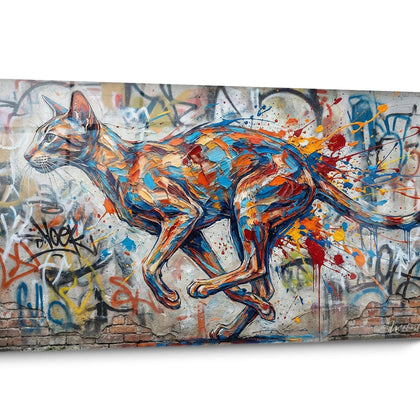
 Oriental Cat Painting Polygonal - Modern Geometric Art - Oriental Shorthair Cat Edition273,90 €
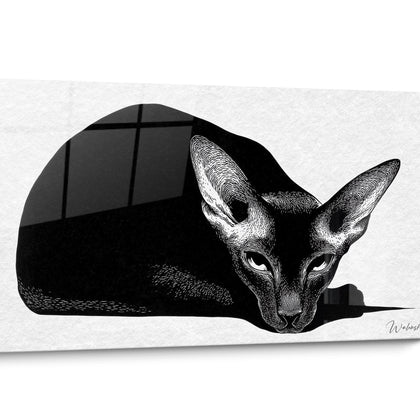
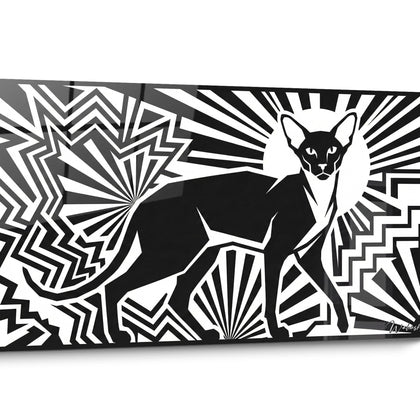
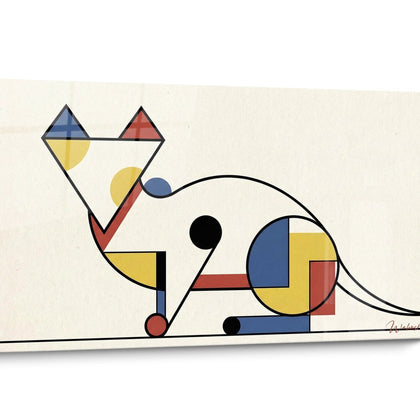
 Abstract Geometric Cat Wall Art – Bauhaus Silhouette – Oriental Shorthair Edition273,90 €
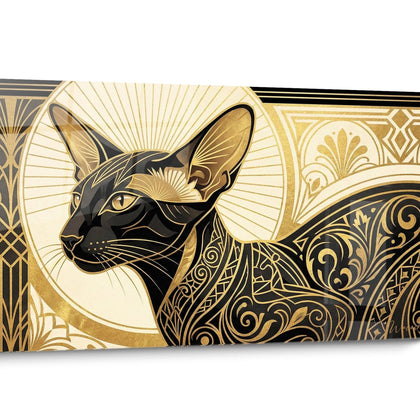
 Oriental Shorthair Cat Silhouette Art Deco Wall Art - Modern Geometry - Oriental Shorthair Cat Edition273,90 €
Explore further
In Oriental Shorthair Cat Geometric Wall Art
All about Oriental Shorthair Cat Geometric Wall Art
- Oriental Shorthair Geometric Wall Art Presentation
- Geometric Design & Feline Architecture
- Contemporary Decorative Integration
- Modern Aesthetics & Wall Format
The geometric Oriental Shorthair cat wall art represents an exceptional fusion between the natural elegance of this emblematic feline breed and the bold aesthetic of contemporary design. This artistic representation transforms the refined lines characteristic of the Oriental Shorthair into structured polygonal compositions, creating a visual dialogue between organic feline suppleness and the mathematical rigor of angular forms. This type of wall art responds to the expectations of modern art enthusiasts seeking to integrate a stylized animal presence into contemporary architectural interiors without sacrificing the authenticity of the breed's distinguished character. The large available dimensions allow this creation to function as a structuring element in a living space, transforming an entire wall into an aesthetic manifesto where sacred geometry meets feline grace.
Polygonal Architecture at the Service of Oriental Morphology
The geometric Oriental Shorthair cat wall art brilliantly exploits the singular morphology of this breed to create compositions where each polygonal facet amplifies the distinctive anatomical characteristics. The Oriental Shorthair's large triangular ears become expressive pyramids, while the rectilinear profile of the muzzle translates into precise angular planes that accentuate the natural aristocracy of the breed.
How do geometric facets reveal the bone structure of the Oriental Shorthair?
Decomposition into polygons highlights the exceptionally visible skeletal structure of this breed with its tubular silhouette. Each geometric segment corresponds to muscle planes stretched over fine bone structure, creating a visual map of volumes that distinguishes the Oriental from more compact feline breeds. This abstract representation paradoxically becomes more revealing of actual anatomy than certain photographic approaches.
Angles and the transmission of feline movement
The strategic use of sharp edges captures the kinetic energy characteristic of the Oriental Shorthair, a breed known for its constant dynamism. The intersections of planes create directional lines that guide the eye along trajectories reminiscent of feline leaps, establishing visual tension even in a static representation. This geometric approach is particularly suited to geometric Oriental Shorthair cat wall art intended for architectural spaces where suggested movement dialogues with the structural lines of the building.
Color palette and surface fragmentation
Geometric subdivision allows sophisticated management of color gradients where each polygon carries a distinct shade. This technique generates discrete gradations particularly adapted to the solid coats of many Orientals, transforming monochrome fur into a symphony of adjacent tones. Versions that explore multiple color registers rival the audacity of colored Oriental Shorthair cat wall art while maintaining rigorous structural coherence.
Large wall formats amplify the impact of this fragmentation, transforming each facet into an architectural element in its own right. The observer can thus appreciate color subtleties even at distance, while the approach progressively reveals the complexity of the geometric construction.
Integration into Contemporary Spaces with Dominant Geometry
Installing a geometric Oriental Shorthair cat wall art in a modern architectural environment establishes visual resonance with surrounding structural elements. This formal harmony makes it possible to integrate an animal presence into refined contexts that would traditionally reject classical figurative representations, thus creating an organic focal point without disrupting overall aesthetic coherence.
Dialogue with contemporary materials
The angular facets of these wall compositions establish visual correspondences with brushed metal surfaces, polished concrete finishes, or composite panels that characterize contemporary interior architecture. This material affinity allows softening the potential coldness of these industrial materials by introducing a vibrant theme, while respecting the formal vocabulary of the space.
What spaces particularly benefit from this geometric feline approach?
Contemporary professional environments such as architecture offices, design studios, or coworking spaces find in these representations a perfect balance between calming animal presence and formal rigor. Large wall formats transform imposing vertical surfaces into aesthetic declarations that simultaneously communicate creativity and professionalism, avoiding the decorative pitfall of overly literal representations.
Lofts and open-volume apartments exploit these creations to visually delineate functional zones without resorting to physical partitions. A large-format geometric Oriental Shorthair wall art thus becomes a spatial marker that structures space through its graphic presence, creating an effective visual partition.
Complementarity with minimalist approaches
Unlike saturated compositions, the geometric approach shares with minimalism an economy of means and formal clarity. This kinship makes it possible to associate these representations with refined décor, where each element is carefully selected for its contribution to the whole. Admirers of minimalist Oriental Shorthair cat wall art will appreciate this philosophical convergence, although the geometric approach introduces more marked structural complexity.
The absence of superfluous details in these compositions also allows their association with furniture featuring refined lines, creating visual continuity where geometric wall forms and volumetric elements dialogue harmoniously. This interaction becomes particularly significant in spaces where Scandinavian or Japanese furniture imposes strict formal discipline.
Artistic Expression and Visual Sophistication of Imposing Formats
Choosing a geometric Oriental Shorthair cat wall art in large format constitutes an affirmed aesthetic commitment that radically transforms the spatial perception of an interior. These wall creations of generous dimensions allow full appreciation of the complexity of polygonal construction, revealing subtleties that would remain imperceptible in smaller formats.
Monumentality in service of visual impact
Imposing dimensions amplify the natural expressivity of the Oriental Shorthair, a breed already characterized by remarkable presence. This scalar amplification transforms the piercing gaze typical of the breed into a hypnotic element capable of capturing attention throughout a living space. Geometrized pupils become visual vortexes that establish psychological contact even at considerable distance.
Why does the geometric approach surpass photographic renderings for large formats?
Geometric stylization avoids the visual saturation that often affects photographic enlargements, where excess detail creates perceptual confusion at large scale. Simplification into facets maintains perfect legibility even over several square meters, with each polygon functioning as an autonomous visual unit that contributes to the whole without overwhelming it. This property makes the geometric Oriental Shorthair wall art particularly suited to entrance halls, stairwells, or gable walls that require compositions legible at distance.
Contrast with alternative chromatic approaches
While golden interpretations offer ostentatious material richness, the geometric approach privileges structural richness. This distinction becomes crucial in contemporary interiors where decorative accumulation is prescribed. Admirers of golden Oriental Shorthair cat wall art seek chromatic opulence, while geometric compositions attract those who prioritize conceptual sophistication.
Similarly, the inherent complexity of multiple facets distinguishes itself radically from the radical simplicity of bichromatic versions. Compositions in black and white Oriental Shorthair cat wall art exploit the power of absolute contrast, while geometric versions deploy an intermediate spectrum of nuances that progressively enriches visual experience.
Perceptual evolution according to ambient lighting
The edges created by plane intersections react dynamically to daily luminous variations, generating subtle cast shadows that constantly modify the composition's appearance. This phenomenon transforms a static creation into a quasi-cinematic installation, where the solar cycle successively reveals different facets of the construction. This living property justifies investment in large formats that amplify these lighting effects.
Is a geometric Oriental Shorthair cat wall art suitable for classic interiors?
Although naturally associated with contemporary spaces, such a wall art can create a bold contrast in a classic interior, establishing temporal dialogue between architectural heritage and contemporary creation. This juxtaposition works particularly well in the generous volumes of Haussmann apartments or bourgeois residences, where ceiling height accommodates imposing vertical formats.
How to choose between geometric composition with numerous facets or simplified?
Compositions with numerous small polygons generate dense visual texture that captures light complexly, suited to spaces enjoying sophisticated lighting. Large-facet versions prioritize legibility and immediate graphic impact, ideal for environments where the wall art must assert itself quickly in the visual field, such as passageways or commercial spaces.
What relationship to establish between geometric Oriental Shorthair cat wall art and angular furniture?
Furniture with pronounced geometric lines can either strengthen formal harmony through repetition of angular vocabulary, or create visual saturation. Optimal balance generally associates these wall compositions with furniture featuring softened angles or subtle curves, thus establishing dynamic tension between vertical geometric rigor and horizontal volumetric softness, enriching perceptual complexity of the space without generating visual conflict.


