


Mount Blanc Nocturne Wall Art
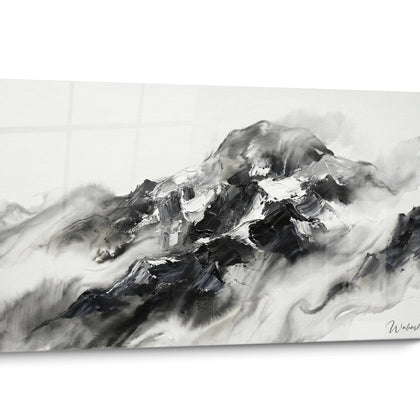
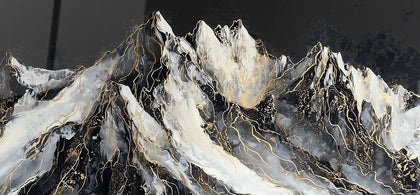
The Painting The Mont Blanc Nocturne celebrates the mysterious beauty of the highest peak in the Alps under the veil of night. This collection captures the essence of nocturnal alpine landscapes where snowy peaks meet the starry sky. Each work reveals the silent grandeur of mountains under the stars, offering a contemplative and serene atmosphere. Perfect for lovers of alpine nature and mountain art, this artistic universe transforms your interior into a refuge inspired by majestic heights.
 Chalet Mont Blanc Wall Art - Starry Alpine Night Edition273,90 €
 Mont Blanc Starry Wall Art - Nocturnal Majesty - Mont Blanc Edition273,90 €
 Mont Blanc Wall Art Art Deco - Golden Constellation - Mont Blanc Edition228,90 €
Explore further
In Mount Blanc Nocturne Wall Art
All about Mount Blanc Nocturne Wall Art
- Mont Blanc Nocturne Canvas Presentation
- Alpine Nocturnal Atmosphere
- Nocturnal Visual Architecture
- Monumental Night Presence
The Mont Blanc nocturne canvas captures the silent majesty of the Alps' highest peak beneath the mysterious veil of night. This monumental wall representation transforms alpine darkness into a striking visual presence, revealing nuances that only high-altitude night photography can capture. Unlike classical daytime depictions, this nocturnal version unveils the secret face of the alpine giant, bathed in deep navy blue, ink black, and silvery moonlit snow reflections. This XXL format magnifies every detail captured in alpine darkness, from moon-lit glacial ridges to valleys plunged in total shadow, creating a visual window into the nocturnal universe of high mountain altitude.
The White Giant's Nocturnal Aura: A Transformed Visual Presence
The Mont Blanc nocturne canvas reveals a rarely explored dimension of the mythic summit: its twilight identity. When the sun abandons the peaks, the massif adopts a radically different personality, oscillating between absolute mystery and metaphysical grandeur. This nocturnal visual transformation offers interior spaces a dramatic depth that daytime representations cannot match.
Why choose a nocturnal representation over daylight?
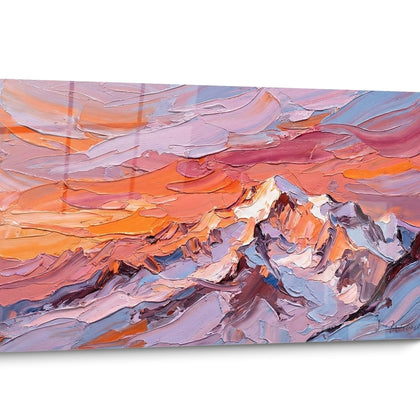
The nocturnal dimension brings unique visual sophistication. Unlike the Mont Blanc sunset canvas which celebrates warm and orange tones, the nocturnal version delves into a cold and contemplative chromatic register. The profound blue of altitude, nearly black in shadowed zones, contrasts with the lunar white of snowfields, creating visual balance that soothes without sedating. This reduced yet intense palette is particularly suited to modern interiors seeking minimalist elegance.
The dialogue between alpine darkness and architectural lighting
Installing a Mont Blanc nocturne large-format canvas in a lived space creates a fascinating dialogue with ambient lighting. The dark areas of the composition visually absorb artificial light, while the snowy sections subtly reflect it. This interplay of absorption and reflection transforms the artwork's perception according to the hour, offering an evolving visual experience. In the evening, with dimmed lighting, the work seems to animate, revealing unexpected nuances in rocky masses plunged into darkness.
The psychological impact of nocturnal alpine landscapes
Environmental neuroscience demonstrates that depictions of nocturnal mountains activate brain zones associated with introspection and meditative contemplation. A Mont Blanc panoramic night canvas installed in an executive office or reflection space promotes deep concentration. Alpine nocturnal vastness evokes simultaneously productive solitude and connection to something greater, creating emotional balance conducive to strategic decisions. Cool tones reduce mental agitation while maintaining intellectual alertness.
Photographic authenticity of extreme conditions
Capturing Mont Blanc at night requires exceptional technical conditions: long exposure at high altitude, perfect stabilization despite glacial winds, management of negative temperatures affecting equipment. This technicality translates visually into crystalline sharpness of glacial ridges under moonlight, infinite depth of field revealing geological layers invisible by day, and capture of background stars that contextualize the summit within cosmic immensity. This technical authenticity justifies investment in a monumental format.
Visual Composition and Spatial Dynamics of the Nocturnal Scene
The visual structure of a Mont Blanc nocturne canvas rests on lines of force radically different from those observed in full daylight. The absence of direct solar light reveals the pure geometry of the massif, its sharp ridges becoming graphic silhouettes against the starry sky. This nocturnal formal simplification creates immediate visual clarity even from great distance.
The visual strata in alpine darkness
The nocturnal spatial organization of Mont Blanc decomposes into three distinct planes: the foreground of valleys immersed in absolute darkness, the mid-ground of rocky foothills receiving moonlight raking that sculpts reliefs, and the background of the summit itself, a spectral white mass dominating the composition. This natural stratification guides the gaze vertically, creating an upward visual journey that amplifies the sensation of monumental height. In XXL format, these strata become distinct architectural zones.
How does moonlight redefine alpine volumes?
Moonlight, 400,000 times less intense than solar light, reveals only surfaces in direct exposure. On Mont Blanc, this means only northwest-facing faces and summit ridges receive this ghostly illumination. A Mont Blanc large-format starry night canvas exploits this radical contrast between illuminated zones and total shadow areas to create striking visual relief. Suspended glaciers become floating luminous masses, detached from their invisible rocky substrate, generating natural geometric abstraction.
The integration of celestial elements in the composition
Unlike daytime representations where the sky remains neutral background, the nocturnal version actively integrates stars, the Milky Way, or lunar phases as narrative components. A crescent moon in the upper right visually balances the summit mass in the lower left. The trail of circumpolar stars creates curved lines contrasting with the rectilinear ridges of the mountain. This cohabitation of mountain and cosmos positions the alpine panoramic nocturnal canvas as bridge between terrestrial and celestial, anchor and elevation.
Infinite depth of field and nocturnal clarity
Night mountain photography requires reduced apertures and prolonged exposure times, resulting in exceptional sharpness from foreground to infinity. On a monumental format, this technical precision allows simultaneous appreciation of details on a rock at 2000m and glacial structures at 4800m altitude. This visual compression of distance amplifies immersion, giving the impression of suspension in nocturnal alpine space. Rock textures become palpable despite ambient darkness.
Decorative Integration and Format Dimensioning of Nocturnal Representations
Installing a Mont Blanc nocturne canvas in large format requires spatial reflection specific to dark compositions. Unlike luminous artworks that project visual energy, nocturnal representations absorb attention and create zones of intense visual concentration. This characteristic profoundly modifies their architectural integration.
Where to position a monumental nocturnal artwork to maximize impact?
Spaces benefiting most from a Mont Blanc nocturne large-format canvas are those where thematic contrast reinforces experience: luminous entry halls where the nocturnal artwork creates a contemplative visual pause, strategic meeting spaces where alpine solemnity favors collective reflection, or master bedrooms where the massif's nocturnal quietude accompanies rest. A wall facing the bed, visible upon waking, psychologically anchors the day in a perspective of majestic serenity. In an industrial loft with raw walls, the contrast between architectural urbanity and nocturnal alpine nature generates productive aesthetic tension.
Mural proportions and visual breathing
For a 150x100cm format, plan for a wall of minimum 250cm width so the artwork breathes visually. Nocturnal compositions require more peripheral space than daytime versions because their concentrated chromatic density must be balanced by surrounding emptiness. Lateral visual clutter would dilute contemplative intensity. Ideally, the monumental alpine nocturnal canvas becomes the sole decorative element on the wall, avoiding any visual competition. Panoramic 200x80cm formats suit longitudinal spaces such as prestige corridors or executive office backdrops.
Chromatic associations with a cool nocturnal palette
The blue-black-silver register of the nocturnal canvas harmonizes naturally with anthracite textiles, brushed stainless steel or titanium metals, aged grays like cerused oak. Avoid associations with saturated warm tones that would create dissonance. Instead favor cool metal accents: chrome floor lamps, petrol blue cushions, pearl gray rugs. This chromatic coherence amplifies overall sophistication. Scandinavian minimalist furniture or Japanese minimal design dialogue perfectly with the elegant austerity of the nocturnal alpine scene.
Perceptual evolution according to seasons and natural light
Paradoxically, a canvas depicting Mont Blanc at night transforms visually according to the room's daytime light. In winter, with cold and raking natural light, the artwork intensifies, its blues becoming nearly phosphorescent. In summer, warm light creates a fascinating thermal visual contrast between the space's warm ambiance and the represented alpine coldness. This perceptual variability offers renewed experience throughout the year, justifying investment in a premium format that will be rediscovered daily.
Is a Mont Blanc nocturne canvas suitable for family living spaces?
Absolutely, provided it integrates into zones dedicated to relaxation rather than dynamic activities. A living room with reading corner will benefit from its soothing presence, while a children's playroom would require more energetic visuals. The nocturnal artwork functions as emotional regulator in multifunctional spaces.
What atmospheric difference between a Mont Blanc nocturne canvas and other versions?
The nocturnal version privileges introspection and silent contemplation where daytime or twilight versions evoke energy and dynamism. It is a resolutely sophisticated choice for personalities seeking depth rather than demonstration, subtlety rather than visual obviousness.
How to maintain visual perception of a Mont Blanc nocturne canvas long-term?
Periodically modify accent lighting: adjustable spotlights allowing different artwork zones to be revealed according to seasons. Zenithal lighting in winter accentuates snowy zones, while lateral lighting in summer sculpts rocky reliefs. This variation maintains perceptual freshness without physically modifying the artwork.


