


Modern African Landscape Wall Art
Our African Landscapes Paintings Modern collection celebrates the majesty of the African continent through exceptional contemporary creations. Each artwork captures the essence of endless savannas, vibrant sunsets, and iconic wildlife in a refined artistic style. These contemporary African paintings bring a touch of exoticism and authenticity to your interior decoration. Perfect for enhancing your living room, office, or living space, our modern African landscapes transform your walls into true art galleries.
 Radiant Golden Sun Painting - African Light - African Landscapes Edition233,90 €
 African Sun Painting - Golden Radiance - African Landscapes Edition213,90 €
 Dancing Village Under Fire Storm Painting - African Landscape Edition232,90 €
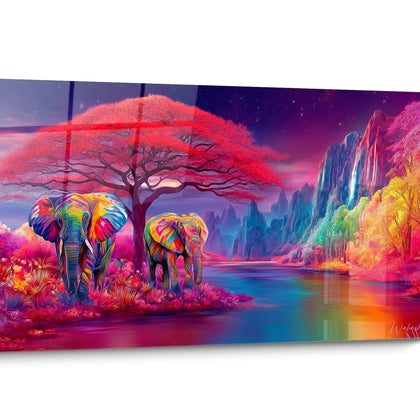
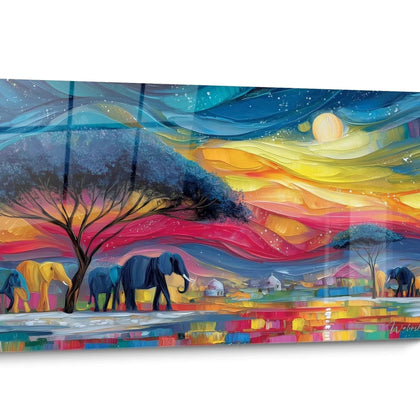
 Elephant Prism Painting African Colors - African Landscape Edition232,90 €
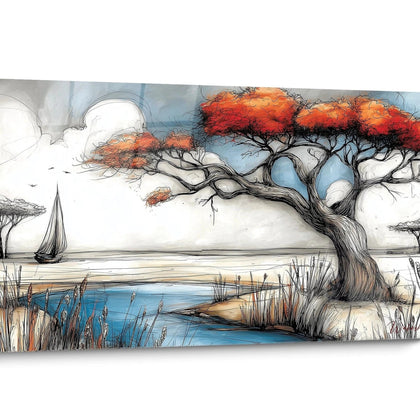
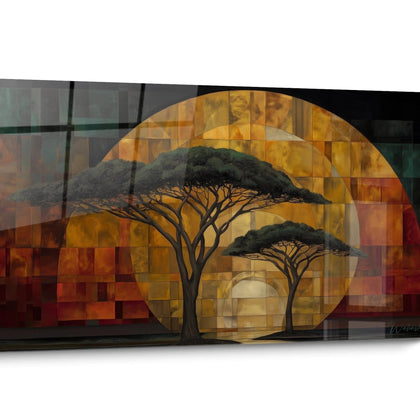
 Acacia Aureolate with Ardent Copper - African Landscape Edition233,90 €
 Savanna Ancestral Soil with Thousand Nuances - African Landscape Edition233,90 €
 Acacia Roots of Time - African Landscape Edition233,90 €
 Elephants Walking Toward the Burning Star - African Landscape Edition233,90 €
 Elephants Flames of Evening Painting - African Landscape Edition233,90 €
 Acacia Master of Saffron Horizons Painting - African Landscape Edition233,90 €
 Baobab Painting Portal to the Golden Star - African Landscape Edition233,90 €
 Elephant Painting Legends of Forgotten Kingdoms - African Landscape Edition233,90 €
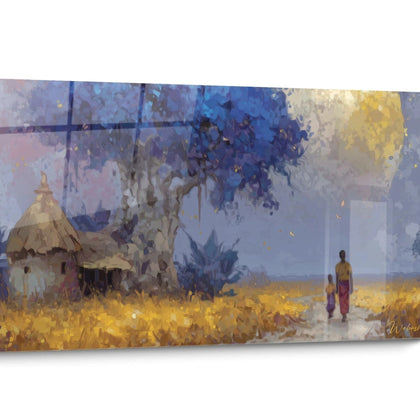
 Village Painting Savanna Reflections - African Landscape Edition233,90 €
 Walensky Boats River Painting Contemporary African Landscape233,90 €
 Acacia Red Lands Guardian Painting - African Landscape Edition233,90 €
 Trees Steppe Crowns Painting - African Landscape Edition233,90 €
 Elephant Painting Prismatic Sky - African Landscape Edition233,90 €
 Village Clay Lands Under the Golden Star Painting - African Landscape Edition233,90 €
 Acacia Tree Roots of the Red Continent Painting - African Landscape Edition213,90 €
Explore further
In Modern African Landscape Wall Art

All about Modern African Landscape Wall Art
- African Landscape Paintings Modern Presentation
- Refined Design & Contemporary Aesthetics
- Chromatic Balance & Atmospheres
- Architectural Integration & Placement
Discover our exclusive collection of modern African landscape paintings, designed for demanding contemporary spaces. These large-format creations capture the essence of African horizons through a minimalist and refined lens, perfectly suited to current design interiors. Each composition reinterprets the majesty of savannas, Saharan dunes and infinite plains through a decidedly contemporary vision, where geometric simplification meets the authenticity of African panoramas. Our large-scale artworks instantly transform reception areas, urban lofts and executive offices into genuine contemporary art galleries.
Visual Refinement of Contemporary African Panoramas
The modern African landscape painting stands out through its minimalist approach to the vast expanses of the continent. Unlike traditional representations saturated with ethnographic details, this contemporary vision prioritizes colored flats, linear horizons and simplified silhouettes of emblematic acacia trees. The large-scale panoramic formats amplify this sensation of immensity characteristic of the Serengeti plains or the Namib desert, creating a visual window onto these infinite landscapes.
How does geometric abstraction elevate African landscapes?
Geometric aesthetics transform African natural elements into architectural compositions. The Drakensberg mountains become superimposed triangles with subtle gradations, while Saharan dunes translate into refined curves playing with shadow and light. This formal simplification works perfectly in Scandinavian, industrial or Bauhaus interiors, where every decorative element must justify its presence through pure visual power. Contemporary art collectors particularly appreciate this conceptual reinterpretation that dialogues with abstract works without compromising African identity.
Reduced color palette serving visual impact
The modern African painting exploits restricted chromatic ranges to maximize expressive power. Three to five carefully selected hues suffice to evoke the scorching atmosphere of the Kalahari or the freshness of Ethiopian highlands. Earth sienna, red ochre and sandy beige tones form the chromatic base, enhanced by touches of deep black for stylized animal silhouettes or graphic tree structures. This economy of chromatic means reinforces visual clarity even at great distance, an essential quality for African landscape sunset paintings and other panoramic compositions intended for large architectural volumes.
Monumental dimensions as stylistic signature
Extra-large formats constitute the DNA of contemporary African painting. Dimensions easily exceeding 150 centimeters in width create the necessary immersion to feel the real scale of African landscapes. In an open living area or corporate meeting room, these monumental works function as architectural statements rather than mere wall ornaments. Verticality can also be exploited to represent centuries-old baobabs or Mali rock formations, transforming an entire wall into a contemplative visual experience.
Chromatic Harmonies and Modern African Decorative Atmospheres
What color combinations define contemporary African aesthetics?
The modern African landscape painting rests on calculated contrasts between warmth and neutrality. Warm tones evoking the Saharan sun – burnt oranges, saffron yellows, laterite reds – oppose cement grays, off-whites and graphic blacks borrowed from contemporary urban vocabulary. This chromatic bipolarity creates dynamic visual tension that maintains attention without causing eye fatigue, a quality indispensable for main living spaces. Monochrome variations in sand tones suit zen and refined spaces, while saturated contrasts prevail in industrial lofts needing powerful focal points.
Integration into current neutral palettes
Contemporary interiors favor neutral chromatic bases – anthracite gray, taupe beige, limestone white – over which the modern African painting brings the necessary organic touch. Stylized representations of dusk-lit savannas or rocky deserts introduce needed warmth without breaking minimalist balance. For optimized urban apartments, a single large-format African work suffices to personalize the space while maintaining visual coherence. High-end real estate professionals actually use these artworks as valuation arguments during viewings, as they instantly humanize austere architectural volumes.
Lighting atmospheres according to time of day
An often-overlooked aspect concerns the interaction between the African painting and evolving natural luminosity. Compositions depicting dawn over the Okavango Delta capture rosy and violet tones that resonate particularly well with morning light in east-facing rooms. Conversely, midday scenes with accentuated contrasts – intense cobalt sky against blinding white sand – suit south-facing spaces requiring visuals capable of standing up to direct luminosity. This synchronization between pictorial subject and natural lighting conditions optimizes decorative impact throughout the day.
Complementary decorative associations
The modern African landscape painting pairs ideally with raw and natural materials. Charred wood, patinated metal, vegetable-tanned leather or limestone stone create textural dialogues enriching overall sensory experience. Architectural plants such as sansevieria or columnar cacti extend the arid theme without falling into literal reconstruction. For discerning collectors, juxtaposition with authentic African first art pieces – Dogon masks, Ashanti stools, Makonde sculptures – establishes a cultural conversation between modernity and tradition that valorizes both aesthetic registers.
Architectural Integration Strategies for Contemporary African Paintings
Where to position a modern African painting to maximize its impact?
The strategic placement of a modern African landscape painting radically transforms spatial perception. In circulation spaces like hallways or entry halls, a horizontal panoramic format creates a visual escape that optically enlarges the passage. For main living room walls in open plans, positioning above a low sofa requires respecting a minimum distance of 20 centimeters from the backrest, allowing the artwork to breathe while maintaining visual cohesion. Double-height ceilings offer the rare opportunity to install monumental vertical compositions evoking Bandiagara cliffs or Ethiopian volcanic peaks.
Adaptation to contemporary architectural constraints
Modern homes often present structural particularities – exposed beams, technical conduits, asymmetrical bay windows – that complicate placement. The modern African painting, through its often off-center and asymmetrical composition, naturally accommodates these irregularities. A savanna scene where the horizon sits at the lower third can perfectly install beneath an exposed metal beam, the latter echoing the horizontal branches of represented acacias. The acute angles of converted attics find their complement in triangular compositions evoking traditional conical hut roofs reinterpreted abstractly.
Creating visual sequences in open spaces
The open-plan layouts characteristic of contemporary architecture benefit from a serial approach. Rather than a single large format, three modern African paintings of medium dimensions – each capturing a different moment of the day on the same landscapes – create temporal narrative guiding the eye through space. This museographic technique visually segments functional zones (living room, dining area, office space) while maintaining thematic continuity. Discerning collectors favor contemporary triptychs where the same panorama unfolds across three distinct panels, an installation nevertheless requiring substantial wall width of at least 350 centimeters.
Technical considerations for large formats
The imposing dimensions of modern African paintings demand professional mounting systems. Standard drywall walls imperatively require structural reinforcement or the use of suspension rail systems that distribute weight across the entire width. For works exceeding 120 centimeters, recourse to steel cable systems with ceiling fasteners offers an elegant solution while creating slight wall offset that accentuates the sculptural presence of the artwork. Institutional collectors favor modular systems allowing height adjustment per seasons or renovations, flexibility particularly appreciated in commercial spaces or evolving offices.
What decorating style best suits modern African landscape paintings?
Modern African landscape paintings integrate ideally into minimalist, industrial, Scandinavian or mid-century modern interiors. Their refined aesthetics naturally dialogue with clean-lined contemporary furniture, raw materials like polished concrete or steel, and neutral palettes enriched with organic touches. Professional spaces – law offices, corporate headquarters, high-end boutiques – particularly appreciate their capacity to evoke authenticity and escape while maintaining urban sophistication.
How to maintain a large-scale modern African painting?
Maintenance is limited to regular dusting with a dry or slightly damp microfiber cloth, avoiding aggressive chemical products. For artworks exposed to full light, semi-annual rotation of several degrees prevents uneven fading. Large formats benefit from annual inspection of fastening systems to guarantee safety, particularly in seismic zones or buildings subject to urban vibrations. Positioning away from direct heat sources – radiators, fireplaces, south-facing bay windows – preserves chromatic integrity long-term.
Do modern African landscape paintings suit small spaces?
Paradoxically, a large-format African work can visually enlarge a restricted space by creating an illusionistic opening toward infinite horizons. In a studio or small living room, favor a horizontal composition with low horizon line accentuating spatial sensation. However, avoid overly busy scenes or excessive contrasts that could optically shrink volume. Monochrome versions in sand tones or minimalist representations of flat deserts work particularly well, acting as contemplative windows rather than imposing decorative elements.


