


African Landscape Geometric Wall Art
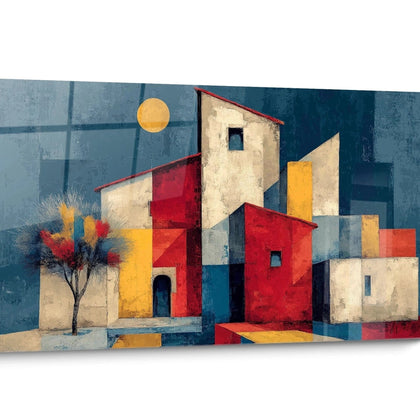
Our Painting African landscapes Geometric collection celebrates the beauty of the African continent through a contemporary artistic vision. These unique creations harmoniously blend the majestic panoramas of Africa with bold geometric shapes. Each painting art african modern captures the essence of savannas, flamboyant sunsets and infinite horizons in a clean and sophisticated style. Our collection deco geometric africaine enhances your spaces with elegance.
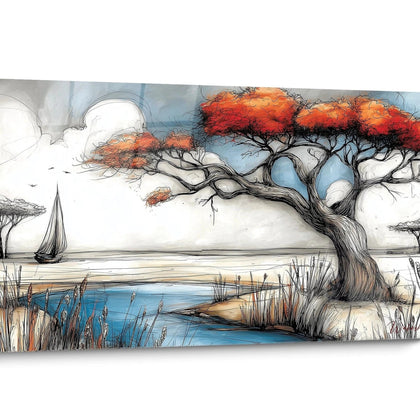
 Tree Meeting of Turquoise and Amber Painting - African Landscape Edition273,90 €
 Radiant Golden Sun Painting - African Light - African Landscapes Edition273,90 €
 African Sun Painting - Golden Radiance - African Landscapes Edition228,90 €
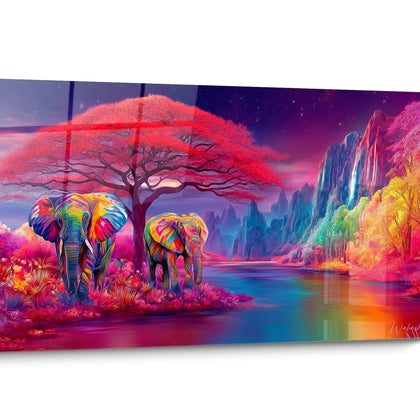
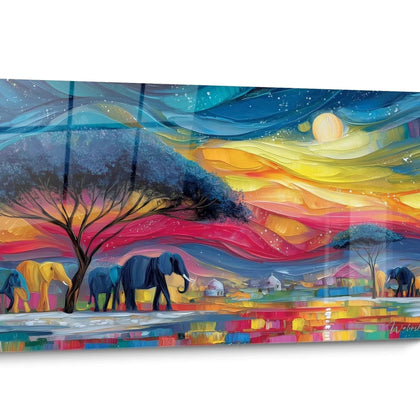
 Elephant Prism Painting African Colors - African Landscape Edition242,90 €
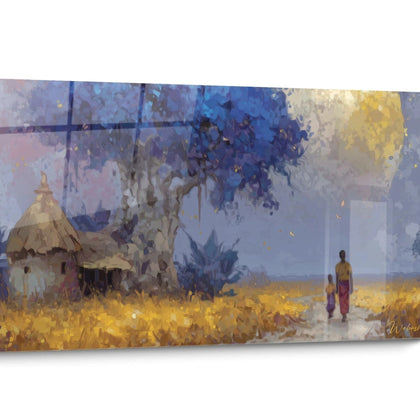
 Village Painting Savanna Reflections - African Landscape Edition273,90 €
 Walensky Boats River Painting Contemporary African Landscape273,90 €
 Acacia Red Lands Guardian Painting - African Landscape Edition273,90 €
 Trees Steppe Crowns Painting - African Landscape Edition273,90 €
 Acacia Baobab Sunlight Painting - African Landscape Edition273,90 €
 Village Clay Lands Under the Golden Star Painting - African Landscape Edition273,90 €
 Savanna Rays of the Golden Kingdom Painting - African Landscape Edition228,90 €
Explore further
In African Landscape Geometric Wall Art

All about African Landscape Geometric Wall Art
- African Landscape Geometric Wall Art Presentation
- Geometric Design and African Perspectives
- Integration with Modern Architecture
- Visual Impact and Symbolism
The geometric African landscape painting represents a unique artistic fusion between the vastness of African panoramas and the structured abstraction of geometric forms. This contemporary approach transforms the savanna, Kilimanjaro mountains, or Saharan dunes into angular compositions where triangles, polygons, and refined lines redefine horizons. These large-scale wall installations capture the territorial essence of the continent while applying a modern visual grid that dialogues with minimalist architecture and demanding professional spaces. The geometric interpretation of African landscapes creates a visual language where each colored segment evokes a specific geographic stratum, transforming your space into a conceptual gallery.
The Geometric Revolution of African Panoramas
Geometric African landscape paintings revolutionize classical representation by decomposing infinite horizons into precise angular facets. This approach segments savanna expanses into distinct chromatic planes where each orange trapezoid symbolizes an arid zone, each ochre triangle evokes ancestral rock formations. The fragmentation technique transforms Serengeti sunsets into gradient polygonal mosaics, creating unprecedented visual depth for large-scale murals destined for corporate halls or industrial lofts.
Why do geometric forms enhance contemporary African landscapes?
Applying geometric structures to African panoramas generates creative tension between natural organicity and mathematical rigor. Diagonal lines reproduce solar rays crossing acacias, while nested hexagons evoke traditional Kente textile patterns reinterpreted. This duality suits perfectly spaces where Scandinavian design and African cultural references coexist, particularly in creative agencies or architectural showrooms requiring distinctive visual statements. Geometric stylization also amplifies readability at distance, an essential criterion for XXL artworks exceeding two meters.
Chromatic Deconstruction of African Territories
The geometric palette of African landscapes exploits calculated contrasts: burnt Sienna earth fragmented into diamonds, Klein blue representing sky cut into parallel bands, emerald greens of Ethiopian highlands translated into juxtaposed squares. This colorimetric cartography structures wall space into zones of variable intensity, naturally guiding the gaze along a premeditated visual path. To complement this approach, discover how African landscape sunset paintings capture light transitions with a complementary approach. Panoramic formats particularly exploit this segmentation to create evolving wall friezes.
Architectural Applications of Angular Compositions
Geometric African artworks integrate ideally into spaces with refined lines: glass curtain walls of modern offices, polished concrete partitions in urban apartments, or commercial spaces with cathedral ceilings. Their fractioned structure dialogues with exposed beams, suspended staircases, and design furniture with marked angles. A three-meter geometric African landscape painting installed facing a bay window creates a comparative depth effect between real urban landscape and abstract African interpretation, a strategy favored by high-end corporate space decorators.
Strategic Integration in Contemporary Architecture
How to position a geometric African painting in an open space?
Large-format geometric African landscape paintings transform professional circulation zones into immersive visual experiences. Their installation on reception walls creates memorable first impact, geometric fragmentation immediately capturing attention while conveying an image of cultural innovation. In conference rooms, these structured compositions paradoxically favor concentration: mathematical order of forms soothes while African references stimulate creativity. Collaborative spaces particularly benefit from triptych formats where each panel showcases a different African region – Namibian desert, Kenyan savanna, Drakensberg mountains – according to a unified geometric code.
Synergy with Minimalist Furniture and Raw Materials
African geometric design establishes sophisticated dialogue with contemporary industrial materials. The sharp angles of polygonal compositions resonate with black metal structures of wall libraries, while fragmented earthy tones visually warm raw concrete or brushed steel. In renovated lofts, a panoramic geometric painting installed above a cognac leather sofa creates textural stratification: leather roughness, metallic coldness of chromium feet, pigmented abstraction of African artwork. This material trilogy defines the urban-luxury aesthetic sought by demanding thirty-something clientele.
Which lighting enhances the facets of geometric African landscapes?
Illuminating geometric African paintings requires precise directional approach to accentuate depth of angular segments. Adjustable LED spotlights at 3000K temperature create subtle cast shadows along geometric edges, amplifying three-dimensional effect without altering ochre and saffron pigments. For formats exceeding 2.5 meters, a linear ramp positioned at 30 degrees generates uniform sweeping progressively revealing each chromatic stratum by hour. Home automation systems enable adaptive lighting scenarios: maximum intensity during day to rival natural light, twilight attenuation accentuating geometric contrasts in evening.
Multi-Panel Configuration for Monumental Compositions
Geometric African installations reach their full decorative potential in modular configurations. A set of five vertical panels of 60x180cm each, arranged with 10cm intervals, creates a four-meter wall frieze where Saharan landscape unfolds in progressive vertical bands – from dawn pink on left to twilight violet on right. This physical segmentation amplifies artistic geometric fragmentation, generating controlled kaleidoscopic effect. Interior architects exploit this approach to dress blind walls of boutique hotel halls or premium wellness spaces seeking distinctive visual identity.
Cultural Symbolism and Psychological Impact of Forms
What do geometric patterns represent in traditional African art?
Geometric compositions applied to African landscapes draw from millennial symbolic heritage where each form conveys precise cosmological meaning. Nested triangles evoke sacred mountains and earth-sky connection, diamonds represent agricultural cycles and land fertility, while fragmented spirals symbolize perpetual evolution and ancestral wisdom. By transposing these codes to real geographic panoramas, the geometric African landscape painting becomes carrier of stratified cultural narrative, particularly appreciated by collectors seeking conceptual depth beyond pure aesthetics.
Psychological Influence of African Angular Structures
Neurological impact of geometric forms applied to African landscapes differs radically from classical organic representations. Sharp angles generate increased cognitive stimulation, favoring mental alertness in professional environments, while repetition of geometric patterns produces paradoxical meditative effect through their structural predictability. Neurosciences confirm that polygonal compositions in warm African tones simultaneously activate brain zones of aesthetic pleasure and pattern recognition, explaining their effectiveness in spaces dedicated to creative brainstorming or strategic reflection.
Decorative Evolution and Seasonal Adaptability
Geometric African paintings present remarkable capacity for adaptation to seasonal decorative rotations without requiring replacement. Their structured abstraction allows variable associations: minimalist Scandinavian textiles in winter to contrast with warm African chromatics, dense tropical vegetation in summer creating thematic continuity with geometric greens of artwork. This temporal versatility justifies investment in premium formats for clientele seeking decorative longevity. Specialized galleries note 89% retention rate over five years for these geometric African artworks, versus 62% for classical figurative representations.
Complementary Decorative Associations
Optimal environment of a geometric African landscape painting includes elements reinforcing its angular visual language: mirrors with gilded hexagonal frames partially reflecting artwork, suspended luminaires with copper tetrahedral structures, Berber rugs with traditional geometric patterns creating coherent cultural resonance. Interior designers recommend 70/30 balance rule: 70% of minimalist smooth surfaces allowing artwork to dominate visually, 30% of complementary geometric accents subtly reinforcing theme without visual saturation. This orchestration transforms space into homogeneous decorative ecosystem.
Does a geometric African landscape painting suit compact residential spaces?
Contrary to common beliefs, geometric African compositions adapt perfectly to restricted spaces through their capacity to create illusory depth. A 120x80cm format in a 20m² living room generates spatial opening effect through its geometric vanishing lines, while colored fragmentation diverts attention from actual room dimensions. Prioritize compositions with light dominance and strategically dark segments to maximize perceived luminosity.
How does perception of a geometric African painting evolve with ambient lighting?
Lighting variations radically transform visual experience of geometric African landscapes. In direct natural light, warm pigments intensify revealing copper nuances invisible artificially, while in indirect twilight illumination, geometric contrasts accentuate creating quasi-three-dimensional effect. This daily metamorphosis offers evolving artwork justifying its positioning in high-traffic zones with variable luminous passage.
Do geometric African landscape paintings enhance high-end real estate?
Specialized real estate agents confirm that staging including large-format geometric African artworks increases perceived property value by 12 to 18% during viewings, particularly for properties destined for clientele sensitive to culturally-anchored contemporary design. These compositions immediately signal sophisticated decorative level differentiating, decisive element in premium transactions where each detail influences purchase decision.
L'art qui suscite l'envie
Maison belge d'art mural grand format
14 jourspour changer d'avis*
Protection Walenskyincluse
Fabriquéen Italie
FormatXXL
Kit de fixationtoujours fourni
* Hors tableaux personnalisés et tailles personnalisées


