


Minimalist Japanese Cherry Blossom Wall Art
The Cherry Blossom Japanese Minimalist painting embodies the pure essence of Zen art and Japanese aesthetics. This collection celebrates the delicate beauty of cherry blossoms in a refined and contemporary approach. Each creation captures the poetry of minimalist cherry trees in bloom with refined compositions that evoke the serenity of Japanese gardens. Perfect for creating a soothing atmosphere, this collection of refined Japanese wall decoration transforms your space into a haven of peace. Ideal for lovers of contemporary Asian art.
 Sakura Soul of Time Painting - zen edition228,90 €
 Starry Efflorescence Wall Art - Black and White Speckled Edition228,90 €
 Dancing Cherry Blossom Canvas - landscape edition242,90 €
 Flower Meadow Painting - Japan Edition273,90 €
 Tree of Destiny Painting - Japan Edition273,90 €
 Cherry Blossom Wall Art No. 1 - Nature Edition273,90 €
 Blooming Sakura Wall Art - Asia Edition273,90 €
 Petals Poetry Wall Art - Asia Edition273,90 €
 Flowers in Moonlight Wall Art - Asia Edition273,90 €
Explore further
In Minimalist Japanese Cherry Blossom Wall Art
-
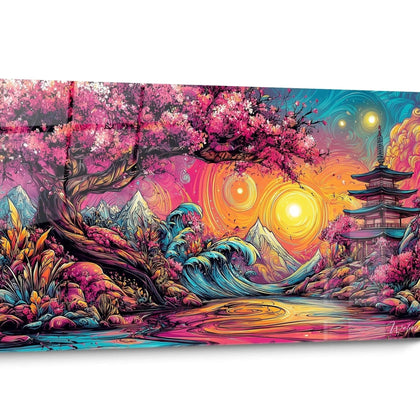 Japanese Cherry Blossom Wall Art40
artworks
Japanese Cherry Blossom Wall Art40
artworks
-
 Japanese Cherry Blossom Zen Wall Art24
artworks
Japanese Cherry Blossom Zen Wall Art24
artworks
-
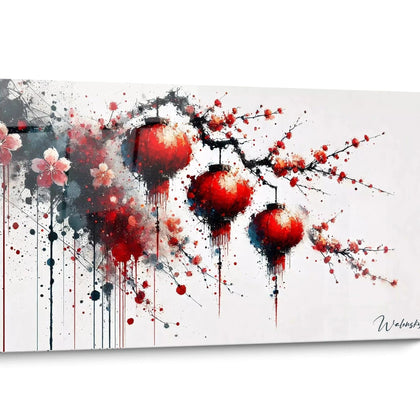 Japanese Cherry Blossom Watercolor Canvas3
artworks
Japanese Cherry Blossom Watercolor Canvas3
artworks
-
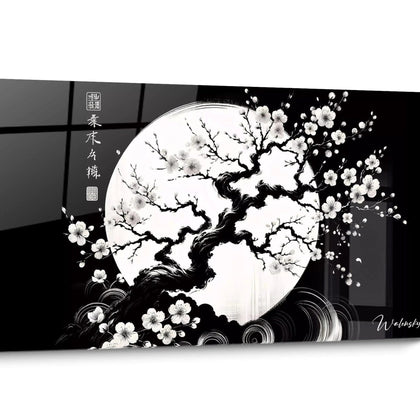 Japanese Cherry Blossom Black and White Wall Art7
artworks
Japanese Cherry Blossom Black and White Wall Art7
artworks
-
 Golden Japanese Cherry Blossom Wall Art5
artworks
Golden Japanese Cherry Blossom Wall Art5
artworks
-
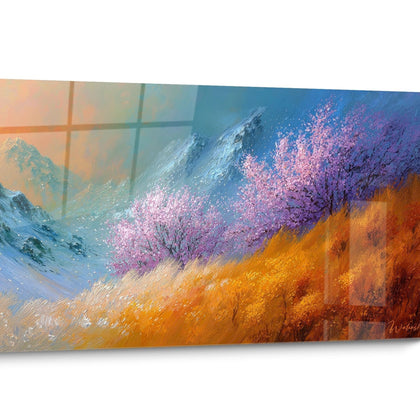 Panoramic Japanese Cherry Blossom Wall Art3
artworks
Panoramic Japanese Cherry Blossom Wall Art3
artworks


All about Minimalist Japanese Cherry Blossom Wall Art
- Painting Japanese Cherry Blossom Minimalist Presentation
- Refined Aesthetics
- Spatial Integration
- Selection & Advice
The Japanese cherry blossom painting minimalist represents the very essence of Japanese philosophy of "ma", this empty space that gives meaning to the composition. Unlike traditional ornamental representations, this refined approach captures the soul of the sakura through a few delicate branches on a neutral background, creating a contemporary work imbued with serenity. These large-format creations instantly transform the atmosphere of a space by inviting calm and contemplation, perfect for modern interiors seeking authenticity.
The Art of Japanese Simplicity in Wall Decor
The Japanese cherry blossom minimalist painting embodies this ancestral philosophy of wabi-sabi where beauty lies in imperfection and simplicity. Each composition generally presents one to three branches of sakura, positioned according to the principles of Japanese asymmetry, creating a dynamic balance that naturally guides the eye. This economy of means contrasts sharply with loaded floral compositions, offering essential visual breathing space in our contemporary living spaces overloaded with information.
The Restricted Color Palette Serving Impact
Minimalist creations favor solid backgrounds in neutral tones – off-white, pearl gray, sand beige or deep black – which enhance the delicate ramifications of the cherry tree. This voluntary chromatic restriction amplifies the expressiveness of each branch, each pale pink or white bud becoming a meditative focal point. For those seeking a refined variation, the black and white Japanese cherry blossom painting pushes this sobriety even further, creating striking graphic contrasts.
How to Recognize a Truly Minimalist Composition?
An authentic Japanese minimalist cherry blossom painting is distinguished by its characteristic void-full ratio: at least 60% of the space remains neutral, allowing the eye to circulate freely. The branches are positioned according to the rule of thirds, never centered, creating this visual tension characteristic of Japanese aesthetics. The absence of superfluous details, complex textures or additional decorative elements guarantees the purity of artistic intention, transforming each work into a true contemporary aesthetic statement .
The Influence of the Sumi-e School in Modern Creations
These paintings are directly inspired by the sumi-e ink painting, where every stroke counts and nothing is superfluous. Contemporary artists transpose this centuries-old discipline into monumental formats, creating large-scale wall artworks that retain the meditative essence of the original gesture. This translation of the traditional support to imposing dimensions amplifies the emotional impact while preserving the intrinsic delicacy of the sakura, offering a visual experience as soothing as it is impressive in modern residential spaces.
Optimizing the Impact of a Minimalist Cherry Tree in the Modern Space
The placement of a Japanese cherry blossom minimalist painting requires a radically different strategic approach than ornamental works. Its refined nature requires a wall completely free of visual competition, where it becomes the sole focal point of a room. Panoramic formats are ideally deployed on 2.5 to 3 meters wide in open spaces, while vertical compositions enhance narrow walls between two openings, creating a natural vertical effect that recalls the organic growth of the cherry tree.
What Architectural Environments Enhance This Aesthetic?
Scandinavian design interiors, refined industrial styles, or contemporary Japanese settings provide the ideal frames for these creations. Pristine white walls, light concrete screed, or smooth plaster surfaces offer the necessary neutral backdrop for the artwork to breathe fully. In a loft with generous volumes, a large-scale painting creates a zen anchor that counterbalances the potential coldness of raw materials. Compact urban apartments particularly benefit from this airy visual approach, which perceptually expands the space thanks to the generous neutral zones of the composition.
The management of negative space around the artwork
A minimalist Japanese cherry blossom painting requires a breathing perimeter of at least 40 centimeters on each side, free of any furniture, shelving, or competing decorative elements. This buffer zone allows the eye to gradually penetrate the composition without peripheral distractions. Unlike ornamental Japanese cherry blossom paintings , the minimalist approach is more akin to an artistic installation requiring a protective void to reveal all its contemplative subtlety.
Association with furniture and natural materials
Low-profile furniture with clean lines – Japanese coffee table, modular sofa with simple shapes, suspended console – harmoniously accompanies these artworks without creating visual competition. Organic materials such as blond wood, natural rattan, or light stone resonate with the vegetal theme while maintaining the necessary sobriety. For spaces requiring an additional dimension, the panoramic Japanese cherry blossom painting extends above a sofa, creating a soothing horizontal continuity, particularly effective in rectangular living rooms.
Acquisition Guide for an Authentic Minimalist Cherry Blossom Painting
Selecting a minimalist Japanese cherry blossom painting of quality requires particular attention to several distinctive criteria. Reproduction quality determines the fidelity of subtle nuances – a dusty rose must retain its delicacy without turning into a bright pink, dark branches must present tonal gradations and not uniform blocks. Large formats require high-resolution printing to preserve the sharpness of fine details even when viewed up close, particularly crucial for compositions where every bud counts.
Stylistic variations within minimalism
The minimalist spectrum encompasses several distinct approaches: the graphic style with sharp contours and bold colors, the watercolor approach with diffused contours and translucent superimpositions, or the ultra-contemporary gilded interpretation. For those who appreciate the softness of gradients, the Japanese cherry blossom watercolor painting offers this organic fluidity while maintaining a clean composition. Conversely, lovers of understated luxury will turn to the gilded Japanese cherry blossom painting where a few metallic touches sublimate the general sobriety without compromising it.
Dimensions adapted to different living spaces
For a main living room, prioritize monumental formats of at least 150x100 cm, allowing for a confident presence without visually saturating the space thanks to the neutral zones inherent in the composition. Bedrooms ideally accommodate vertical formats of 120x80 cm positioned facing the bed, creating a meditative focal point that promotes sleep. Transition spaces such as hallways benefit from stretched horizontal compositions that accompany the natural movement of displacement, transforming a simple passage into a daily contemplative experience.
Why prioritize a zen approach in your selection?
The meditative intention forms the heart of Japanese minimalist aesthetics. An authentic painting should instantly inspire mental calm, slowing the heart rate through its mere visual presence. This quality transcends technical aspects to touch the spiritual essence of the work. The Japanese zen cherry painting crystallizes this contemplative dimension, ideal for spaces dedicated to yoga, meditation, or simply disconnecting from the daily hustle in our refuge interiors.
Is a minimalist Japanese cherry painting suitable for professional spaces?
Absolutely, these works excel in medical offices, therapy spaces, high-end waiting rooms, or executive offices where professional sobriety meets the need to humanize the space. Their chromatic neutrality integrates seamlessly with corporate visual identities while bringing that essential touch of tranquility in potentially anxiety-provoking environments.
How to maintain a large-format minimalist Japanese cherry painting?
Imposing formats require monthly dusting with a dry antistatic microfiber cloth, in delicate movements from the center outwards to avoid particle accumulation in the corners. Absolutely avoid liquid cleaning products that risk altering the delicate pigments, particularly pale pinks and cream whites sensitive to chemical agents. An annual repositioning of a few centimeters prevents differential discoloration marks on the adjacent wall.
Can multiple cherry paintings be combined in a minimalist approach?
Contrary to popular belief, a minimalist diptych or triptych can work if the spacing between the panels respects the one-third rule of their individual width, creating an airy continuity rather than a compact assembly. Each panel must maintain its own compositional integrity while dialoguing with the others through subtle echoes – a branch oriented to the left on one panel responding to a right orientation on the other, creating a harmonious visual flow across the total wall space.
Further reading
Our articles on this topic
- Woodblock Prints and Wabi-Sabi: Decoding the Codes of the Japanese Painting
- How do Japanese minimalist artworks create a soothing emptiness?
- Sakura painting for a modern living room: the right colour pairings and materials
- Minimalist Japanese Bobtail Cat Painting: Japanese Simplicity Meets Scandinavian Style
- Sakura painting for an adult bedroom: the Zen symbolism that soothes sleep
L'art qui suscite l'envie
Maison belge d'art mural grand format
14 jourspour changer d'avis*
Protection Walenskyincluse
Fabriquéen Italie
FormatXXL
Kit de fixationtoujours fourni
* Hors tableaux personnalisés et tailles personnalisées


