



Minimalist British Shorthair Cat Wall Art
Our Painting cat British shorthair Minimalist captures the natural elegance of this iconic breed in a clean and contemporary style. Each artwork celebrates the beauty of the British shorthair wall decoration with pure lines and a refined aesthetic. Perfect for creating a soothing atmosphere, this minimalist cat breed painting harmoniously integrates into modern interiors. Discover a unique collection that combines feline passion and contemporary design, ideal for embellishing living rooms, bedrooms or offices.
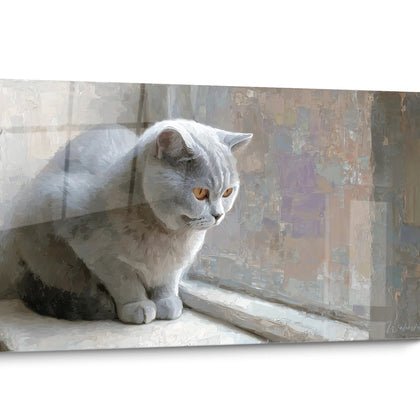
 British Shorthair Cat Wall Art Gray - Feline Serenity - British Shorthair Cat Edition273,90 €
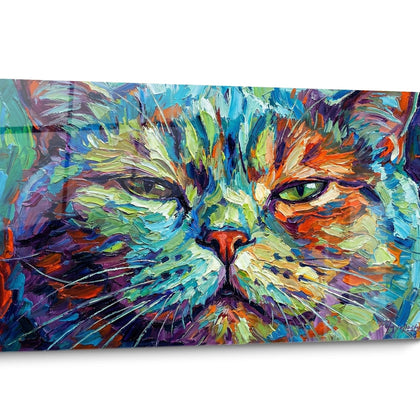
 British Shorthair Cat Canvas Amber Eyes - Captivating Gaze - British Shorthair Cat Edition273,90 €
 Orange-Eyed British Shorthair Cat Painting - Majestic Portrait - British Shorthair Cat Edition273,90 €
 British Shorthair Cat Painting Amber Eyes - Mystical Gaze - British Shorthair Cat Edition228,90 €
 Gray British Shorthair Cat Painting with Amber Eyes - Contemplative Gaze - British Shorthair Cat Edition228,90 €
Explore further
In Minimalist British Shorthair Cat Wall Art



All about Minimalist British Shorthair Cat Wall Art
- Description British Shorthair Minimalist Artwork
- Refined Elegance
- Visual Architecture
- Spatial Adaptation
The British Shorthair minimalist artwork embodies the perfect alliance between feline nobility and contemporary, refined aesthetics. This graphic representation of the British Shorthair, a breed emblematic of Britain known for its bearing and dense coat, is presented in a stripped-down visual approach that eliminates all superfluity. Unlike cluttered compositions, this minimalist interpretation captures the very essence of the British Shorthair through pure lines, simplified geometric shapes, and a restricted color palette. The monumental format of these wall creations transforms each feline silhouette into an architectural statement, where every rounded curve characteristic of the breed becomes a deliberate design element. The minimalist approach reveals the distinctive morphology of the British Shorthair: the roundness of its full cheeks, the amplitude of its compact body, the texture suggested by its short, dense coat, while eliminating anecdotal details to retain only the essential graphic elements. This artistic approach responds to the codes of refined contemporary interiors, from Scandinavian spaces to industrial lofts, where accumulation gives way to the meticulous selection of meaningful visual elements.
Graphic purification at the service of the British Shorthair breed
The British Shorthair minimalist artwork rests on an economy of plastic resources that paradoxically magnifies the distinctive morphological characteristics of this British breed. Unlike hyperrealistic representations that accumulate details, the minimalist approach proceeds by subtraction: it isolates the essential attributes of the British Shorthair to transform them into powerful graphic signs. The massive and compact silhouette becomes a simple, almost abstract geometric shape, while the characteristic rounded proportions are translated into softened curves that dialogue with modern architecture.
Why does minimalism particularly enhance the British Shorthair?
The naturally balanced morphology of the British Shorthair lends itself remarkably to graphic simplification. Its harmonious proportions, its round body without sharp angles, and its massive head with full cheeks create a visually stable composition that retains its impact even when reduced to the essentials. Minimalist creations exploit this innate geometry by transforming each curve into a deliberate design element, creating compositions where the cat becomes an architectural motif. British Shorthair watercolor artworks adopt a different approach by prioritizing the fluidity of pigments, while minimalism structures space with clean blocks and sharp outlines.
Restricted color palette and maximum visual impact
The effectiveness of a British Shorthair minimalist artwork lies in its ability to generate a considerable visual impact with a deliberately limited color palette. Three to four shades are enough to capture the essence of the British Shorthair: a dominant tone for the coat, a contrasting background for figure-ground separation, and sometimes a touch of accent for the characteristic copper eyes of the breed. This color restriction creates an immediate visual coherence with contemporary interiors, where color schemes are themselves refined. Monochrome or bichrome compositions in black and white reveal volumes through contrasts rather than shadow modeling, while neutral-toned versions naturally integrate into Scandinavian spaces dominated by grays, beiges, and off-whites.
Monumental formats and controlled spatial presence
The generous dimensions of the British Shorthair minimalist artworks amplify their visual appeal while preserving the sobriety inherent in minimalism. An XXL format transforms the refined silhouette of the British Shorthair into an architectural focal point that structures space without visually cluttering it. This apparent contradiction finds its resolution in the graphic economy: even at a large scale, a minimalist composition does not generate visual saturation thanks to its breathing spaces, uniform blocks, and absence of competing details. The British Shorthair, by its compact and collected morphology, naturally occupies the space of the frame in a balanced way, avoiding unbalanced compositions that would require filling elements.
Visual construction and minimalist graphic hierarchy
The minimalist British shorthair cat painting orchestrates a rigorous visual hierarchy that guides the gaze according to a deliberate path, exploiting the principles of contemporary graphic design. Unlike Baroque compositions that scatter attention, minimalism concentrates visual energy on strategic areas: the British shorthair's gaze often becomes the main anchor point, reinforced by chromatic contrast or local saturation. This concentration allows monumental formats to function as architectural signage panels that articulate interior volumes.
Geometricization of characteristic racial traits
The minimalist transcription of the British shorthair proceeds by systematically geometrizing its morphological attributes: full cheeks become perfect circles, the massive body simplifies into an oval or rectangle with rounded corners, the medium ears are reduced to softened triangles. This geometric abstraction does not betray the breed but reveals its underlying architecture, creating a universal visual language that transcends photographic realism. Pop art British shorthair cat paintings also use simplification, but combine it with saturated and contrasting colors, while minimalism favors chromatic restraint and tonal harmony.
How does minimalism dialogue with contemporary architecture?
The natural affinity between the minimalist British shorthair cat painting and contemporary spaces is explained by their common formal language. Minimalist architectures favor pure volumes, smooth surfaces, clean lines, and clear transitions between materials – all characteristics that the refined feline compositions reproduce. A British shorthair represented by uniform planes and clean outlines naturally dialogues with a pristine white wall, polished concrete, or light wood cladding. Intentional void areas in the minimalist composition create visual breaths that amplify the impression of space rather than saturating it, a fundamental principle of optimized contemporary interiors.
Asymmetrical balanced composition systems
Unlike classical symmetry, the minimalist British shorthair cat painting frequently exploits asymmetrical balanced compositions where the feline occupies one third or two thirds of the frame, voluntarily leaving empty areas that actively participate in the visual balance. This dynamic asymmetry generates a subtle visual tension that maintains interest without creating discomfort, a technique borrowed from architectural photography and contemporary editorial design. The compact visual mass of the British shorthair allows for these off-center compositions without imbalance, its round body functioning as sufficient gravitational anchor. Versions with the British shorthair positioned at the edge of the frame create a suggestion of off-screen space, mentally amplifying the perceived dimensions of the work.
Spatial integration and minimalist decorative versatility
The minimalist British shorthair cat painting demonstrates exceptional adaptability to varied spatial configurations, a property directly linked to its graphic economy and chromatic sobriety. In contemporary living spaces with reduced surfaces, these refined compositions generate a maximum visual impact without contributing to a feeling of clutter – an apparent paradox that only minimalism resolves effectively. Open-plan living rooms type loft benefit from these graphic focal points that visually segment the space without physical barriers, the monumental British shorthair functioning as a visual territorial marker.
Which professional spaces particularly value these compositions?
Design-conscious professional environments – creative agencies, architecture firms, high-end coworking spaces, concept stores – massively adopt minimalist British shorthair cat paintings for their ability to signal a sophisticated aesthetic identity without ostentation. These spaces require decorative elements that communicate professionalism and aesthetic mastery while avoiding corporate coldness: the British shorthair, a noble but accessible breed, brings this touch of controlled humanity. Cream British shorthair cat paintings offer a chromatic softness particularly suited to wellness spaces and luxury stores, while graphic minimalist versions are suitable for technological environments and startups.
Strategies for Combining with Other Decorative Elements
Integrating a minimalist British shorthair cat painting into an existing decorative ecosystem requires a strategic approach based on formal continuity rather than thematic consistency. Rather than accumulating feline representations, we prioritize dialogue with other elements sharing the same minimalist language: black and white architectural photographs, geometric abstract compositions, monumental typography. The British shorthair then becomes the organic element that tempers the surrounding geometric rigor, bringing a reference to life without stylistic disruption. Vertical formats pair effectively with low horizontal furniture, creating counterpoints that energize the space, while panoramic formats dialogue with architectural lines – exposed beams, bay windows, wall shelves.
Adaptation to Lighting and Temporal Mutations
Minimalist compositions exhibit remarkable visual stability in the face of daily natural lighting variations. Unlike complex works whose perception transforms radically depending on the incidence of light, the minimalist British shorthair cat painting maintains its graphic readability from dawn to dusk. Uniform planes reflect light homogeneously without generating disturbing localized glare, while crisp outlines maintain their definition even in low light. This perceptual constancy is particularly valuable in spaces with multiple functions – living rooms that transform into reception areas, bedrooms also serving as offices – where the lighting ambiance varies considerably depending on usage. Grey British shorthair cat paintings exploit subtle tonal nuances, while minimalist versions structure the space with crisp contrasts that resist lighting variations.
Decorative Evolution and Aesthetic Longevity
Investing in a minimalist British shorthair cat painting is a lasting decorative choice thanks to the timelessness of minimalist principles. While fleeting decorative trends come and go – maximalism, cottage core, grandmillennial – minimalism maintains a constant relevance, regularly reinterpreted but never fundamentally outdated. This aesthetic stability allows for decorative reconfigurations without requiring replacement of the main artwork: a change of furniture, the introduction of seasonal textiles, or modification of accessories are sufficient to renew the ambiance while maintaining the minimalist visual anchor. The British shorthair, a historic breed whose popularity spans decades without decline, reinforces this longevity by avoiding the ephemeral fashion effect associated with recently created breeds. Collectors also appreciate the possibility of developing a coherent series by combining the minimalist with realistic British shorthair cat paintings or other stylistic interpretations, creating a visual narrative journey through the different artistic approaches of an iconic breed, linked to the British shorthair cat painting collection as a whole.
FAQ – Frequently Asked Questions about the Minimalist British Shorthair Cat Painting
Is a minimalist British shorthair cat painting suitable for small spaces?
Absolutely, minimalism excels precisely in constrained spaces. The graphic economy and absence of superfluous details avoid visual saturation even in monumental format, while intentional areas of void mentally amplify the perceived dimensions of the room. Monochrome or bichrome compositions create chromatic continuity with the walls rather than an encumbering visual break.
How to combine multiple minimalist paintings without creating visual confusion?
The key lies in formal consistency rather than thematic consistency: prioritize a unified color palette, geometrically harmonious formats, and regular spacing according to the principles of the grid system. A triptych of minimalist British shorthairs in tonal variations creates a progressive visual narrative, while an association with other minimalist subjects (geometric plants, abstract compositions) works if the graphic language remains homogeneous.
Is the minimalist style suitable for traditional interiors or only contemporary ones?
Although naturally aligned with contemporary aesthetics, a minimalist British shorthair cat painting can create interesting dialogues in traditional interiors by playing the role of a modern counterpoint. This juxtaposition generates a productive aesthetic tension that avoids a frozen, museum-like reconstitution, particularly effective in Haussmann apartments or stately homes where the insertion of refined contemporary elements energizes the historic architecture without denaturing it.


