





Golden Saint Bernard Dog Wall Art
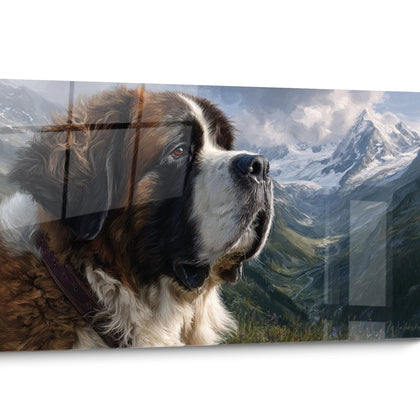
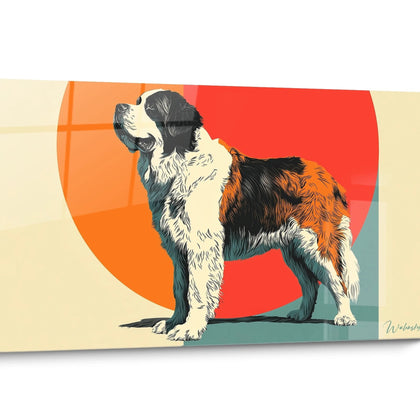
The Painting Golden Saint Bernard Golden sublimates the nobility and loyalty of this mountain guardian. This collection celebrates the natural elegance of the Saint Bernard through artistic compositions with sumptuous golden tones. Perfect for lovers of dog Saint Bernard wall decoration Saint Bernard, it brings warmth and character to your interior. Each creation highlights the bearing of this majestic golden dog breed, creating a refined and authentic atmosphere in your living space.
 Saint Bernard Painting with Golden Tones - Noble Portrait - Saint Bernard Edition273,90 €
 Saint Bernard Golden Silhouette at Sunset Wall Art - Luminous Contemplation - Saint Bernard Edition273,90 €
 Saint Bernard in Golden Mist at Gallop - Majesty in Motion - Saint Bernard Edition273,90 €
 Majestic Saint Bernard Painting with Golden Tones - Contemplative Portrait - Saint Bernard Edition228,90 €
Explore further
In Golden Saint Bernard Dog Wall Art



All about Golden Saint Bernard Dog Wall Art
- Description Painting Saint Bernard Doré
- Golden Hue and Canine Nobility
- Warm and Luxurious Atmosphere
- Artistic Tribute to the Alpine Companion
The golden Saint Bernard dog painting embodies the sublime encounter between the majesty of a legendary breed and the timeless elegance of metallized finishes. This artistic representation transforms the mountain's faithful guardian into a true showpiece, where every detail of the two-tone fur is adorned with copper reflections and amber hues. Designed for art lovers seeking sophisticated wall decor with a strong visual presence, this type of creation combines animal symbolism and aesthetic refinement. The golden tones naturally magnify the characteristic coat of the Saint Bernard, accentuating the contrasts between the white and reddish areas while adding a luxurious dimension to the whole. Perfect for structuring a generous space such as an imposing entrance hall, a private library or a spacious living room, this monumental format immediately captures the eye while evoking the nobility and protection associated with this emblematic breed of the Alps.
The Visual Alchemy of Golden Finishes on the Silhouette of the Saint Bernard
The golden Saint Bernard dog painting reveals a particular alchemy between the morphological characteristics of this monumental breed and the reflective properties of metallic pigments. The reddish fur areas traditionally present on the Saint Bernard's head, ears and back find in gold and copper tones a natural amplification of their chromatic warmth. Artists exploit this synergy by applying layering techniques where golden hues emphasize the massive volumes of the animal, creating light and shadow games that sculpt the powerful musculature and imposing build.
How do golden tones reveal the expressiveness of the Saint Bernard's gaze?
The targeted application of golden pigments around the eye area is a major artistic process in these wall creations. Metallic reflections framing the hazel eyes characteristic of the breed accentuate the depth of the gaze, that expression both benevolent and watchful which defines the temperament of the Saint Bernard. Contemporary artists frequently use gold glazing techniques to create an internal luminosity that seems to emanate from the gaze itself, transforming a simple animal portrait into a captivating emotional presence.
The enhancement of symbolic attributes by the golden palette
The small barrel traditionally carried around the neck of the Saint Bernard, a historical emblem of alpine rescue missions, becomes under the golden treatment a true decorative jewel integrated into the composition. Metallic reflections on this iconic accessory simultaneously evoke the breed's monastic heritage and the preciousness of the artwork itself. This approach transforms a narrative element into a focal point of aesthetics, particularly suitable for interiors seeking wall decor combining history and visual sophistication. For those who also appreciate modern interpretations, a geometric Saint Bernard dog painting offers a fascinating contemporary alternative.
Chromatic adaptation to warm-toned environments
A golden Saint Bernard dog painting naturally integrates into spaces decorated according to warm color palettes: terracotta, ocher, dark chocolate brown, caramel beige. The golden finishes establish visual correspondences with precious woodwork (golden oak, aged walnut), brass-patinated elements or luminaires with copper finishes. This harmony facilitates integration into revisited classic interiors, chic neo-rustic atmospheres or spaces inspired by contemporary alpine chalets, where the Saint Bernard also finds a particular thematic resonance.
The variations in sheen within the golden palette also allow for dynamic effects depending on the orientation of natural light. A perpendicular placement to windows will maximize light reflections throughout the day, while facing a light source will create a spectacular irradiation effect in the evening.
Creating a Prestigious Atmosphere Around the Golden Retriever Portrait
Why does the golden Saint Bernard suit reception areas particularly well?
The golden Saint Bernard painting has a unique ability to immediately establish a welcoming atmosphere while asserting a high decorative status. The breed itself symbolizes hospitality, rescue, and loyalty – values particularly appropriate for reception areas such as spacious entrance halls or formal living rooms. The golden finishes amplify this symbolism by adding a dimension of refinement and permanence. In a generous vestibule, this type of wall creation serves as an immediate aesthetic statement, signaling to visitors an environment where attention to decorative details is combined with a warm welcome.
The usual large dimensions of these representations are perfectly suited to the vertical volumes of double-height entrances or architecturally marked transition spaces. The naturally imposing stature of the Saint Bernard finds a proportionate representation scale that avoids the pitfall of ineffective miniaturization.
Association with noble materials and rich textures
The ideal environment for a golden Saint Bernard painting incorporates materials that dialogue with its metallic finishes: patinated leather of Chesterfield seats, deep-toned velvets (forest green, navy blue, burgundy), natural stones with warm veins, or hand-glazed artisanal ceramics. These material associations create a sensory coherence where the visual richness of the golden portrait finds tactile echoes in the surrounding layout. Oriental patterned rugs or antique kilims with rust and gold hues also establish harmonious color correspondences.
What lighting configuration enhances the golden reflections of the portrait?
Lighting is a determining parameter to fully reveal the aesthetic qualities of a golden Saint Bernard painting. A directed lighting system with adjustable spotlights at a warm color temperature (2700-3000K) accentuates the copper and amber tones while creating dramatic depth. The optimal position of light sources is slightly oblique to the plane of the work, avoiding direct reflections while sculpting the represented volumes. Wall sconces in aged brass or patinated bronze, positioned on either side of the painting, create a museum-like staging particularly suitable for private libraries or character offices.
The alternation between daytime natural lighting and artificial illumination at night literally transforms the appearance of the work: metallic reflections capture different light spectra, offering two distinct visual experiences depending on the time of day.
The composition of a gallery wall around the golden Saint Bernard
When integrated into a larger wall composition, the golden Saint Bernard painting works ideally as a centerpiece around which complementary elements of smaller dimensions gravitate. Black and white alpine photographs, antique botanical engravings representing mountain flora, or historical maps of mountain passes create a coherent visual narrative. This thematic approach reinforces the narrative dimension while maintaining a clear visual hierarchy where the golden portrait retains prominence. The frames of the satellite elements should favor sober finishes (matte black, dark natural wood) to avoid competing with the metallic reflections of the main piece.
The Golden Saint Bernard as an Artistic Expression of the Human-Animal Bond
Beyond its decorative function, the golden Saint Bernard dog painting embodies a celebration of the exceptional companionship that has united humans with this legendary breed for centuries. The monks of the Grand-Saint-Bernard hospice created, through their meticulous selection, a dog whose qualities go far beyond the simple utilitarian function to touch on the archetype of the devoted rescuer. Contemporary artists who choose to represent this breed with gold finishes are not merely engaging in an aesthetic exercise: they are visually formalizing the intrinsic value of this living heritage, the preciousness of these characteristics forged by centuries of collaboration with man in the most extreme conditions.
The transmission of an Alpine heritage through wall art
For owners with ties to the Alpine regions – whether familial, geographical, or simply emotional – a golden Saint Bernard dog painting constitutes a strong identity marker. The work functions as a symbolic anchor, recalling the values of resilience, mutual aid, and perseverance associated with mountain cultures. In a renovated chalet or a second home in an alpine area, this artistic representation establishes a continuity between architecture, the natural environment, and interior decoration. Gold finishes then evoke both the particular lights of dawn on the snow-capped peaks and the comforting warmth of the hearth after exertion at altitude.
Why choose a gold representation rather than a classic naturalistic rendering?
The gold treatment transcends simple photographic reproduction to offer an artistic interpretation that magnifies and immortalizes. Where a naturalistic portrait documents, the gold version celebrates and elevates. This aesthetic choice is particularly suitable for those seeking not a literal illustration but a poetic evocation, a decorative presence that stimulates the imagination while serving as a visual convergence point. The partial abstraction introduced by the metallic finishes also allows for a smoother integration into contemporary interiors that might find a photographic realism too literal or thematically restrictive.
The perceptual evolution of the artwork in its environment
An often underestimated aspect of metallic-finish paintings is their evolving visual nature. Unlike works in matte pigments whose appearance remains relatively constant, a golden Saint Bernard dog painting literally transforms according to lighting conditions, the position of the observer, and even the seasons (changes in the angle of penetration of natural light). This perceptual variability creates a dynamic relationship between the artwork and its environment, constantly renewing the visual experience and preventing aesthetic habituation. The owner thus discovers different facets of their piece depending on the time of day, maintaining lasting visual interest.
This characteristic is particularly appreciated in everyday living spaces where static decoration could gradually lose its impact. The painting then becomes a living element of the interior environment, subtly reacting to atmospheric and lighting variations.
Frequently asked questions about the golden Saint Bernard dog painting
Is a golden Saint Bernard dog painting suitable for modern minimalist interiors?
Absolutely, provided certain integration principles are respected. In a minimalist space, the gold painting functions as a unique focal point, benefiting from the surrounding sparseness that avoids any visual competition. The combination with white or light gray walls, clean architectural lines, and understated furniture creates a striking contrast where the richness of the portrait is fully revealed. This approach follows the Japanese principle of ma (間), negative space that enhances the object by its uncluttered environment.
Do the gold finishes of a Saint Bernard painting risk appearing ostentatious?
The perception of ostentation depends essentially on the overall context and the quality of artistic execution. A golden Saint Bernard dog painting created with subtlety – where the metallic tones function as enhancements rather than a complete covering – maintains a refined elegance. The balance is established between golden areas and more neutral passages, creating visual breathing room. In a consistent decorative environment that favors authentic materials and natural textures, gold finishes integrate as a logical extension of a warm color palette rather than as a superficial addition.
Can a golden Saint Bernard dog painting be combined with other animal representations?
This combination works particularly well by respecting a consistent thematic or stylistic logic. Several approaches prove to be relevant: a collection centered on mountain breeds (Bouvier Bernois, Newfoundland, Leonberg) creates a specialized canine narrative; a series dedicated to rescue or working animals establishes a functional continuity; or, alternatively, a set of works with gold finishes representing different animals maintains a stylistic unity. The essential thing is to avoid random juxtaposition by prioritizing a clear curatorial intention that justifies the chosen associations.


