


Geometric Architecture Wall Art
Our Painting Geometric Architecture collection celebrates the perfect harmony between clean forms and structured compositions. These contemporary works capture the essence of minimalist architectural design through precise lines and sophisticated abstract patterns. Each creation reveals a modern geometric aesthetic that transforms your interiors into refined spaces. Ideal for lovers of contemporary art and minimalist decoration, these pieces bring elegance and character to any environment.
 Art Deco Architecture Painting - Golden Skyline - Art deco Edition233,90 €
 Modern Architectural Structure Wall Art - Urban Passages - Architecture Edition233,90 €
 Abstract Architectural Forms Wall Art - Geometric Symphony - Architecture Edition233,90 €
 Modern Abstract Architecture Wall Art - Urban Fusion - Architecture Edition233,90 €
 Geometric Crystals Wall Art - Luminous Fragments - Architecture Edition233,90 €
 Futuristic Architecture Crystals Painting - Luminous Fragments - Architecture Edition233,90 €
 Geometric Stairs Painting - Architectural Fusion - Architecture Edition213,90 €
 Abstract Architecture Painting - Golden Convergence - Architecture Edition232,90 €
Explore further
In Geometric Architecture Wall Art

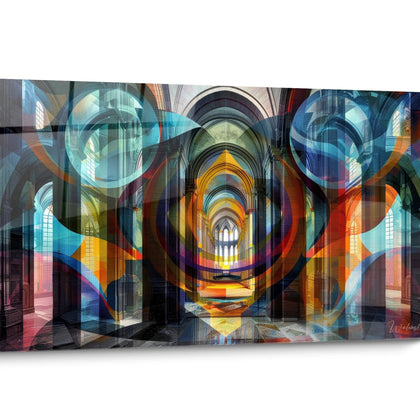


All about Geometric Architecture Wall Art
- Geometric Architecture Wall Art Presentation
- Structural Lines and Perspectives
- Modern Architectural Composition
- Contemporary Decorative Integration
The geometric architecture wall art transforms your space by celebrating the purity of structural forms and the mathematical balance of architectural compositions. These large-scale mural creations capture the minimalist essence of contemporary facades, calculated urban perspectives and linear intersections that characterize modern architecture. Each large-format visual becomes a visual manifesto where right angles, rigorous parallels and calculated symmetries dialogue to create an imposing graphic presence. Architectural geometric art transcends simple decoration to become a structuring element of your interior design, particularly sought after in professional environments, industrial lofts and refined design interiors.
Geometric Architecture as Structural Wall Expression
The geometric architecture wall art draws its visual vocabulary from the fundamental principles of modern construction and rational design. The compositions feature orthogonal grids, modular frameworks and networks of lines that evoke architectural blueprints, facade elevations or structural diagrams of major contemporary buildings.
How do architectural perspectives redefine wall depth?
The representations exploit multiple vanishing points and axonometric perspectives to create a sense of three-dimensionality without resorting to photographic realism. These geometric depth games generate particularly effective visual dynamics in spaces with generous volumes such as professional entrance halls, corporate reception areas or residential mezzanines. The isometric technique, frequently employed in these compositions, offers simultaneous reading of multiple architectural facades, considerably enriching the informational density of the visual.
Repetitive modules and their spatial rhythm
The use of repeated modular patterns creates a visual rhythm comparable to modernist building facades or geometric architecture wall art where structure becomes ornament. This serial approach, inherited from the Bauhaus movement and International Style, confers monumentality suited to large-scale murals. Geometric sequences establish visual cadences that naturally guide the viewer's eye through the composition, particularly appreciated in circulation spaces such as corporate corridors or architectural transition zones.
What is the influence of architectural materials on color palettes?
The color ranges are inspired directly by contemporary building materials: raw concrete, brushed steel, tinted glass, anodized aluminum. These material references translate into palettes dominated by industrial grays, deep blacks, architectural whites and metallic accents. This chromatic sobriety reinforces the impact of pure geometric structures and facilitates integration into minimalist design environments or chic industrial-style interiors.
Visual Composition and Constructive Principles of Geometric Wall Art
Grid systems as compositional foundation
The geometric architecture wall art articulates around complex grid systems that govern the spatial organization of each visual element. These structuring frameworks, often invisible but always perceptible, establish mathematical proportional relationships between different areas of the composition. The application of harmonic ratios such as the golden ratio or Fibonacci sequences generates instinctive visual balances, particularly effective for panoramic formats or multi-panel mural installations in corporate spaces.
How does the tension between order and dynamism operate?
Although founded on rigorous principles of spatial organization, these compositions integrate elements of calculated disruption: subtle shifts, controlled rotations, strategic overlaps. These interventions create a visual tension that avoids monotony while preserving overall structural coherence. This dialectic between geometric stability and controlled perturbation generates sustained visual interest, essential for works intended for spaces of prolonged contemplation such as high-end waiting areas or corporate relaxation zones.
Linear intersections and their optical effects
Multiple line crossings create visual nodes that become natural focal points in the composition. These intersections sometimes generate moiré effects or depth illusions that vary depending on the viewing angle, adding a perceptual dimension that evolves with the viewer's movement. This dynamic property proves particularly interesting in circulation spaces where the public moves constantly, such as exhibition galleries, design hotel lobbies or architectural showrooms.
What are the advantages of balanced asymmetric compositions?
Unlike strictly symmetric arrangements, balanced asymmetric compositions offer superior visual sophistication by creating tensions resolved through calculated visual counterweights. This approach, inspired by constructivism and suprematism, produces more contemporary and less academic arrangements. For large-scale murals intended for innovative professional spaces, this controlled asymmetry communicates a modernity and boldness aligned with the values of forward-thinking companies.
Spatial Integration and Installation Contexts for Geometric Architecture Wall Art
Optimal professional and corporate environments
The geometric architecture wall art finds its optimal expression in professional contexts where rational aesthetics meets corporate values: architecture firms, design studios, technology companies, financial institutions. Architectural geometric compositions project attributes of rigor, structured innovation and systemic vision, particularly valued in these sectors. Monumental formats naturally establish themselves in boardrooms, client reception areas and collaboration spaces where they reinforce the organization's visual identity.
How to optimize installation in double-height spaces?
Generous vertical volumes such as contemporary stairwells, open mezzanines or industrial lofts constitute privileged locations for these large-scale works. The architectural verticality of the space naturally dialogues with the structural compositions of the visual, creating aesthetic continuity between the built space and the decorative element. The monumental scale required for these volumes frequently demands formats exceeding 150 cm in width, ensuring a visual presence proportionate to the spatial amplitude.
Associations with contemporary design furniture
These compositions harmonize particularly well with streamlined furniture: Bauhaus seating, steel and glass tables, modular metal shelving systems. The visual association between mural geometric structures and design objects creates total stylistic coherence in sophisticated minimalist interiors. The noble industrial materials of the furniture (stainless steel, structured leather, lacquered wood) find their echo in the visual textures suggested by the architectural compositions.
What are the lighting considerations to maximize geometric impact?
Directional grazing lighting reveals the visual depth of compositions by accentuating contrasts between light and dark areas, reinforcing the perception of overlaid planes. Architectural track lighting systems allow precise positioning of light sources to visually sculpt geometric structures. Accent spot lighting creates cast shadows that physically extend the artwork's lines into real space, generating a fascinating interaction between the two-dimensional work and the three-dimensional environment.
FAQ - Frequently Asked Questions About Geometric Architecture Wall Art
Is geometric architecture wall art suitable for minimalist residential spaces?
Absolutely, these mural compositions find their place in refined residential interiors, particularly lofts, contemporary apartments and architect-designed homes where aesthetic coherence between the built envelope and decorative elements is sought. The monumental format adapts perfectly to feature walls in open-plan living areas.
What wall orientation should be prioritized for large-format geometric architecture wall art?
Walls perpendicular to the main natural light source allow you to avoid reflections while benefiting from lateral lighting that enriches the perception of geometric depths. Continuous rails or technical walls without openings constitute ideal supports for these imposing structural compositions.
How does geometric architecture wall art influence the spatial perception of a room?
Compositions with vertical dominance accentuate the perceived height of spaces, while horizontal arrangements visually broaden volumes. Integrated perspectives create illusory depths that can visually compensate for spatial limitations in rooms with restricted dimensions, an effect particularly sought after in urban offices where perceptual space optimization is a major concern.


