


Gothic Architecture Wall Art
Our Gothic Architecture Painting collection celebrates the majesty of medieval cathedrals and European sacred art. Each work captures the essence of colorful Gothic stained glass windows and the soaring vaults that define this iconic architectural style. Flying buttresses, luminous rose windows, and medieval cathedral spires come to life in refined artistic compositions. Perfect for lovers of history and medieval aesthetics, these creations bring elegance and character to your interior.
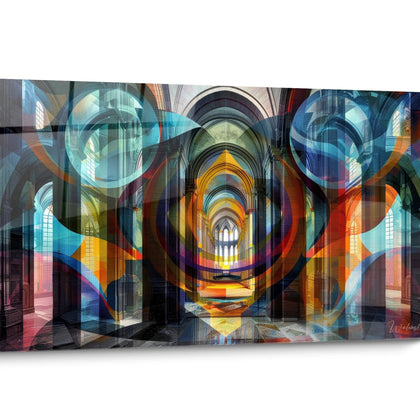
 Gothic Architecture Wall Art - Transcendent Light - Architecture Edition273,90 €
 Abstract Gothic Cathedral Artwork - Mystical Lights - Architecture Edition273,90 €
 Abstract Gothic architecture painting - Divine light - Architecture edition242,90 €
Explore further
In Gothic Architecture Wall Art



All about Gothic Architecture Wall Art
- Presentation Painting Gothic Architecture
- Cathedrals and Monuments
- Symbolism and Spirituality
- Decorative Integration
The painting Gothic architecture transcends simple wall decoration to become a true visual portal to the medieval era of cathedral builders. These monumental compositions capture the essence of buildings that defined an entire era, where every buttress, every rose window and every spire seemed to touch the sky. For enthusiasts of architectural history and collectors of religious art, these large-format representations are much more than a simple decorative element: they embody a fascination with mystical verticality, the play of light and shadow filtered through stained glass, and this quest for spiritual elevation inscribed in stone.
Medieval Cathedrals Magnified on a Large Scale
A painting Gothic architecture capturing Notre-Dame de Paris, Reims Cathedral or Chartres Cathedral immediately transforms the atmosphere of an interior space. These monuments with their dizzying proportions require generous formats to faithfully restore the complexity of their ribbed structures, sculpted portals and slender buttresses. Large-format representation allows you to appreciate the architectural details that characterize the Gothic style : pointed arches, ribbed vaults and these spires that reach for the heavens.
Why do low-angle perspectives enhance these sacred buildings?
Photographic or pictorial low-angle accentuates the feeling of crushing verticality characteristic of Gothic cathedrals. This perspective amplifies the impression of grandeur and creates an upward visual dynamic that naturally draws the eye upwards. In a contemporary interior, this composition generates a striking contrast between the horizontality of modern spaces and the medieval vertical thrust, creating a particularly sought-after aesthetic tension by interior architects specializing in contrasting atmospheres.
The impact of dramatic skies in Gothic compositions
The most impactful Gothic architecture paintings often incorporate celestial backgrounds filled with stormy clouds or twilight lights. These stormy skies resonate with the spiritual and sometimes unsettling dimension of these millennial buildings. A leaden sky enhances the crenellated silhouettes of towers and spires, while a sunset ignites the rose windows and transforms stone into luminous gold. This natural theatricality amplifies the emotional impact of the work in a living room or library.
Nocturnal representations and their architectural mysteries
Some creations favor nocturnal views where artificial lighting reveals sculptural details otherwise invisible. The gargoyles, the saints nestled in their niches and the stone lace take on a fantastic dimension under the spotlights. These illuminated Gothic architecture paintings are particularly suitable for interiors with dark tones, creating luminous focal points that guide visual circulation in the room.
Spiritual Symbolism and Sacred Geometry in Wall Art
Beyond their formal beauty, Gothic buildings embody principles of sacred geometry and Christian symbolism that contemporary paintings can magnify. Circular rose windows, with their subdivisions into petals and their mandalas of colored stained glass, are hypnotic compositions that fascinate both collectors of spiritual art and lovers of complex geometric structures. A Gothic architecture painting centered on these circular elements brings a meditative dimension to the space.
How do Gothic stained glass windows influence the color palette of paintings?
Medieval stained glass, with its deep blues from Chartres, ruby reds, and emerald greens, offers exceptional chromatic richness. Contemporary artists creating painting of Gothic architecture exploit these saturated color ranges to generate vibrant compositions where light seems to pass through the representation itself. These works are particularly suitable for minimalist interiors where they bring a controlled explosion of complex colors, evoking the sensation of being inside a nave flooded with filtered light.
The symbolism of portals and their sculptures
Gothic portals, with their successive archivolts populated with biblical figures, angels, and prophets, constitute subjects of exceptional narrative density. A painting of Gothic architecture focusing on these sculpted entrances tells a theological story in stone, creating a cultural depth appreciated in spaces dedicated to reflection such as researchers' offices, consulting rooms, or private libraries. These detailed compositions invite prolonged contemplation and progressive discovery of the iconographic elements.
The light-darkness opposition in Gothic aesthetics
Gothic architecture masterfully plays on the contrast between deep shadows and pools of colored light. This duality translates remarkably into large-format mural representations where dark areas create mystery while bright openings attract attention. For those who also appreciate radical formal contrasts, works of painting of abstract architecture offer a complementary approach where geometry is completely freed from figuration while retaining structural rigor.
Integrating a Monumental Gothic Artwork into Contemporary Spaces
The installation of a painting of Gothic architecture of large dimensions requires reflection on the stylistic balance between medieval heritage and the surrounding modernity. These works work remarkably in interiors with high ceilings that echo the vertical proportions of the represented cathedrals. Industrial lofts with exposed metal structures, duplexes with mezzanines, or contemporary houses with cathedral-like volumes constitute ideal settings for these imposing compositions.
What furniture and materials harmonize with the Gothic style?
Dark wood, patinated leather, wrought iron, and natural stone create material correspondences with the universe of medieval cathedrals. A painting of Gothic architecture naturally integrates into an environment where these authentic materials predominate, creating a continuity of aesthetics. Paradoxically, these works also function in radical contrast with ultra-minimalist white or gray interiors, where they become the sole historical and spiritual anchor, a controlled visual shock between eras.
Decorative associations to amplify the medieval atmosphere
To strengthen immersion in the Gothic universe, some collectors associate these paintings with decorative wrought iron elements, wrought iron candelabras, or tapestries with medieval motifs. Libraries filled with antique books with leather bindings constitute a natural extension of this aesthetic. The goal is not to recreate a period decor but to create subtle resonances that enrich the reading of the main work without creating visual overload.
The importance of scale in architectural perception
A painting of Gothic architecture of a small size loses an essential part of its impact: the feeling of immensity that characterizes these buildings. Generous formats allow for an almost physical immersion where the viewer finds themselves facing a visual opening onto another space-time. This monumentality requires clear walls, free of any peripheral decorative clutter, so that the work can breathe and fully exert its architectural presence in the living space.
Would a painting of Gothic architecture be suitable for professional spaces?
Absolutely. Law firms, architects or notaries particularly appreciate these representations which evoke permanence, structural rigor and a certain institutional solemnity. Boutique hotels and gastronomic restaurants also use them to create a distinguished atmosphere steeped in history.
Can Gothic architecture and Scandinavian decor be mixed?
This bold mix works remarkably well when the Gothic architecture painting is treated in black and white or sepia tones, creating a chromatic bridge with the refined Nordic palette. The contrast between the Gothic ornamental complexity and the Scandinavian simplicity generates a sophisticated and very contemporary aesthetic tension.
Do representations of Gothic ruins have a specific decorative interest?
Ruined abbeys such as Tintern or Fountains Abbey offer a different romantic and melancholic dimension than intact cathedrals. These paintings of Gothic architecture evoke the fragility of time and the beauty of impermanence, bringing an additional philosophical reflection that particularly seduces collectors sensitive to the aesthetics of ruins and the romantic sublime.
L'art qui suscite l'envie
Maison belge d'art mural grand format
14 jourspour changer d'avis*
Protection Walenskyincluse
Fabriquéen Italie
FormatXXL
Kit de fixationtoujours fourni
* Hors tableaux personnalisés et tailles personnalisées


