- Overview Rural Landscape Art
- Rural landscape bucolic atmosphere
- Rural landscape interior decoration
- Rural landscape large format
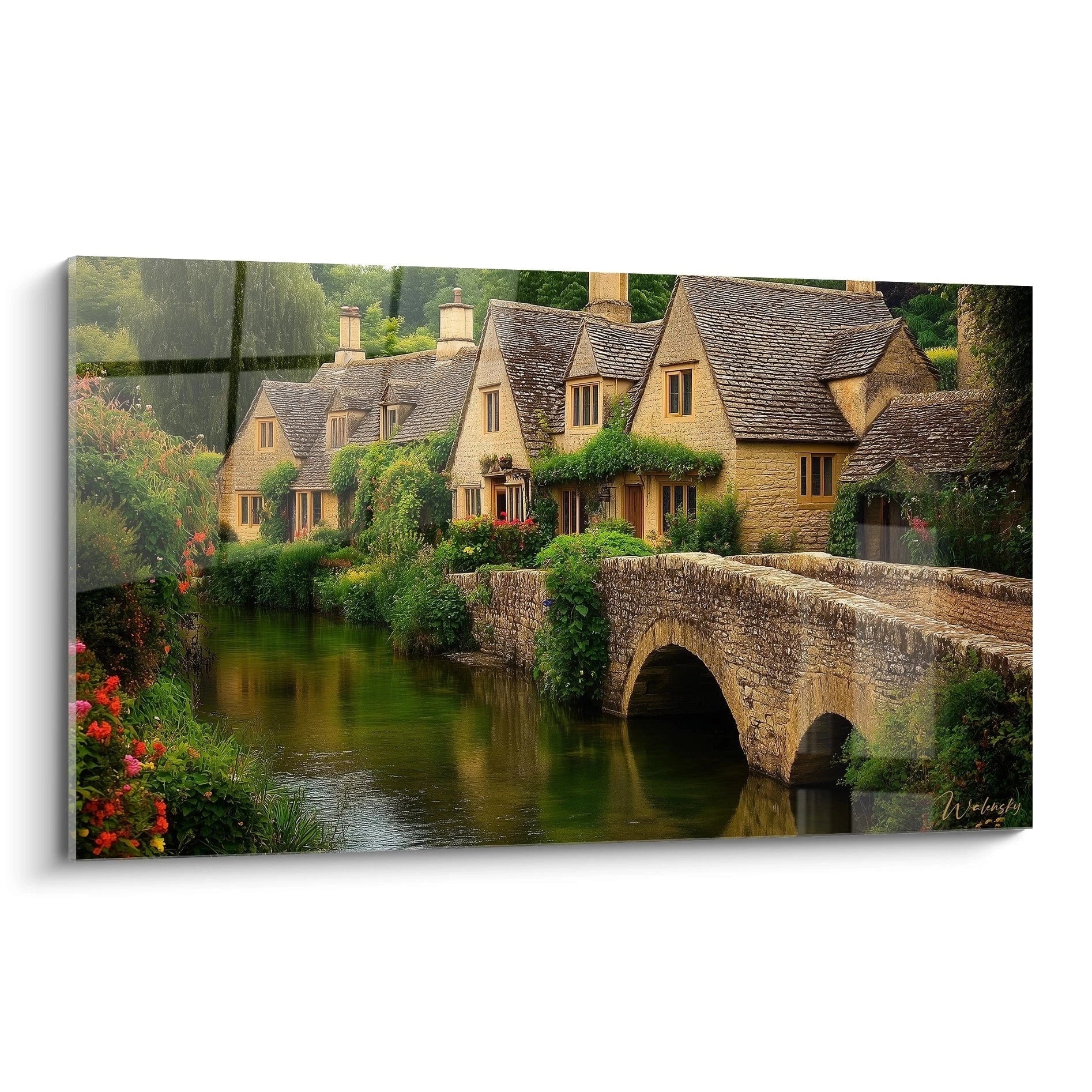
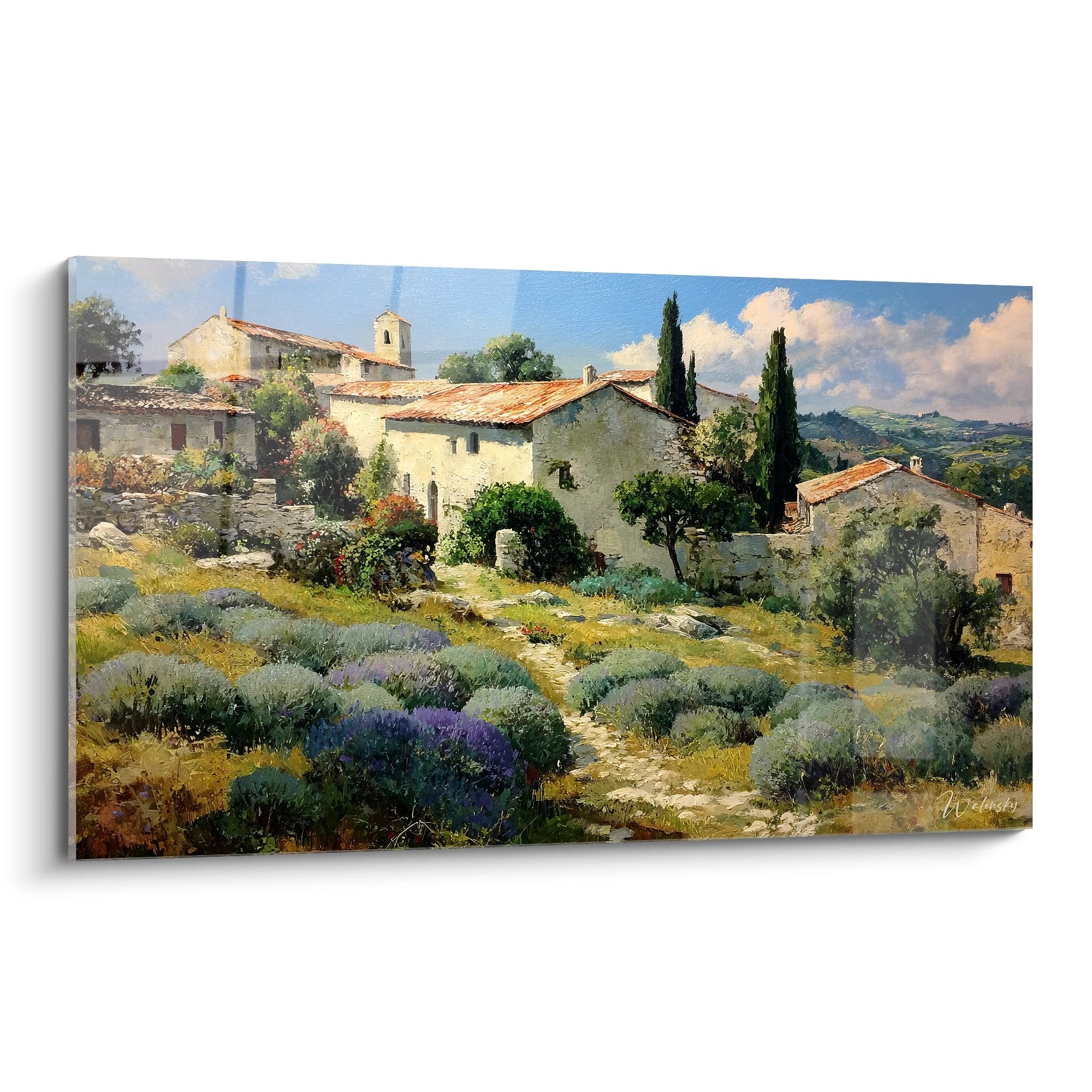
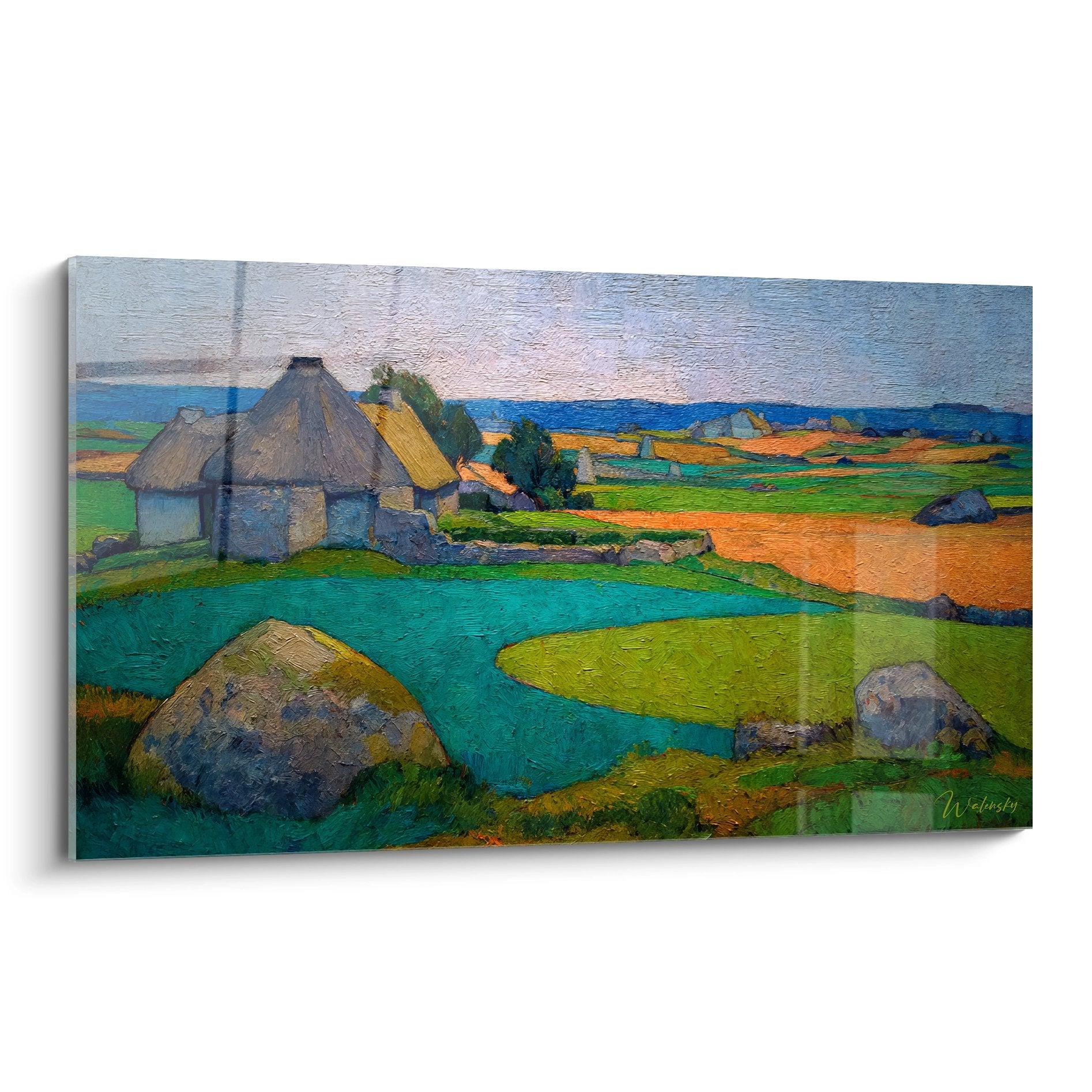
Rural landscape artwork represents an invitation to escape towards bucolic and pastoral scenery. These artistic works capture the essence of countryside scenes, rolling horizons, undulating wheat fields, and picturesque farms that characterize rural regions. Each rural landscape tells a unique story, evoking serenity, simplicity, and the timeless beauty of pastoral landscapes.
Rural landscape artworks distinguish themselves through their ability to instantly transport the observer away from urban agitation. They create a window into a world where time seems to slow down, where seasons dictate the rhythm of life, and where nature flourishes in all its splendor. These pictorial representations offer a precious visual escape from our often-hectic daily lives.
The charm of a countryside landscape artwork lies in its ability to evoke nostalgic and soothing emotions. Whether verdant meadows in spring, golden fields in summer, flamboyant forests in autumn, or snow-covered landscapes in winter, these works capture the soul of the countryside in its multiple seasonal facets.
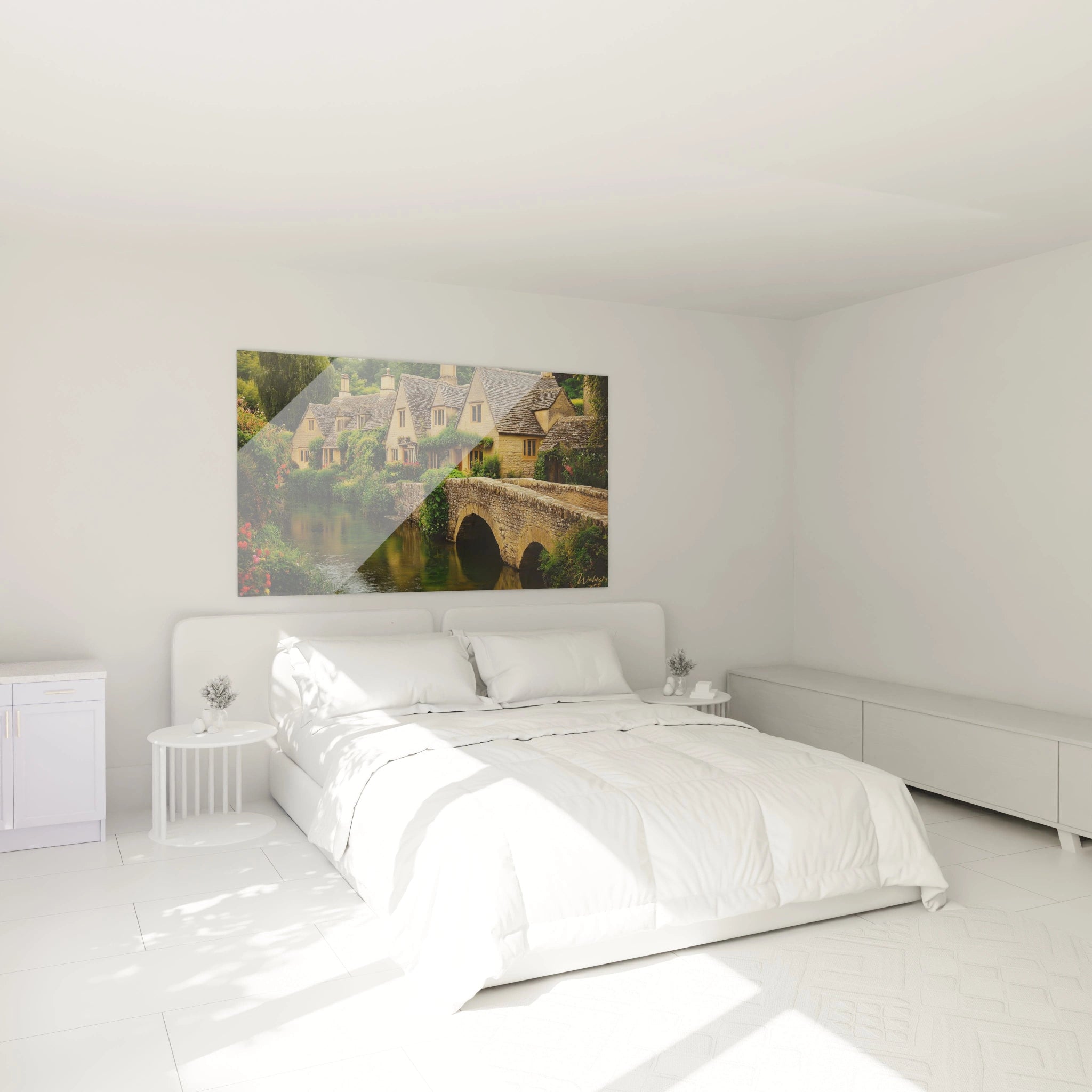
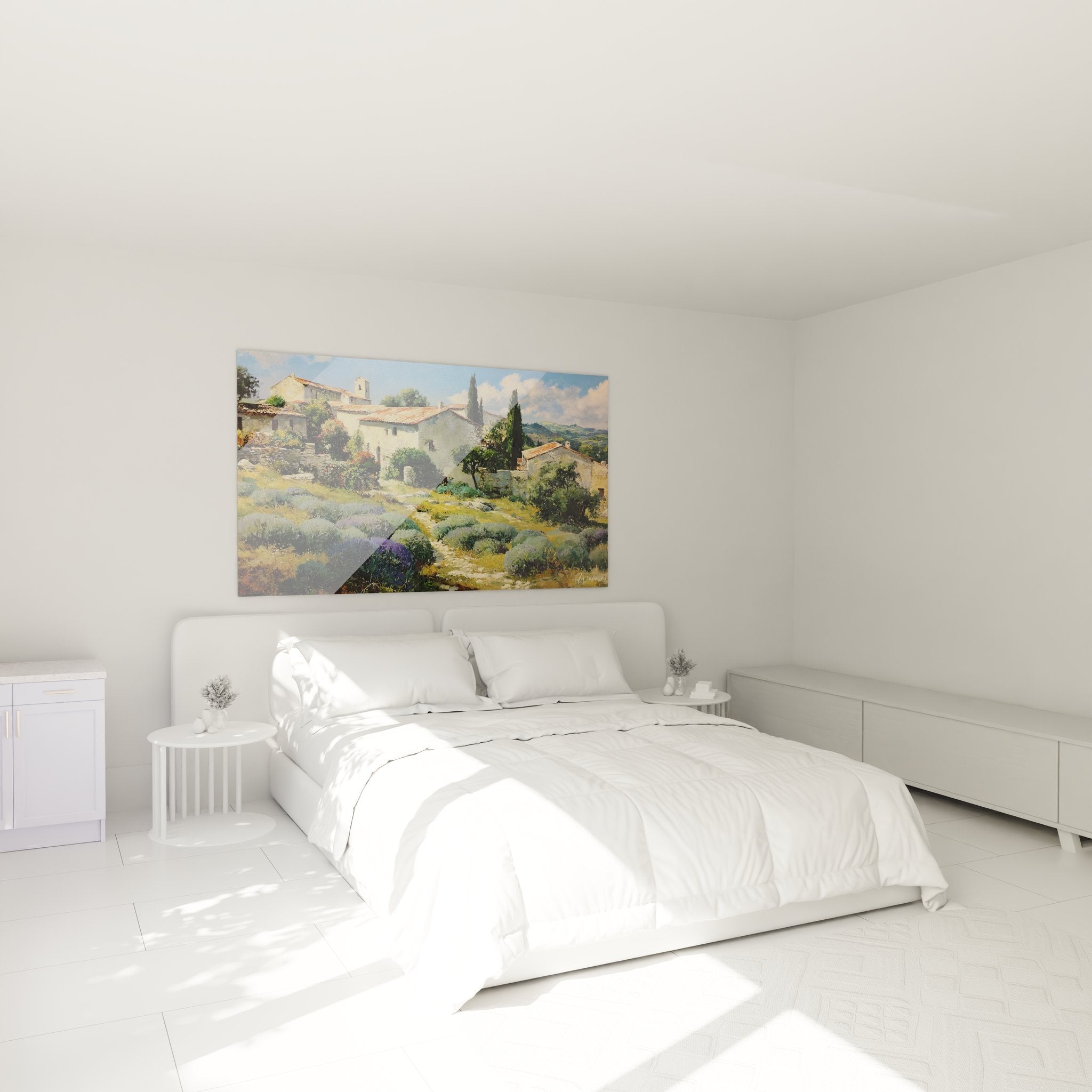
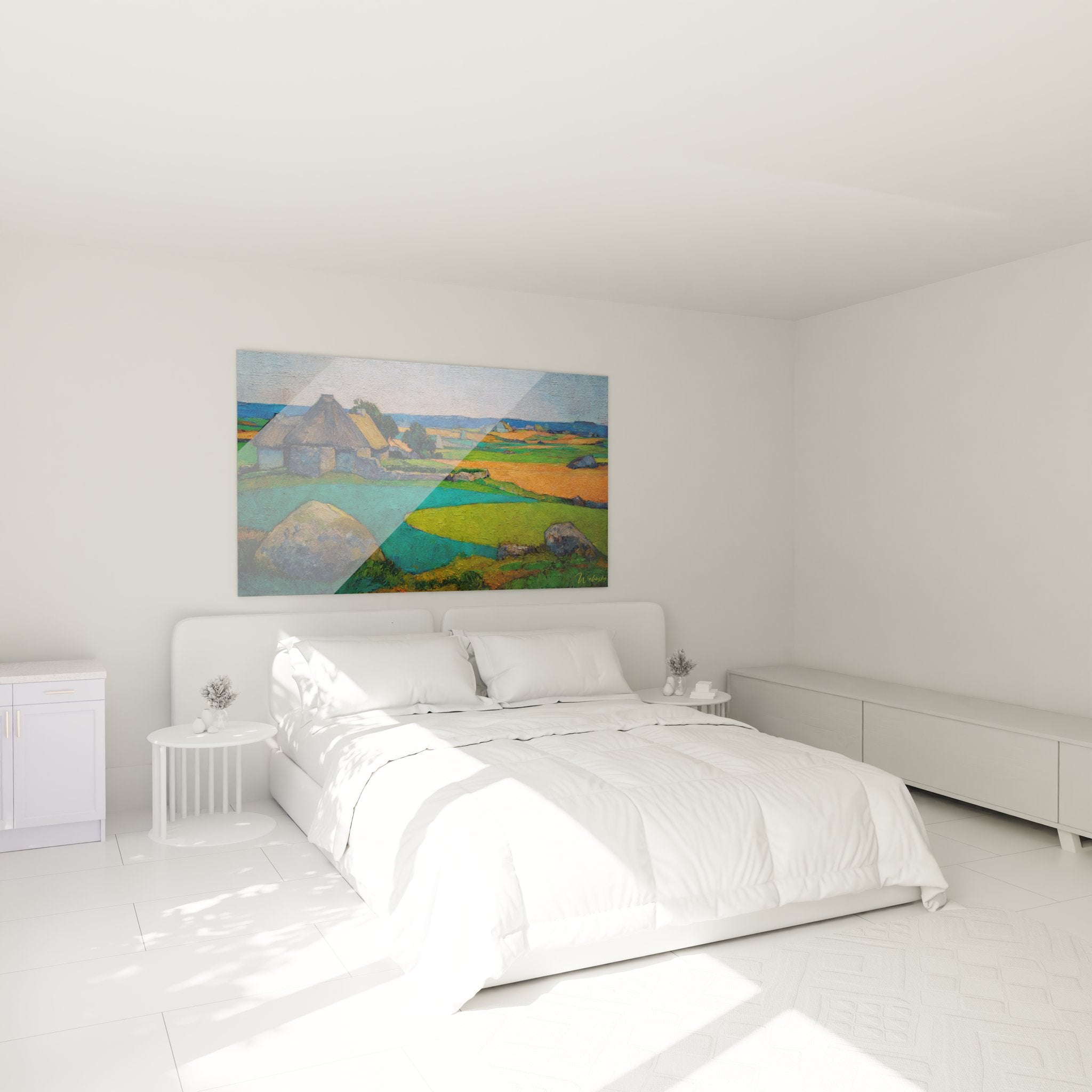
Large-scale rural landscape artworks create considerable visual impact in contemporary interiors, offering striking contrast with the clean lines of modern spaces. These masterpieces instantly transform a room's ambiance, bringing warmth and character to minimalist environments.
Explore our different sections to discover how to perfectly integrate a rural landscape into your décor, understand the artistic nuances that distinguish these works, and select the ideal piece that will resonate with your aesthetic sensibility and living space.
The Sensory Immersion of Rural Landscape Artwork: A Window into the Countryside
Rural landscape artwork is far more than simple visual representation - it is a genuine sensory immersion that instantly transports the observer to the heart of rural scenery. These pictorial works capture the unique atmosphere of countryside territories, evoking the subtle sensations one experiences in nature: the rustling of wheat ears in the breeze, the scent of freshly cut hay, and the enveloping warmth of summer sun.
What unique emotions does rural landscape artwork evoke compared to other landscape representations?
Rural landscape artwork fundamentally distinguishes itself from other landscape representations through its ability to evoke a sense of rural nostalgia and earthly authenticity. Unlike marine landscapes that stir feelings of vastness and freedom, or urban landscapes that reflect dynamism and modernity, rural landscapes awaken emotions deeply rooted in our collective memory: the simplicity of a lifestyle governed by seasons, connection with the nourishing earth, and a certain melancholy of times past.
Countryside scenes transcend eras, offering a timeless visual haven in our contemporary interiors. Their evocative power resides precisely in this suspended temporality, where daily haste gives way to contemplation of natural cycles. In a hyperconnected world, these rural pictorial representations respond to a growing need to reconnect with what truly matters.
Seasonal variations in rural landscape artwork
Rural landscape artworks transform through the seasons, each bringing its distinctive color palette and particular atmosphere. In spring, fresh and vibrant tones dominate, expressing renewal and the awakening of life. Summer unfolds brilliant yellows and deep greens, capturing the peak of field fertility. Autumn introduces a symphony of reds, oranges, and browns, conveying transition and harvest abundance. Winter, in turn, offers refined landscapes in delicate tones, where snow covers the furrows of plowed fields.
This seasonal diversity allows adapting a room's ambiance according to personal preferences or even evolving the atmosphere throughout the year. An artwork depicting golden fields under summer sun will bring warmth and luminosity to a northern-facing space, while a winter scene introduces freshness and serenity to a warm-toned interior.
- Spring artworks: perfect for work or creative spaces requiring dynamism and inspiration
- Summer scenes: ideal for visually warming north-facing rooms
- Autumn landscapes: complementary to interiors with warm woodwork and rustic furniture
- Winter visions: balance spaces with pronounced terracotta or ochre tones
The influence of daytime hours on depicted rural atmospheres
The magic of rural landscape artwork also resides in its ability to capture light variations throughout different times of day. Dawn scenes are bathed in pearlescent light, tinting rural landscapes with an almost mystical atmosphere. Midday representations reveal every detail with striking clarity under frank light. Late afternoon paintings benefit from the famous "golden hour" so prized by artists, where oblique sun rays magnify volumes and intensely warm colors. Finally, twilight scenes plunge countryside landscapes into a romantic ambiance with dramatic colorations.
This temporal dimension provides additional narrative depth to these works. Rural landscape artwork depicting the gentleness of dawn suggests beginning, hope, and renewal, while a sunset scene evokes contemplation, reflection, and fulfillment. These subtle nuances considerably influence the emotional impact the work will exert in a living space.
How does rural landscape artwork influence the perceived acoustics of a space?
A fascinating and rarely discussed phenomenon concerns the influence rural landscape artworks exert on the overall sensory perception of a space, including acoustically. Through a mechanism of synesthetic suggestion, these visual representations can subtly alter how we perceive the sound environment of a room. A vast countryside expanse will unconsciously suggest spatial amplitude that can attenuate the impression of echo in a large high-ceiling room.
Bucolic scenes also evoke soothing soundscapes - the gentle rustling of foliage, distant bird song, the discreet breath of wind - creating beneficial contrast with urban environments often saturated with aggressive auditory stimulation. This implicit acoustic dimension explains why rural landscape artworks are particularly appreciated in relaxation spaces, waiting areas, or bedrooms, where they contribute to an atmosphere of calm and serenity.
Large-format rural landscape artworks amplify this phenomenon, creating a genuine "sensory gateway" to expansive spaces. In stressful professional environments or urban dwellings, these monumental works can play a significant therapeutic role by constantly evoking the tranquility of natural landscapes.
Strategic Integration of Rural Landscape Artwork in Contemporary Spaces
Rural landscape artwork offers a unique visual respite in contemporary interiors by creating striking contrast between the organicity of rural scenery and the refined geometry of modern spaces. This deliberate juxtaposition between nature and architecture generates a particular aesthetic tension highly sought after by interior designers. Unlike abstract works that often extend architectural lines, rural landscape artwork introduces an element of visual rupture that immediately captures attention and becomes a room's focal point.
The transformative effect of rural landscape artwork on spatial perception
Large-format rural landscape artworks possess the remarkable ability to radically modify the spatial perception of an interior environment. Like "visual portals," these works create the illusion of an opening to the outside, visually enlarging restricted spaces. This characteristic becomes particularly valuable in urban apartments with limited dimensions, where installing a panoramic rural landscape can literally "push back the walls" and instill a sense of breathing space.
This transformation of spatial perception is explained by principles of atmospheric perspective typically present in countryside landscape representations. Subtle gradations toward the horizon, successive plane overlapping, and progressive detail reduction with distance create visual depth transcending the room's physical limits. A particularly notable phenomenon when the artwork is positioned facing a room's main entrance, creating an impression of escape from the first glance.
- Strategic positioning in narrow corridors to suggest space extension
- Installation in spaces without windows to simulate an opening to the outside
- Use as background in restricted spaces to visually increase depth
- Placement facing main seating areas to maximize daily exposure to the soothing effect
Which chromatic associations should be prioritized with rural landscape artwork?
Harmonious integration of rural landscape artwork in a contemporary space largely depends on chromatic associations established with surrounding elements. Unlike conventional decorative approaches often recommending extracting and repeating an artwork's dominant colors, rural landscape artworks benefit from a more subtle strategy based on complementary or analogous contrasts.
Countryside scenes with green and yellow dominants flourish particularly in environments with neutral tones (stone grey, off-white, beige) that provide an understated setting allowing vegetation nuances to shine. For landscapes with warmer tonalities (golden fields, sunsets), washed blues and blue-greys in the environment create striking chromatic dialogue that amplifies the artwork's visual impact while maintaining a serene atmosphere.
Rural landscape artworks with misty atmospheres or winter scenes find their full expression when surrounded by warm materials such as dark wood, aged leather, or textiles with pronounced textures. This juxtaposition between the artwork's visual freshness and the environment's tactile warmth creates a complex sensory experience particularly sought after in contemporary design.
Strategic orientation of rural landscape artwork according to natural lighting
The relationship between rural landscape artwork and natural light constitutes a determining element in its successful integration. Unlike contemporary works often designed for controlled artificial lighting, countryside landscape representations maintain a particular dialogue with daylight, evolving subtly throughout hours and seasons.
Rural landscape artwork with soft tones and misty atmospheres will find full expression in spaces benefiting from indirect north light, which will preserve its delicate nuances without creating disturbing reflections. Conversely, scenes with marked contrasts and vibrant colors will reveal full intensity under more direct east or west light, particularly during morning and evening "golden hours."
For spaces enjoying strong midday brightness, prioritize rural landscape artworks depicting shaded subjects (wooded areas, tree-lined paths) that will establish refreshing visual counterpoint. In professional environments with dominant artificial lighting, opt for representations with pronounced contrasts that will maintain visual impact even under less nuanced lighting.
Rural landscape artworks as seasonal atmosphere regulators
Beyond their intrinsic aesthetic qualities, rural landscape artworks can play a surprising functional role in psychological regulation of interior atmospheres throughout the seasons. In regions with long dark winters, strategic installation of luminous summer representations allows counterbalancing the psychological impact of shortened days and maintaining visual connection with nature's vitality.
Conversely, in very hot climates or particularly mineral urban environments, rural landscape artworks with cool atmospheres (morning mists, shaded wooded areas) bring welcome visual sensation of freshness. This psycho-environmental dimension explains why numerous professional spaces now integrate these works in their design strategies aimed at occupant wellbeing.
Large-format rural landscape artworks considerably amplify these regulatory effects, creating genuine "visual microclimate zones" in interior spaces. This unique ability to modify the sensory perception of an environment gives these works a value far transcending their simple decorative dimension, transforming them into architectural elements actively participating in quality of life in contemporary spaces.
The Monumental Impact of Large-Format Rural Landscape Artwork in Architectural Spaces
Large-format rural landscape artworks constitute far more than mere decorative elements - they become genuine architectural interventions capable of radically transforming the perception and experience of a space. Unlike standard-dimension works that adapt to their environment, these monumental formats impose their presence and redefine the very identity of the place receiving them. In the specific context of rural representations, this monumentality creates striking paradox: the contemplative intimacy of the countryside unfolds at a scale rivaling the built environment.
How do large formats modify the perception of rural scenes?
The shift to monumental scale profoundly transforms our relationship with countryside scenes. Details that would pass unnoticed in a conventional format gain new importance, revealing the textural richness of rural representations: the precise undulations of cultivated fields, the complex structure of threatening clouds, or the botanical diversity of wild meadows suddenly become perceptible with unprecedented acuity.
This amplification extends beyond purely visual aspects to experiential dimension. A large-format rural landscape artwork is no longer contemplated in a single glance - it requires visual scanning, physical displacement, sequential exploration akin to the actual experience of wandering through a landscape. The observer is no longer facing a representation but finds themselves literally immersed in a spatial experience transcending traditional boundaries between pictorial art and installation.
- Horizontal panoramic formats (ratio exceeding 2:1) to simulate the extended horizon of open rural landscapes
- Monumental vertical compositions to capture the majesty of agricultural structures or elevation of cloud formations
- Oversized square formats to create balanced "windows" into depicted countryside scenes
- Triptychs or polyptychs to introduce sequential narrative into landscape experience
Acoustics transformed by large rural landscape artworks
A rarely mentioned yet fundamental aspect concerns the influence of monumental rural landscape artworks on space acoustics. Through their significant surface area, these works considerably modify the sound reflection properties of their supporting walls. In environments with hard, reflective surfaces (concrete, glass, metal), the introduction of a large rural landscape artwork with complex visual textures helps reduce excessive reverberation and create a more muffled sound atmosphere.
This acoustic modulation accompanies a fascinating psycho-acoustic phenomenon: the visual representation of open natural spaces subtly influences our perception of surrounding environmental sounds. Neuroscience research demonstrates that our brain integrates visual information to "color" our auditory experience - thus, facing an immense artwork depicting open fields, we unconsciously perceive the sound environment as more spacious and less confined, even in objectively restricted spaces.
In large architectural volumes (entrance halls, reception areas, atriums), this property makes monumental rural landscape artworks valuable tools for humanizing the sometimes-intimidating scale of these spaces, creating sensory decompression zones that counterbalance the often-problematic acoustics of contemporary architecture.
Specific lighting challenges for large-format rural artworks
Adequate illumination of a monumental rural landscape artwork presents particular technical challenges that fundamentally distinguish it from other large-format representation types. The chromatic richness of countryside scenes, characterized by deep greens, subtle ochres, and atmospheric blues, requires exceptionally high color rendering index (CRI) that only certain specialized lighting systems can guarantee.
The narrative dimension of rural landscapes, with successive planes extending from detailed foreground to distant horizon, requires perfectly homogeneous light distribution across the entire surface, otherwise certain compositional elements risk losing lisibility. This requirement often imposes multiple coordinated lighting solutions rather than a single source, particularly for formats exceeding two meters in width.
Seasonal and temporal variations often represented in rural landscape artworks (morning mists, golden sunset light, winter atmospheres) ideally require lighting systems with adjustable color temperature. This technology enables subtle adaptation of the luminous ambiance to reinforce the original chromatic intentions of the work according to daytime moments or seasons, extending the dialogue between actual space and represented space.
Integration of monumental rural landscape artworks in contemporary architecture
Contemporary architecture, characterized by refined volumes and industrial materials, offers a paradoxically ideal setting for large-format rural landscape artworks. This deliberate contrast between architectural geometry and the organicity of rural representations creates dynamic visual tension amplifying the impact of both elements. Spaces with raw concrete walls, mineral resin floors, or exposed metal structures constitute a perfect counterpoint to the lush vegetation and atmospheric softness of countryside scenes.
In contemporary professional spaces (corporate headquarters, coworking areas, healthcare facilities), strategic installation of monumental rural landscape artworks also responds to wellbeing and productivity concerns. Environmental psychology research demonstrates that regular exposure to nature representations, even virtual ones, significantly reduces stress levels and improves concentration capacity, particularly in dense urban environments where access to natural spaces is limited.
FAQ about rural landscape artwork
What is the ideal dimension for rural landscape artwork in a large living room?
For a spacious living room, prioritize rural landscape artwork whose width represents at least 50% of the wall's width to create significant visual impact. For a space with high ceilings (exceeding 2.70m), opt for a vertical or square format of at least 120cm per side that will balance room proportions while offering optimal immersion into the depicted rural landscape.
How should one properly maintain a large-format rural landscape artwork?
Large-format rural landscape artworks require specific maintenance to preserve their brilliance. Regularly dust the surface with a soft-bristled feather duster while avoiding all contact with liquid products. Protect the work from direct UV ray exposure that could alter the subtle nuances of greens and blues characteristic of rural landscapes. For monumental formats, biannual inspection of mounting systems is recommended.
Are rural landscape artworks suitable for professional spaces?
Rural landscape artworks constitute particularly relevant choices for contemporary professional environments. Their expansive scenery representations effectively counterbalance potential feelings of confinement in work spaces, while their natural color palettes promote concentration and creativity. In meeting rooms or reception areas, panoramic formats create striking focal points subtly reflecting modern enterprises' authenticity and openness values.