


Ancestral Lands Black and White Wall Art
The Painting Terres d'avant Black and White transports you on a visual journey where primal essence meets the elegance of monochrome. This collection celebrates the origins of our world through purified compositions with striking black and white contrasts. Each work evokes the raw beauty of ancestral landscapes, capturing the soul of primitive lands in wall art. A timeless tribute to the strength of nature and the majestic simplicity of the past, perfect for enhancing your spaces with character and depth.
 Woolly Mammoth Canvas - Prehistoric Majesty - Woolly Mammoth Edition273,90 €
 Black and White Woolly Mammoth Painting - Prehistoric Majesty - Woolly Mammoth Edition273,90 €
 Indricotherium Portrait Wall Art - Equestrian Elegance - Indricotherium Edition273,90 €
 Dunkleosteus Black and White Wall Art - Prehistoric Predator - Dunkleosteus Edition273,90 €
 Prehistoric Bird Wall Art - Piercing Gaze - Argentavis Edition228,90 €
 Three Raptors Dinosaur Painting - Captivating Portrait - Dinosaur Edition273,90 €
 Diplodocus Canvas in Black and White - Giants of the Jurassic - Dinosaur Edition273,90 €
Explore further
In Ancestral Lands Black and White Wall Art
-
 Ancient Lands Canvas150
artworks
Ancient Lands Canvas150
artworks
-
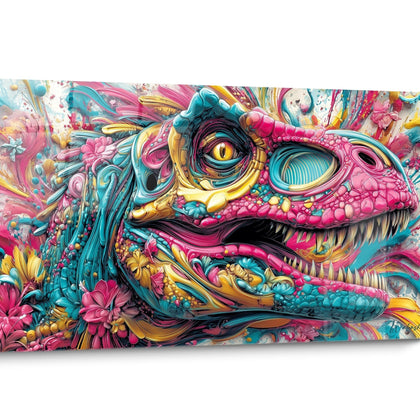 Ancient Lands Pop Art Canvas4
artworks
Ancient Lands Pop Art Canvas4
artworks
-
 Ancient Lands Golden Artwork18
artworks
Ancient Lands Golden Artwork18
artworks
-
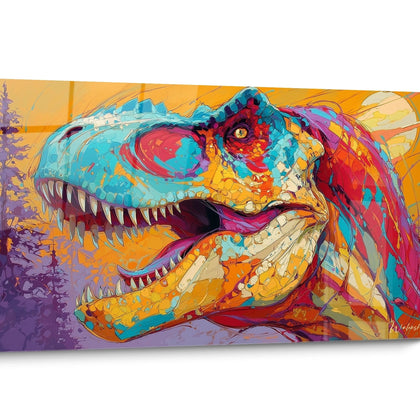 Primordial Lands Expressionist Artwork8
artworks
Primordial Lands Expressionist Artwork8
artworks
-
 Ancestral Lands Mosaic Wall Art11
artworks
Ancestral Lands Mosaic Wall Art11
artworks
-
 Ancient Lands Abstract Wall Art12
artworks
Ancient Lands Abstract Wall Art12
artworks
-
 Ancestral Lands Colorful Wall Art23
artworks
Ancestral Lands Colorful Wall Art23
artworks
-
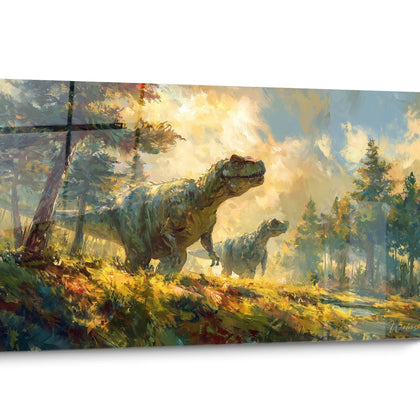 Primordial Lands Realistic Wall Art17
artworks
Primordial Lands Realistic Wall Art17
artworks
-
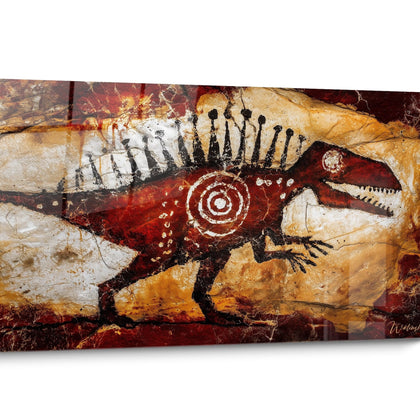 Prehistoric Rock Art Canvas - Ancient Lands7
artworks
Prehistoric Rock Art Canvas - Ancient Lands7
artworks
-
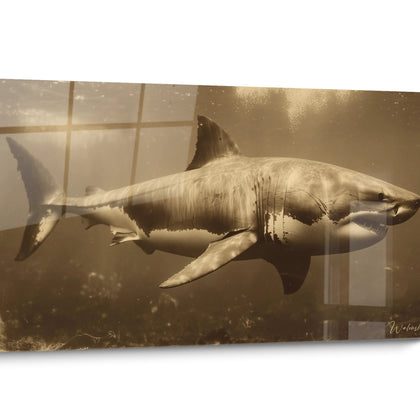 Vintage Lands of Yesterday Canvas8
artworks
Vintage Lands of Yesterday Canvas8
artworks


All about Ancestral Lands Black and White Wall Art
- Presentation Lands of Yore Black and White Wall Art
- Monochrome Aesthetics
- Decorative Impact
- Styles and Applications
Explore the fascinating universe of Lands of Yore wall panels in black and white, an exclusive collection that revisits ancestral landscapes through a refined monochromatic prism. These large-scale wall creations capture the raw essence of forgotten territories by eliminating chromatic distraction to reveal pure structure, primordial textures, and dramatic contrasts. Unlike their color counterparts, this monochrome range intensifies the geological and mineral aspects of the compositions, offering timeless sophistication suited to demanding contemporary interiors. Each model explores antediluvian rock formations, tectonic stratifications, and primary reliefs through an exclusive dialogue between deep shadows and brilliant lights.
The Power of Monochrome in Ancestral Geological Imagery
The Lands of Yore black and white wall panel transcends simple chromatic representation to reveal an unsuspected architectural dimension of primitive landscapes. The absence of color amplifies topographic contrasts, transforming each geological stratum into a graphic line, each erosion into sculptural shadow play. This minimalist approach magnifies volcanic textures, tectonic faults, and millennial sedimentations with an intensity that polychrome cannot achieve.
Why choose monochromatic representation for antediluvian landscapes?
Primordial terrestrial formations gain clarity when freed from color interpretations. Black and white elevates stratified structures, crystalline fractures, and mineral accumulations by revealing their fundamental geometry. This chromatic refinement works perfectly for large wall spaces where visual complexity must balance with decorative sophistication, creating a focal point without sensory saturation.
The interaction between natural light and large-scale monochromatic surfaces
Large-format monochromatic wall panels capture and reflect ambient light differently throughout the day. Anthracite zones absorb morning light while pearl gray areas reflect overhead illumination, creating an evolving visual dynamic. This particular photometric sensitivity transforms the panel into a decorative sundial, subtly altering its appearance over the course of the day in residential or professional spaces.
Gray tones as markers of geological depth
Contrary to popular belief, a monochromatic palette offers exceptional tonal richness. From deep charcoal to silver ash, each gray shade maps a distinct geological epoch, specific mineral composition, or particular rock density. This tonal graduation creates a three-dimensional relief sensation on large-scale wall surfaces, inviting the eye to explore fictional depths and atmospheric perspectives, comparable to landscapes captured by nineteenth-century geological photography.
For those who also appreciate non-figurative compositions within this restricted chromatic range, the Lands of Yore Abstract collection offers more conceptual interpretations of the same primordial themes.
Architectural Integration of Monochromatic Primitive Landscapes
How does black and white harmonize with contemporary materials?
The Lands of Yore black and white wall panel establishes a natural dialogue with modern raw materials: polished concrete, brushed steel, limestone, or limed wood finishes. This material compatibility transforms the wall artwork into an architectural extension rather than simple applied decoration. Large formats amplify this integration effect, particularly in industrial lofts, minimalist Scandinavian spaces, or brutalist interiors where material authenticity takes precedence over ornamentation.
Visual balance in refined spaces with neutral tones
Contemporary monochromatic interiors require visual anchor points sufficiently powerful without disrupting tonal harmony. These geological representations in black and white fulfill this precise function: their textural complexity provides necessary density while their restricted palette maintains chromatic coherence. In minimalist living rooms or premium professional spaces, this type of wall composition creates an affirmed presence without disrupting the overall decorative scheme.
Visual stratification as echo to architectural volumes
Sedimentary formations and geological strata represented in monochrome resonate with contemporary architecture's horizontal lines: exposed beams, suspended shelving, dropped ceiling cutouts. This formal correspondence between the panel's stratigraphic lines and the space's structural elements creates sophisticated visual coherence, particularly valued in premium design projects where each decorative element must justify its presence through its contribution to the whole.
The role of pronounced contrasts in defining spatial zones
Marked oppositions between deep blacks and brilliant whites function as subtle visual delimiters in open spaces. A large-scale monochromatic wall panel can signal the transition between reception and private areas, or mark the focal point of an open-plan living-dining room. This decorative zoning function proves particularly relevant in residential open-space configurations or contemporary offices where physical separations are minimized in favor of spatial fluidity.
Stylistic Expressions and Acquisition Contexts
Graphic variations within the monochromatic palette
The Lands of Yore black and white collection features several visual approaches: some compositions favor bold flat areas and sharp demarcations for a contemporary graphic effect, while others exploit subtle gradients and misty transitions evoking volcanic atmospheres or tectonic mists. This stylistic diversity allows adaptation to the specific character of each environment, whether radically minimalist or subtly nuanced.
Which spaces particularly benefit from these large-format monochromatic compositions?
Imposing entrance halls, corporate reception areas, double-height living rooms, and spacious master bedrooms constitute ideal contexts. The monumentality of monochromatic geological landscapes requires sufficient visual distance and uncluttered wall surface to fully reveal their impact. Premium medical practices, hotel reception areas, and architect-designed residences particularly seek this type of masterpiece capable of asserting strong visual identity without chromatic aggression.
Perceptual evolution according to ambient lighting
Unlike color compositions whose appearance remains relatively stable, monochromatic artworks demonstrate remarkable sensitivity to lighting variations. Raking lateral illumination reveals subtle nuances and accentuates the impression of relief, while diffuse frontal light uniformizes tones and softens contrasts. This perceptual versatility makes the monochromatic primitive landscape panel a particularly valuable acquisition for collectors sensitive to daily visual metamorphoses.
Selection criteria for informed acquisition
Acquiring a large-format monochromatic piece requires evaluating several parameters: the proportion between dark and light zones (balanced or contrasted), the presence of textural details visually exploitable at distance, and tonal compatibility with fixed space elements (woodwork, wall coverings). Discerning buyers prioritize compositions whose complexity justifies the large format, avoiding overly simple motifs that would lose impact once deployed across several square meters of wall surface.
Why does the Lands of Yore black and white panel suit demanding contemporary interiors?
Its restricted palette facilitates integration into sophisticated decorative schemes while providing the visual density necessary for large wall spaces, without risk of chromatic discord with future furniture or accessory evolution.
How do monochromatic geological landscapes influence a room's atmosphere?
They establish a contemplative and timeless ambiance, visually slowing space through their reference to geological timescales, which advantageously contrasts with the agitation of contemporary urban environments.
Can multiple Lands of Yore black and white panels be combined in the same space?
Diptych or triptych compositions amplify the panoramic effect and monumentality, provided that tonal and thematic continuity is maintained between the different panels, thereby creating a contemporary geological fresco particularly suited to longitudinal walls of reception areas.
Further reading


