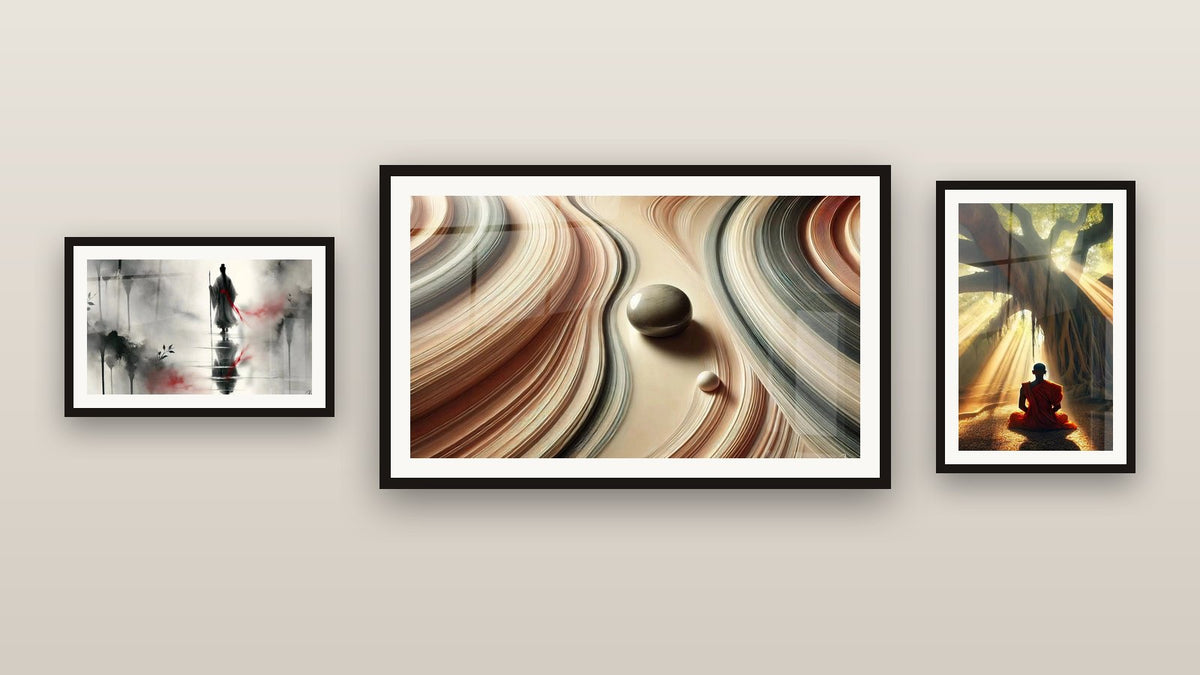
Why do Zen masters use artworks to guide their students?
11 October 2025 · 2 min read · by Walensky
The gaze directed at a Zen artwork is not limited to aesthetic observation. Every detail, every brushstroke and every empty space has a profound meaning, inviting total immersion in the present moment. This approach favors a Zen mind, allowing the viewer to detach from parasitic thoughts and reach a state of serenity.
In monasteries, it is not uncommon to find spiritual artworks depicting misty landscapes, inspiring calligraphy or nature scenes. These images are not mere illustrations; they are meditation supports that facilitate inner connection.
Works full of wisdom and positive energy
Some Buddha artworks are specifically designed to raise the level of consciousness and diffuse positive energy into the environment where they are placed. They embody the wisdom and compassion of the Buddha, inviting contemplation and introspection.
Natural elements such as water, wind or mountains are often depicted in meditative paintings, reinforcing the link between man and nature. These compositions bring a soothing atmosphere, conducive to relaxation and letting go.

The present moment captured in Zen art
In Zen tradition, creating a energetic artwork is itself an act of meditation. The artist, fully aware, lets their brush follow the momentum of the moment, without seeking to control the final result. This spontaneity is essential: it translates the authenticity of the gesture and captures the very essence of the present.
A Zen wall art, whether it is a flowing calligraphy or a minimalist landscape, invites contemplation and promotes a state of spiritual awakening. Disciples of Zen use these artworks as portals to a deeper understanding of the world, thus going beyond simple aesthetic appreciation.
A visual teaching beyond words
Zen masters know this well: some truths cannot be grasped by the intellect. A relaxation artwork then becomes a silent guide, a mute master who teaches without words. The student, by gazing at a relaxing canvas, does not seek to "understand" in the classic sense of the term, but to feel and experience.
This immersion in a meditation image allows one to reach a state of serenity where inner harmony reveals itself. A serenity poster, placed in a space dedicated to contemplation, becomes a point of anchorage to return to oneself and reconnect with one's deep self.
In this silent transmission, each artwork becomes an invitation to inner travel, a mirror reflecting the true nature of the one who contemplates it. The meditation painting, with its evocative power, continues to be an essential tool in the quest for mindfulness and well-being.
— Our selection


Explore our collections