When faced with an authentic zen artwork, something strange happens. Our Western eye, accustomed to symmetrical and balanced compositions, initially feels a slight tension. A bamboo leaning to the left side, a deliberately unfinished ensō circle, three stones arranged seemingly randomly... Yet, this imperfection creates a profound harmony that instantly soothes the mind.
Here's what asymmetry in zen artworks brings: it awakens active contemplation rather than passive observation, it reflects the natural imperfection of living things, and it creates space for your imagination to complete the work. Far from being random, this asymmetry is the heart of zen aesthetics.
You admire these minimalist compositions in decorating magazines, you dream of bringing that serenity into your home, but one question plagues you: why do these artworks always seem « off-center »? Is it a defect? A misunderstanding on the part of Western artists who imitate them?
Rest assured: this apparent asymmetry hides a rare and ancient philosophy. Understanding this principle is accessing a new way of seeing art, but also of inhabiting your space. In the next few minutes, you will discover why zen masters deliberately broke with perfect symmetry, and how this choice radically transforms your perception of harmony.
Zen asymmetry: a radical rejection of artificial perfection
In my daily practice of composition, I have observed a fascinating paradox: the most soothing zen artworks are those that violate all classic rules of balance. Where Western art seeks perfect symmetry as an ideal of beauty, zen aesthetics deliberately embraces asymmetry as a fundamental principle.
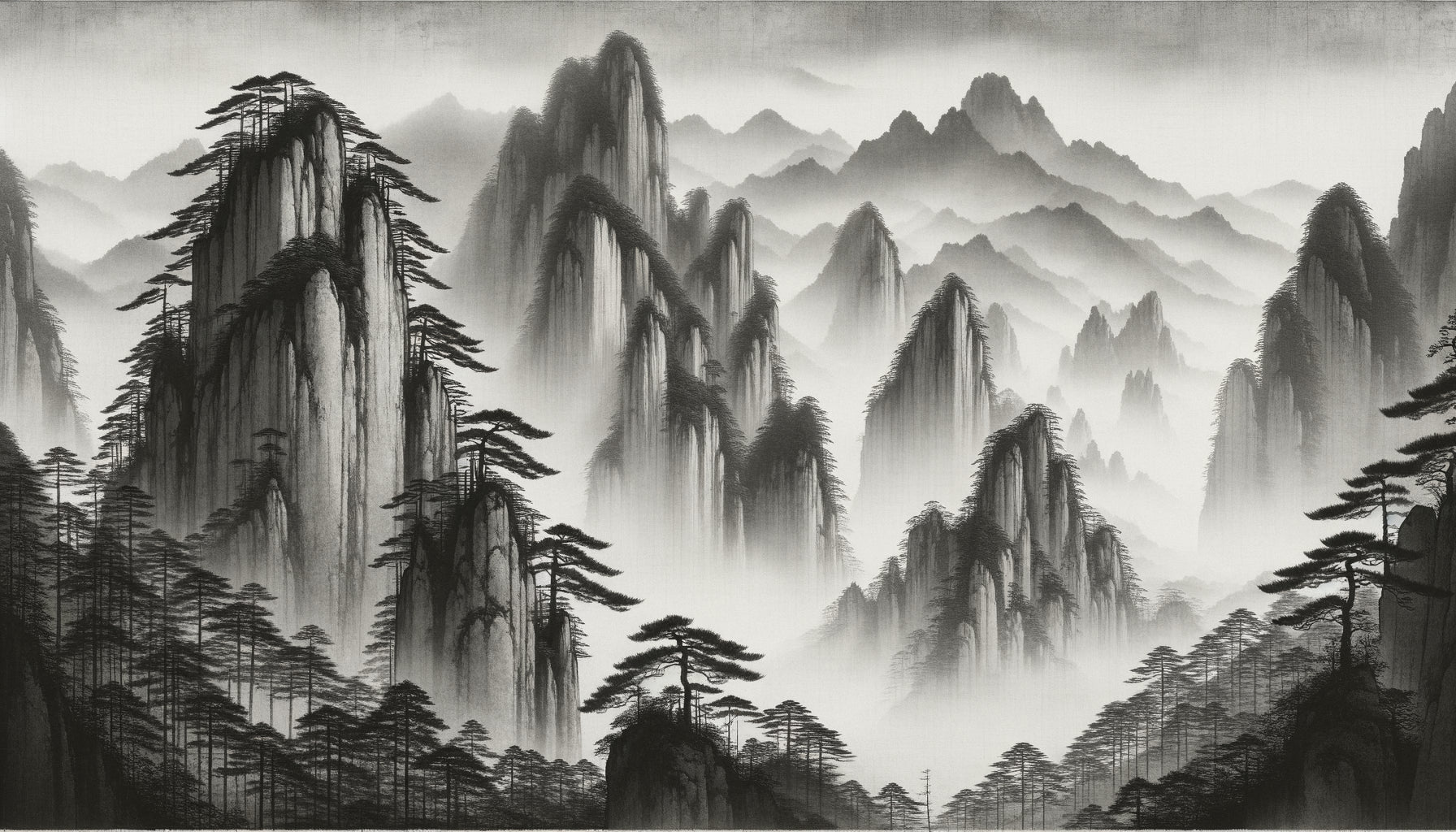
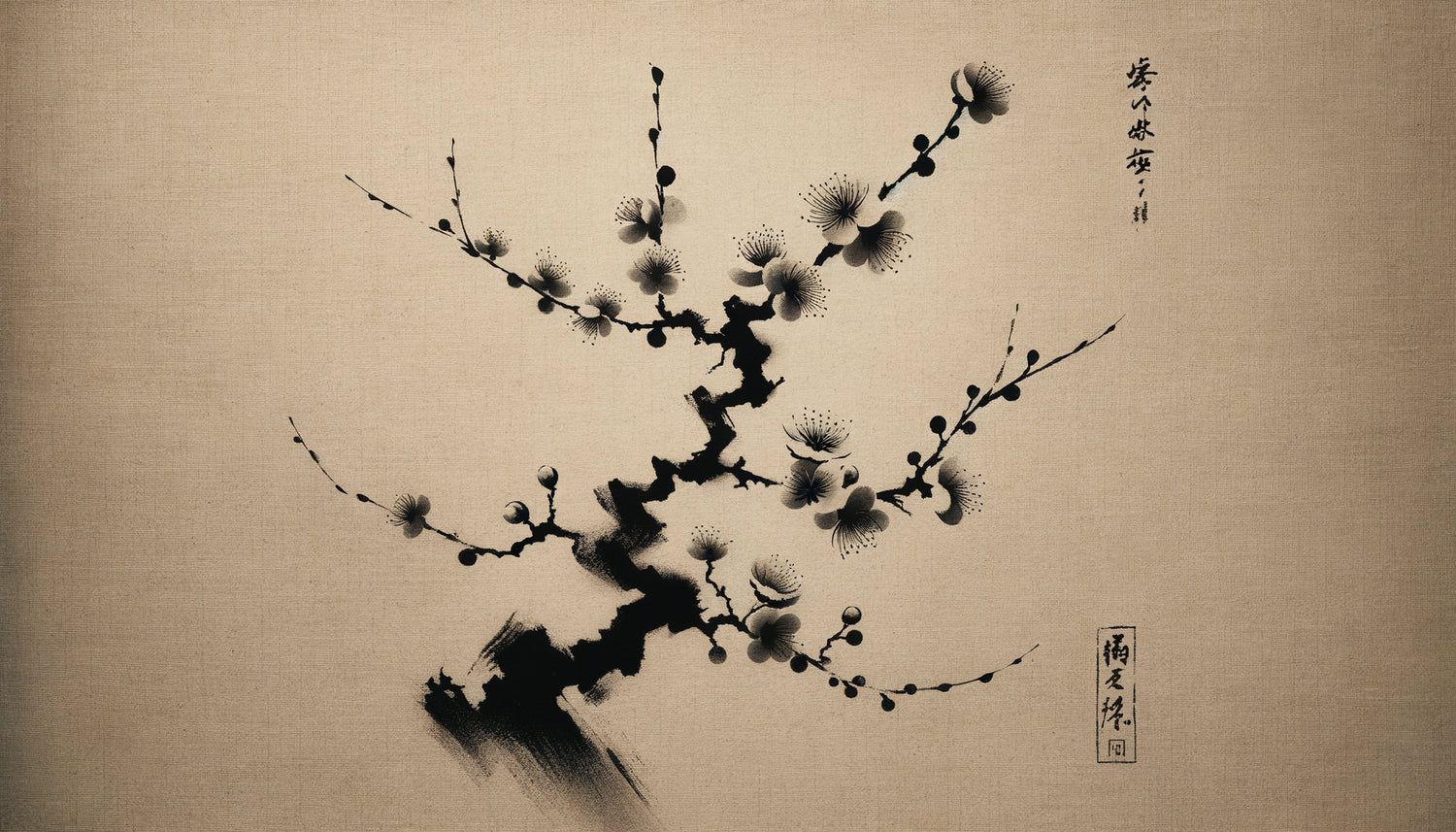
This approach finds its roots in wabi-sabi philosophy, which celebrates imperfection, impermanence and incompleteness. An authentic zen artwork is never centered, never obviously balanced. A cherry branch stretches to the right, leaving two thirds of the space empty. A mountain emerges from the fog, resolutely positioned on one side of the composition.
Why this radical choice? Because nature itself is asymmetrical. No tree grows perfectly straight, no stone is identical to its neighbor, no wave exactly reproduces the previous one. Zen artworks imitate this organic truth, thus creating a profound resonance with our intuitive perception of the natural world.
Ma: empty space as a central element of composition
If you examine a zen artwork carefully, you will notice that what is not painted occupies as much importance as what is. This Japanese concept, called ma, refers to the negative space, the fertile void that allows the eye to breathe and the mind to wander.
In a zen, asymmetrical composition, this empty space is never placed predictably. It can invade the upper half of the canvas, creating a sense of celestial infinity. It can border a single element on the left, suggesting the immensity of an off-screen landscape. This asymmetry of space creates an invisible movement, an energetic flow that naturally guides your gaze.
Unlike a symmetrical composition which freezes the eye in the center, zen asymmetry invites it to travel. Your attention rests on the solitary bamboo, glides towards the immense void surrounding it, returns to explore the details of the ink, then escapes again. This contemplative dance is precisely the desired effect: to keep the mind in a state of relaxed alertness.
The rule of thirds revisited by oriental sensitivity
Photographers know the rule of thirds, this compositional principle that divides the image into nine equal sections. Zen aesthetics uses a similar but more intuitive, more organic approach. Elements are rarely placed at exact intersections, but rather in areas that create dynamic tension.
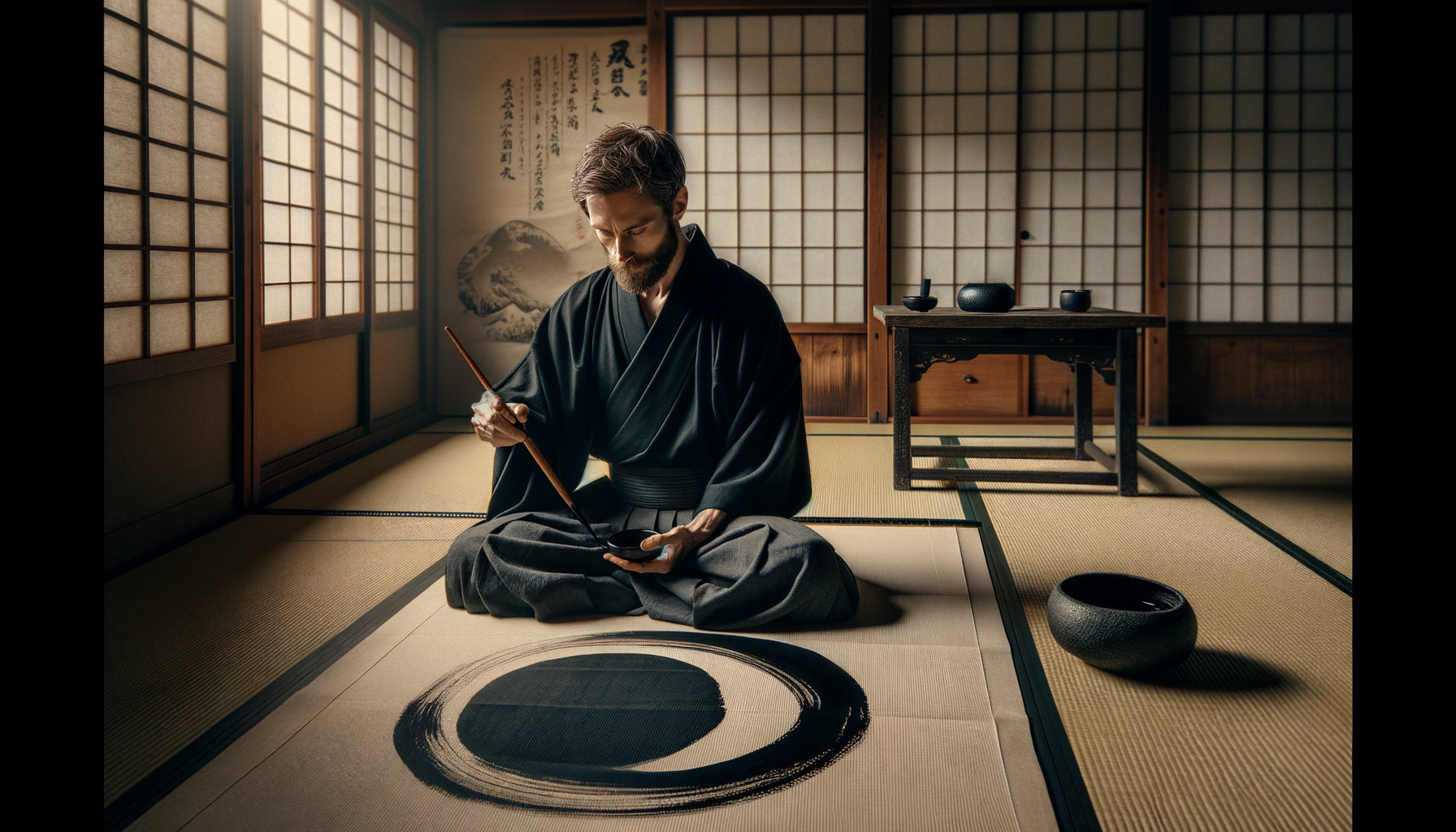
A circle ensō can float in the upper right third, slightly off-center. Three rocks can form an irregular triangle, with unequal spacing. This calculated irregularity prevents the eye from resting in a predictable comfort zone, while maintaining a global harmony that soothes.

Odd numbers and unbalanced arrangements: the mathematics of imperfection
You have probably noticed that zen wall art favors odd numbers. Three bamboos rather than four, five stones rather than six, seven plum branches rather than eight. This preference is not accidental: it naturally reinforces the asymmetry of the composition.
An even number of elements instinctively invites the creation of pairs, symmetries. With an odd number, it is impossible to divide the space equally. There is always one element that breaks the balance, creating this characteristic visual tension of zen art. Three stones form an irregular triangle, five brushstrokes create a syncopated rhythm, seven lotus flowers compose an asymmetrical constellation.
This approach extends to the arrangement of the elements themselves. In an authentic zen composition, spacing is deliberately unequal. The first and second bamboo can be close together, while the third moves significantly further away. This rhythmic irregularity imitates natural patterns and avoids the monotony of regular repetitions.
When Asymmetry Becomes Meditation: The Psychological Effect of Imperfection
Here's the most fascinating aspect of asymmetry in zen paintings: its direct impact on your mental state. Faced with a perfectly symmetrical composition, your brain relaxes too quickly. It categorizes, understands, and then moves on. Symmetry reassures but doesn’t engage.
Zen asymmetry, on the other hand, keeps your mind in a gentle state of attention. Your brain instinctively seeks balance, but does not find it in conventional form. It must then adapt, accept this imperfection as a new form of harmony. This subtle cognitive process is precisely what induces a meditative state.
I've observed this phenomenon among my clients: an asymmetrical zen painting in a room naturally becomes a visual anchor point. Unlike a symmetrical work that blends into the background, asymmetry creates a living presence, a silent conversation with the surrounding space.
Voluntary Incompleteness: Letting the Imagination Complete the Work
A fundamental principle of zen aesthetics is to never show everything. An enso circle remains open, a mountain disappears into mist, a bamboo stalk emerges from the frame. This asymmetrical incompleteness transforms the viewer into a co-creator: your imagination naturally completes what is missing.
It's perhaps the most subtle form of asymmetry: the imbalance between what is shown and what is suggested. A small element painted in a corner evokes an entire landscape off-screen. Three quick brushstrokes suggest a flight of birds continuing beyond the canvas. This economy of means creates an asymmetrical dynamic between presence and absence.

How to Integrate Zen Asymmetry into Your Living Space
Understanding the asymmetry of zen paintings radically transforms your approach to decoration. Rather than systematically centering your works above the sofa, dare to place them off-center, allowing the space to breathe. An asymmetrical zen painting can float to the left of a wall, creating a dialogue with the emptiness on the right.
The trick is to balance the asymmetry of the work itself with its placement in the room. A painting where elements are concentrated on the right benefits from being positioned slightly to the left of the wall, allowing the visual energy to spread throughout your interior space.
Also consider multiple arrangements. Three zen artworks of different sizes, arranged asymmetrically on a wall, create a dynamic composition that breathes. Avoid perfect alignments: slightly offset the heights, vary the spacing, let natural irregularity guide your installation.
Choosing a zen artwork according to its asymmetry
When selecting a zen artwork, carefully observe its type of asymmetry. A strongly unbalanced composition towards one side will create a powerful directional energy, ideal for a hallway or passageway. A more subtle asymmetry, with elements scattered irregularly, is better suited to a living room or bedroom where you want a soothing contemplation.
Zen artworks with plenty of asymmetrical empty space are perfect for small spaces: they visually create an impression of spaciousness. Conversely, a dense asymmetry, with several elements concentrated in one area, can visually structure a large blank wall.
Ready to transform your interior with soothing asymmetry?
Discover our exclusive collection of Zen artworks that embody the perfect balance of natural imperfection.
Your gaze transformed: seeing harmony in imperfection
Now that you understand the principle of asymmetry in zen artworks, your perception of harmony will never be the same. You will notice how nature itself systematically avoids perfect symmetry. You will appreciate the elegance of an off-center composition, the power of a strategically placed empty space.
This understanding extends far beyond art. It invites you to accept imperfection in your daily life, to see beauty in what is not perfectly aligned, measured, controlled. Zen asymmetry is a philosophy of life as much as an aesthetic principle.
Start simply: observe a zen artwork today. Rather than looking for what's missing or seems unbalanced, let your gaze naturally follow the flow of the composition. Notice how this apparent irregularity actually creates a deeper, more vibrant, truer harmony than any artificial symmetry. It is in this space of deliberate imperfection that true serenity resides.