


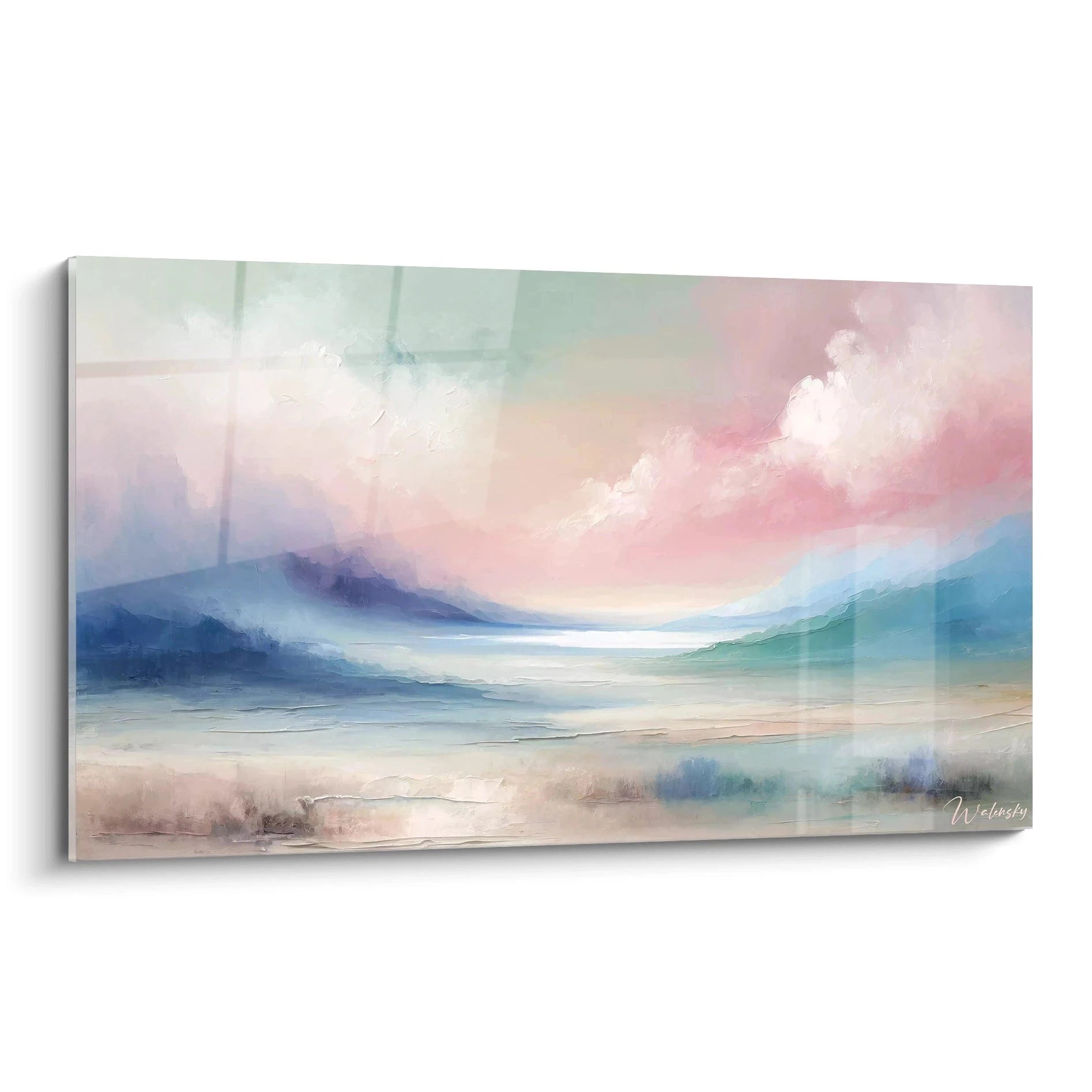

How Does the Concept of Ma (Interval) Structure Zen Tableaux Compositions?
November 13, 2025 · 7 min read · by Walensky
I spent hours in Master Tanaka’s studio in Kyoto, watching his brushes glide across the rice paper. What struck me? It wasn't what he was painting, but what he wasn't painting. These empty spaces, vibrant with meaning, bore a name I would later discover: ma. This ancestral Japanese concept radically transforms our perception of Zen art and is now revolutionizing our approach to interior decoration.
Here’s what ma brings to your spaces: a visual breath that soothes the mind, an unsuspected emotional depth, and timeless elegance that transcends fleeting trends.
You may have felt this visual saturation when you came home. Every wall saturated, every surface cluttered, every corner filled. This quest for 'more' exhausts us. We seek serenity in our interiors, but our decorative choices paradoxically create the chaos we are fleeing.
Rest assured: understanding ma requires no training in oriental philosophy. This millennial principle naturally applies to the Zen paintings you admire, and I will reveal exactly how these works orchestrate emptiness to create fullness.
Ma: much more than just an empty space
The ma (間) literally translates to 'interval', 'space between', or 'pause'. But reducing this concept to emptiness would be like confusing silence and absence of music. In Japanese aesthetics, ma represents the space charged with potential, the breath between two notes, the respiration between two gestures.
During my research on Zen compositions, I discovered that ma is never accidental. Each unpainted area in a Zen painting is the subject of a decision as deliberate as the choice of elements represented. This intention transforms negative space into a protagonist in its own right.
Take a Zen painting depicting a cherry branch: the flowers may occupy 20% of the surface, but the remaining 80% are not 'empty'. This interval evokes the infinity of the sky, the lightness of spring, the ephemeral dimension of flowering. The ma thus generates an invisible narrative that dialogues with figurative elements.
The architecture of breath in Zen composition
How does ma concretely structure a Zen painting? The answer lies in three compositional principles that I identified after analyzing hundreds of works.
The principle of decentering
Unlike classical Western composition which favors symmetry and centering, Zen paintings use ma to create an asymmetrical balance. The main element – a monk in meditation, a solitary bamboo, an ensō circle – generally occupies one third of the space, leaving two thirds to the interval.
This distribution is not arbitrary. It often respects the Japanese rule of sangai (three divisions) where ma creates a dynamic tension. Your gaze travels between presence and absence, generating that characteristic sense of motionless movement in Zen art.
The hierarchy of intervals
In a sophisticated Zen composition, not all ma are equal. I have observed that masters create a subtle hierarchy between different types of intervals: the large spaces evoking the cosmos, the intermediate spaces suggesting atmosphere, and the micro-spaces animating details.
A Zen painting depicting mountains in mist perfectly illustrates this stratification. The dominant ma (the vast sky) dialogues with the medium intervals (the mist between the peaks) and the small spaces (between the branches of a pine tree). This orchestration creates a meditative depth that your eye traverses without ever tiring.

When emptiness becomes an emotional language
The genius of ma in Zen paintings lies in its ability to convey emotions without representing them. This interval functions as a receptacle where your own feelings can unfold.
I experienced this viscerally when facing a minimalist Zen painting: three brushstrokes suggesting reeds, the rest in immaculate white. This predominant ma did not create a feeling of lack, but an invitation to contemplation. My mind naturally filled that space with memories, associations, personal sensations.
This participatory dimension explains why Zen compositions cross cultures without losing their resonance. Ma offers a psychic space where each observer projects their own interiority, making the work infinitely renewable.
The breathing rhythm of the composition
Zen painters often compare their art to breathing. Ma functions as the exhalation – that moment of release which gives meaning to inspiration. In a Zen painting, the alternation between dense areas (concentrated ink, detailed work) and spacious intervals creates a visual rhythm that unconsciously synchronizes our breathing.
That’s why you feel that immediate sense of calm in front of a successful zen composition. Ma physiologically affects your nervous system, slowing down your gaze like meditative breathing slows the breath. This quality makes zen paintings tools for emotional regulation in our overloaded interiors.
— Our selection


Decoding ma in your interior decoration
How do you translate this principle into your decorative choices? The application of ma extends far beyond zen paintings to inform your entire approach to layout.
First, consider the wall itself as a space. A zen painting should never be surrounded by other works in a visual patchwork living room. The ma of the bare wall around the piece is an integral part of its composition. I recommend leaving at least 40 cm of empty space on each side so that the work can 'breathe'.
Secondly, height positioning creates a vertical ma. A zen painting placed too high or too low generates disproportionate spaces that disrupt balance. The rule of thumb: the center of the artwork at eye level (approximately 145-150 cm from the floor), creating harmonious spaces above and below.
The fatal error of 'horror vacui'
The philosophical opposite of ma is called horror vacui – the fear of emptiness that drives you to fill every available space. I have visited countless interiors where beautiful zen paintings lost all effectiveness, stifled by accumulations of objects, multiple frames, oversized furniture.
The presence of a zen painting requires rigorous curation of its immediate environment. The ma of the composition must extend into the ma of your room. This does not mean austere minimalism, but intentionality: each element gains in presence when surrounded by appropriate space.

The five archetypes of ma in zen paintings
After years of observation, I have categorized five distinct uses of ma in zen compositions, each creating a specific atmosphere for your interior.
My celestial: these zen paintings place an earthly element (mountain, tree) in the lower third, leaving the upper interval to evoke the immensity of the sky. They are perfect for spaces with low ceilings, creating a vertical elevation illusion.
Enveloping my: the central element floats at the heart of an interval that surrounds it uniformly. These zen compositions generate a feeling of meditative protection, ideal for bedrooms and relaxation areas.
Directional my: the dominant interval is located on one side, creating a dynamic movement. A bird in flight with a vast my in front suggests travel, openness – perfect for an office or creative space.
Fragmented my: several small elements punctuate a large interval, like footsteps in the snow. These zen paintings invite the eye to create connections, subtly stimulating the mind – excellent for reception areas.
Absolute my: the most refined compositions where the interval dominates at 90%, with a single minimal element. Reserve these radical pieces for already very minimalist spaces, otherwise you risk creating unintentional coldness.
— You may also like


Cultivating my beyond the painting
The true power of my is revealed when you integrate it as a philosophy of life. This concept of interval applies to time (pauses between activities), relationships (respected personal space), communication (meaningful silences).
In your decoration, my becomes a decision-making filter: before adding anything, ask yourself if it enriches the interval or pollutes it. An authentic zen painting teaches you this discipline of sight. It proves that subtraction can be more eloquent than addition, that the unpainted can be more expressive than the painted.
Ready to invite breath into your space?
Discover our exclusive collection of Zen paintings that authentically integrate the concept of my to transform your interior into a sanctuary of serenity.

In the same vein
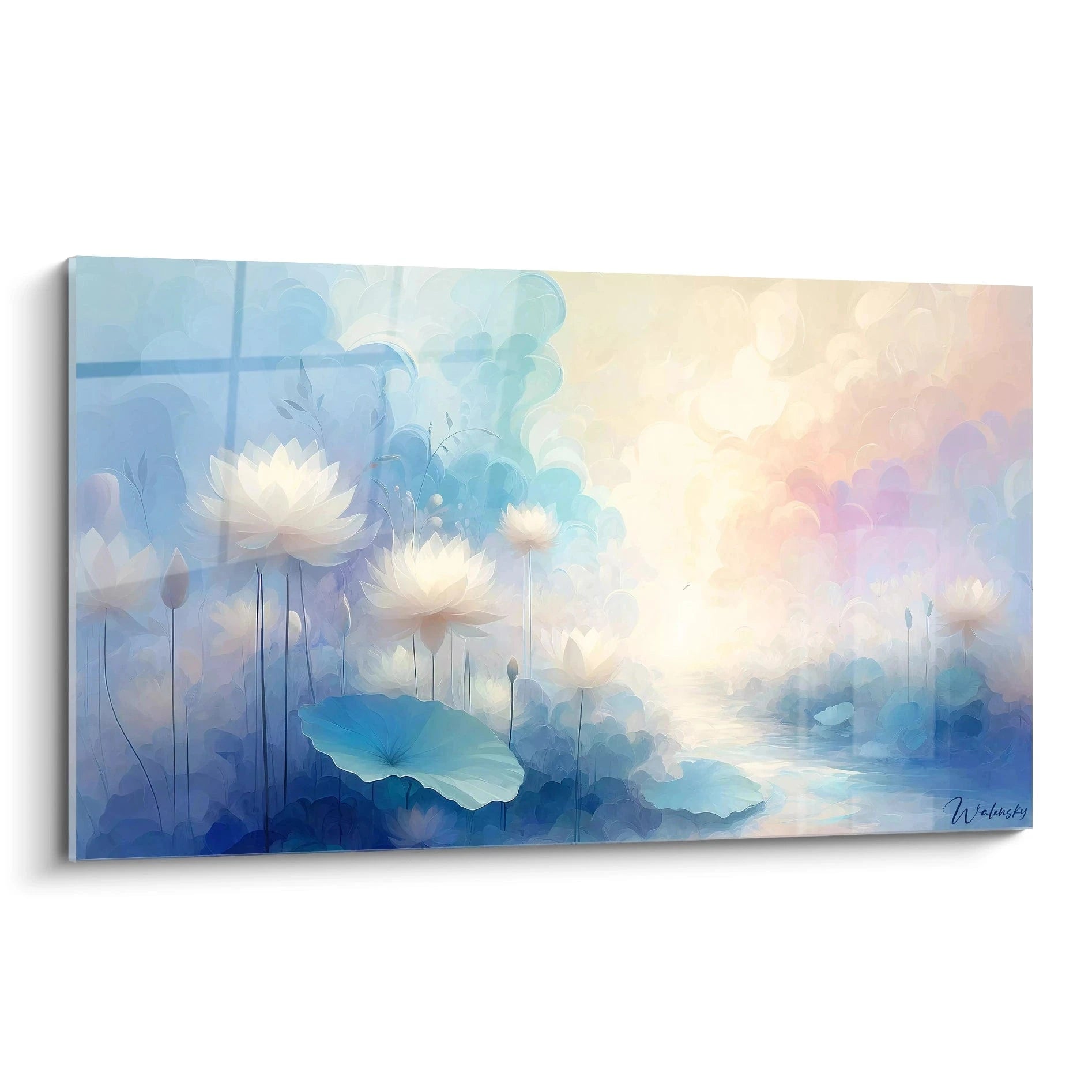
Garden of Reflections Wall Art - Divers Zen Edition
233,90€
Discover this artwork →The interval that transforms everything
Ma is not just another decorative technique to tick off your list. It's an invitation to fundamentally rethink your relationship with space, time, and presence. Zen artworks that master this interval do not decorate your walls – they reconfigure your perception.
Imagine coming home tomorrow and instantly feeling that inner expansion, the release of your shoulders, the slowing down of your mind. Not because you've added something, but because you've finally let the space breathe. The ma of zen compositions teaches you exactly that: fullness does not lie in accumulation, but in the quality of the void you cultivate.
Start simply: choose a zen artwork whose interval speaks to you, position it consciously, and observe. Observe how your gaze rests differently on it. How the visual silence of ma creates an echo chamber for your thoughts. How this unpainted space becomes the most valuable part of your interior.
Explore our collections


