

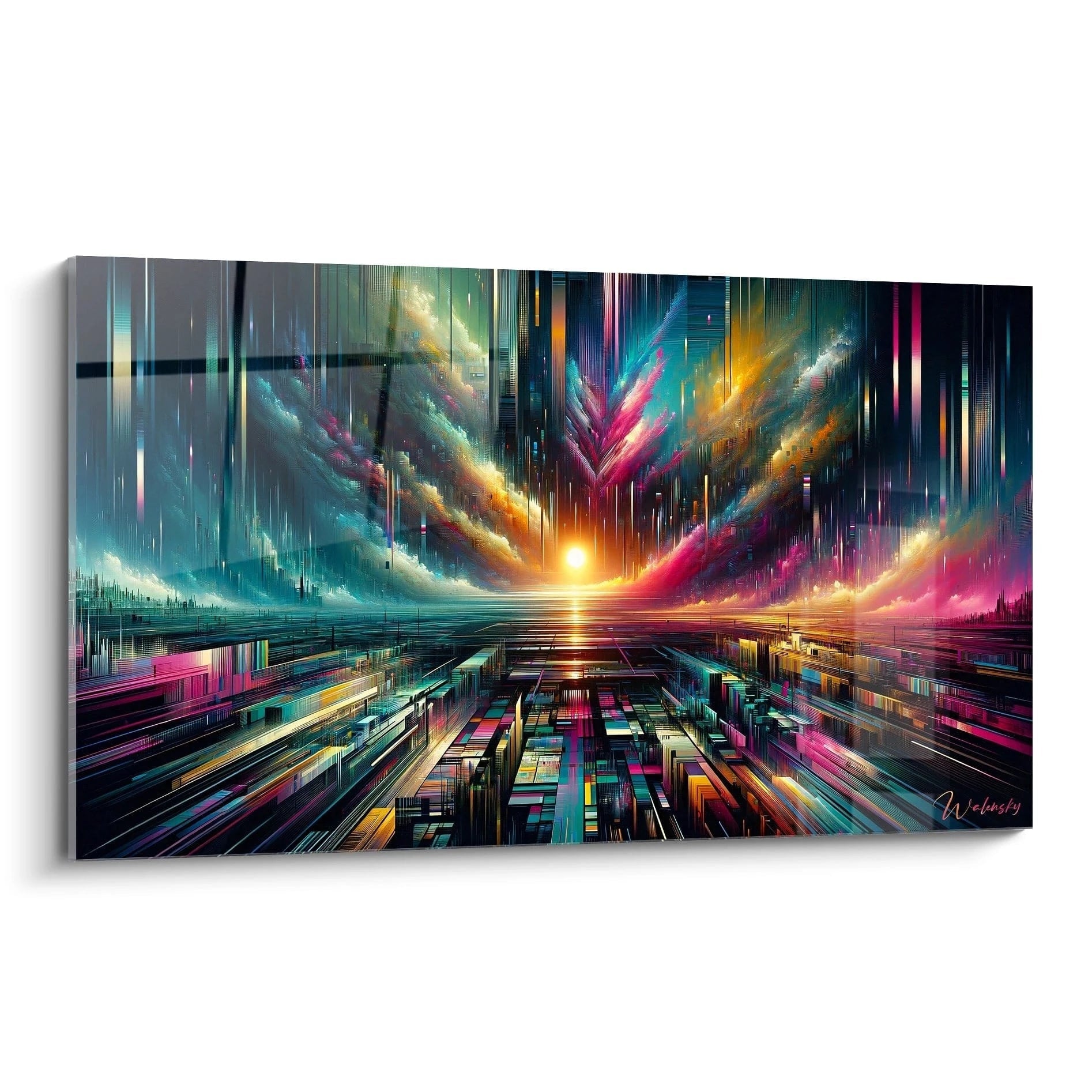

What Zen Artworks Suit a Personal Meditation Space?
November 27, 2025 · 8 min read · by Walensky
I spent eight years designing meditation spaces for spiritual retreat centers in Asia and Europe. One lesson became clear to me from my very first immersion in a Buddhist temple in Japan: the artwork that adorns a meditation space is never just decoration. It becomes an anchor for the mind, a silent bridge between mental agitation and inner peace. Too many people install soothing images without understanding their true contemplative function, transforming their sacred corner into mere zen decor. A good Zen painting becomes a practice companion, a visual guide that accompanies your breath and deepens your introspection.
Here's what an authentic Zen painting brings to your meditation space: natural focus that calms the mind, an aesthetic resonance that elevates your practice, and a visual presence that transforms an ordinary corner into a personal sanctuary. Today, I’m revealing how to choose artworks that truly serve your contemplative practice, not just your decoration.
Sacred geometry: when forms meditate in your place
During my collaboration with a vipassana meditation master in Thailand, I discovered the hypnotic power of mandalas and circular geometric patterns. These compositions are not just drawings: they are designed to naturally guide the eye towards a center, creating a visual movement that precisely mimics the return of attention to the breath.
Zen paintings representing mandalas offer this unique meditative quality: your gaze naturally follows the concentric circles, the symmetrical lines, the patterns that repeat in harmony. This visual dance soothes the prefrontal cortex, that part of the brain responsible for incessant mental chatter. I observed practitioners reduce their meditation settling-in time from fifteen to five minutes simply by placing a clean mandala facing their meditation cushion.
Favor paintings with neutral tones – beiges, soft grays, off-whites with touches of gold or copper. These shades do not excite the nervous system and allow for prolonged contemplation without visual fatigue. Geometry does the anchoring work, colors maintain serenity.
The art of empty space: Japanese minimalism at the service of meditation
In the Zen tradition that I studied in Kyoto, the concept of ma – empty space, the silence between notes – is fundamental. An effective Zen painting for meditation must breathe. It does not fill the space, it sculpts it.
Japanese minimalist paintings – a cherry branch on an immaculate background, an enso circle traced with a brushstroke, three stones arranged asymmetrically – create what I call visual pauses. Your mind has nothing to analyze, nothing to decode. It can simply be. This visual emptiness is fertile ground for conscious presence.
I installed a large painting depicting a simple sumi-e line – this Japanese black ink – on white canvas in a Parisian meditation space. Practitioners told me that this inhabited void allowed them to project their own inner state without distraction, transforming the work into a meditative mirror rather than an external contemplative object.
Stylized natural elements
Zen minimalism excels in the purified representation of nature: stylized bamboos, stacked pebbles, stylized waves. These motifs connect your interior space to natural rhythms without cluttering it with details. A single ink-painted bamboo contains all the flexible strength of nature – that same quality cultivated by meditation.


Contemplative landscapes: windows on vastness
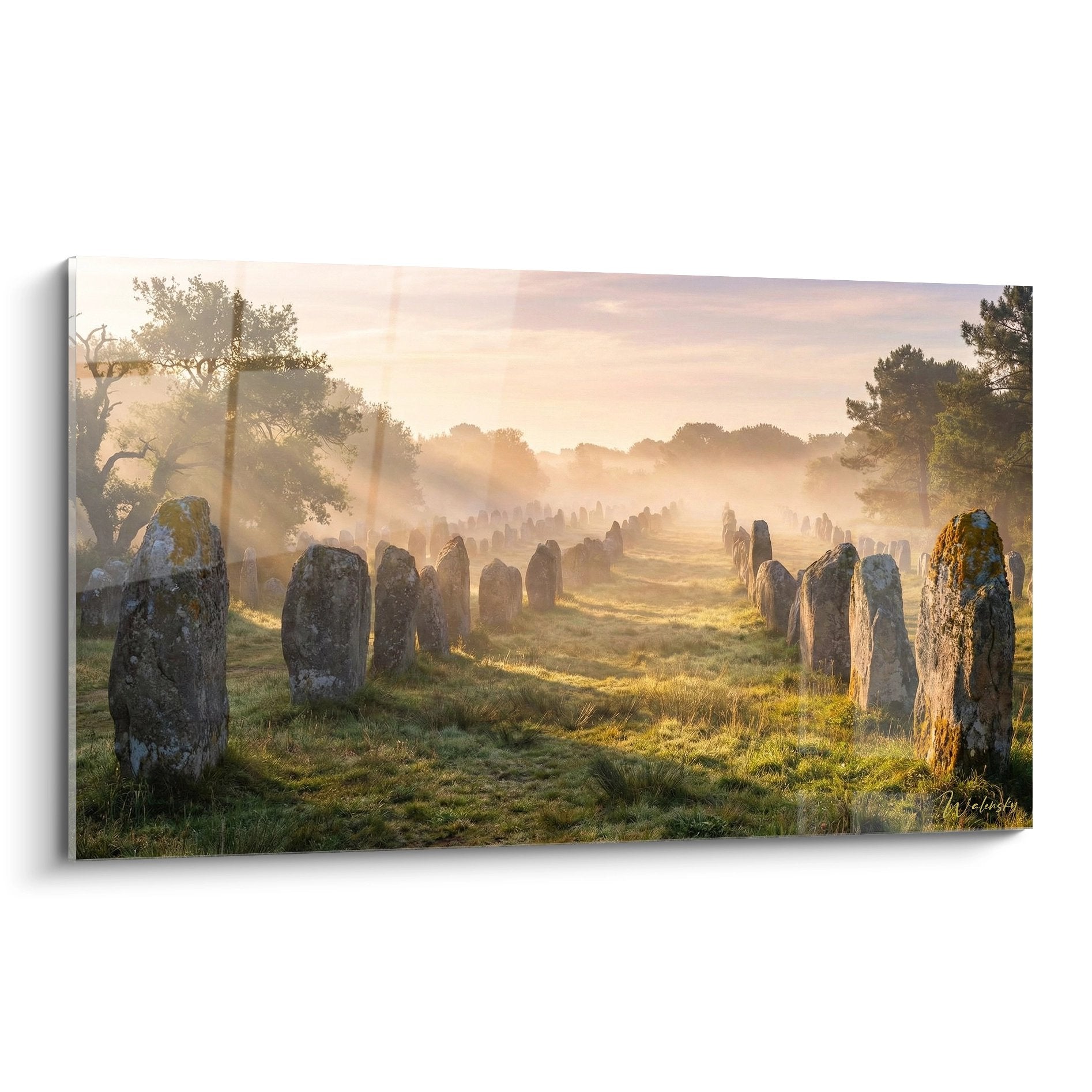
Some meditative minds need expansion rather than concentration. For these practitioners, I often recommended zen paintings depicting vast and soothing landscapes: misty mountains, oceans at an infinite horizon, foggy forests.
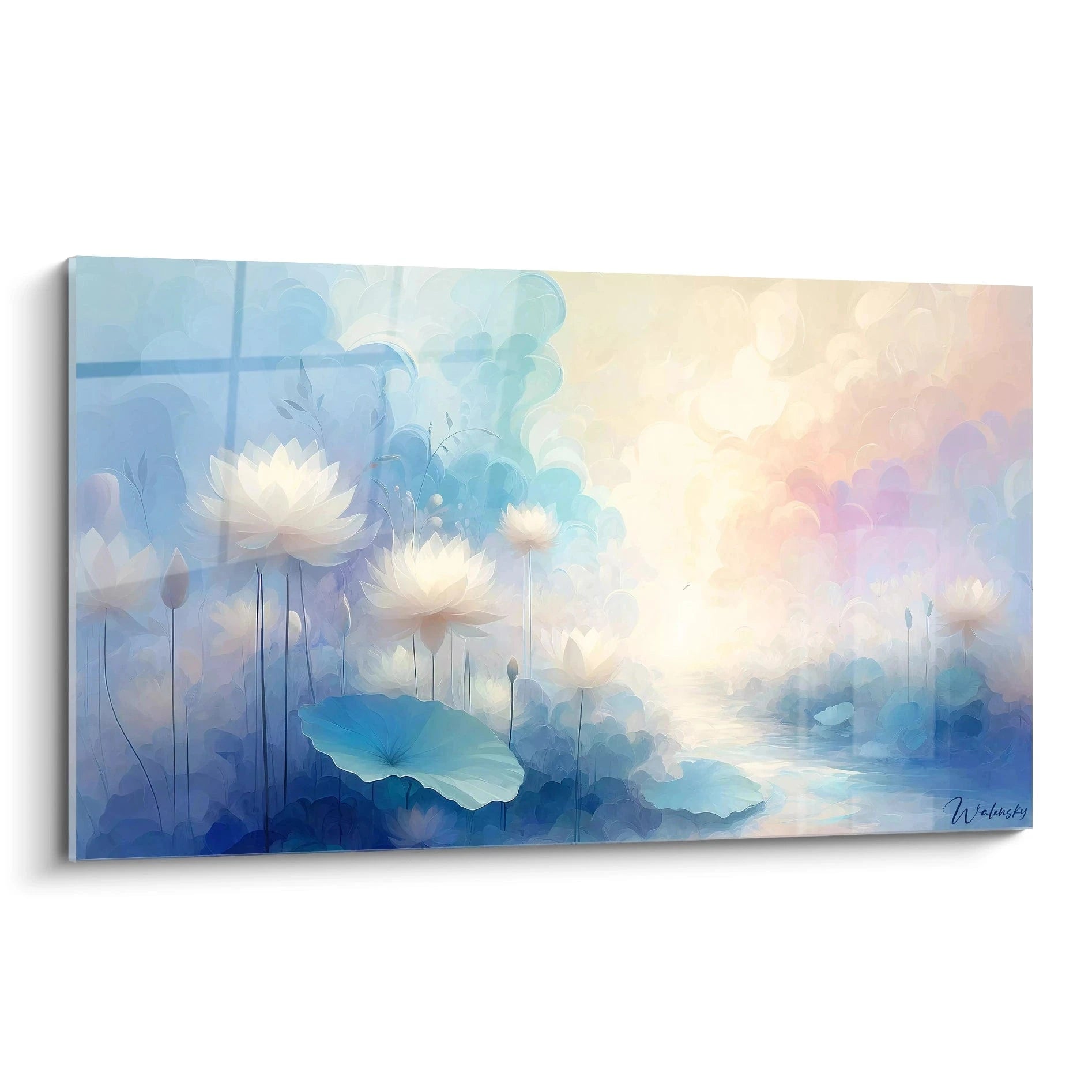
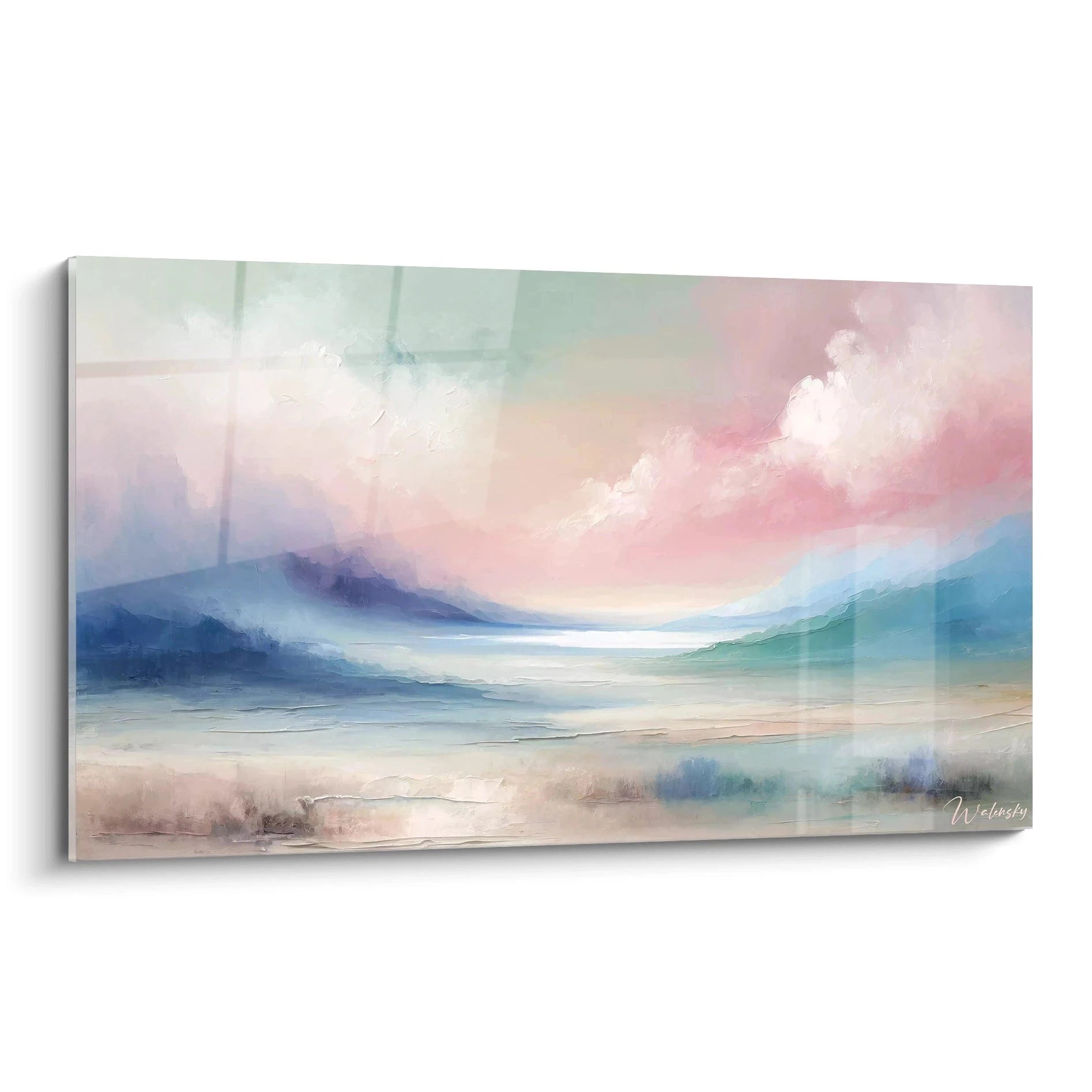
The trick lies in the degree of abstraction. A hyperrealistic photographic landscape overstimulates the analytical mind. But a watercolor landscape with blurred outlines, a mountain whose peaks dissolve into clouds, an ocean with waves suggested rather than detailed – these semi-abstract works invite your consciousness to expand without clinging to details.
In a meditation center in Ardèche, I hung a panoramic zen painting depicting an alpine valley in shades of blue-gray. Meditators reported a sensation of expanded inner space, as if their breathing harmonized with the vastness of the landscape. This resonance between external and internal space is precisely what a zen painting should create in a practice place.
The chromatic palette of serenity
After designing about thirty meditation spaces, I established an emotional mapping of zen colors. Some hues naturally facilitate introspection, while others disperse it.
Deep blues and slate grays induce a natural introspection, a dive inward. I recommend them for evening meditations or deep emotional exploration practices. Sage and celadon greens balance and center, perfect for morning meditations or daily mindfulness practices. Beiges, off-whites, and earthy tones ground and stabilize, ideal for meditations on rooting.
A common pitfall: choosing multicolored zen paintings under the guise of dynamism. A meditation space, on the other hand, requires a restricted color harmony – no more than three tones. This sobriety allows your nervous system to settle rather than visually flit.
The exception of metallic touches
A subtle touch of gold, copper, or silver in a zen painting can create a contemplative point of light. These metallic accents capture natural light and create a living presence without agitation. I have seen practitioners use these reflections as a focal point for their meditations on inner light.

Spiritual symbols: choose with intention, not with trend
Buddhas, lotuses, Om symbols, trees of life – these motifs saturate the zen decor market. But be careful: a spiritual symbol in a meditation space is not a decorative accessory, it's a practice support.
If you have no personal connection to Buddhism, placing a Buddha in your meditative space can create a subtle dissonance. Your subconscious perceives this inconsistency between the image and your actual practice. On the other hand, if the figure of the Buddha embodies for you the inner peace that you cultivate, then its zen painting becomes a daily reminder of your intention.
I always encourage choosing purified and respectful representations of spiritual symbols. A stylized lotus in a few ink strokes carries more contemplative power than a hyperrealistic lotus in a thousand shades. Simplicity leaves room for your inner projection.
Strategic placement: where and how to hang your zen painting
The position of your zen painting radically influences its meditative effectiveness. Fundamental rule that I learned from a Korean Zen master: the painting should be placed slightly above your natural line of sight when you are in a meditative posture.
This height encourages a slight upward gaze which naturally opens the chest and clears airways – two essential elements for deep meditation. If the artwork is too low, your neck will droop; too high, your gaze strains and creates tension.
Distance also matters: between 1.5 and 2.5 meters from your cushion or chair. Closer, the artwork becomes overwhelming; further away, it loses its visual anchoring function. Test several positions for a week of practice before permanently fixing your piece.
Absolutely avoid cluttered walls. Your zen artwork deserves empty space around it – at least 40 centimeters of margin on each side. This visual breathing amplifies its soothing power.
Transform your meditative practice with the artwork that calls to you
Discover our exclusive collection of Zen artworks that transform a simple corner of your room into a sanctuary of daily serenity.
— Our selection
Creating a living relationship with your zen artwork
Here's a practice I teach everyone who creates their meditative space: your zen artwork is not fixed in its function. Some days, it will be an active focal point – you will dive into its shapes, colors, and energy. Other days, it will become a peripheral presence, simply there, silent guardian of your practice.
This evolving relationship is normal and healthy. An effective zen artwork accompanies the seasons of your inner life. After six months or a year, you might feel the call for another piece, another visual vibration. Listen to this intuition: it reflects your contemplative evolution.
The essential thing is that each time you sit facing your zen artwork, you feel a micro-invitation to peace – that subtle release of your shoulders, that breath which deepens on its own, that mind which naturally finds its anchor. If this alchemy operates, you have found the right visual companion for your inner journey.
Imagine yourself tomorrow morning, entering your personal meditation space. Your gaze instantly finds that zen artwork waiting for you, faithful and soothing. Your breath settles, your mind recognizes this sanctuary you have created. This piece is not just an image on a wall – it has become the gateway to your inner peace. Give yourself this visual anchor. Choose with your heart, install with intention, and let the transformation operate, session after session.
Frequently Asked Questions about Zen Artworks for Meditation
What size zen artwork should I choose for a small meditation space?
For a meditation corner of 2 to 4 square meters, prioritize a zen artwork from 60 to 90 cm wide. The frequent mistake is to choose too small for fear of cluttering: an artwork that is too modest visually disappears and loses its contemplative anchoring function. The rule I apply: your work should occupy about one third of the width of the wall it inhabits. In a restricted space, a panoramic horizontal format creates a feeling of expansion without overloading vertically. And remember: a single large, refined zen artwork brings more serenity than three small works that fragment attention. Simplicity is always your ally in a personal meditation space.
Can you regularly change zen artwork in your meditation space?
This question often comes up, and my answer nuances the trend towards constant renewal. A zen artwork gains meditative power over time – it becomes imbued with your sessions, your contemplative energy. I recommend keeping the same work for at least three to six months to allow this deep relationship to develop. However, if you practice different types of meditation, you can create an intentional seasonal rotation: an expansive landscape for summer meditations on openness, a geometric mandala for winter meditations on introspection. The important thing is that each change is conscious and meaningful, not simply decorative. Your meditation space is not a living room to be constantly reinvented, but an inner temple that benefits from visual stability.
Can digital zen artworks on screen replace a physical artwork?
I have experimented with this option in temporary spaces, and here is my observation: a screen emits active light that stimulates the nervous system, even in dimmed mode. This light emission physiologically counteracts the state of relaxation sought during meditation. A physical zen artwork, on the other hand, passively reflects ambient light – it breathes with the environment rather than activating it. If your only option is digital, prioritize an e-ink tablet (electronic ink technology) that mimics paper, or a wall projection turned off before your session. But whenever possible, invest in an authentic physical artwork: canvas, paper, wood. Materiality matters in a sacred space. Your unconscious perceives the difference between a real object that carries the intention of a creator and an infinitely reproducible digital image. This material authenticity anchors your practice in reality.
Explore our collections


