I spent fifteen years roaming European auction houses, examining thousands of vintage still lifes, negotiating with collectors from Madrid to Amsterdam. And one question consistently arises: why does this Dutch bouquet from the 17th century cost the price of a car, when a similar Italian still life is worth barely the price of a weekend in Rome? The answer lies as much in art history as it does in market mechanics. Vintage still life wall art are not all equal: their value fluctuates dramatically depending on their origin, condition and documented provenance. You are fascinated by these silent compositions, these fruits suspended in time, these vanitas laden with symbols, but you are navigating blindly in an opaque market? Rest assured: understanding the price differences between different European schools does not require a doctorate in art history. Here's how to decipher the values of vintage still lifes and invest wisely in these timeless works that transform a wall into a cultural conversation.
The Dutch school: the undisputed aristocracy of still lifes
When we talk about vintage still life wall art, the Flemish and Dutch school of the 17th century reigns supreme in the hierarchy. These hyperrealistic compositions, where every drop of dew on a grape seems palpable, regularly reach prices of five or six figures at auction. An authenticated Jan Davidsz de Heem can exceed €500,000, while a Pieter Claesz oscillates between €80,000 and €300,000 depending on the complexity of the composition.
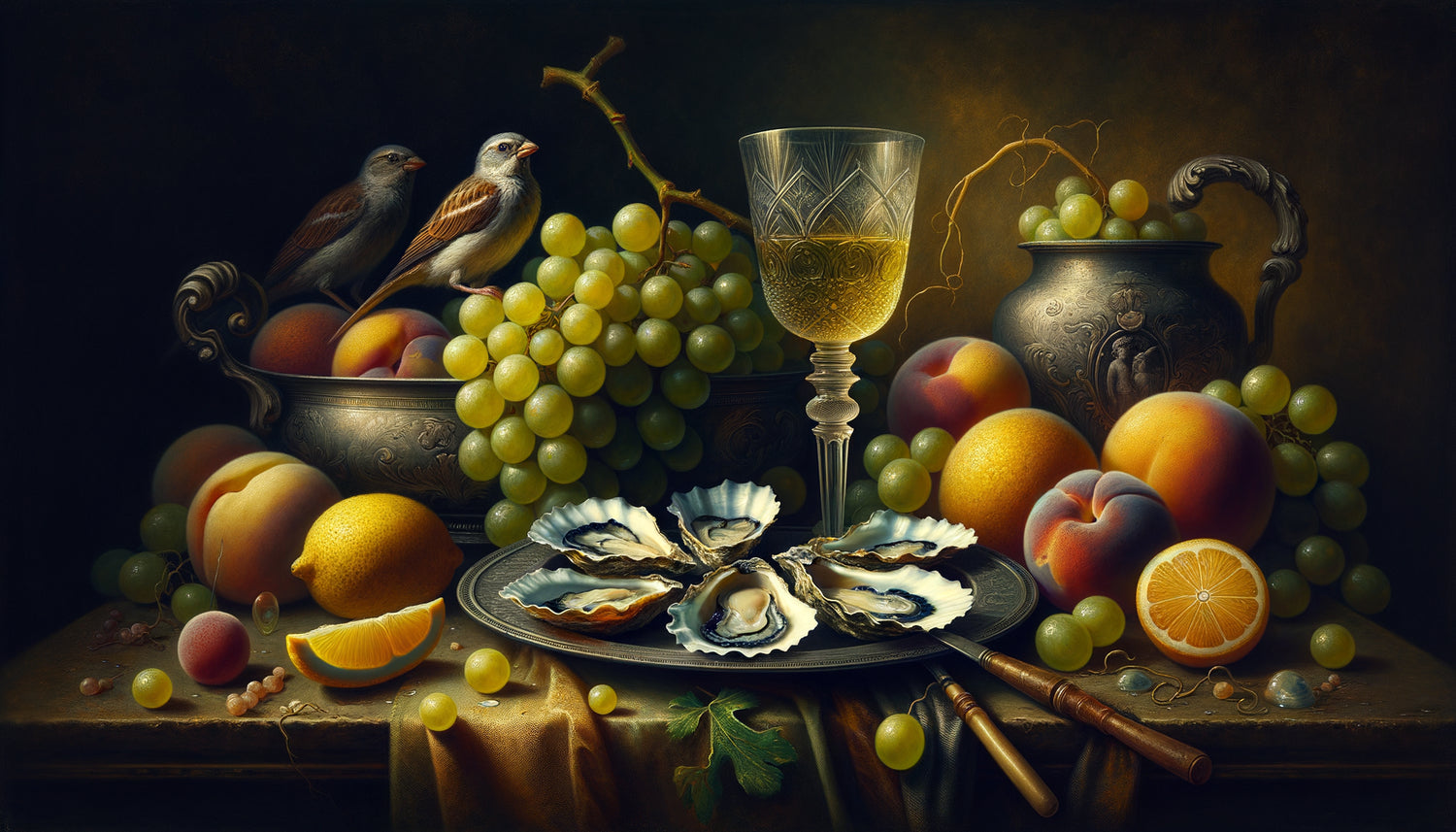
Why such a difference with other schools? The Dutch school revolutionized the genre by developing an unprecedented technical mastery: transparency of glass, velvety peaches, metallic reflections of silver cups. These artists were not painting objects, they were capturing light itself. Collectors pay for this virtuosity, but also for rarity: many of these works have disappeared in wars and fires, making each surviving piece all the more valuable.
The signatures that drive up bids
In the world of vintage Dutch still lifes, some names act as value amplifiers. Willem Kalf, specialist in pronkstilleven (ostentatious still lifes), sees his paintings sell for between €200,000 and €1 million. Rachel Ruysch, one of the few recognized female painters, reaches peaks with her floral compositions: one of her works sold for €4.2 million in 2012. Even second-tier artists like Abraham Mignon or Jan van Huysum maintain respectable prices between €30,000 and €150,000.
The Italian school: theatricality at an accessible price
Vintage Italian still life wall art offers a radically different aesthetic. Less obsessed with microscopic detail, Italian painters favored dramatic composition and luminous contrast inspired by Caravaggio. An overturned basket of fruit, vegetables on a marble table, all bathed in raking light creating deep shadows: this is the Italian signature.
Their prices remain significantly more accessible. A work attributed to the school of Caravaggio generally sells for between 15,000 and 80,000 euros. The works of Giuseppe Recco, a Neapolitan master specializing in fish and seafood, range from 40,000 to 200,000 euros. For collectors on a limited budget, the Italian school offers a fascinating entry point: these pieces possess a spectacular wall presence that rivals their Nordic cousins, but at a fraction of the price.
The Roman paradox: abundance and devaluation
Italy has produced thousands of vintage still lifes between 1600 and 1750. This relative abundance partly explains the softer prices: the market is not under pressure as it is for the Dutch. But be warned: some Italian masters escape this rule. Michelangelo Merisi da Caravaggio himself painted a few still lifes whose value is inestimable, jealously guarded by museums. His famous Basket of Fruit at the Ambrosiana in Milan will never leave public collections.

The French school: classic elegance undergoing a significant revaluation
Long considered less spectacular than the Dutch school, the French school of still life has been experiencing a significant reassessment for twenty years. Jean-Baptiste-Siméon Chardin, the 18th century master, now achieves prices comparable to those of the Dutch: between 300,000 and several million euros for his intimate compositions where a simple pear on a table becomes a visual poem.
Seventeenth-century French vintage wall art, particularly that of Louise Moillon or Lubin Baugin, sells for between 50,000 and 400,000 euros. Their more refined aesthetic, less cluttered than Nordic compositions, particularly appeals to contemporary interior designers seeking discreet sophistication. A small Chardin in a Parisian dining room? It is the epitome of understated refinement.
The Spanish school: undervalued mystical power
Here's a secret that few collectors know: vintage Spanish still lifes currently offer the best value for money on the European market. Juan Sánchez Cotán, with his almost surreal geometric compositions where vegetables seem suspended in emptiness, remains relatively accessible: between 100,000 and 500,000 euros for works of astonishing modernity.
The Spanish school brings a unique spiritual dimension to the genre. These wall art pieces do not celebrate earthly abundance like the Dutch masters, but invite ascetic meditation. Francisco de Zurbarán, a monk-painter, transformed simple lemons into objects of mystical contemplation. His still lifes, recognizable by their deep black background and almost supernatural light, sell for between 200,000 and 2 million euros – much less than their comparable Dutch counterparts.
The Iberian Investment Potential
Experts agree: the Spanish school is undervalued. With growing interest from Latin American collectors in their heritage, Spanish prices should continue to rise. Acquiring a museum-quality Spanish still life today could prove as rewarding as it is aesthetically pleasing.

Decoding Variations: What Tips the Scales
Beyond the school of origin, several factors determine the precise value of a vintage wall art piece of still life. Documented provenance can sometimes multiply the value by three: a painting that adorned a known aristocratic collection, with clear traceability since the 17th century, reassures buyers and justifies a substantial premium.
The condition plays a crucial role. A yellowed varnish, clumsy restorations, visible repaints: all factors that can divide the price by two or three. I have seen a magnificent De Heem drop from an estimated 400,000 to 150,000 euros after an expertise revealed that 30% of the surface was repainted in the 20th century. Conversely, a professionally cleaned painting revealing vibrant colors can see its value soar.
Dimensions also matter
A detail often overlooked: size drastically influences the price of vintage still lifes. Large formats (over 100 cm) reach peaks because they were intended for aristocratic residences and are therefore rarer. But paradoxically, very small intimate formats, particularly prized for contemporary interiors, are also in high demand. Medium sizes (50-80 cm) often offer the best value for money.
Buy Smartly: Where to Find Your Vintage Still Life
Vintage still life wall art circulates through several channels. Major auction houses (Christie's, Sotheby's, Bonhams) regularly offer major pieces, but with high reserve prices and substantial purchase fees (20-25%). Regional and provincial sales sometimes hide underestimated treasures, especially in France and Spain.
Specialized galleries offer the advantage of expertise and often a guarantee of authenticity, but with an integrated profit margin. For novice collectors, museum-quality vintage reproductions are an elegant alternative: they capture the aesthetics without the six-figure investment. With advances in giclée printing on canvas, some reproductions almost rival originals in terms of wall presence.
Your wall deserves a story that spans centuries
Discover our exclusive collection of Vintage Art that captures the timeless elegance of European still lifes, without the exorbitant prices of auction houses.
The Silent Transformation of Your Space
A vintage still life wall art does not decorate a space; it transforms it into a dialogue with European art history. These compositions that have fascinated collectors for four centuries continue to exert their mysterious magnetism. Whether it's an opulent Dutch composition overflowing with exotic fruits, a Spanish meditation on three lemons, or an elegant French simplicity, your choice reflects your personal sensitivity.
European schools each developed their unique visual language: Flemish technical virtuosity, Italian theatricality, French refinement, Spanish spiritual intensity. Understanding these nuances does not turn you into an instant expert, but allows you to navigate this fascinating market with confidence. Start with what moves you viscerally: a color, a composition, an atmosphere. The authenticity of your reaction counts more than any rating.
So, which European school will speak to your wall? What silent conversation do you want to install in your daily life? History awaits your gaze.
FAQ: Your Questions About Vintage Still Lifes
How to authenticate an antique still life painting?
Authenticating a vintage still life wall art requires professional expertise combining several approaches. An expert will first examine the support (type of canvas, frame, nails) to verify its consistency with the claimed period. Analysis of pigments by fluorescence can reveal anachronisms: some synthetic pigments did not exist before 1850. The painting technique itself often betrays forgeries: Dutch masters used superimposed transparent glazes that are almost impossible to perfectly imitate. Documented provenance (old invoices, sales catalogs, photos in historical collections) significantly reinforces authentication. For a potentially high-value painting, do not hesitate to seek several independent expert opinions. Specialized laboratories such as the C2RMF in France offer advanced scientific analyses that can confirm or refute an attribution. Be wary of overly visible signatures: many authentic still lifes are unsigned, and paradoxically, a conspicuous signature can be a later fraudulent addition.
What budget should you expect for a real antique still life?
The market for vintage still life wall art spans an extraordinarily wide range. For an authentic work by a minor artist or workshop (not directly from the master), count on a minimum of 3,000 to 8,000 euros with specialist dealers. These pieces, often from the Italian school or second-tier Flemish artists, offer an accessible entry point while guaranteeing period authenticity. Between 15,000 and 50,000 euros, you access higher quality works by documented artists, generally with established provenance. Above 50,000 euros, you enter the segment of museum-quality works by recognized masters. If your budget is more modest, consider vintage still lifes from the 19th century: the French school of this period produced excellent works in a neo-classical style, often available between 1,500 and 5,000 euros. Provincial sales and high-end flea markets sometimes hide undervalued treasures, but it takes a trained eye and patience. Don't forget to budget for framing (300-1,500 euros for a restored antique frame) and insurance if the value exceeds 10,000 euros.
Do vintage reproductions have comparable decorative value?
Absolutely, and that’s the beauty of the contemporary approach to art. A museum-quality reproduction of a vintage nature morte wall art offers 90% of the visual impact at 1% of the price. Giclée printing technologies now reproduce textures, chromatic nuances, and even the relief of the original painting with astonishing fidelity. For a residential interior where the goal is aesthetic harmony rather than financial investment, a beautiful reproduction installed in an antique frame (which can be easily found between €100 and €300) creates exactly the desired atmosphere. I’ve seen living rooms where carefully chosen reproductions of Chardin or Zurbarán completely transformed the ambiance, bringing that timeless sophistication characteristic of European still lifes. The key lies in the quality of the print: prioritize canvas reproductions with UV-resistant pigments, avoid laminated posters. The difference in wall presence is considerable. An honest, assumed reproduction has infinitely more value than a fake pretending to be authentic. It allows you to live daily with masterpieces that only museums and millionaires can afford in original.