

Composez votre galerie d'art

Des tableaux qui racontent votre histoire
Code d'initiation
ART10
10% offerts sur votre première acquisition
DĂŠcouvrir la collection

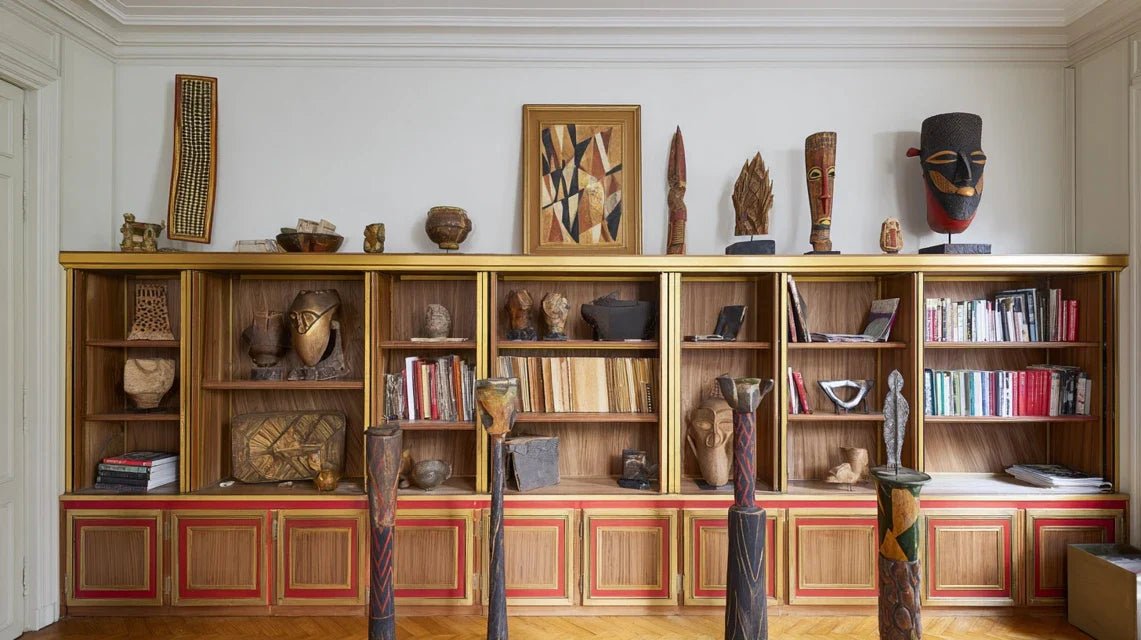
Cultural and Traditional Themed Artwork: Art as Transmission

Tableaux à thèmes culturels et traditionnels : l’art comme transmission
⏱️ Reading time: 8 minutes
You've been staring at that blank wall for weeks, imagining a thousand times the perfect artwork that would transform your living room into a true art gallery. But every time you explore options, the same frustration returns: these generic works of art that tell nothing, these soulless reproductions that everyone has.

You dream of an interior that tells your story, reflects your travels, your origins, your cultural sensitivity. Something authentic that captivates your guests and creates that unique atmosphere you long for.

You may have already tried experimenting with a few inexpensive posters or reproductions, but the result disappoints you. These works lack character, depth, that visual richness that makes the difference between simple decoration and true artistic choice.

This disappointment is perfectly normal: how can you create a personal universe when mainstream art favors standardization? The real solution lies in culturally and traditionally themed art, creations that carry centuries of know-how and symbolism.

By the end of this article, you will know exactly how to choose, harmonize and enhance authentic cultural paintings to create an interior that truly resembles you and impresses your loved ones for a long time.

Why do cultural artworks radically transform a living space?

Cultural and traditional art has this unique ability to create an immediate emotional connection. Unlike standard decorative works, these paintings convey stories, ancestral techniques, symbols that speak to our collective unconscious. That's the difference between decorating a wall and creating an experience.

🎨 Testimony of a successful transformation: Marie, interior architect, tells how adding a triptych inspired by Berber motifs completely transformed her Parisian living room. "My guests only talk about it. This painting tells my Moroccan origins with an elegance that I had never managed to achieve with classic decorative objects."

💬 Conversation with a decor expert

"I fear that cultural themed paintings will be too showy for my modern and minimalist interior..."
It's like thinking that a spice would dominate a dish when it can subtly enrich it. Contemporary cultural artworks know how to combine tradition and modernity. They bring that touch of authenticity that is often lacking in too smooth interiors, without creating a stylistic break.
"I've always been told that you have to stay within your culture for it to be consistent..."
This vision is outdated! Art transcends cultural boundaries. A Japanese motif can perfectly dialogue with European architecture, creating that visual hybrid that characterizes the most sophisticated interiors of today.

Artistic culture doesn't decorate, it transforms: Like a perfume that reveals the personality of the person who wears it, an authentic cultural artwork reveals the soul of your interior. Allow 2 to 3 weeks for your loved ones to notice this new dimension of your space.

Decoding the signs revealing your need for artistic authenticity

You may be feeling that weariness with your current decor, that impression that your walls lack character, or even that irresistible desire to tell your story through your interior.

These signals reveal a deep need for authenticity that conventional decorative solutions cannot satisfy. Your frustration doesn't come from a lack of taste, but from a mismatch between your deepest aspirations and a standardized artistic offer.

It’s like trying to express yourself in a foreign language: the words are missing to say exactly what you feel. The cultural art offers you this enriched visual vocabulary that finally allows you to fully express yourself.

The first hidden cause: the illusion of decorative neutrality

Contrary to popular belief, "neutrality" in decoration does not exist. Each artistic choice conveys a message, even so-called "neutral" interiors that actually reflect a certain contemporary Western vision of space.

It’s like believing you can speak without an accent: our visual environment always expresses a culture, whether it is consciously chosen rather than passively endured.

This awareness completely liberates your decorative approach. You move from the constraint of "mandatory neutrality" to the freedom of assumed cultural expression, finally creating the atmosphere that suits you.

🔍 Instant test: Observe your emotional reaction in front of your current paintings. If you feel indifference rather than emotion, it is a sign that they do not carry enough cultural meaning to create this deep connection.

The second cause: industrial art versus art carrying memory

Mass reproductions have accustomed us to consuming "disposable" art, without history or particular technique. However, our brain instinctively distinguishes an object charged with history from a standardized industrial product.

Imagine the difference between reheated food in the microwave and a dish cooked with love: even if the appearance is similar, the sensory richness is nothing like it. The traditional art carries within it this emotional density that our sensitivity immediately captures.

This explains why some interiors mark us indelibly while others leave us cold, regardless of their cost or apparent aesthetics.

The third cause: the absence of personal narrative

Most decorative choices follow aesthetic codes without creating a narrative coherence. Result: interiors "beautiful" in theory but that don't tell any personal story.

You can identify this problem in your own space: do your guests admire your decor or ask questions about the origin and meaning of your works?

This difference reveals the impact of cultural art: it transforms your walls into conversation pieces and your interior into an authentic reflection of your personality.

4 signs that your interior lacks cultural authenticity:

  • The "catalog" effect: Your decor looks like magazine photos but lacks a unique personality
  • Guest indifference: No one spontaneously comments on your artistic choices or asks about their origin
  • Rapid fatigue: You feel the need to change regularly because nothing emotionally connects you
  • Lack of pride: You don't feel that deep satisfaction when contemplating your space

The trigger: the quest for meaning in art

The factor that really makes the difference is the symbolic charge. Like a catalyst in chemistry, this cultural dimension multiplies the emotional impact of art on your daily environment. You will recognize this power from the emotion you feel when discovering a work that "speaks to" you immediately.

Golden rule of authentic cultural art: If a painting mentally transports you to a specific era, place or tradition, it possesses this cultural density that will durably enrich your daily life. Test immediately: close your eyes and see if the work evokes images in your mind.

❌ Standard decorative art ✅ Authentic cultural art 💡 The key difference 🎯 Daily benefit
Chosen to "look nice" in the space Chosen for its personal resonance Emotion takes precedence over pure aesthetics Renewed pleasure with each glance
Generic subject without a particular story Carries a tradition and ancestral techniques Cultural depth creates mystery Enriching conversations with your guests
Industrial reproduction without soul Unique creation or artisanal limited series Authenticity can be felt instinctively Pride in owning something rare
Blends into the mass of "trendy" interiors Creates a personal visual signature Cultural originality distinguishes you Memorable and recognizable interior

The 3-step method to create your personal cultural gallery

Rest assured: incorporating cultural art into your interior doesn't require expertise in art history or a huge budget. The key is to take a progressive approach, like that of an astute collector who builds their collection piece by piece. You will discover how to create a cultural harmony that suits you, step by step, with visible results from the first acquisition.

🗺️ Overview of your transformation: Like a gardener who prepares their soil before planting, you will first define your cultural identity (step 1), then choose your first structuring works (step 2), and finally create the visual dialogues that unify the whole (step 3). Each step brings its own satisfaction and prepares the next.

Step 1: Define Your Artistic Cultural DNA

This first step is fundamental because it prevents you from making impulsive purchases and costly mistakes. Like an architect who establishes foundations before building, you will map your cultural affinities to create a coherent guiding thread. The satisfaction of this new clarity about your tastes will give you confidence for the rest of the process.

The tools of your artistic introspection

  • Visual logbook: A simple notebook to note your artistic crushes, whether in a museum, a book, or online. It helps you identify recurring patterns in your tastes and becomes your personal reference. Avoid digital applications that scatter attention: handwritten writing favors emotional memorization.
  • Cultural inspiration boards: Cut-out or printed images that you organize by themes (colors, motifs, eras). This stylist's method visually reveals your unconscious preferences and facilitates creative associations. Prefer the physical format to digital for better perception of nuances. Emotional analysis grid: A simple system for rating your reactions to works (from 1 to 5) according to different criteria: emotion, curiosity, desire to own. This objectification of your feelings allows you to go beyond social judgments to identify your true affinities.

Now let's move on to the practice of this personal exploration

Guided discovery of your cultural preferences

Exploring cultures that attract you: Spend 30 minutes browsing traditional art collections (books, specialized sites, virtual museums) noting your reactions instinctively. The goal is to reveal your spontaneous affinities before any rational filter, because the first emotion is often the most authentic.

⏱️ Time: 30 minutes | ✅ Successful when: You have identified 3-4 cultures or styles that spark your curiosity | ⚠️ Attention: Don't censor your tastes for fear of "what will they say" - it is the most common mistake that leads to bland choices

Analysis of your current environment: Photograph your living spaces and identify existing cultural elements (travel objects, dominant colors, materials). This existing base will guide your future choices to create a harmonious continuity rather than a brutal break.

⏱️ Time: 15 minutes | ✅ Successful when: You have a clear vision of your current style and its influences | ⚠️ Attention: Many neglect this step and create inconsistent mixes

Lifestyle compatibility test: Reflect on your daily lifestyle, activities, and surroundings. Is a very symbolic work of art suitable for your social environment? This pragmatic reflection avoids post-purchase disappointments and ensures sustainable integration into your daily life.

⏱️ Time: 10 minutes | ✅ Successful when: You know how much originality you can comfortably assume | ⚠️ Attention: Excessive self-censorship is as harmful as a total lack of limits
✨ Validation of your cultural profile: You should now have a clear "artistic identity card": 2-3 preferred cultures, an idea of your favorite colors, and the certainty that your choices will naturally integrate into your life. If you are still hesitating, extend the exploration for a few days - this clarity conditions all the success of what follows!

OUR RECOMMENDED PRODUCTS

Step 2: Selecting your first structuring works

Now that your cultural compass is defined, you move on to the most exciting phase: acquiring your first masterpiece pieces. This step reveals a particular satisfaction as you see your vision take shape concretely. The snowball effect is powerful: an initial success greatly facilitates subsequent choices.

Selection criteria for impactful works

  • Size and visual presence: Favor medium to large formats (minimum 60x40cm) for your main pieces. As in architecture, scale determines emotional impact. A work that is too small drowns in the space, while an appropriate size gives it that magnetic presence that transforms the atmosphere of the room.
  • Authenticity of techniques: Look for creations using traditional methods (hand painting, artisanal engraving, ancestral techniques). These processes bring this living irregularity that the eye instinctively perceives, creating a visual richness impossible to reproduce industrially. Color consistency: Check the harmony of colors with your existing palette. Even the most authentic art must dialogue with your environment to create that visual unity that characterizes successful interiors.

Progressive acquisition strategy

Choosing your first flagship artwork: Select ONE piece that perfectly embodies your identified cultural affinities. This pilot work will test the reaction of your environment and give you confidence for what follows. Take the necessary time because it will define the identity of your future collection.

⏱️ Time: 1-2 weeks of reflection | ✅ Successful when: You feel emotion every time you look at this artwork | ⚠️ Attention: Resist haste - it is better to wait for the perfect piece than settle for a compromise

Step 3: Creating overall harmony

The final step transforms your individual acquisitions into a coherent collection. This is the level of mastery that distinguishes an informed enthusiast from a simple impulsive buyer. You develop here this sensitivity of the gallerist who knows how to create visual dialogues between artworks, multiplying their individual impact.

Techniques for cultural harmonization

Creating visual bridges: Identify recurring elements between your artworks (colors, shapes, textures) and use them as guiding threads. Cushions, a vase, or a rug can take up these motifs to create this subtle unity that transforms a collection of objects into a harmonious ensemble.

⏱️ Time: 2-3 days of observation | ✅ Successful when: The eye naturally moves from one artwork to the next | ⚠️ Attention: Avoid decorative overload that drowns out the artistic message

Rule of mastered progression: Acquire a maximum of 2-3 artworks per quarter to allow each piece to find its place in your universe. This patience ensures thoughtful choices and avoids visual saturation that kills the magic of cultural art.

Congratulations! You now master the fundamentals of authentic cultural art. Here are some expert secrets that will make the difference between a successful interior and an exceptional interior.

🎯 Tip from experienced collector: Lighting radically transforms the perception of a cultural artwork. Warm lighting (2700K) reveals the richness of traditional pigments and creates that cozy atmosphere that magnifies artisanal details. Test different lighting angles: cultural art often reveals surprising nuances depending on the light.

💭 Frequent question from our readers

"How do I know if a cultural painting will really integrate into my modern interior?"

This question is legitimate and reveals a true decorative sensibility! The beauty of cultural art lies precisely in its ability to create bridges between eras. A traditional Japanese motif can sublimate a contemporary living room with its refined minimalism, while African art will bring that organic warmth which softens the coldness of modern design. The secret lies in the balance of proportions and respect for the dominant colors of your space.

🔧 Instant compatibility test: Temporarily place a reproduction of the artwork you are considering in your space (even printed on paper) and live with it for a few days. Your eye gets used to it and naturally reveals whether the integration works.

The 5 mistakes that sabotage your cultural artistic investments

After supporting hundreds of art enthusiasts, some errors systematically recur. Knowing them will spare you disappointments and unnecessary expenses:

  • ⚠️ The impulsive purchase without reflection: Emotion is important but must be tempered by reflection. A magnificent artwork in a gallery can become overwhelming on a daily basis. Allow yourself 48 hours of reflection before any major purchase - if the desire persists, it's a good sign!
  • 📏 The fatal scale error: Underestimating the impact of dimensions is the most common mistake. A painting that is too small disappears, too large it crushes. Always measure and visualize with newspaper before buying. Rule of thumb: minimum 2/3 of the width of the furniture below.
  • 💸 Neglecting quality to save money: Cheap cultural art quickly loses its authenticity and emotional value. It is better to have an authentic, high-quality artwork than three soulless reproductions. Consider this as a long-term investment in your daily well-being.
  • 🎨 Mixing too many cultures without logic: Cultural diversity is enriching but requires visual consistency. Three very different styles in the same room create confusion. Limit yourself to a maximum of 2-3 cultural influences per space to preserve harmony.
  • 🔆 Ignoring the importance of hanging: A poorly positioned or lit painting loses 50% of its impact. Standard height: center of the artwork at 1m60 from the floor. For culturally rich artworks with lots of details, providing dedicated lighting reveals all their beauty.

🛡️ Safety checklist before purchase: Does the artwork still move you after 3 attentive looks? Can you precisely identify its culture of origin? Does it blend chromatically into your space? Does it correspond to your budget without creating financial stress? These 4 "yes" guarantee a successful choice.

🎁 Special readers offer

Because you took the time to inform yourself, enjoy 10% discount on your first order: [HTML]

ART10

⏰ Valid for 72h after reading • Applicable to all our products

🙋‍♀️ Your most frequently asked questions about cultural art

💰 What budget should you allocate to start a quality cultural art collection?

For a first authentic work of medium size (60x80cm), count between 200 and 800€ depending on the technique and origin. This initial investment will allow you to test your tastes and assess the impact in your interior. Always prioritize quality over quantity: one beautiful piece is better than three mediocre works.

⏰ How long does it take to create a coherent collection?

A harmonious collection takes 12 to 18 months to build for a main space (living room or bedroom). This patience allows each acquisition to reveal its accompaniment needs and avoids impulsive purchases. Start with a strong work, observe its impact for 2-3 months, then gradually add more.

🏠 How to integrate traditional art into a contemporary decor?

The trick lies in chromatic bridges: pick up one or two colors from the traditional work in contemporary elements (cushions, vases, rugs). This technique creates a natural visual continuity. Avoid brutal contrasts that create a "museum" effect rather than a living space.

🔍 How to recognize the authenticity of a cultural work?

Look for artisan irregularities that betray human work: variations in traits, non-uniform color nuances, texture revealing manual technique. Industrial reproductions are too perfect. Don't hesitate to ask about the origin and technique used - an honest seller shares this information spontaneously.

🎨 Can we mix different cultures in the same space?

Absolutely, but with method! Limit yourself to a maximum of 2-3 cultural influences and find a common denominator: similar color palette, comparable era, or unifying theme. Nomadic art and merchant civilizations naturally offer these cultural bridges that facilitate harmonious blends.

🌟 Your artistic transformation begins today

In a few weeks, your loved ones will notice this new depth in your interior. Your walls will finally tell your personal story, creating those magical moments where your guests spontaneously stop in front of a work, curious to know its origin and meaning. This recognition of your artistic sensitivity will nourish lasting and authentic pride.

Beyond the decorative transformation, you will have developed this visual culture that enriches every museum visit, every trip, every encounter with art. This newly sharpened sensitivity transforms your gaze on the world and opens up exciting conversations with other art lovers.

The most difficult part was understanding the mechanisms of authentic cultural art - you now master them. All that remains is to take that first step: identify the artwork that calls to you and begin this artistic adventure that will enrich your daily life for years to come. Your future collection awaits you somewhere!

✨ Your new artistic life is reaching out to you: Every day spent in an interior that truly resembles you is an extra day of happiness. This transformation only awaits your decision - it begins with your first authentic cultural acquisition!

Read more

Tableaux du cosmos et de l’univers : voyage spatial au cœur de votre déco
Tableaux d’architecture et paysages urbains : la ville comme sujet artistique