⏱️ Reading time : 8 minutes
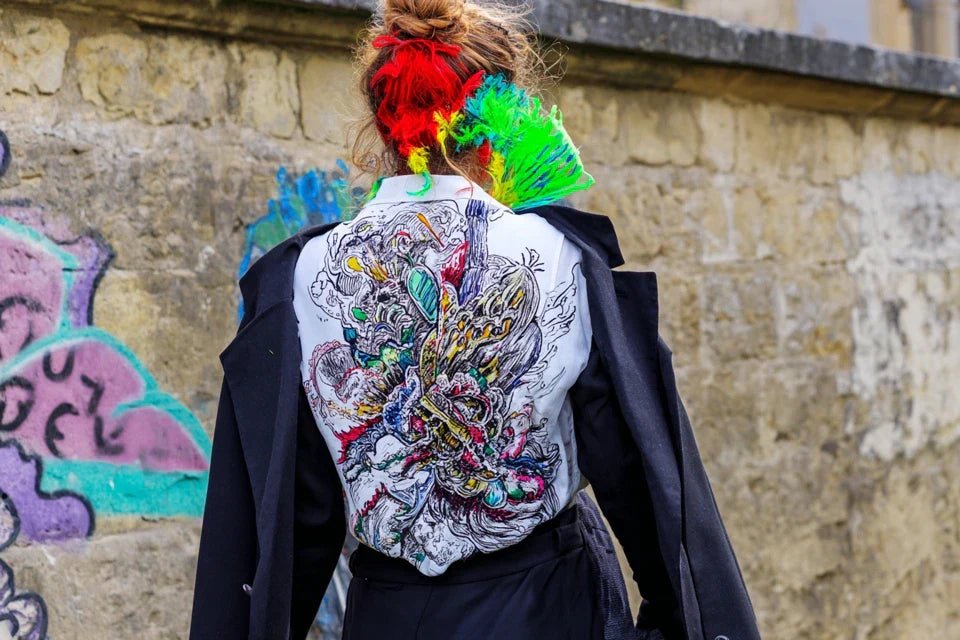
You just bought this beautiful jacket that looks so good on you, but when you get home, it seems completely out of place in your living room. Your white and empty walls create a disconcerting contrast with your affirmed personality in your clothing choices.
Every morning, you spend time putting together your outfit, harmonizing colors, choosing accessories that reflect your mood. Then you enter an anonymous interior that tells nothing of your personal story.
You may have tried hanging a few posters or reproductions found in large stores, but the result leaves you unsatisfied. These generic decors don't speak to you, they don't extend this extension of your personality that you cultivate so carefully in your wardrobe.
It’s perfectly normal! Most people think that decoration and fashion are two separate universes, when they are intimately linked. Your wardrobe style is already an expression of your identity; it just takes knowing how to transpose it onto your walls.
By the end of this article, you will know how to create a perfect coherence between your personal style and your wall art, transforming your interior into a true extension of your personality.
Why should your interior tell the same story as your dressing room?
Imagine receiving friends who compliment your clothing style, then entering a living room that could belong to anyone. This lack of coherence creates a disturbing dissonance.
Your interior becomes a missed opportunity to extend your personal expression. It's like wearing a carefully thought-out outfit with completely unsuitable shoes.
💡 Revelation from a decorator: "Marie, a fashion designer, contacted me because her clients loved her creations but seemed disappointed when discovering her showroom. The problem? Her neutral walls reflected none of the boldness of her collections. In three weeks, we created a visually consistent universe that transformed the customer experience.”
💬 Conversation with a decor expert
"I'm afraid my new painting won't go well if I change my wall color..."
Relax! It’s exactly the opposite. A true artistic crush adapts and even reveals itself with new colors. It's like a diamond that shines differently depending on the lighting!
"But I was told you always had to match colors..."
Who told you that? Modern decor plays on subtle contrasts. A
painting with warm tones on a cool wall is like a fireplace in a blue room: magical!
Decoding: what lies behind this style/interior disconnect
Do you recognize these situations? You love geometric prints in your clothes but your walls remain desperately smooth.
You collect vintage accessories, but your living room could come from an IKEA catalog. You dare to use bright colors in your dressing room but don't dare transpose them at home.
This mismatch is not due to a lack of taste, but to a mental compartmentalization between these two forms of expression.
Our brains have been conditioned to separate "changing" fashion from "permanent" decoration, when they draw on the same creative sources.
It's like learning to drive while thinking that the steering wheel and pedals are independent.
Once you understand that they form a coherent system, driving becomes fluid and natural.
First cause: fear of decorative commitment
Unlike a dress that can be changed according to your mood, a wall painting seems definitive, almost intimidating.
This popular belief makes us forget a simple truth: the most beautiful interiors evolve with their inhabitants.
Think about your wardrobe: it gradually enriches itself, some pieces leave, others arrive, but your personal style remains recognizable.
Your decoration can work exactly the same way.
This fear deprives you of a daily creative expression and keeps your interior in a frustrating neutrality.
Imagine the pleasure of coming home and finding your universe with every glance!
🔍 Immediate test: Look at your wardrobe and identify three recurring elements (colors, textures, patterns).
Now look at your living room: how many do you find? This simple observation reveals the extent of untapped potential.
The illusion of technical difficulty
Many think that harmonizing art and clothing style requires interior architect skills.
In reality, you already master the essentials: you instinctively know what you like and what suits you.
It's like believing that you have to be a chef to cook your favorite dishes.
You already have the palate (your developed taste), just learn some basic techniques.
This false complexity makes you lose years of fulfillment in your own space.
As soon as you understand the simple principles, you will see your interior transform naturally.
The trap of imitation versus authenticity
Too often, we copy interiors seen on Pinterest without asking ourselves if they really look like us.
It's the equivalent of wearing only outfits seen in magazines, regardless of your figure or personality.
Observe your surroundings: you immediately recognize someone who embodies their style versus someone who blindly follows trends.
The same applies to authentic interiors.
This superficial approach explains why so many "perfect" interiors leave us cold and why you don't feel "at home" in your own home.
🔍 3 signs of an interior disconnected from your style:
- You hesitate to invite friends over: Your interior doesn't represent you enough for you to be proud to show it, like wearing an outfit that doesn’t suit you
- You often change your decor without ever being satisfied: You are subconsciously searching for this missing consistency without identifying the real problem
- Your guests don't recognize "your touch": They are surprised by the contrast between your affirmed personality and your impersonal interior
The turning point: when style and habitat meet
The magical moment arrives when you realize that your personal style artwork can literally inhabit your walls.
It's a domino effect: a first piece of art that truly resembles you transforms your perception of the entire space.
You begin to see your interior as a canvas for expression, not just a place to live.
The rule of decorative authenticity: One element that represents you is worth more than ten "perfect" but impersonal decorations.
Start by identifying your visual signature and the rest will follow naturally in a few weeks.
| ❌ Disconnected approach |
✅ Style-habitat consistency |
💡 Explanation |
🎯 Practical benefit |
| I choose according to trends |
I extend my personal style |
Your taste is already developed |
Immediate and lasting satisfaction |
| My walls are neutral for safety |
My walls tell my story |
Neutrality creates blandness |
Unique and memorable interior |
| I accumulate without an overall vision |
Each room dialogues with the others |
Harmony is born from consistency |
"Magazine" effect without a decorator |
| I separate fashion and decoration |
I unify my creative expression |
Same source of inspiration, same person |
Increased confidence in your taste |
The progressive method for creating your interior visual signature
Rest assured, you're not going to revolutionize everything at once!
We will proceed as when composing an outfit: first the basics, then the accents, finally the details that make the difference.
This approach respects your pace and budget, while creating a visible transformation from the first few days.
🎯 3-Step Overview: First, we identify your style DNA (recurring codes in your choices), then we translate it into a first signature artwork, and finally, we create overall harmony.
Each step brings you closer to that perfect coherence between your wardrobe and your interior.
Step 1: Decoding Your Personal Style Signature
This first step is fundamental because it reveals your true visual identity.
Like an architect who analyzes the terrain before building, we will explore your unconscious preferences to make them conscious and exploitable.
Once this step is complete, you will have a new clarity on what you really like, and above all why.
🔍 Tools for Analyzing Your Style
- Your current wardrobe: It already contains all the answers! Observe the pieces you wear most often; they reveal your true preferences beyond impulse purchases. Prioritize clothes worn more than 10 times rather than recent purchases, as they reflect your deep and lasting tastes.
Your favorite accessories: Jewelry, bags, shoes... They often concentrate your personal style in a pure way because they are chosen for pleasure, not necessity. Look at their shapes, materials, recurring colors to identify your personal aesthetic vocabulary.Your favorite photos of yourself: Analyze those where you really feel good. They intuitively capture your best stylistic expression and reveal the natural harmony that you know how to create.
Now, let's move on to the concrete analysis of your preferences
🎨 The Inventory of Your Personal Palette
Photograph your 10 favorite outfits: Spread them on your bed and take an overall photo.
This global view immediately reveals your dominant colors and preferred combinations.
You will see your natural palette appear, often more consistent than you might imagine.
⏱️ Time: 15 minutes | ✅ Success when: You identify 3-4 colors that constantly reappear | ⚠️ Attention: Avoid including sportswear or compulsory work clothes that do not reflect your free choices
Identify your recurring textures: Touch and observe the materials of your favorite pieces.
Are you attracted to smooth or textured, matte or shiny, rigid or fluid?
These tactile preferences will directly translate into the choice of your artistic supports.
⏱️ Time: 10 minutes | ✅ Success when: You can name 2-3 dominant texture families | ⚠️ Attention: Don't confuse "what is practical" with "what you really like"
Analyze your patterns and shapes: Stripes, polka dots, geometric, floral, solid... Even if you mostly wear solids, observe the cuts and silhouettes.
These graphic elements are the foundation of your future wall art consistent with your lifestyle.
⏱️ Time: 10 minutes | ✅ Successful when: You identify your degree of taste for patterns versus solids | ⚠️ Attention: Look at what you really wear, not what you would like to wear
✅ Validation of step 1: You should be able to describe your style in three words maximum (e.g., "modern, warm, clean" or "bohemian, colorful, textured”).
If it's blurry, repeat the analysis because this clarity is essential for the next steps.
This step gives you confidence: you ALREADY have a style; now you just need to develop it!
Step 2: Choosing your first signature artwork
Now that you know your style DNA, we're going to materialize it with your first work of art.
This piece will serve as a visual anchor and set the tone for all your decorative efforts.
The excitement of this step comes from finally seeing your style come to life on your walls!
🎨 Criteria for selecting your signature artwork
-
The right format for your space: Like a jacket that needs to be the right size, your wall mural must have proportions adapted. Too small, it will be lost; too large, it will overwhelm the room. Measure your wall and aim for 1/3 to 1/2 of its width for optimal impact without visual clutter.
The technique that suits you: Painting, photography, illustration, collage... Each technique has its own personality. If you like natural materials in your clothes, opt for artworks with texture. If you prefer the clean and precise, choose refined graphic techniques.
Emotion above all else: Beyond colors and shapes, your signature artwork must evoke the same satisfaction as putting on your favorite outfit. This emotional connection guarantees that you won't get tired of it and that the work will shine in your space.
🎯 Methodical selection of your masterpiece
Apply your identified palette: Search for artworks that pick up 2-3 colors from your wardrobe, not necessarily in an obvious way.
A work with your colors in subtle nuances will create a sophisticated harmony more elegant than a perfect match.
The goal is resonance, not copying.
⏱️ Time: 30 minutes of research | ✅ Successful when: The artwork immediately evokes some of your outfits | ⚠️ Attention: Avoid artworks that pick up ALL your colors; it's often too much
Test stylistic consistency: Place a photo of the artwork next to your style analysis from step 1.
The link should be obvious but not literal. Someone who knows you well should say "that's totally you" when seeing the artwork, even without knowing your process.
⏱️ Time: 5 minutes per candidate artwork | ✅ Successful when: You feel an obviousness, a "natural logic" | ⚠️ Attention: Be wary of crushes that don't match your analysis
Visualize integration into your space: Imagine the artwork on your main wall, then visualize yourself in your favorite outfit in front of this artwork.
This mental projection immediately reveals whether the style-habitat consistency works. You must feel "complete" in this mental image.
⏱️ Time: 2-3 minutes of visualization | ✅ Successful when: The mental image makes you smile naturally | ⚠️ Attention: If you have to "force" the visualization, it's not the right artwork
🎯 Validation of your choice: Your signature artwork should create a visual obviousness with your personal style.
Show it to someone who knows you well: their spontaneous reaction will confirm whether you have found the right piece.
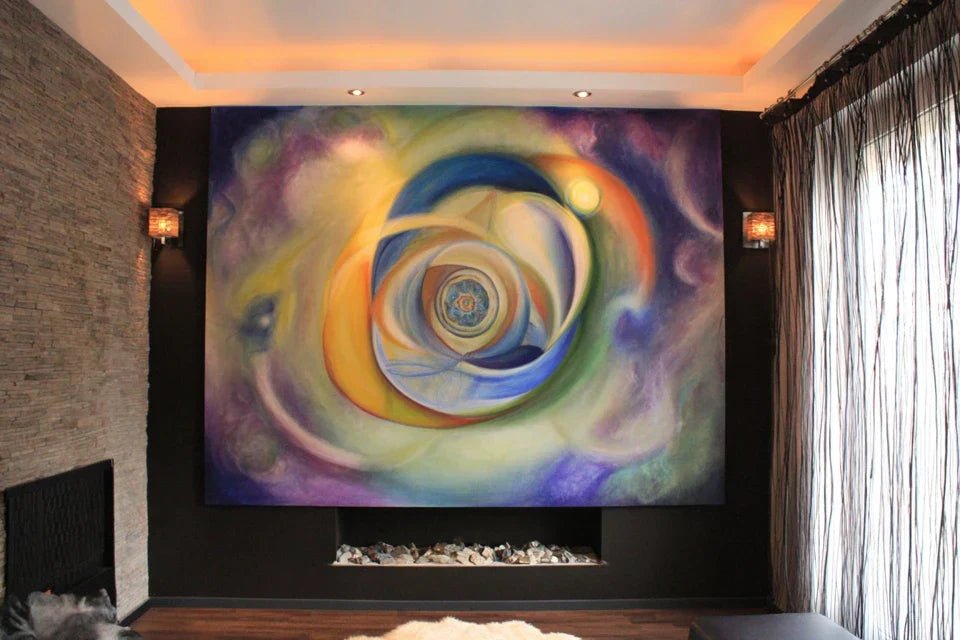
This artwork will transform your perception of your space as soon as it is installed!