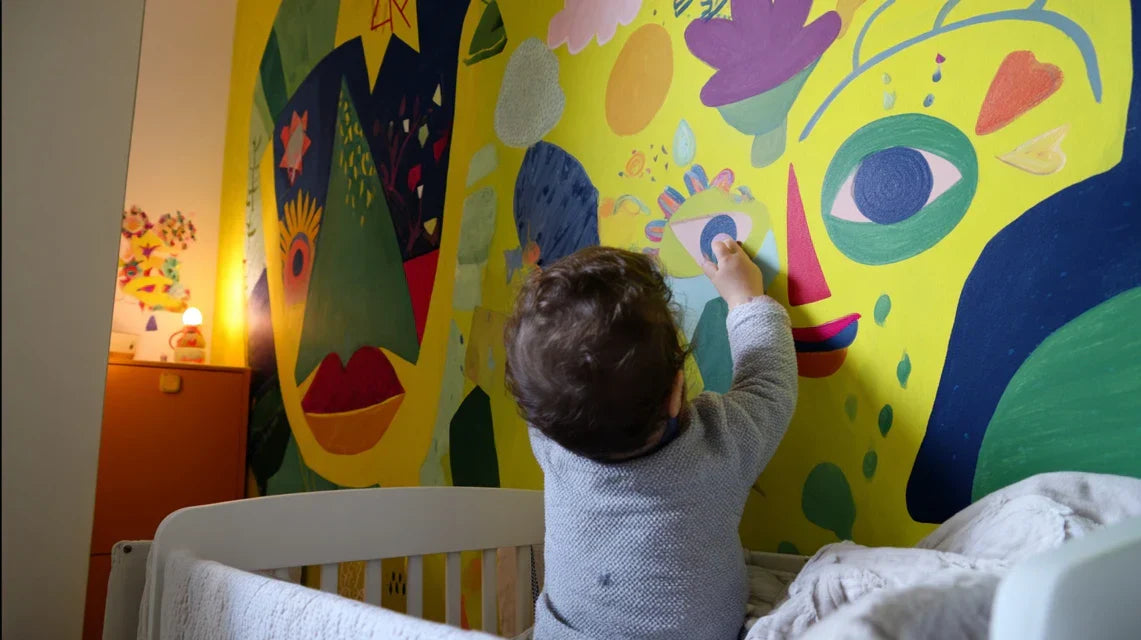
You’ve just purchased a beautiful artwork for your child's bedroom, but something feels off. The vibrant colors that seemed perfect in the store now appear too aggressive, or conversely, those delicate pastel tones seem to extinguish the joy of the room.
Your child walks past without even looking up, while you hoped to see their eyes light up every morning. The artwork, though of quality, seems totally disconnected from their world, like a foreign element that doesn't find its place in their personal sanctuary.
You may have followed classic advice: "blue for calming," “red for stimulation,” “cute animals to please.” But your unique child deserves more than generic decor that doesn’t reflect them.
This disconnect isn't your fault. The real difficulty lies in the fact that each child possesses their own emotional signature, a unique blend of temperament, preferences, and energy that requires a personalized approach.
By the end of this article, you will know how to decode your child's artistic personality and create a decorative universe that truly resembles them, where every color and theme resonates with their unique temperament.
Why is personalized decor crucial for your child’s development?
A child spends an average of 10 hours a day in their room. Imagine the impact of an environment that doesn't match their deep nature: it's like forcing an artist to create in a stark office. The harmony between personality and decor directly influences your child’s well-being, creativity, and even sleep quality.
🏠 Revealing testimonial: Emma, 6 years old, categorically refused to sleep in her princess pink themed bedroom. Her parents discovered that she was passionate about astronomy. By replacing the artwork with a cosmic universe of navy blue and gold tones, Emma rediscovered the pleasure of her personal space.
💬 Conversation with a decor expert
The golden rule of childlike decor: A perfectly suited artwork acts as an emotional mirror - it reflects and amplifies your child's natural qualities. The result? A space where your child feels authentically themselves from the first weeks.
Understanding what lies behind your child’s preferences
Does your child consistently reject certain colors, linger in front of specific images, or express tastes that surprise you? These signals actually reveal their unique sensory and emotional profile. It's not a whim; it's their nervous system communicating their needs.
Behind every "I don’t like it" lies valuable information about how they process visual and emotional stimuli. A highly sensitive child will have different needs than a little explorer or a contemplative dreamer.
It's like discovering your child's native language: once you understand it, communication becomes fluid and natural.
Revealing chromatic sensitivity
Contrary to what one might think, children don’t choose their colors at random. Their developing brain instinctively seeks the shades that help them regulate their energy and emotions.
Think about how some people feel soothed by the ocean while others prefer the energy of the mountains. Colors have the same effect on your child’s nervous system.
This understanding completely transforms your decorative approach: instead of imposing "pretty" colors, you become a translator of your child's authentic needs.
🔍 Revealing test: Observe your child for 10 minutes in a toy store. Which colors do they naturally gravitate towards? This instinctive attraction reveals their preferred emotional palette.
Introverted children often gravitate towards colors that create a protective cocoon, while extroverts seek shades that amplify their social energy. This fundamental difference explains why the same colors can have opposite effects.
It's like choosing between an energizing coffee and a soothing herbal tea: the right choice depends entirely on your needs of the moment and your natural constitution.
Recognizing your child’s temperament allows you to create an environment that supports them rather than hinders them, transforming their room into a true personalized sanctuary.
Hidden signals in drawings and creations
The spontaneous drawings of your child are a goldmine of information. The pressure of the pencil, the choice of colors, the composition reveal their inner world better than any investigation.
You can observe these clues in how they color: do they stay within the lines (need for structure) or joyfully overflow (free spirit)? Do they prefer meticulous details or expressive broad strokes?
These creative habits directly influence their reception of the artwork around them and guide you towards styles of paintings that will resonate with their sensibilities.
4 indicators of artistic personality:
- Relationship to space: Do they prefer to fill the entire sheet or focus on a corner? This reveals their need for expansion or intimacy
- Execution speed: Quick and spontaneous creation or slow and thoughtful? Indicator of their natural rhythm
- Recurring subjects: Animals, vehicles, characters, or abstract shapes? Reveals deep interests
- Use of color: Restricted and harmonious palette or multicolored explosion? Shows their relationship to visual stimulation
The trigger element: the emotion sought
The most powerful factor is neither color nor theme, but the emotion your child seeks to feel in their space. Some children need to feel safe, others want to escape, and still others want to be intellectually stimulated. Once this emotion is identified, the choice of colors and themes becomes obvious and consistent.
The emotional mirror rule: The best painting for your child is one that reflects and amplifies the emotion they naturally seek. Observe in which situations they seem most fulfilled to discover this key emotion.
| ❌ Standard approach | ✅ Personalized approach | 💡 Why it works | 🎯 Benefit observed |
|---|---|---|---|
| Colors "appropriate for age" | Colors suited to temperament | Respects the unique nervous system | Improved sleep and concentration |
| Trendy themes | Themes related to real passions | Nourishes authentic interests | Strengthened motivation and curiosity |
| "Safe" and neutral decoration | Environment that positively stimulates | Encourages personal expression | Developed self-confidence |
| Choices based on gender | Selection based on personality | Avoids limiting stereotypes | Authentic development of identity |
The method for creating perfect harmony between colors and personality
Now that you understand the hidden mechanisms, let's move on to practice. This progressive method will allow you to decode and then translate your child's personality into harmonious decorative choices. Like an architect who studies the terrain before building, we will first observe, then interpret, and finally create the ideal environment.
🎨 Overview of transformation: In 3 logical steps, you will first identify your child's emotional profile, then translate these insights into a personalized color palette, and finally choose themes that resonate with their world. Each step reveals a facet of their unique personality.
Step 1: Decoding your child’s emotional signature
This observation phase is crucial as it lays the foundations for all future decoration. Like a kind detective, you will collect clues that reveal the deep nature of your child. This step will already provide immense satisfaction: finally understanding what truly animates your little one.
The necessary observation tools
- An observation notebook: Choose a small notebook that you keep within reach for a week. It will be used to note your child's spontaneous reactions to colors and images. Avoid mobile applications which can distract your attention during observation.
- A variety of color samples: Gather magazines, paint samples or colorful objects representing different families of shades. These tangible supports reveal instinctive preferences better than screens, and allow you to observe tactile reactions.
- A privileged observation moment: Identify the time of day when your child is most relaxed and authentic - often in the late afternoon or before bedtime. It is during these moments that their true preferences emerge, without the fatigue or excitement that can distort reactions.
Let's move on to actively observing your little budding artist
The practice of kind observation
Observe spontaneous reactions: For a week, note each time your child shows attraction or repulsion towards a color or image. The goal is to capture their natural reflexes, not their "to please" responses. These micro-reactions reveal their true visual signature.
⏱️ Time: 10 minutes per day | ✅ Successful when: You have noted at least 15 different reactions | ⚠️ Attention: Avoid asking direct questions that influence the answers
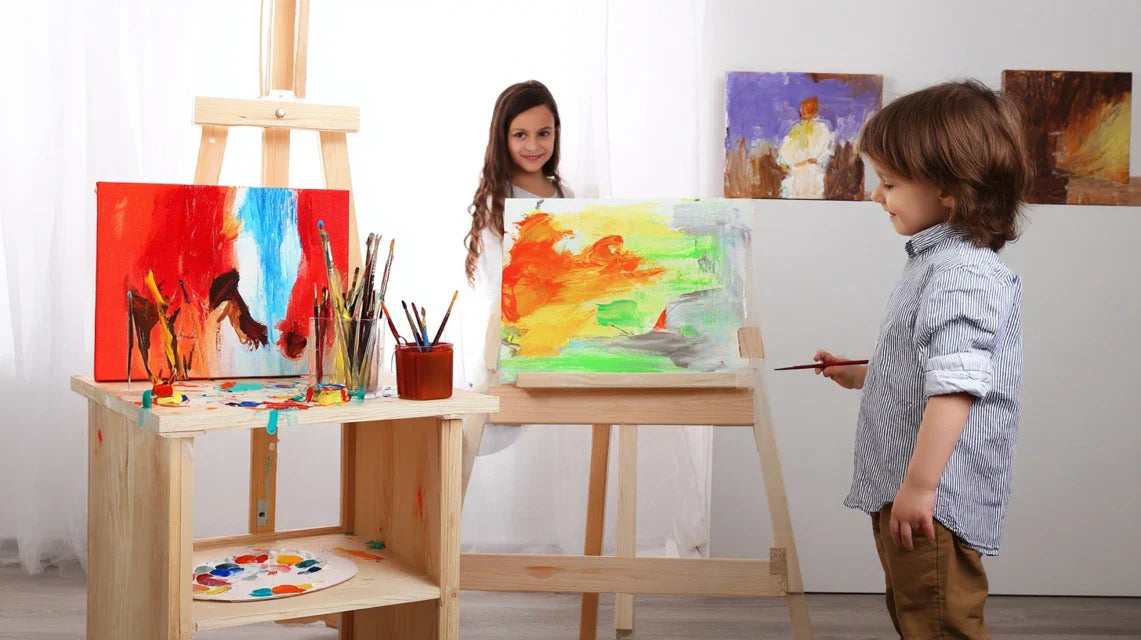
Analyze free creations: Offer your child a free drawing or painting session, without instructions. Observe their spontaneous color choices, the pressure of their gestures, and the subjects that emerge naturally. These undirected creations are the most faithful mirror of their inner world.
⏱️ Time: 30 minutes of creation + 10 minutes of analysis | ✅ Successful when: You identify recurring patterns | ⚠️ Attention: Do not comment while they create to preserve authenticity
Test reactions to atmospheres: Temporarily create different lighting and color ambiances in their room (dim lighting, bright colors, pastel tones). Observe which configuration your child seems most comfortable and relaxed. Their body will tell you what words cannot express.
⏱️ Time: 20 minutes per test, 3 different tests | ✅ Successful when: An atmosphere visibly generates more well-being | ⚠️ Attention: Test at different times of the day as needs vary
🎯 Validation of your decoding: You should now be able to clearly identify whether your child is more stimulated by visual richness or soothed by simplicity, whether they seek escape or security, whether they prefer harmony or contrast. If you are still unsure, extend the observation for a few days - each child has their own pace of revelation.
OUR RECOMMENDED PRODUCTS
Step 2: Translate insights into a personalized palette
Now that you have your child's "source code," it’s time for creative translation. This step is particularly rewarding because you will see your child's personality take shape in colors. This is when the abstract becomes concrete, and understanding turns into action.
Your creative translation tools
- An extended color wheel: Get a color wheel that includes various shades, saturations, and luminosities. This tool allows you to explore all variations of a favorite color rather than limiting yourself to primary versions. The shade makes all the difference between a color that irritates and one that soothes.
- Reusable test supports: Use large colored sheets or fabrics that can be temporarily placed in the bedroom. These life-size tests reveal the real impact of colors in living space, unlike small samples which can mislead.
- A classification system: Create simple categories (energizing/soothing colors, adventure/cocoon themes, realistic/imaginary styles) to organize your discoveries and facilitate final decisions.
The art of emotional translation
Associate emotions and colors: For each personality trait identified, find the colors that naturally support it. A child seeking security will gravitate towards earthy tones or deep blues, while an explorer will thrive with adventurous greens or stimulating oranges. Let your parental intuition guide these associations.
⏱️ Time: 45 minutes of research and testing | ✅ Successful when: Each trait has its corresponding color | ⚠️ Attention: Don't limit yourself to obvious colors, explore the nuances
Create a harmonious palette: Select 3-4 main colors that work well together while respecting your child’s needs. Test these combinations by creating small color compositions. Harmony is born from the balance between dominant colors and accent touches.
⏱️ Time: 30 minutes of composition | ✅ Successful when: The palette immediately evokes your child's personality | ⚠️ Attention: Avoid more than 4 main colors to preserve harmony
Validate with your child: Subtly present your palette by arranging the colors in their everyday environment. Observe their natural reactions without revealing your approach. Their spontaneous behavior will confirm or refine your choices.
⏱️ Time: 2-3 days of observation | ✅ Successful when: You observe a constant positive reaction | ⚠️ Attention: Change only one color at a time to isolate reactions
Step 3: Select themes that resonate
The final step transforms your understanding into concrete purchasing decisions. You will never buy a painting randomly again: each choice will be guided by an intimate knowledge of what nourishes your child's soul. This mastery gives you total confidence in your decor decisions.
Your refined selection criteria
- A personalized evaluation grid: Create a checklist based on your child's profile (validated colors, emotions sought, themes of interest). This grid eliminates impulsive purchases and guarantees the consistency of your choices with their authentic personality.
- Targeted sources of inspiration: Identify 2-3 artistic styles that match the decoded temperament (contemporary art for free spirits, detailed illustrations for perfectionists, colorful abstractions for dreamers). This focus avoids dispersion and strengthens the visual identity of the space.
- A budget proportional to the impact: Plan to invest more in 1-2 master pieces perfectly adapted rather than in several generic paintings. The emotional impact of a "custom" painting justifies this investment in your child's well-being.
The art of inspired selection
Filter by emotional criteria: For each potential painting, ask yourself if it evokes the main emotion sought by your child. A technically beautiful but emotionally neutral painting will have less impact than a simple but resonant work. Always prioritize emotional connection over aesthetic perfection.
⏱️ Time: 15 minutes per evaluated artwork | ✅ Successful when: The painting immediately evokes your child | ⚠️ Attention: Resist personal crushes that do not match the profile
Test integration into space: Mentally visualize (or with a photo) how each painting integrates into the overall room. The artwork must dialogue harmoniously with the existing while bringing its unique personality.
⏱️ Time: 20 minutes of consideration per option | ✅ Successful when: The integration feels natural and obvious | ⚠️ Attention: Consider the lighting and proportions of the room
Validate future potential: Choose artworks rich enough to grow with your child, which will reveal new details or spark new reflections over the years. A good children's painting nourishes their curiosity in the long term.
⏱️ Time: 10 minutes of future projection | ✅ Successful when: You imagine your child at different ages with this artwork | ⚠️ Attention: Avoid references that are too dated or fleeting trends
The rule of harmonious evolution: Only proceed to purchase when you feel this certainty: "This is exactly what I need for my child." This intuitive certainty, nurtured by your methodical approach, guarantees lasting and rewarding choices.
You now master the subtle art of decorative personalization. These expert techniques give you a considerable advantage over parents who buy intuitively, allowing you to create truly transformative environments for your child.
🎨 Master decorator technique: Create an "evolving mood board" by regularly photographing your child's creations and observing the evolution of their tastes. This visual archive reveals the constants of their personality and predicts their future preferences, allowing you to anticipate decor changes with remarkable accuracy.
🤔 Frequent question from a thoughtful parent
"What if I'm completely wrong and my child ultimately hates the painting I chose for them?"
This fear is absolutely understandable and reveals your love for your child. In reality, when you follow this method of observation and decoding, total mistakes become almost impossible. You base your choices on concrete data rather than assumptions. And even if an adjustment proves necessary, your child will be touched by the attention you have paid to understanding their tastes - this approach strengthens your bond as much as it beautifies their space.
💡 Decorative safety: Start with a smaller or temporary painting to test your reading of their personality. The success of this first choice will give you confidence for more important investments later on.
The pitfalls to absolutely avoid in your quest for personalization
Even with the best intentions, some mistakes can compromise the harmony you are seeking to create. These pitfalls are so common that they affect 80% of well-intentioned parents - knowing yourself allows you to avoid them gracefully.
- 🚫 Projecting your own artistic tastes: It's tempting to choose the artwork that YOU like, especially when it is objectively beautiful. But your 5-year-old doesn’t have your adult aesthetic references. Resist the urge to turn their room into a gallery that resembles you. Rely on your decoding rather than your personal preferences.
- 🚫 Overstimulation through excessive enthusiasm: Discovering that your child likes bright colors doesn't mean you have to transform their room into a rainbow. Visual accumulation is tiring and stressful, even for the most energetic children. Preserve visual rest areas to balance stimulating elements.
- 🚫 Ignoring the natural lighting of the room: A perfectly colored artwork can become dull or aggressive depending on its exposure. An artwork that shines in full sun may seem sad under artificial light. Always test your choices in the different lighting conditions that the room experiences.
- 🚫 Choosing only based on current age: Your 4-year-old won’t stay stuck in their 4-year-old tastes. Avoid themes too specific to a narrow age range (like "baby animals" which can quickly seem childish). Prioritize artworks that evolve with your child's maturity.
- 🚫 Neglecting quality over quantity: It’s better to have one high-quality artwork that creates a real emotion than three mediocre works that clutter the space. Quality is subconsciously felt and influences your child's self-esteem. Invest in excellence rather than accumulation.
🛡️ Your error prevention verification system: Before any purchase, ask yourself these 4 questions: "Does it correspond to the emotional profile I have identified?", "Does it harmoniously integrate into the room's lighting?", "Can it evolve with my child?", "Does the quality justify the investment?" A "no" to one of these questions = postpone the decision.
🎁 Special readers offer
Because you took the time to inform yourself, enjoy 10% discount on your first order:
⏰ Valid for 72h after reading • Applicable to all our products
🙋♀️ Your questions about customizing children's artworks
An investment of €80 to €200 for a quality statement piece represents approximately €0.50 per day over a lifespan of 5-10 years. Compared to the daily impact on your child's well-being, it is remarkably cost-effective. Start with a budget of €100-€120 for a first artwork that will allow you to assess the impact before any additional investments.
Superficial tastes do indeed change (favorite character, color of the moment), but deep personality traits remain remarkably stable. An introverted child will generally remain so, even if their interests evolve. By basing yourself on temperament rather than fleeting trends, you create a lasting foundation that adapts to natural developments.
No color is inherently "forbidden", but it all depends on the intensity, the area covered and above all your child's temperament. A bright red can irritate a highly sensitive child but energize a small introvert. The golden rule: always test in a small format before committing to large surfaces, and observe sleep and behavior reactions.
Use wall fixings suitable for the weight (Molly anchors for partition walls, expanding anchors for solid walls) and position artworks more than 1.20m from the floor to avoid accidental bumps. Absolutely avoid glass frames in rooms of children under 8: prefer plexiglass or canvases without protection. Check the solidity every 6 months.
Create personalized zones rather than a bland compromise that satisfies no one. Assign each child a wall or corner that reflects their personality, and use a neutral but quality element (such as a beautiful wall color) to unify the whole. This approach respects individualities while preserving the harmony of the shared space.
🌟 Your transformation into an expert parent-decorator
In a few weeks, you will observe your child naturally spending more time in their bedroom, feeling truly at home there rather than just occupying a decorated space. Their friends will notice this unique atmosphere that is like no other, and you will know that you have succeeded in translating their essence into a visual environment.
This mastery of personalized decoration goes beyond simple furnishing: you develop an enhanced parental intuition that will serve you in all future choices regarding your child. This skill in decoding and adaptation will naturally apply to activities, books, outings - you become expert in "translating authentic needs".
The most difficult part was understanding that each child possesses their own unique emotional signature. Now that you know it, start by carefully observing your child this week using the observation notebook method. This simple first step will already reveal unsuspected aspects of their personality.
🎯 Your immediate mission : Your child deserves an environment that truly reflects them, and you now have all the keys to create it. Start today with 10 minutes of compassionate observation - you will be surprised by the richness of what you discover.